
What should happen if a septic tank cannot be safely accessed?
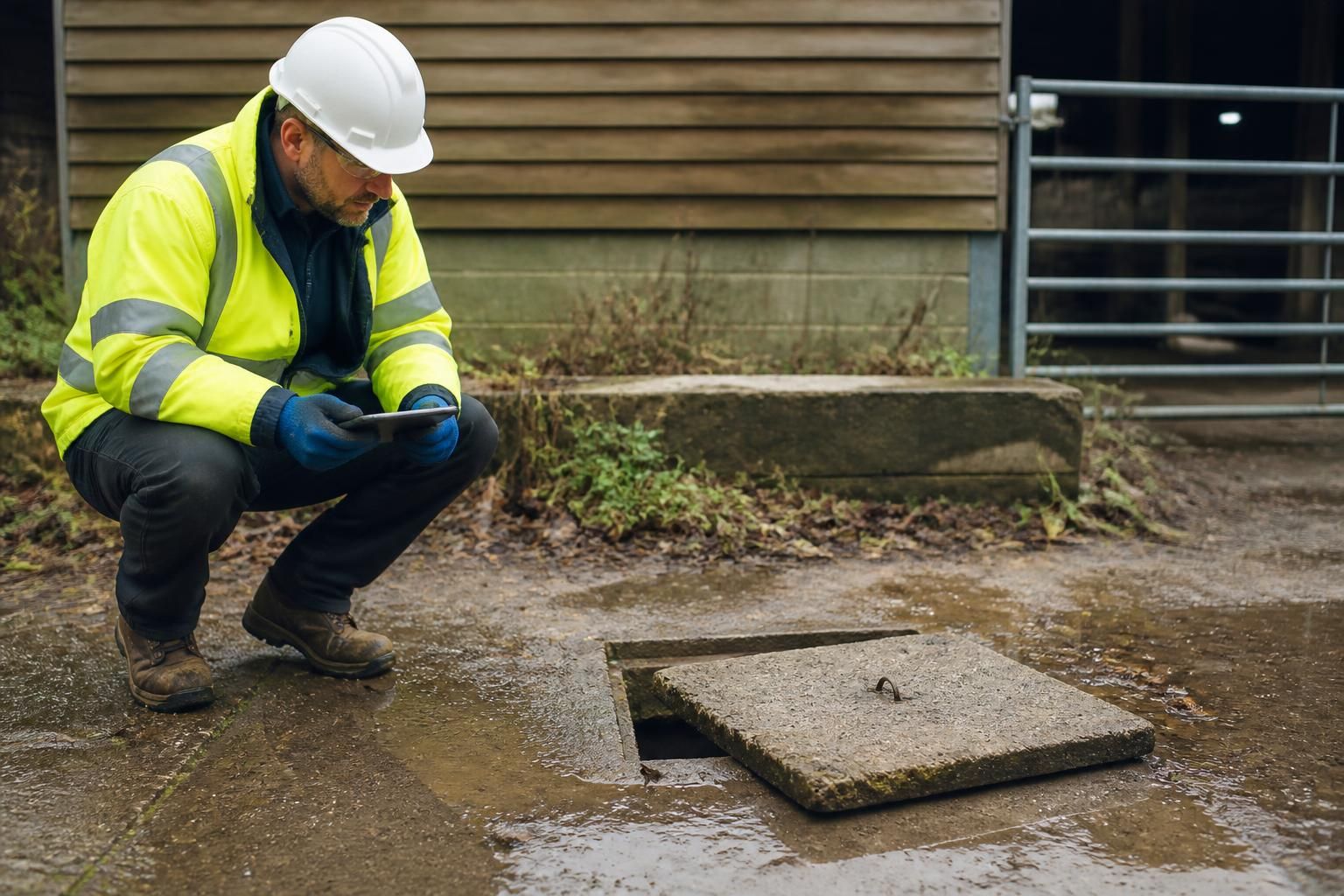
The work should remain on hold until the access problem has been assessed by a competent person and a safe method has been agreed. The next step is not to force open a buried, damaged or unstable cover, but to identify why access is unsafe, control the immediate hazards and determine whether the tank can be made accessible or requires an alternative inspection or emptying arrangement.
Identify the reason access is unsafe
The appropriate remedy depends on the condition and location of the tank. Common problems include:
- a missing, cracked, corroded or inadequately secured cover;
- soil, paving, vegetation, stored materials or waste covering the access point;
- floodwater or sewage surrounding the cover;
- an access point located within a traffic route or unstable ground;
- structural damage, subsidence or signs that the tank or chamber may collapse;
- uncertain tank location, meaning that excavation could damage the tank, pipework or underground services; and
- a narrow, deep or obstructed opening that could create a confined-space hazard.
A visual inspection from a safe position may help establish the condition, but nobody should lean over an opening, enter the tank or disturb a cover that may be supporting ground or vehicle loads. Septic tanks can contain toxic or oxygen-deficient atmospheres, and dangerous conditions may not be apparent from smell or appearance.
Control the area before further investigation
The tank location should be kept away from employees, visitors, members of the public, children, vehicles and livestock. Suitable barriers, warning signs and traffic controls may be needed, particularly where the access point is in a yard, car park, service road or other working area. If there is standing water, an open chamber, sewage leakage or a risk of collapse, the area should be isolated until a specialist has assessed it.
People should not attempt to pump out the tank merely to make access easier, remove a cover with improvised lifting equipment or enter the chamber to investigate. Emptying does not necessarily remove atmospheric hazards, and a tank may still be unsafe after its contents have been removed.
Obtain a competent assessment
A suitable contractor should establish the tank’s location, construction, access arrangement and current condition. The assessment should consider the condition of the cover and chamber, the surrounding ground, the required lifting method, vehicle access, nearby services, traffic and the possibility of hazardous gases or oxygen deficiency.
Where entry into the tank or another confined space is being considered, the work requires a specific risk assessment, suitable equipment, trained personnel, atmospheric testing, supervision and an effective rescue plan. In many cases, the safest solution is to avoid entry altogether and use equipment or methods that allow the work to be completed from outside.
Choose a proportionate remedy
Depending on the findings, remedial work may include clearing the area, repairing or replacing the cover, installing a properly secured access riser, stabilising the chamber, improving drainage around the opening or providing a safer working surface. Where vehicles pass over the access point, the cover and surrounding construction must be suitable for the loading conditions; a domestic cover should not be assumed to be suitable for commercial or industrial traffic.
If the tank cannot be safely opened in its existing position, a competent specialist may consider remote inspection equipment, a different access point, controlled excavation or another engineered method. The proposed method should be documented before work starts, including how personnel will be protected, how removed materials will be handled and what will happen if the tank is found to be damaged or full.
Consider urgent pollution or capacity risks
An inaccessible tank still requires monitoring for signs of overflow, sewage surfacing, odour, leakage or contamination of nearby land or water. If there is an imminent risk of pollution, people should be kept away from the affected area and competent environmental or waste specialists should be contacted without delay. The relevant environmental authority may also need to be notified where pollution has occurred or cannot be controlled.
Until the tank has been assessed, the site operator should consider whether water use can be reduced safely and whether other activities are adding to the tank’s load. This is a temporary risk-control measure, not a substitute for inspection or emptying. Chemicals, biological treatments or unauthorised discharge should not be used as a way to manage an access problem.
Keep a clear record
The responsible organisation should record the date the problem was identified, the location and condition of the access point, photographs where they can be taken safely, immediate controls, advice received and any remedial works completed. The record should also state why inspection or cleansing was delayed and when the arrangement will be reviewed.
After the access route has been made safe, the tank should be inspected or emptied using a method appropriate to its design and condition. The contractor’s service documentation should identify the tank or chamber, the work carried out, any defects found, waste transfer details where applicable and recommendations for future access. If safe access cannot be created, the owner or responsible person should retain the specialist assessment and agree a documented alternative maintenance plan rather than allowing the tank to become unmanaged.
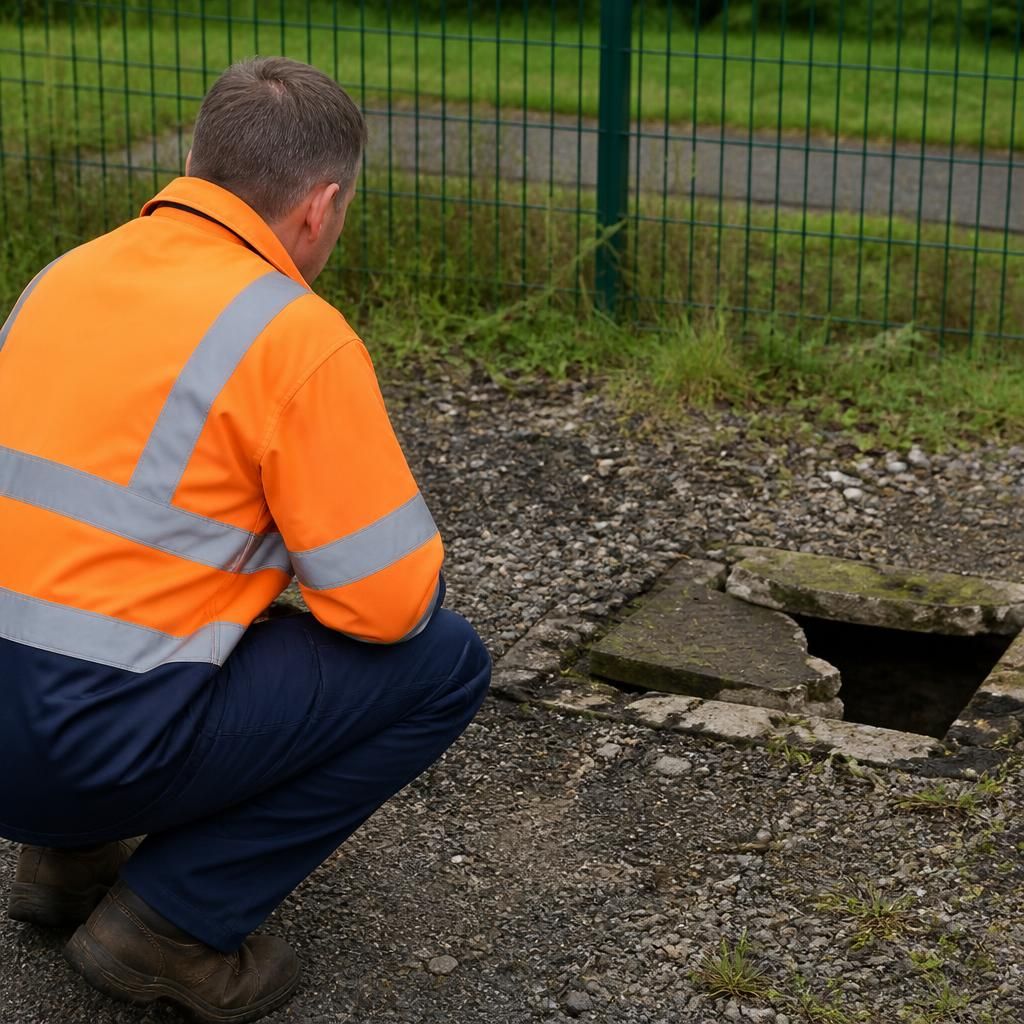
An unsafe septic tank access point does not transfer responsibility to the cleansing contractor. The owner or site operator remains responsible for controlling the area, providing accurate information about the tank and ensuring that any proposed work is properly planned. A contractor should be given details of the tank’s location, known defects, previous access problems, surrounding traffic or ground conditions and any signs of leakage or overflow.
The work should be arranged through a clearly defined scope that separates access-related repairs from inspection, emptying or maintenance. This helps prevent a contractor arriving without the equipment, permissions or controls needed for the site. The agreed documentation should identify who is responsible for each action, what conditions must be met before work proceeds and how the tank will be managed if safe access cannot be achieved.
Discuss an Unsafe Septic Tank Access Point
If you need to determine whether an inaccessible tank can be safely serviced, consult a competent septic tank specialist to review the site and advise on the appropriate next step.