
What should a septic tank desludging quotation include?
A septic tank desludging quotation should set out the tank or system covered, the proposed desludging work, service frequency, waste collection and disposal arrangements, and the total price. It should also identify any assumptions, access requirements, additional charges, relevant environmental responsibilities and the records or documentation provided after the work.
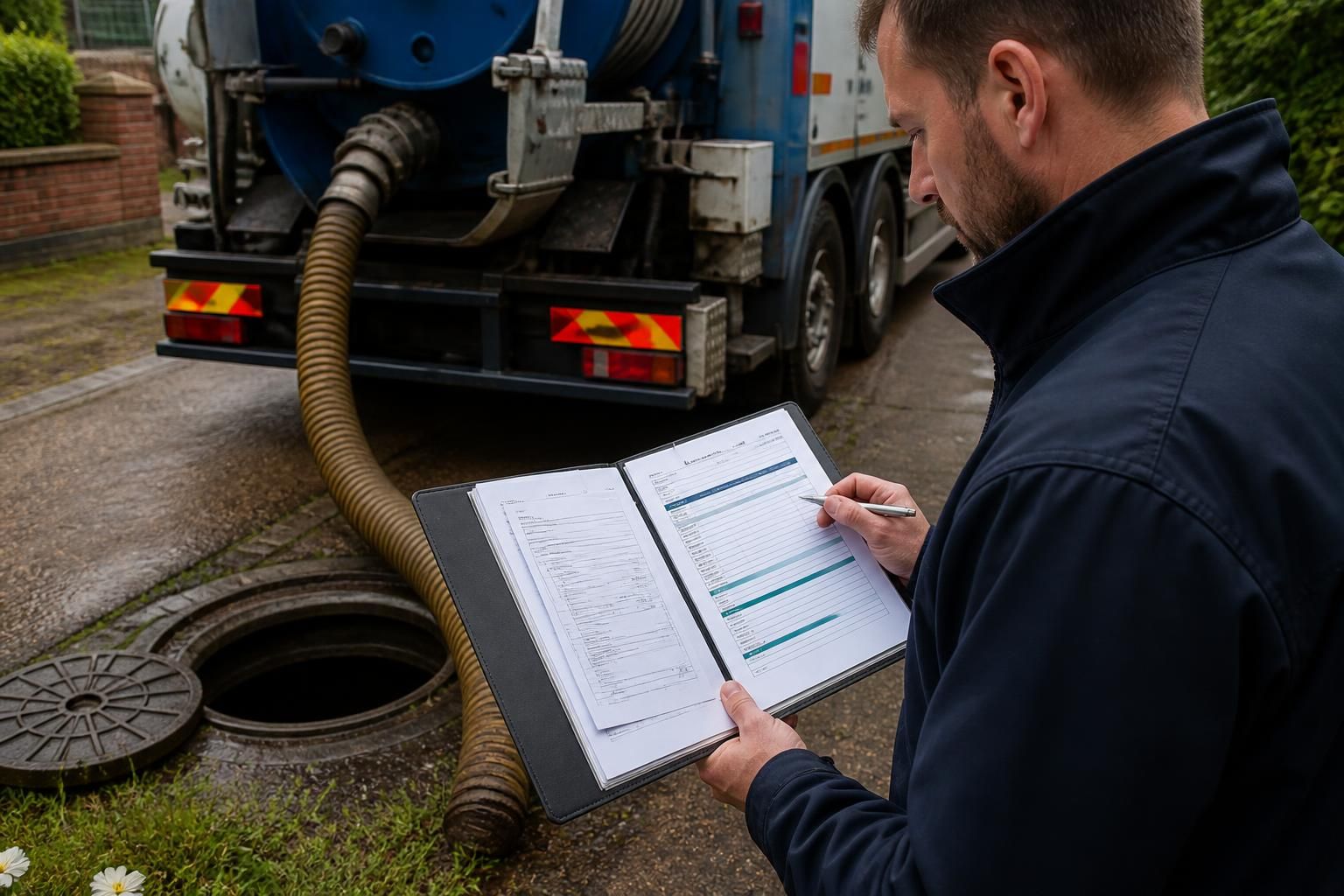
A septic tank desludging quotation should provide enough detail for a business to understand exactly what is being priced, what is excluded and what evidence will be supplied after the work. It should be specific to the site rather than a generic charge for emptying a tank.
Site and system details
The quotation should identify the premises, the tank or treatment system concerned and the information used to prepare the price. This may include the tank type, approximate capacity, number of tanks, access points, location on the site and whether other connected chambers or pumping equipment are included. If the contractor has not inspected the installation, the quotation should say which details have been provided by the client and which have been assumed.
Where the tank capacity or layout is uncertain, the quotation should explain how this may affect the work. A request for photographs, drawings, previous service records or a site visit can help prevent a price being based on the wrong chamber or an incomplete understanding of the system.
Description of the work
The scope should explain what the contractor will do, not simply describe the job as “desludging”. It should clarify whether the work includes locating and opening access covers, removing accumulated sludge, pumping liquid from the relevant chamber, replacing and securing covers, and checking the area afterwards. If the quotation includes only routine emptying, it should not be taken to include repairs, cleaning of pipework, jetting, excavation, pump replacement or work on a drainage field.
The quotation should also state how the contractor will deal with conditions found during the visit. For example, excessive sludge, a damaged cover, a blocked inlet, an inaccessible chamber or a failed pump may require further approval before additional work is undertaken. A clear variation procedure should prevent unplanned work from being treated as automatically authorised.
Pricing and commercial terms
A useful quotation separates the main charge from possible extras. It should indicate whether the price covers labour, equipment, transport, waste handling and any applicable VAT. If the charge depends on the quantity removed, the number of loads or the time required, the basis of that calculation should be explained.
Potential additional charges may relate to:
- an extra tank, chamber or load;
- unusually long hose runs or difficult access;
- waiting time caused by site restrictions;
- standing water, flooding or unsafe ground conditions;
- the need for specialist pumping equipment; or
- repairs or remedial work identified during desludging.
These items should be described as possible variations rather than hidden within vague wording. The quotation should also include its expiry date, payment terms, cancellation or rearrangement provisions and the process for approving additional work.
Access and site conditions
Access information is important because a tanker or vacuum unit must be able to reach a suitable position and operate safely. The quotation should record relevant restrictions such as narrow entrances, weight limits, locked gates, steep approaches, soft ground, overhead obstructions, shared access routes and the distance between the vehicle and the tank.
It should state what the client must arrange before the visit. This could include providing access to the site, identifying the tank, removing obstructions, making keys or permits available, keeping vehicles away from vulnerable ground and informing staff about the work area. If the contractor may refuse to proceed where access or safety conditions are unsuitable, that limitation should be clear in advance.
Waste handling and legal records
The quotation should explain who takes responsibility for the sludge once it has been removed and where it will be taken. Commercial clients should expect the contractor to describe the intended lawful disposal or treatment route and to identify the waste documentation supplied for the job.
Depending on the arrangements, records may include a waste transfer note or equivalent documentation identifying the waste, the parties involved and the destination. The contractor should be able to explain how its waste-carrier and disposal responsibilities are addressed. A business should retain these records with its environmental and maintenance files, particularly where it must demonstrate appropriate waste management to a landlord, auditor, regulator or internal compliance team.
Frequency and maintenance advice
A quotation may propose a recurring desludging arrangement, but the recommended interval should have an identifiable basis. Relevant factors can include the tank or treatment system design, occupancy, water use, inflow, sludge accumulation and the manufacturer’s or system operator’s instructions. A contractor should distinguish between a suggested maintenance interval and a fixed contractual commitment.
The quotation should explain whether future visits are automatically scheduled, requested by the client or reviewed after inspection and servicing. It should also state whether monitoring, inspections or condition reports are included, since desludging alone does not establish that the tank, pipework, pumps or drainage field are operating correctly.
Completion information
After the work, the client should receive a record showing the site attended, date of service, system or chamber dealt with, work completed, any material issues found and waste documentation where applicable. Photographs, measurements or notes about damaged covers and restricted access may also be useful where they form part of the agreed service.
Before accepting a quotation, a business should compare like with like: confirm the equipment and chambers covered, check every exclusion, establish how variations are authorised and ask what records will be issued. The clearest quotation links the proposed work, site assumptions, environmental responsibilities and commercial terms so that both parties can verify what has been agreed.

A septic tank desludging quotation should state whether it is a fixed price or an estimate. A fixed quotation normally applies to the defined scope and stated site conditions, while an estimate may change if the quantity of sludge, access requirements or equipment needed differs from the information available when it was prepared.
The document should also explain when the quotation becomes part of the service agreement. Businesses should check how acceptance is recorded, which terms apply, and whether any subsequent change must be agreed in writing. This helps distinguish the agreed desludging service from a later request for work outside the original quotation.
Discuss your septic tank desludging quotation requirements
Contact Blue Fish Water Management Ltd to discuss your site and the information needed for a septic tank desludging quotation. Their team can help clarify the scope required before you commit to the service.