
How should businesses choose a septic tank desludging contractor?
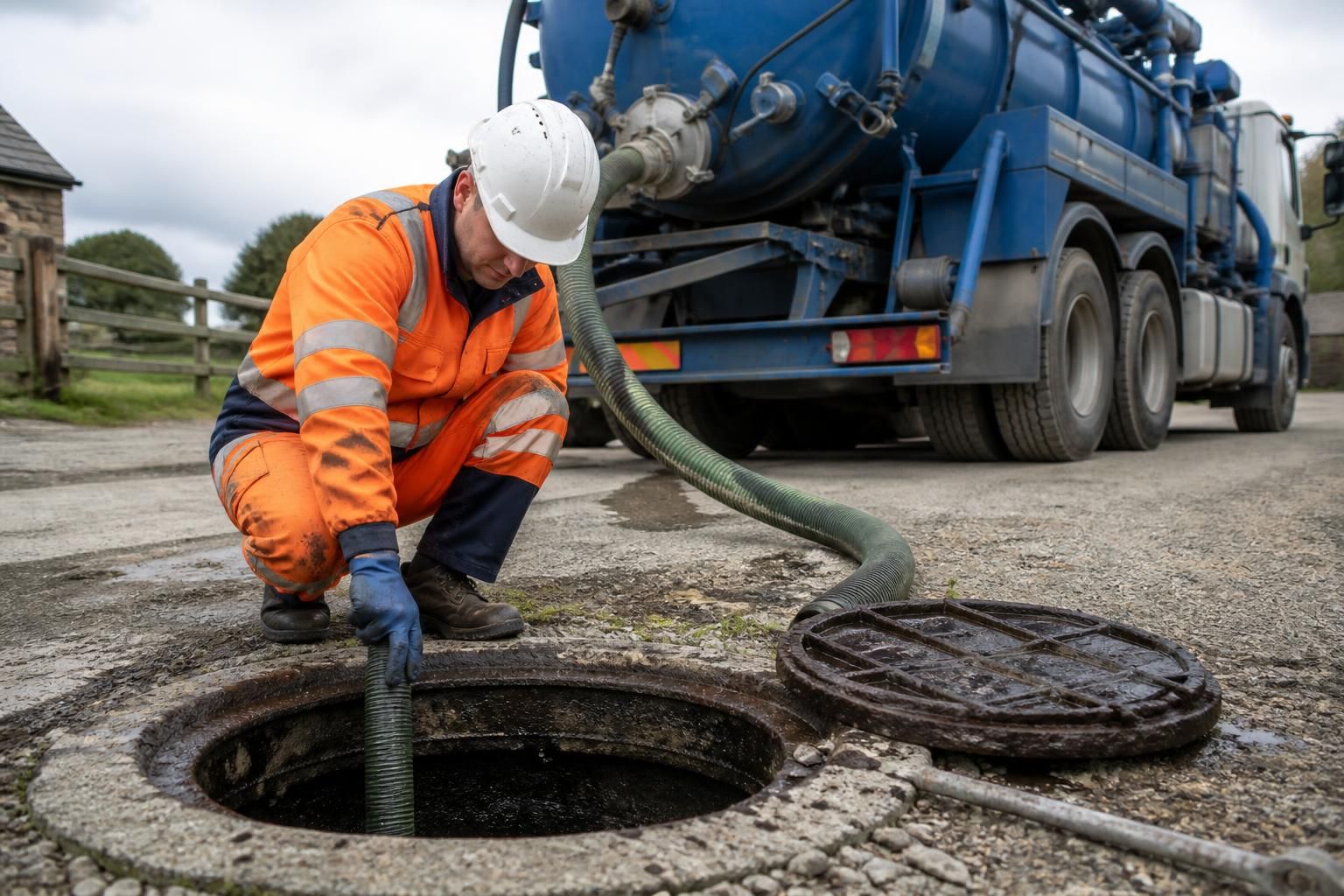
Businesses should choose a septic tank desludging contractor through a documented comparison of technical suitability, operational controls and contractual clarity. The right contractor is not simply the one offering the lowest price; it is the one that can demonstrate an appropriate understanding of the installation, manage the work without avoidable disruption and provide reliable evidence that the service has been completed correctly.
Start by defining the service requirement. Before approaching contractors, gather the information they will need to assess the work properly. This may include the tank type, approximate capacity, location, previous desludging dates, known access restrictions, the premises served and any history of blockages, odours or alarm conditions. A contractor that asks relevant questions and identifies missing information is more likely to produce a suitable proposal than one that quotes without understanding the installation.
The business should also consider whether the tank is part of a wider private drainage system. A contractor may need to understand the relationship between the tank, inlet pipes, outlet arrangements, pump chambers, treatment units and drainage field. Desludging alone may not resolve a problem caused by a damaged pipe, hydraulic overload or failing treatment equipment. A clear distinction between routine emptying, inspection and additional remedial work helps prevent misunderstandings.
Assess practical competence, not just years in business. Ask how the contractor trains and supervises operatives, what equipment is used for different site conditions and how difficult access is managed. Relevant experience may include work at industrial premises, offices, housing developments, agricultural sites or locations where hygiene and operational continuity are important. References should be relevant to the type and scale of the proposed work rather than being treated as a general endorsement.
It is also reasonable to ask whether the contractor uses its own employees or appoints subcontractors. Where subcontractors are involved, the business should establish who remains responsible for supervision, documentation, health and safety controls and any damage caused during the work. The contractual supplier should be able to explain this arrangement before work starts.
Examine the contractor's working controls. A suitable provider should be able to explain how it will protect people, vehicles, buildings, hardstanding and nearby drainage features during the operation. This may involve controlled vehicle positioning, barriers, spill prevention, hygiene measures and a process for dealing with unexpected conditions. At commercial premises, ask how the work will be coordinated with site rules, security procedures, traffic routes and other contractors.
For businesses with formal procurement or compliance systems, request copies of relevant documentation before appointment. Depending on the work and site, this may include insurance certificates, operator qualifications, waste documentation, risk assessments, method statements and evidence of appropriate vehicle or equipment maintenance. Documents should be current, legible and consistent with the company and service being appointed.
Compare quotations on an equivalent basis. A useful comparison should show what is included in the service, what assumptions have been made and which circumstances could lead to an additional charge. Check whether the price is based on an estimated volume, a defined number of tanks, particular equipment or specific site conditions. Clarify how variations are authorised so that an operative cannot carry out extra work without an agreed instruction from the responsible person.
Review the proposed terms as carefully as the price. The contract should identify the parties, service scope, responsibilities, cancellation arrangements, payment terms, liability provisions and the process for raising concerns. It should also state what happens if the tank cannot be reached, if its condition prevents normal work or if the contractor identifies a separate defect. Clear terms are particularly important where several properties or departments are covered under one arrangement.
Check the quality of communication and records. The contractor should provide a named point of contact and explain how site instructions, changes and defects will be recorded. After the work, the business may need a service report showing the date, location, asset serviced, observations and any recommended action. Records should be retained with other drainage, environmental and facilities-management documents so that future contractors can understand the installation's history.
Finally, consider whether the contractor can support sensible ongoing management rather than treating each visit as an isolated transaction. A provider should identify patterns such as unusually frequent tank filling, recurring blockages or deterioration around the installation, while avoiding recommendations that are not supported by the site evidence. Obtaining two or more comparable proposals, checking the documentation and recording the reasons for the final appointment gives the business a defensible basis for its decision.
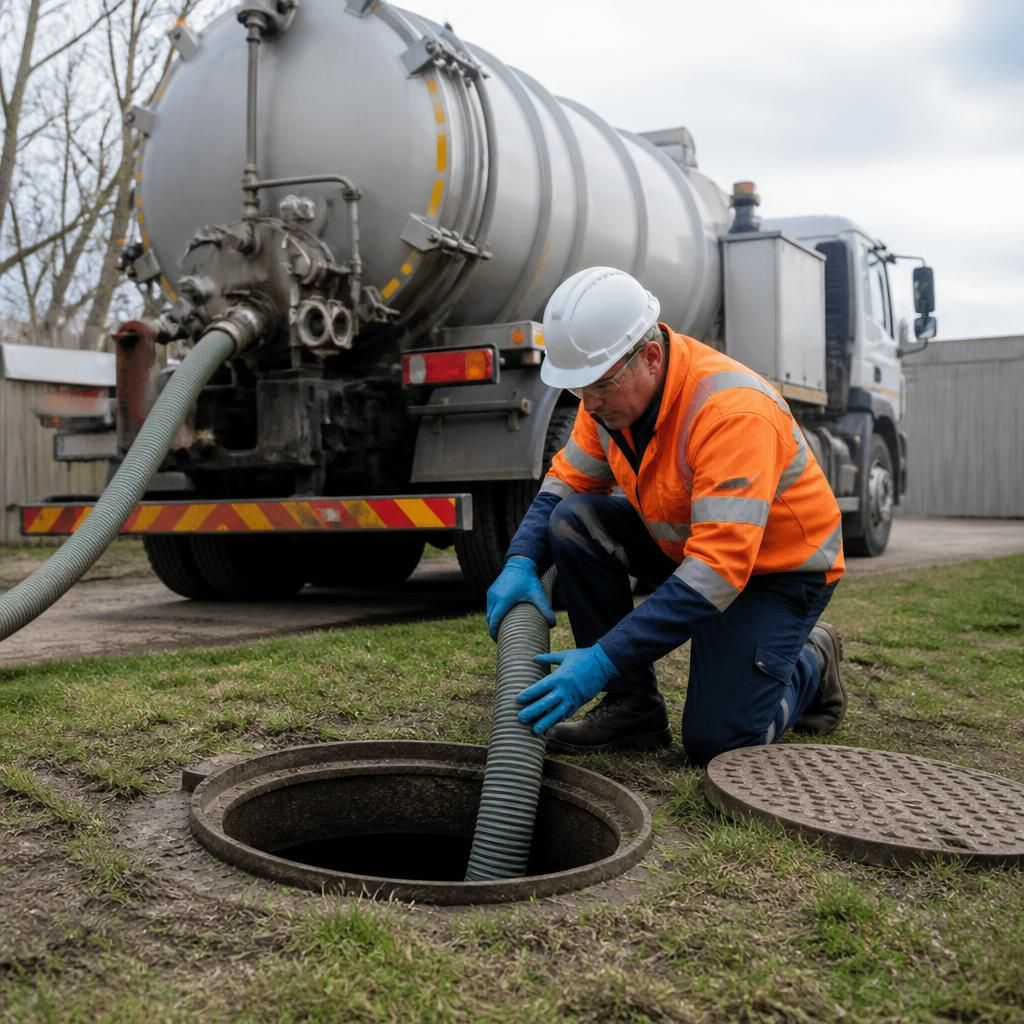
Businesses should check how a septic tank desludging contractor manages confined-space and structural hazards before making an appointment. Septic tanks can contain toxic gases, unstable covers and contaminated contents, so routine desludging should be planned as a no-entry operation. Ask the contractor how operatives assess damaged or displaced covers, unsafe ground, restricted access and other hazards before positioning equipment.
The contractor should explain what will happen if the tank cannot be approached safely or if its cover is damaged. Suitable arrangements may include isolating the area, preventing unauthorised access and referring structural repairs to a competent specialist rather than improvising on site. This is a useful selection criterion because it shows whether the contractor treats desludging as a controlled safety task, not simply a pumping operation.
Discuss your septic tank desludging requirements
Discuss your septic tank desludging requirements with Blue Fish Water Management Ltd and provide details of the installation, access arrangements and service history. This will help establish whether the proposed work is suitable for your site.