
How is septic tank desludging carried out?
Septic tank desludging is carried out by a specialist contractor who accesses the tank, uses a vacuum tanker to remove accumulated sludge and transports the waste for lawful treatment or disposal. The contractor should then check that the tank and access points are left secure and record the work completed.
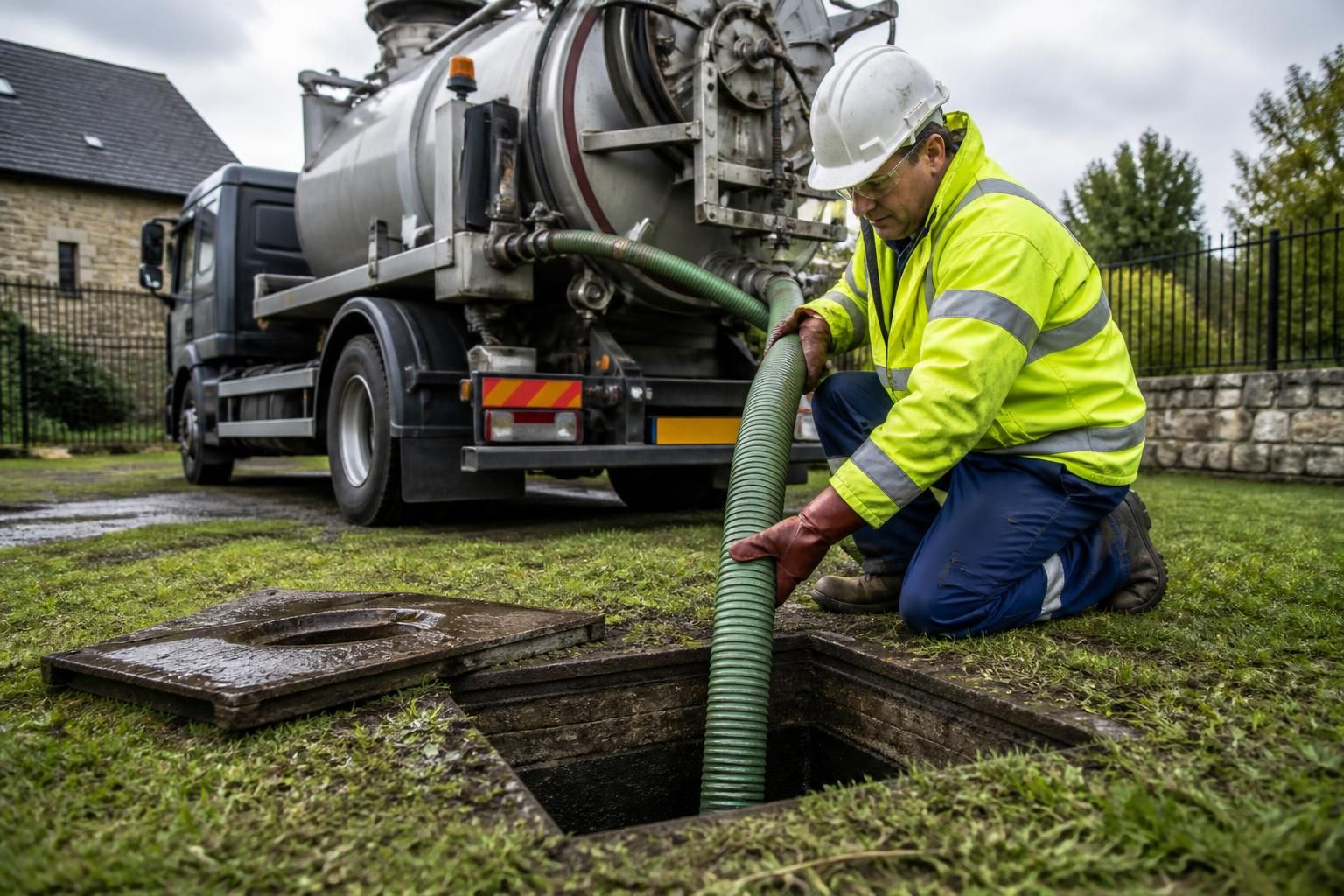
Septic tank desludging is the controlled removal of accumulated settled solids, floating scum and associated wastewater from a tank using suction equipment. The process is more than simply pumping out the contents: the operator must assess the tank, remove material without damaging the structure or connected pipework, and manage the waste through the appropriate disposal route.
1. Reviewing the tank and site
Before work starts, the contractor should establish the tank location, access arrangements, construction, approximate capacity and connection points. They should also consider vehicle access, ground conditions, overhead obstructions, nearby buildings and the position of covers. This planning helps determine whether the tanker hose can reach the tank safely and whether additional equipment or access controls are needed.
The operator should identify potential hazards, including unstable covers, confined spaces, exposed electrical equipment, contaminated surfaces and biological hazards. Septic tanks must not be entered. Opening covers and carrying out the work should be restricted to trained personnel using suitable procedures and protective equipment.
2. Opening and preparing the tank
The covers are opened carefully and the tank is allowed to vent naturally. The operator may inspect the visible condition of the covers, inlet and outlet arrangements, baffles and internal components before pumping begins. This can identify problems such as damaged covers, displaced baffles, excessive sludge, blocked pipework or unusual liquid levels.
Where access is restricted, the contractor may use a suitable hose extension or specialist equipment. Hoses should be positioned to avoid unnecessary damage to landscaping, driveways and surrounding surfaces. The working area should be kept controlled so that people and vehicles cannot approach open access points.
3. Measuring and loosening the contents
The operator assesses the depth and condition of the sludge and scum layers. Dense or compacted material may need to be loosened using controlled agitation or water, depending on the tank design and the equipment available. This helps the vacuum system remove material that has settled firmly rather than extracting only the more liquid portion.
Agitation must be carried out carefully. Excessive disturbance can damage internal fittings, overload connected drainage or cause solids to pass into the outlet. The method should therefore reflect the tank's condition and the reason for desludging.
4. Removing the sludge
A vacuum tanker extracts the tank contents through a suction hose. The contractor normally works methodically across the tank to remove settled sludge and surface scum. The operator monitors the suction process and the condition of the tank rather than leaving the equipment unattended.
Desludging does not always mean removing every drop of liquid. Depending on the tank design, condition and the contractor's assessment, some liquid may be retained or returned to help maintain the tank's working environment. A full emptying may be appropriate in particular circumstances, such as when inspection, repair or extensive cleaning is required. The chosen approach should be explained and recorded, especially where it differs from routine desludging.
If the tank cannot be emptied properly because of hardened deposits, structural damage, restricted access or a blocked inlet, the contractor should record the limitation and advise on the necessary follow-up work. They should not force equipment in a way that could crack the tank or damage its fittings.
5. Checking the system after pumping
Once the material has been removed, the contractor should check the tank and accessible connections for visible defects. Relevant checks may include:
- the condition and security of covers;
- the inlet and outlet pipes;
- internal baffles, screens or filters where fitted;
- signs of cracking, leakage, root ingress or corrosion;
- evidence of blockages or abnormal flow; and
- the condition of the surrounding ground.
These checks do not replace a detailed structural survey, drainage investigation or repair. They can, however, highlight issues that could affect the tank's operation or indicate that further assessment is needed.
6. Managing the removed waste
The extracted material is transported in the tanker to a facility authorised to receive it. Waste documentation should identify the source, nature and quantity of the load where required, together with the relevant transfer details. Businesses should retain the service record and any waste documentation provided, as these records can help demonstrate appropriate maintenance and waste management.
Discharging septic tank waste to land, a surface water drain or another unauthorised location is not an acceptable alternative to controlled waste handling. The contractor and the business commissioning the work should be clear about who is responsible for the waste and what documentation will be supplied.
7. Securing the site and recording the work
At completion, access covers should be replaced securely and the work area left in a safe condition. Any spillage should be dealt with using an appropriate procedure, and equipment should be removed without leaving contaminated residues or creating a trip hazard.
A useful completion record states the date of service, tank or site identification, work undertaken, any restrictions encountered, observations about the tank, the waste destination and recommendations for further action. If the inspection identified damaged covers, blocked pipework, high sludge accumulation or a suspected drainage failure, those matters should be addressed rather than treated as part of routine desludging.
For commercial premises, the service record should be kept with relevant maintenance and environmental documentation. Regular monitoring of tank condition and sludge accumulation can then be based on actual site observations, rather than relying only on a fixed emptying pattern.
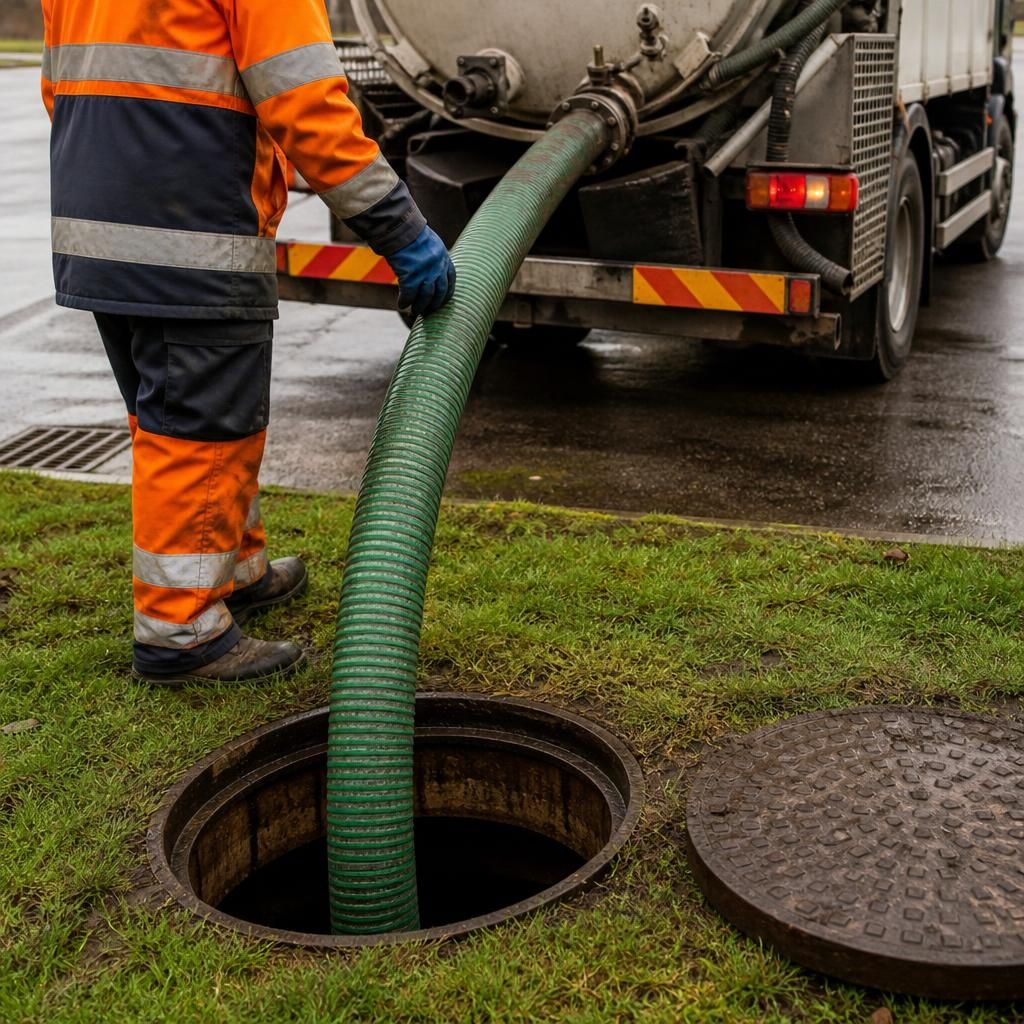
At a commercial site, the contractor may need to control inflows while the tank is being desludged. Toilets, sinks, process drains or pumping equipment connected to the tank can continue sending wastewater into it during the visit, affecting liquid levels and making the work less controlled. The site operator should therefore follow any instructions to pause non-essential water use or temporarily isolate relevant flows.
This is particularly important where several buildings share one tank or where incoming wastewater could reach an open access point. The contractor should agree the necessary controls with the responsible site contact before pumping starts, then confirm when normal discharge can resume. Any restriction, isolation or operational issue should be included in the service record.
Discuss your septic tank desludging requirements
If you are planning septic tank desludging for a commercial site, discuss your tank, access arrangements and site requirements with Blue Fish Water Management Ltd to establish the appropriate scope of work.