
How can businesses prepare a septic tank for desludging?
Businesses can prepare a septic tank for desludging by reviewing its maintenance records, confirming the tank’s location and access route, and removing obstacles around inspection covers and access points. Staff should also be briefed on the planned work, relevant site hazards identified, and arrangements made to keep people and vehicles clear while the tank is being accessed.
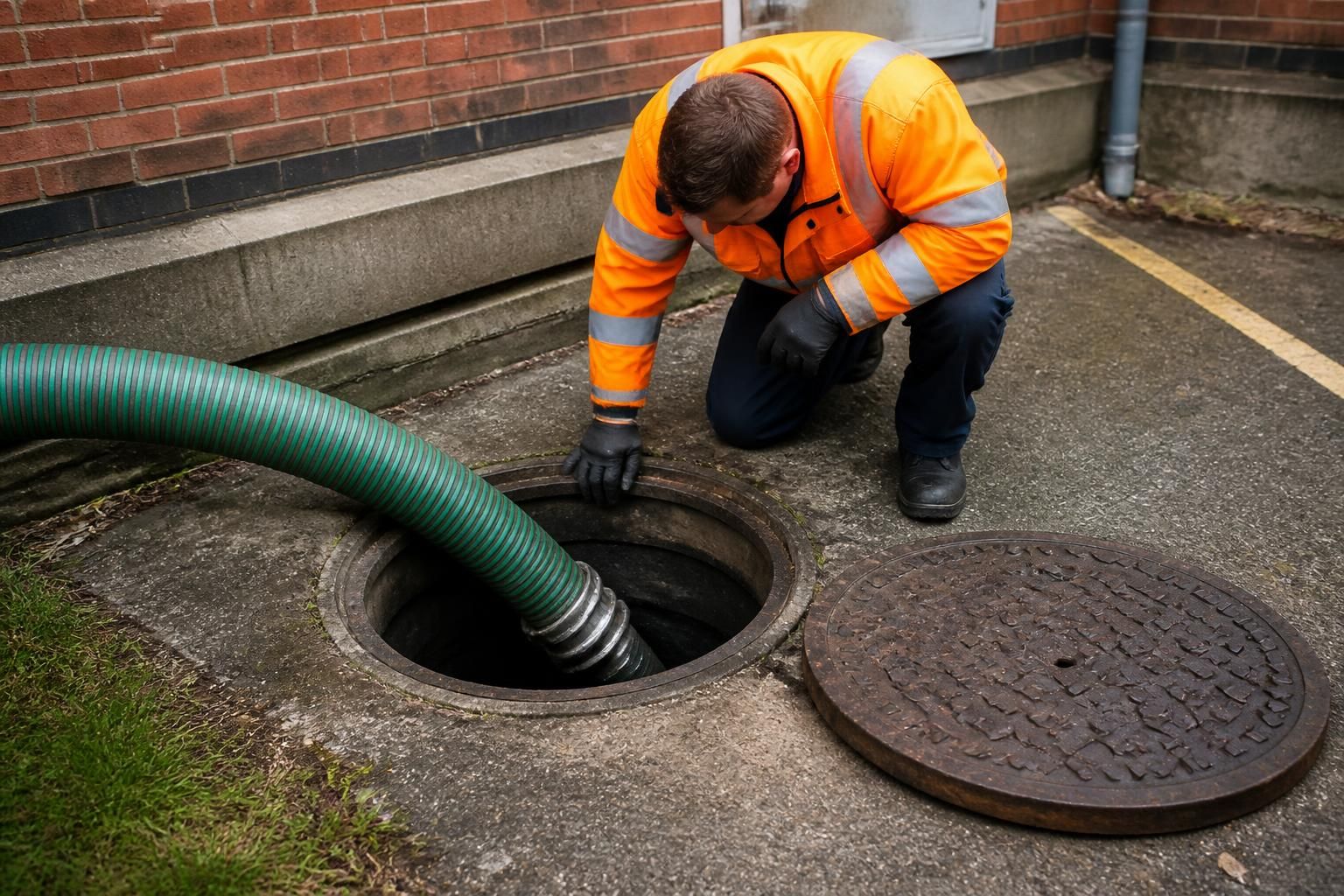
Businesses should prepare a septic tank for desludging by controlling what enters the system, confirming how the premises will operate during the work, and providing the contractor with accurate information about the tank and its contents. Preparation should protect people, prevent avoidable sewage problems and ensure that removed sludge can be handled and documented appropriately.
Review the system before the visit. Check the available drainage drawings, inspection reports, desludging history and records of previous faults. Establish whether the tank serves toilets, kitchens, trade areas, staff facilities or process drainage. This information helps the contractor understand likely loading and identify whether unusual substances could be present. If the tank has received oils, solvents, disinfectants, laboratory waste or other chemicals, this must be disclosed before work begins.
Do not assume that every tank can be treated in the same way. A septic tank connected to a busy workplace may continue receiving wastewater while it is being serviced, whereas a site with a small tank or limited storage capacity may need temporary controls. Ask the contractor whether normal water use should be reduced, stopped or redirected during the operation. Do not close an inlet, isolate a pump or obstruct a drainage line unless this has been assessed and authorised, as an unsuitable isolation can cause internal flooding or an uncontrolled discharge.
Plan how the premises will function during the work. Where toilets, washrooms, kitchens or production areas discharge to the tank, arrange suitable temporary measures if those facilities cannot be used. Tell relevant occupants which facilities are affected and set out who is responsible for managing the arrangements. Businesses should also consider deliveries, customer movements, waste collections and other activities that could interfere with the contractor’s equipment or create a conflict with the work.
Electrical and mechanical equipment may need attention before desludging. If the system includes pumps, alarms, macerators or treatment equipment, identify the responsible person for operating or isolating it. Only a suitably competent person should work on electrical supplies or mechanical components. The contractor should be told about faults, alarm conditions, unusual smells, recent blockages, high liquid levels or evidence that the tank is structurally damaged.
Control health and safety risks. A septic tank is a confined-space hazard. It can contain toxic gases, have a low-oxygen atmosphere and present a drowning risk. No employee should enter the tank, lean into an open access chamber or attempt to inspect its contents directly. Covers should remain in place until the contractor is ready to work, and any opening should be managed under the site’s control measures. Smoking, naked flames and other ignition sources should be kept away from the work area because gases may be flammable.
Provide the contractor with relevant site safety information, including emergency arrangements, traffic controls, overhead restrictions, underground services and any areas where contamination may be present. If the tank is in a location affected by flooding, unstable ground or difficult weather conditions, raise this before the appointment so that the method of work can be reviewed. The contractor may need to postpone or change the operation if conditions make access or tank opening unsafe.
Protect the drainage system and surrounding area. Before desludging, stop avoidable inputs such as excessive water use, flushing of unsuitable materials and discharge of chemicals that could affect the tank or the people handling its contents. Toilets should not be used for wipes, sanitary products, nappies, fats, oils, solvents or other materials that can increase blockages or contaminate the sludge. This is an opportunity to correct poor disposal practices rather than simply remove the accumulated material.
Keep spill response materials available where the site’s risk assessment requires them, and make sure employees know how to report a spill or suspected leak. The contractor should be able to work without placing hoses across unprotected walkways or near sensitive drainage channels. Any liquid or sludge escaping from the tank should be treated as a contamination incident and managed through the site’s established emergency procedures.
Prepare the records and post-work checks. Retain the work order, waste documentation, volume or description of material removed where provided, and any notes about defects or recommended repairs. These records support the business’s maintenance programme and can help demonstrate that waste was dealt with through an appropriate route. They should be reviewed alongside the next planned inspection or risk assessment.
After desludging, check that covers, pipe connections, alarms and surrounding surfaces have been left secure. Confirm whether the contractor has identified structural damage, unusual inflow, poor settlement or a need for remedial work. Do not return equipment to normal operation until any agreed isolation has been safely reversed. A short review with the person responsible for the premises can then confirm when facilities may be used normally and what monitoring is required.
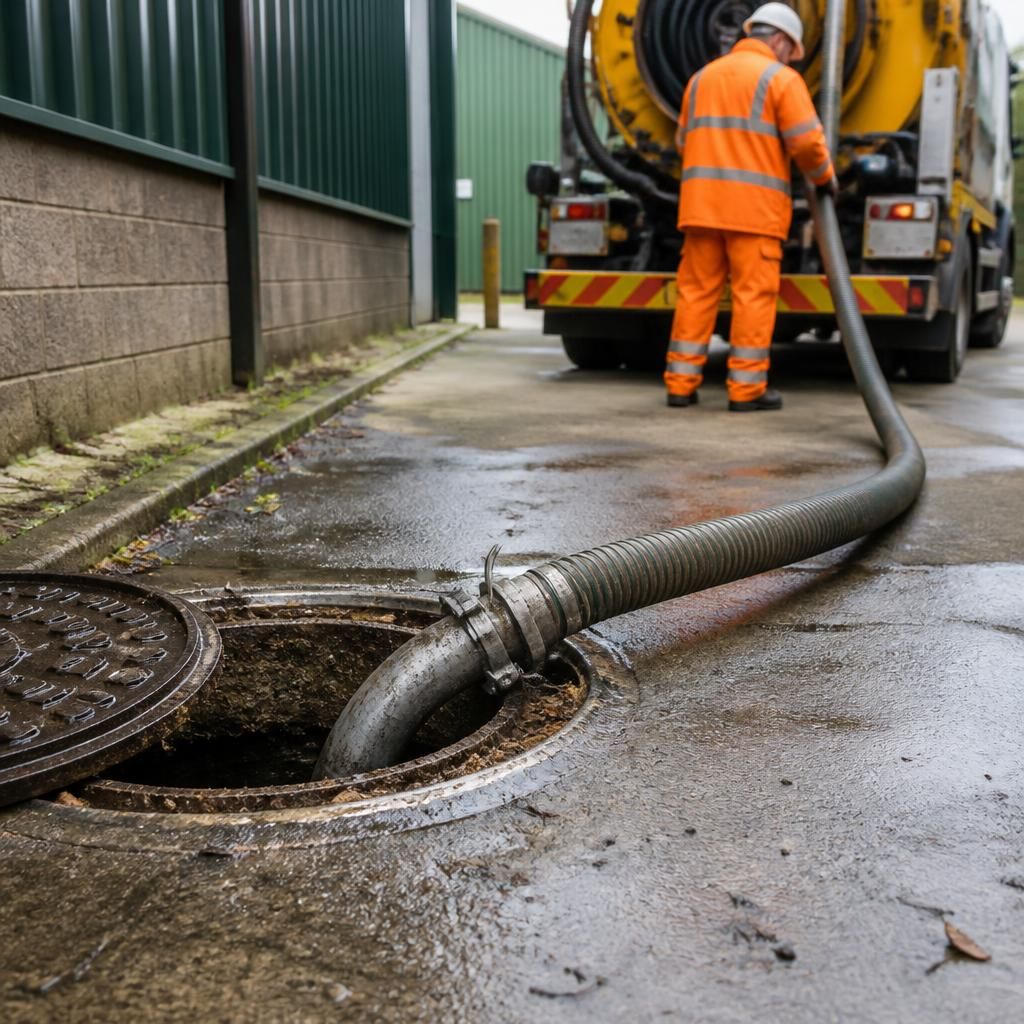
Before the visit, agree exactly what the desludging work includes. A business should confirm whether the contractor is expected to remove settled sludge only, inspect inlet and outlet baffles, check filters or identify defects that may require separate remedial work. Desludging does not automatically repair damaged components, clear every downstream blockage or resolve excessive inflow.
Ask how any findings will be reported and ensure the responsible site representative is available to review them. Separating routine sludge removal from inspection and repair helps the business approve necessary follow-up work based on evidence, rather than treating the tank as fully serviced simply because material has been removed.
Discuss your septic tank desludging requirements
Contact Blue Fish to discuss your septic tank desludging requirements and establish the information, access arrangements and work scope needed for a properly planned visit.