
Which signs indicate that a hot water tank needs replacing?
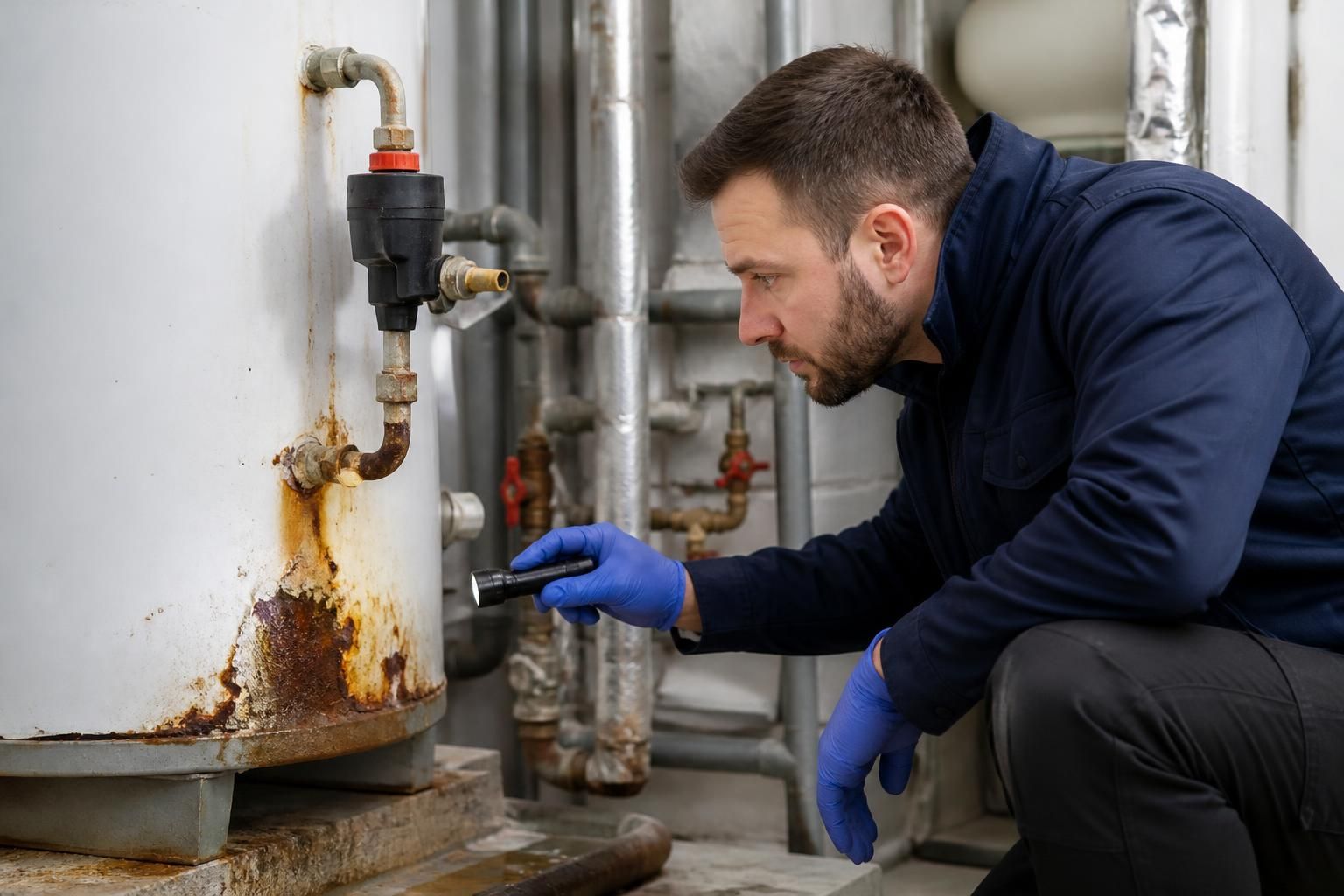
The less obvious signs that a hot water tank needs replacing include structural distortion, repeated pressure-control problems, persistent scale-related noise, deteriorated insulation, an exhausted internal protection system, or an age and condition that make further repairs impractical. These indicators do not prove that replacement is necessary on their own, so the tank, associated pipework and safety controls should be assessed together by a suitably qualified person.
Visible distortion or structural damage
A tank that is bulging, misshapen, cracked around a connection or showing signs of movement may have suffered internal or external deterioration. Deformation can affect the vessel’s ability to withstand operating pressure and should not be treated as a cosmetic defect. If the tank is unvented, any concern about its structural condition requires particular caution because it operates under pressure. The system should be made safe and examined by a competent engineer rather than being opened or altered by an unqualified person.
Repeated discharge from safety components
Water regularly discharging through a temperature and pressure relief valve, expansion relief valve or tundish can indicate a problem with expansion control, operating temperature or another component connected to the cylinder. Replacing the tank may not always be the answer; the expansion vessel, pressure-reducing valve, thermostat and associated controls may be at fault. However, repeated discharge can damage components and signal that the installation is no longer operating correctly. The cause should be identified before deciding whether repair or replacement is appropriate.
Persistent banging, rumbling or cracking noises
Unusual sounds during heating commonly result from scale or sediment on the heating surface. Deposits can reduce heat transfer, increase localised overheating and place additional strain on the system. Occasional noise may be resolved by cleaning or replacing a component, but persistent noise in an older tank can indicate internal deterioration or a level of scaling that makes remedial work uneconomical. An inspection should establish whether the deposit can be removed safely and whether the cylinder has sufficient remaining service life.
Damaged or ineffective insulation
Perished insulation, exposed sections of the vessel or a poorly fitting jacket allow stored water to lose heat more quickly. This can result in longer heating periods and higher energy use, although those symptoms can also arise from control or heating-equipment faults. Replacing insulation may be suitable where the tank itself remains sound. If the insulation is integrated, contaminated or impossible to restore properly, replacement of the complete unit may provide the more practical solution.
Evidence that internal protection has been exhausted
Some cylinders rely on an internal lining and, where specified, a sacrificial anode to protect the vessel from corrosion. An anode that has been substantially consumed may leave the cylinder less protected, while damage to the lining can allow deterioration to progress beneath the surface. A maintenance inspection may identify whether these parts can be renewed. If the vessel has already deteriorated internally, fitting a new protective component will not reverse the damage and a replacement tank may be necessary.
Age, obsolete components or a poor repair history
Age alone is not a sufficient reason to replace a tank, because condition, construction, water quality and maintenance history all affect its remaining serviceability. Replacement becomes more reasonable where the cylinder is old, compatible parts are difficult to obtain, safety controls are obsolete, or several repairs have already been carried out. A written record of previous defects and interventions helps compare the likely cost and reliability of another repair with installing a new vessel.
Insufficient capacity for the current building use
A tank may be physically sound but no longer suitable if occupancy, production, washroom provision or hot-water demand has changed. Frequent depletion of stored hot water, unacceptable recovery periods or the need to restrict normal use can indicate that the original capacity or recovery arrangement is no longer appropriate. Before selecting a larger replacement, demand should be reviewed alongside storage temperature, heating capacity, usage patterns and available space. Increasing capacity without reviewing these factors can leave the underlying performance problem unresolved.
Problems identified during inspection or monitoring
Inspection records may reveal declining performance that is not obvious during day-to-day use. Examples include failed control checks, inconsistent temperature readings, inaccessible components, evidence that the vessel cannot be maintained as designed, or a condition that prevents reliable cleaning and servicing. In a commercial or industrial setting, these findings should be considered alongside the site’s water safety arrangements. A tank that cannot be controlled, maintained or monitored reliably may need replacement even when it has not yet developed an obvious physical failure.
How to decide between repair and replacement
A proper decision should consider:
- the tank’s construction, age, condition and maintenance history;
- the source of the defect and whether it is confined to a replaceable component;
- the condition of valves, controls, expansion equipment, heating elements and connected pipework;
- the cylinder’s capacity and suitability for present and foreseeable demand;
- the availability of compatible parts and the practicality of future servicing;
- access, installation constraints and the consequences of taking the system out of service; and
- the effect of the proposed work on water safety controls and operating records.
A tank should not be replaced solely because one component has failed, but delaying replacement after structural damage, uncontrolled pressure behaviour or serious internal deterioration can increase the risk of disruption and further damage. A competent assessment should document the defect, explain whether repair remains viable and specify the checks required before a replacement is put into service.
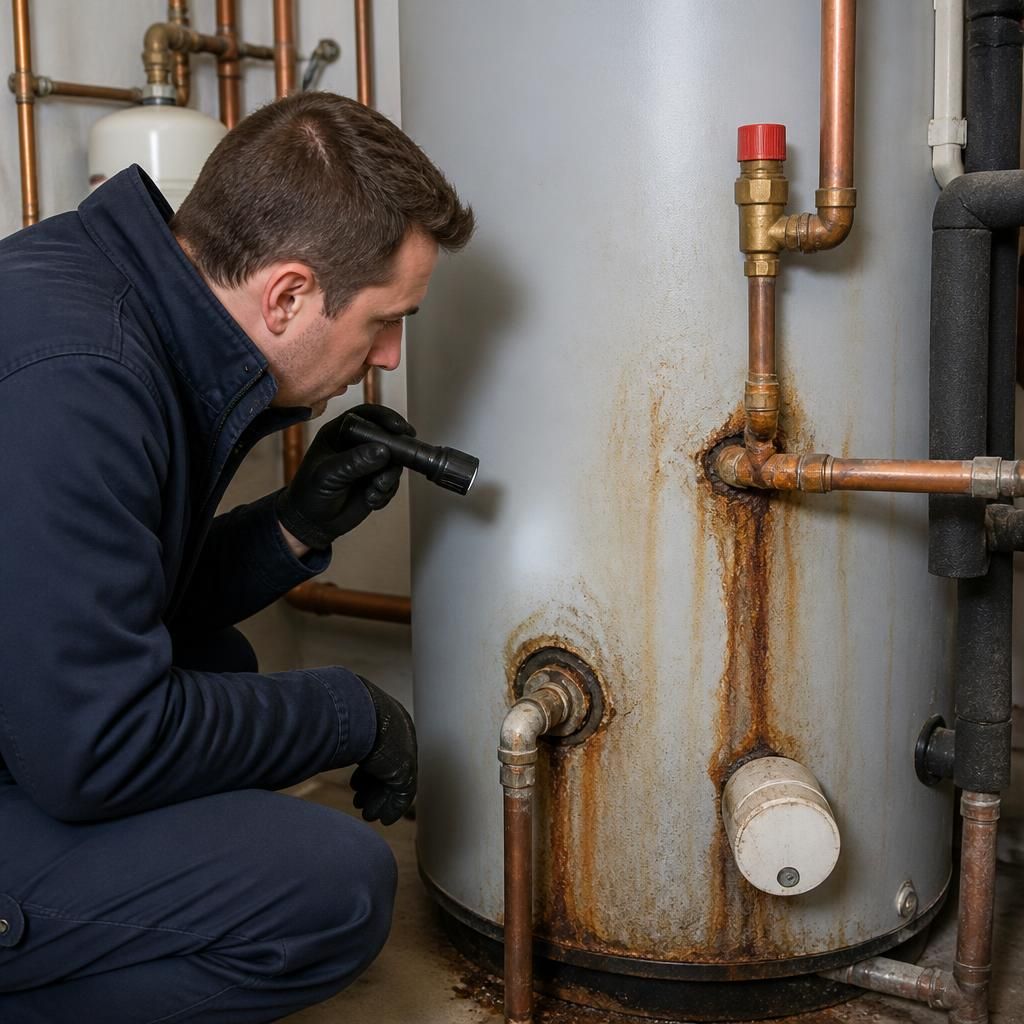
Water around a hot water tank does not always mean that the cylinder itself is leaking. Moisture may come from a joint, valve, tundish, drain connection or condensation on cold pipework, while a leak from the vessel may leave staining, damp insulation or corrosion around a seam and gradually worsen during heating.
The source should be traced before replacement is authorised. Drying the area, observing when moisture returns and checking connected components can help distinguish a repairable fitting fault from deterioration of the tank. If water is reaching electrical equipment or the leak is substantial, the system should be made safe and examined by a qualified engineer.
Get expert advice on whether your hot water tank needs replacing
Arrange a professional assessment to establish whether repair remains suitable or whether replacing the hot water tank is the safer, more practical option. Blue Fish Water Management Ltd can help review the tank, associated controls and water safety implications before work proceeds.