
What happens to Legionella risk during hot water tank replacement?
Legionella risk can temporarily increase during hot water tank replacement because draining, pipework alterations and periods of stagnation may disrupt temperature control and introduce contamination. The risk should be managed through planned isolation, hygienic installation, appropriate cleaning and disinfection, and thorough checks before the system is returned to normal use.
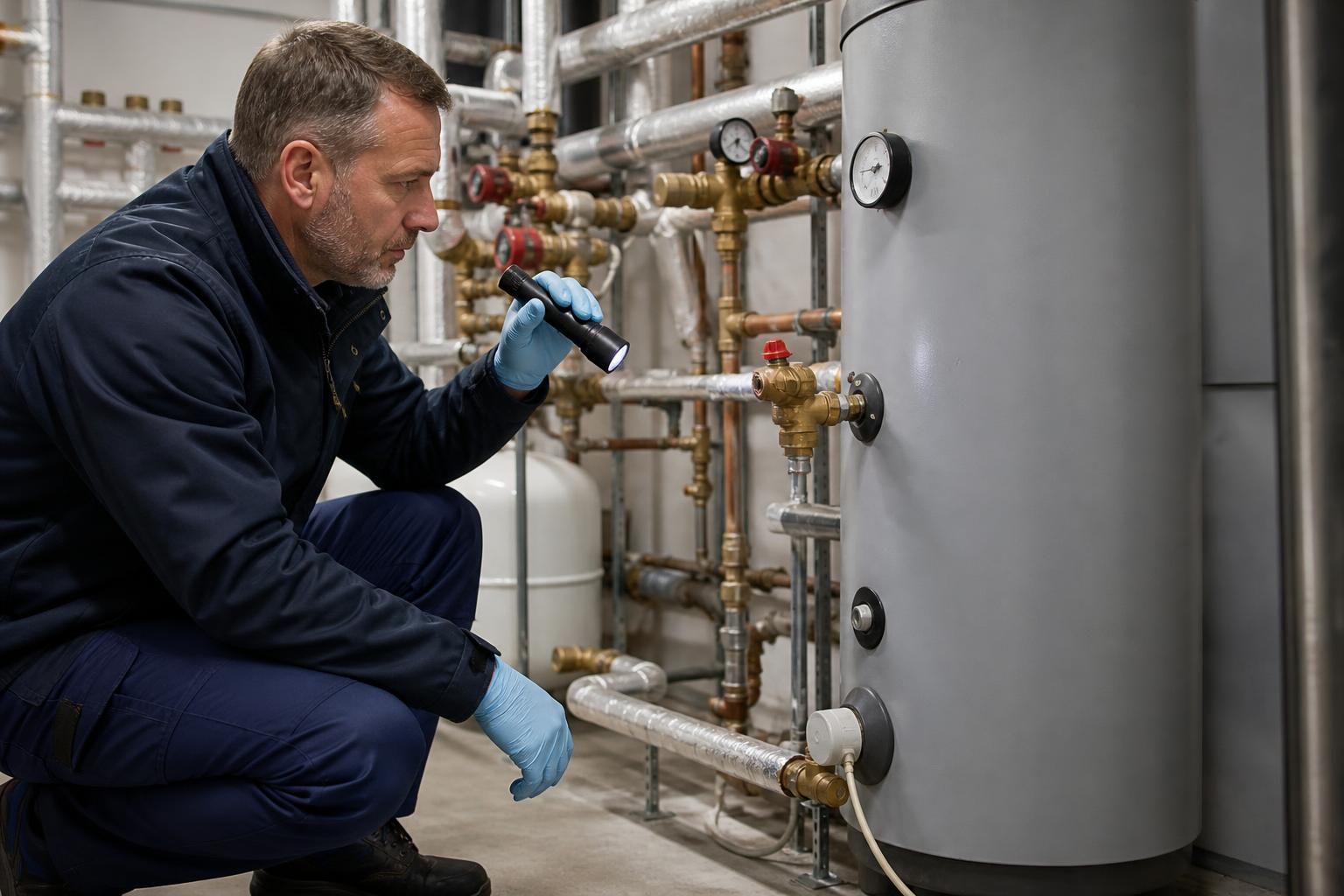
During hot water tank replacement, Legionella risk changes from an established operational risk to a temporary installation and recommissioning risk. The new tank itself does not make the system safe automatically: the outcome depends on the system design, the condition of connected components, the quality of the installation and the checks completed before normal use resumes.
The work should be managed as a controlled change to the water system. Before removal begins, the responsible person should confirm which outlets, services and users will be affected, identify any healthcare or other vulnerable occupants, and review the existing risk assessment, schematic and maintenance records. The method statement should define isolation points, responsibilities, hygiene controls, temporary water arrangements and the conditions that must be met before the system is handed back.
Risk can arise at several stages:
- Before the work: existing temperatures, circulation, outlet usage and known defects provide a useful baseline. Any poorly used outlets, scale, corrosion or sections with limited flow should be identified rather than assumed to have been resolved by replacing the tank.
- During installation: open components and exposed connections must be protected from dirt, dust and contact. Materials should be suitable for potable water use, stored hygienically and installed in accordance with the design. Unnecessary alterations to branches, valves and secondary return arrangements should be avoided because they can create new areas of low flow.
- During recommissioning: the system needs to be brought back into a stable operating condition. This includes confirming that the tank, primary heating arrangement, controls, circulation and temperature settings operate as intended, rather than relying solely on the fact that the tank is new.
- After handover: early monitoring is important because faults may only become apparent once the building returns to normal occupancy and water demand. Unusual temperatures, slow recovery, poor circulation or changes in outlet use should trigger investigation.
Temperature control remains a central safeguard. The hot water storage temperature, distribution temperatures and recovery performance should be checked against the system design and the organisation's Legionella control requirements. Checks should cover representative outlets and any secondary return or circulation points, not just the tank thermometer. A reading that appears satisfactory at the vessel can conceal inadequate temperatures elsewhere in the distribution system.
The replacement may also expose related defects. Valves can be left in the wrong position, sensors can be poorly located, controls can be incorrectly commissioned, and insulation can be missing or disturbed. Connections that are no longer needed should be removed or properly addressed; unused branches can provide conditions in which water remains undisturbed. The responsible person should ensure that these issues are recorded and resolved rather than treating them as separate from the tank replacement.
Cleaning and disinfection requirements depend on the work undertaken, the system's condition and the findings of the risk assessment. They should be specified by a competent person and carried out using a documented procedure appropriate to the installation. Following treatment, the system should be flushed and checked in line with the agreed process before it is returned to users. Chemical residues, unsuitable water quality or incomplete flushing can create separate safety and operational problems.
Where the work affects outlets used for drinking, washing, bathing or other aerosol-producing activities, a controlled handover is particularly important. Outlets should not be returned to service until the relevant checks have been completed. Any temporary restrictions should be clearly communicated to building users and duty holders, with alternative arrangements managed safely.
Post-work verification should normally include:
- confirmation that the installed tank and associated equipment match the approved design;
- inspection of insulation, valves, sensors, controls and circulation components;
- temperature checks at storage, return and representative outlets;
- confirmation that flushing, cleaning or disinfection has been completed where required;
- water sampling where indicated by the risk assessment, the system history or the nature of the work; and
- recording of defects, corrective actions, test results and the person who authorised the return to service.
Legionella sampling should support, not replace, physical control measures. A satisfactory sample does not compensate for poor temperature management, inadequate circulation or an unresolved design defect. When samples are required, they should be taken from a planned set of points and interpreted alongside temperature records, maintenance information and the building's usage pattern. Testing through a UKAS-accredited service can provide appropriately controlled analytical evidence for the compliance record.
The risk assessment and written control scheme should be reviewed after the replacement if the work changes the tank capacity, layout, control strategy, operating temperatures, outlet arrangements or maintenance requirements. The schematic, asset register, inspection schedule and emergency procedures may all need updating. Staff or contractors responsible for monitoring the system should also understand what has changed and which readings or faults must be escalated.
In practice, a tank replacement is complete from a Legionella-control perspective only when the altered system has been verified in operation and the evidence has been documented. A competent water hygiene specialist can help assess the changed risk, define proportionate sampling and disinfection requirements, and identify remedial work where the replacement reveals wider system weaknesses.
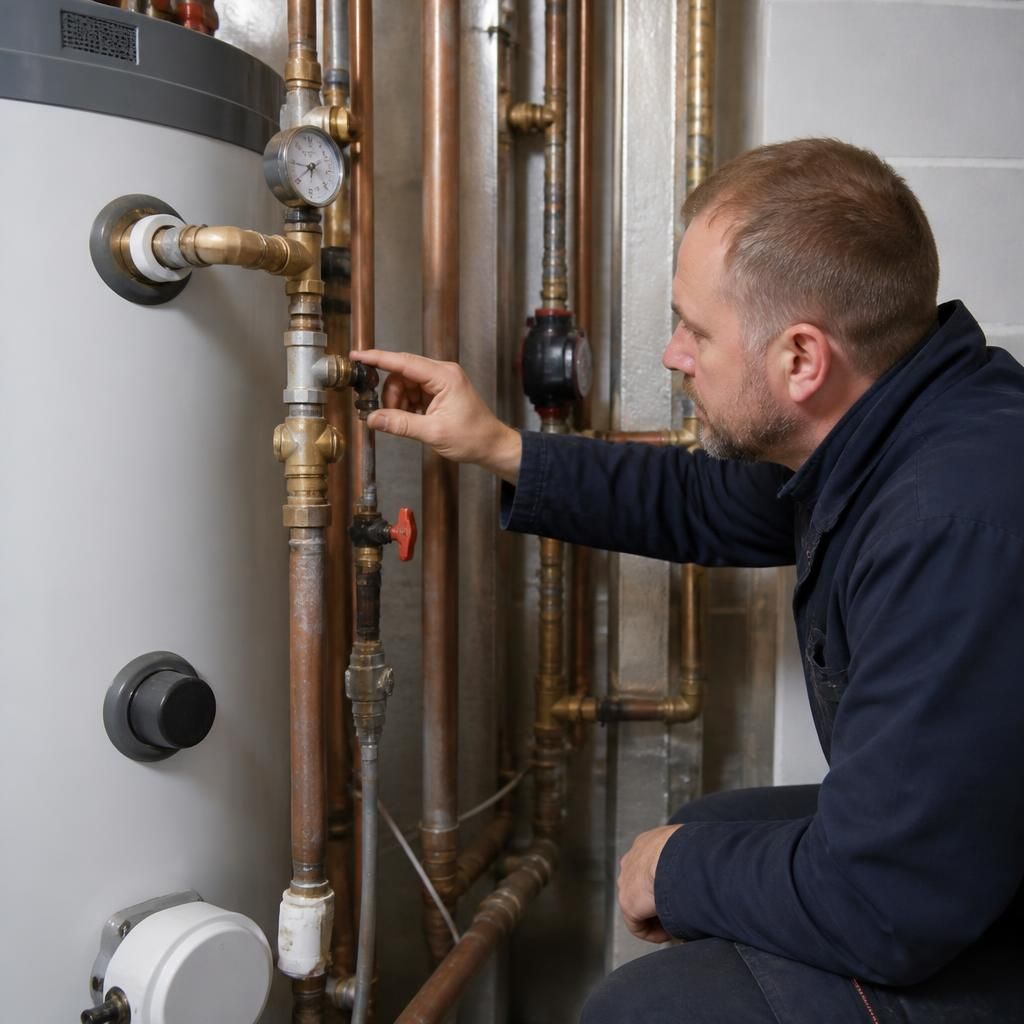
A replacement tank can alter Legionella risk if its storage capacity does not suit the building’s actual hot water demand. A tank that is larger than necessary may hold water for longer before use, while an undersized tank may struggle to recover temperature during periods of demand. Either condition can undermine the intended control strategy, even when the vessel and heating equipment are functioning correctly.
The design review should therefore consider expected occupancy, peak demand, outlet usage and the performance of the primary heating system. After installation, operating records should show that stored water is being heated and used as intended, rather than remaining stagnant for extended periods. Any change in demand or building use should be considered alongside the replacement, because the correct tank size is part of Legionella control rather than merely a mechanical specification.
Review Legionella risk after hot water tank replacement
Discuss your proposed hot water tank replacement with Blue Fish Water Management Ltd to determine the appropriate Legionella control checks, documentation and handover requirements for the altered system.