
What commissioning checks should follow a hot water tank replacement?
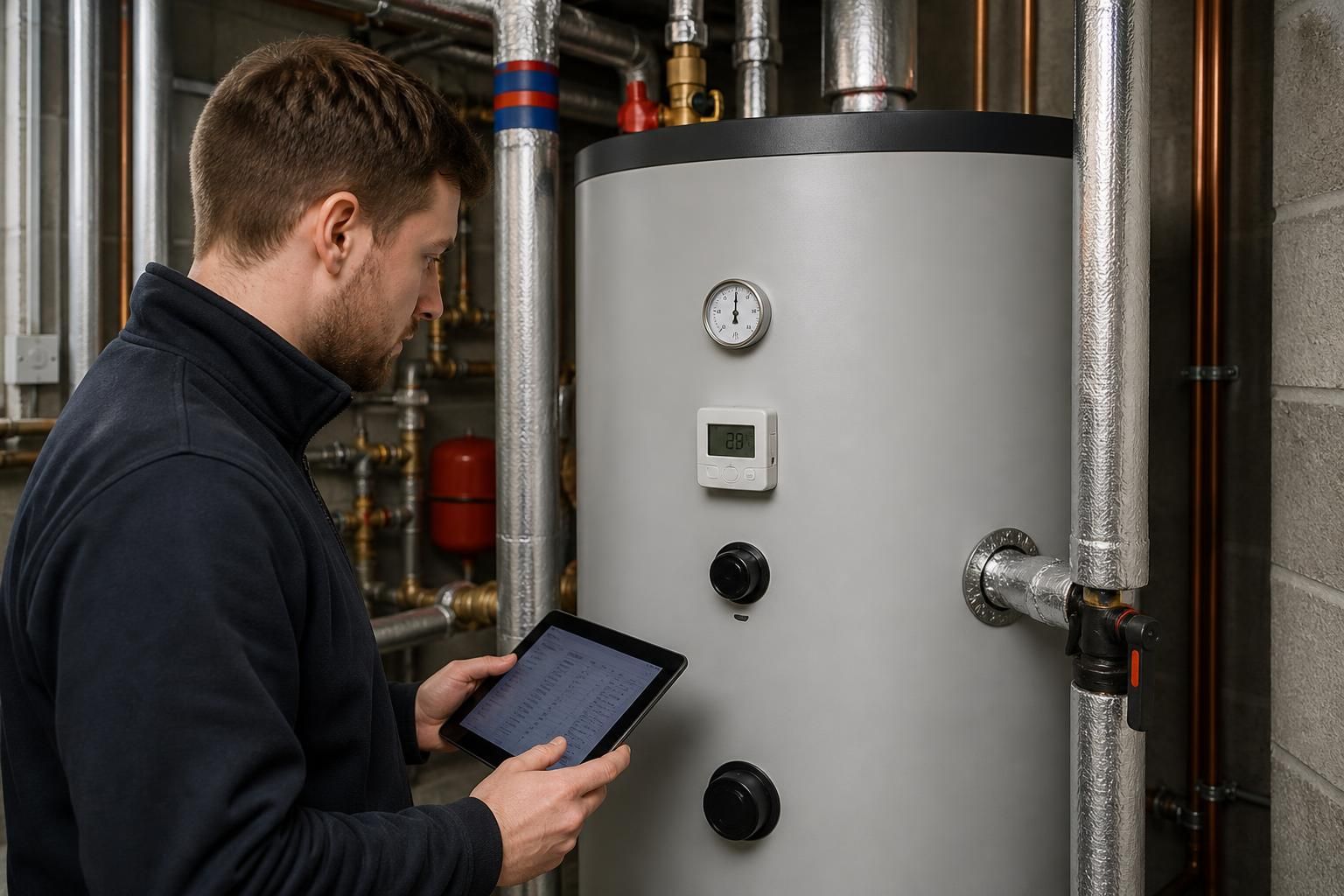
Commissioning checks after a hot water tank replacement should demonstrate that the completed installation performs as designed, can be managed hygienically and has been handed back with clear evidence. The process should cover the tank, associated distribution system, controls, access arrangements and management documentation rather than treating the vessel as an isolated component.
Check the completed installation against the design
Before the system is returned to normal use, compare the installed arrangement with the approved design, schematic and specification. Confirm that the replacement tank has the intended capacity and configuration, that valves and connections are accessible, and that insulation has been reinstated properly. Any alteration to pipework, storage volume, secondary circulation or outlet arrangements should be recorded because it may affect the system's risk profile.
Check that redundant sections of pipework have not been left connected or capped in a way that creates a stagnant branch. Where the work has changed the route, length or use of pipework, the updated schematic should show the change accurately. This helps future maintenance staff identify all storage vessels, return routes, valves, sampling points and outlets.
Verify controls and operating behaviour
The commissioning engineer should test the control strategy under realistic operating conditions, including recovery after demand and periods when demand is low. This can reveal faults that a simple start-up check may miss, such as a sensor positioned incorrectly, a control sequence that does not call for heat, or circulation that stops before all relevant parts of the system have been adequately served.
- Confirm that thermostats, sensors, programmers, valves and associated interlocks respond to their intended commands.
- Check that temperature readings are taken at representative points and compare sensibly with the control display.
- Confirm that alarms or fault indications are visible to the person responsible for managing the system.
- Check that settings cannot be changed casually where unauthorised adjustment could undermine water safety.
- Verify that pumps and control components operate without abnormal noise, vibration or repeated cycling.
Any discrepancy between displayed and measured conditions should be investigated rather than accepted as a minor commissioning variation. A sensor reading can appear satisfactory while the temperature at a remote part of the distribution system remains unsuitable.
Assess outlets and points of use
Commissioning should include a representative review of outlets affected by the replacement. Confirm that hot and cold supplies are correctly identified, that blending valves function as intended where fitted, and that outlets are not subject to unexpected temperature instability or cross-flow. The check should also consider low-use outlets, shower fittings, flexible hoses and other components that may retain water or create additional hygiene controls.
Where outlets have been disconnected during the work, inspect them for correct reassembly and clean operation. Strainers, aerators and showerheads may need attention if debris has entered the system during installation. The responsible person should know which outlets require routine flushing, cleaning, temperature checks or other control measures after handover.
Review hygiene evidence and release the system appropriately
The decision to return the installation to service should be based on the completed commissioning evidence, not solely on the fact that the tank has been filled and heated. Where the work specification or risk assessment requires post-work sampling, use a competent laboratory and interpret the results in context with the system history and any remedial action. A result should not be considered in isolation from defects, unusual temperatures, poor circulation or incomplete cleaning.
If commissioning identifies a problem, record the defect, its location, the interim control and the action needed to close it. Restrictions on use may be appropriate while a significant defect is investigated. Recheck the affected part after remedial work rather than closing the issue on the basis of an assumption that the original installation is now satisfactory.
Complete the handover records
The handover pack should contain enough information for ongoing water hygiene management. Depending on the installation, this may include:
- the tank's technical details, location and intended operating arrangement;
- updated schematics and valve identification;
- control settings and commissioning measurements;
- records of checks, cleaning, disinfection, sampling and outstanding actions;
- manufacturer instructions and maintenance requirements supplied with the equipment;
- details of changes that may affect the existing legionella control scheme; and
- confirmation of who is responsible for monitoring and maintaining the system.
The water safety management plan should then reflect the commissioned arrangement. A replacement may require changes to monitoring locations, inspection frequencies, written procedures or training, particularly where storage capacity, circulation or outlet use has changed. The commissioning record should therefore be retained with the site's wider compliance documentation and made available to the person responsible for water safety.
For complex commercial or industrial systems, commissioning is best treated as a documented verification stage involving the installer, facilities team and responsible person. This provides a clear route from completed construction work to controlled operation and makes it easier to demonstrate that the replacement has been assessed, tested and handed over responsibly.
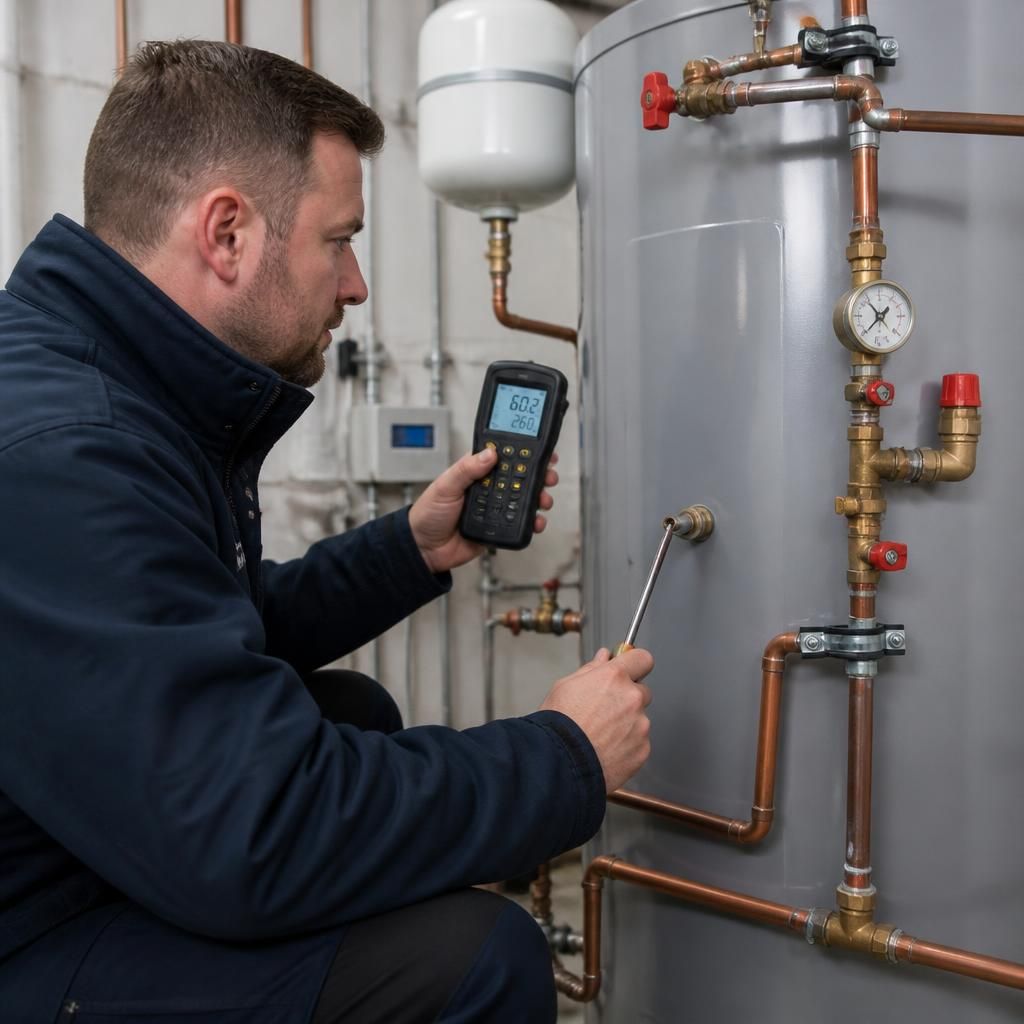
A replacement hot water tank should also undergo a dedicated safety check before commissioning is signed off. Inspect the temperature and pressure relief arrangements, expansion vessel, discharge pipework, isolation valves and drain points to confirm that each component is correctly installed, accessible and free from obstruction. Check the tank and connections under operating conditions for leaks, movement, unusual noise or pressure instability.
Where the system includes electrical equipment, confirm that relevant electrical connections, protective devices and bonding arrangements have been completed and verified by a suitably competent person. Any failed safety device, inaccessible valve or defect in the discharge route should be corrected before the tank is placed into normal service, with the findings recorded alongside the wider commissioning documentation.
Discuss commissioning checks after a hot water tank replacement
If you need to confirm that commissioning evidence is complete after a hot water tank replacement, discuss the installation with Blue Fish Water Management Ltd. Their team can advise on water hygiene checks, documentation and any updates needed to support ongoing legionella control.