
Does replacing a hot water tank require a Legionella risk assessment update?
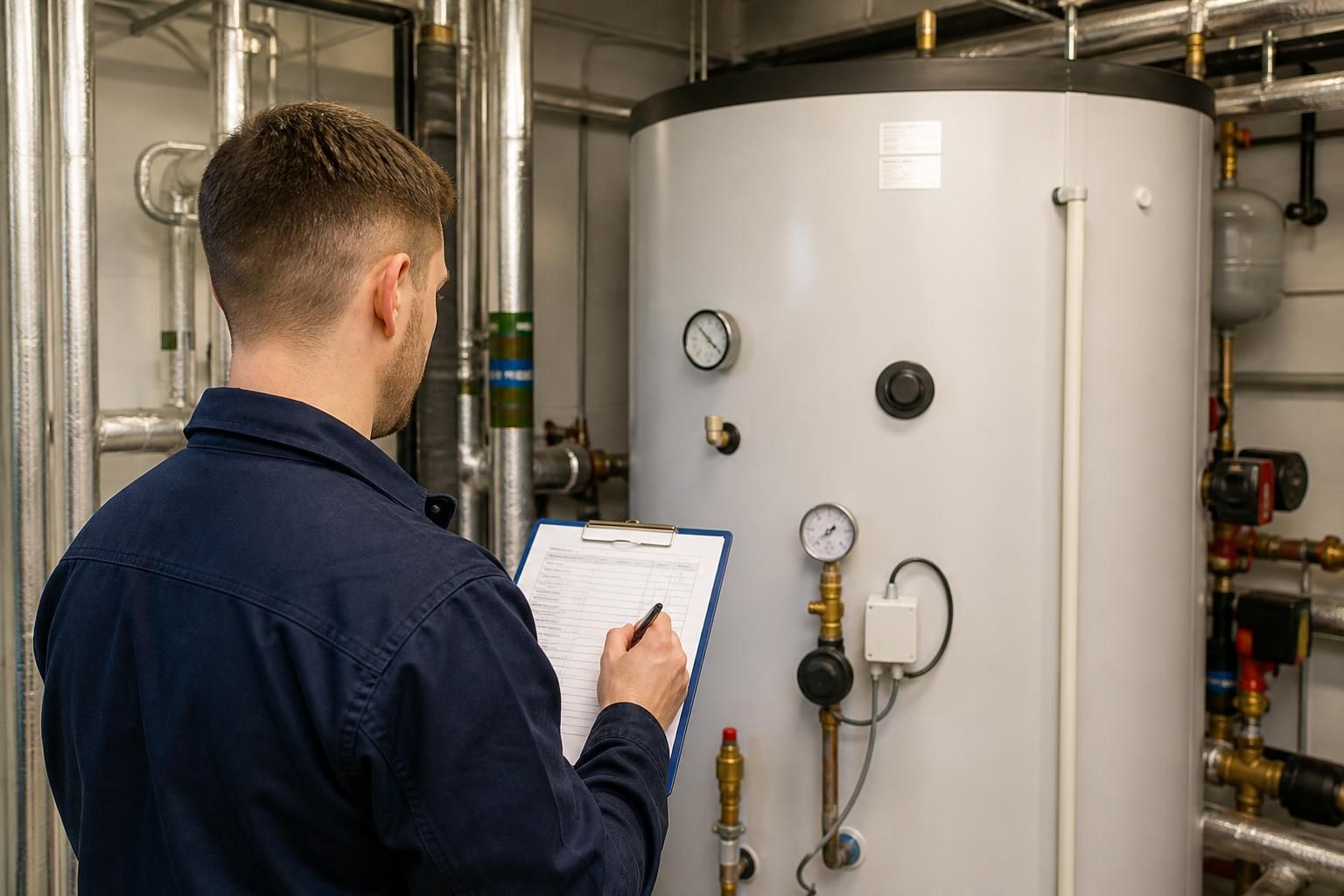
A hot water tank replacement requires a Legionella risk assessment review whenever the work could alter how water is stored, heated, distributed or used. The review should confirm that the existing control measures remain suitable, identify any new hazards and record the completed changes. It does not necessarily mean commissioning an entirely new assessment from the beginning.
The responsible person should establish what has changed before the replacement is treated as complete. This includes comparing the old and new tank arrangements, associated controls and connected pipework against the current assessment and schematic. A replacement that appears similar externally may still have different operating characteristics, connections or usable capacity that affect the risk profile.
- Storage and temperature: confirm the tank capacity, operating temperature, recovery behaviour and temperature stability. The assessment should consider whether water can remain within a temperature range that supports Legionella growth, including during periods of low demand.
- Distribution: check that primary and secondary circulation arrangements, valves, pumps and connected pipework operate as intended. Any altered branches, redundant connections or sections with little flow should be considered as potential stagnation points.
- Outlets and usage: identify whether outlets have been added, removed, relocated or changed in type. Low-use showers, taps and other outlets may require specific flushing or monitoring arrangements.
- Controls: verify that thermostats, sensors, time controls, alarms and other protective devices are correctly positioned, set and working. The assessment should explain how these controls are checked and what action follows if they fail.
- Maintenance access: consider whether the new installation can be inspected, cleaned, drained and serviced safely. Restricted access can affect the practicality of the control scheme even where the water system's basic layout is unchanged.
The review should also cover the work itself. During isolation, draining, dismantling and reconnection, normal temperatures and circulation may be interrupted. Temporary pipework, capped branches, open connections and contamination introduced during installation should be recorded and managed. The responsible person should know which parts of the system are unavailable, whether outlets need to be taken out of service and what precautions apply before normal use resumes.
After installation, the assessment should be checked against commissioning evidence rather than relying solely on the contractor's completion statement. Relevant evidence may include:
- the final schematic and asset register;
- records confirming the tank and associated controls have been installed as specified;
- temperature measurements from the tank and representative outlets or return points, where applicable;
- checks that circulation, valves, pumps, alarms and protective devices function correctly;
- evidence that outlets and pipework have been flushed or otherwise prepared in accordance with the system's control procedures;
- details of defects, outstanding remedial work and the person responsible for closing each action.
Water sampling is not automatically a substitute for reviewing the risk assessment, and a negative result does not demonstrate that the system will remain controlled. Sampling should be considered within the wider risk-based monitoring programme, particularly where there is uncertainty about contamination, a history of problems or a significant change in system operation. Decisions about sampling, cleaning and disinfection should be made by a suitably competent person who understands the installation.
The updated records should make clear the date of the replacement, the equipment affected, the findings of the review, any revised control measures and who is responsible for ongoing monitoring. Staff and contractors whose duties have changed should also receive the information or training needed to carry out flushing, temperature checks, inspection and escalation procedures correctly.
Blue Fish Water Management can support this process through legionella risk assessment reviews, water hygiene monitoring, compliance audits, UKAS-accredited water testing where appropriate, and advice on remedial actions. The right scope depends on how extensively the system has changed and on the findings from commissioning and operational checks.
Need help reviewing your Legionella risk assessment?
Ask Blue Fish Water Management to review your Legionella risk assessment against the completed tank replacement and commissioning records. This can help identify any necessary amendments to the assessment, control measures or ongoing monitoring arrangements.