
When should diesel tank cleaning be carried out?
Diesel tank cleaning should be carried out when inspection, fuel sampling or system performance indicates contamination such as water, sludge or microbial growth, and as part of planned maintenance where deposits may have accumulated. It is also prudent before returning a tank to service after prolonged storage, alteration or suspected fuel degradation, with the timing determined by the tank’s condition and operational risk.
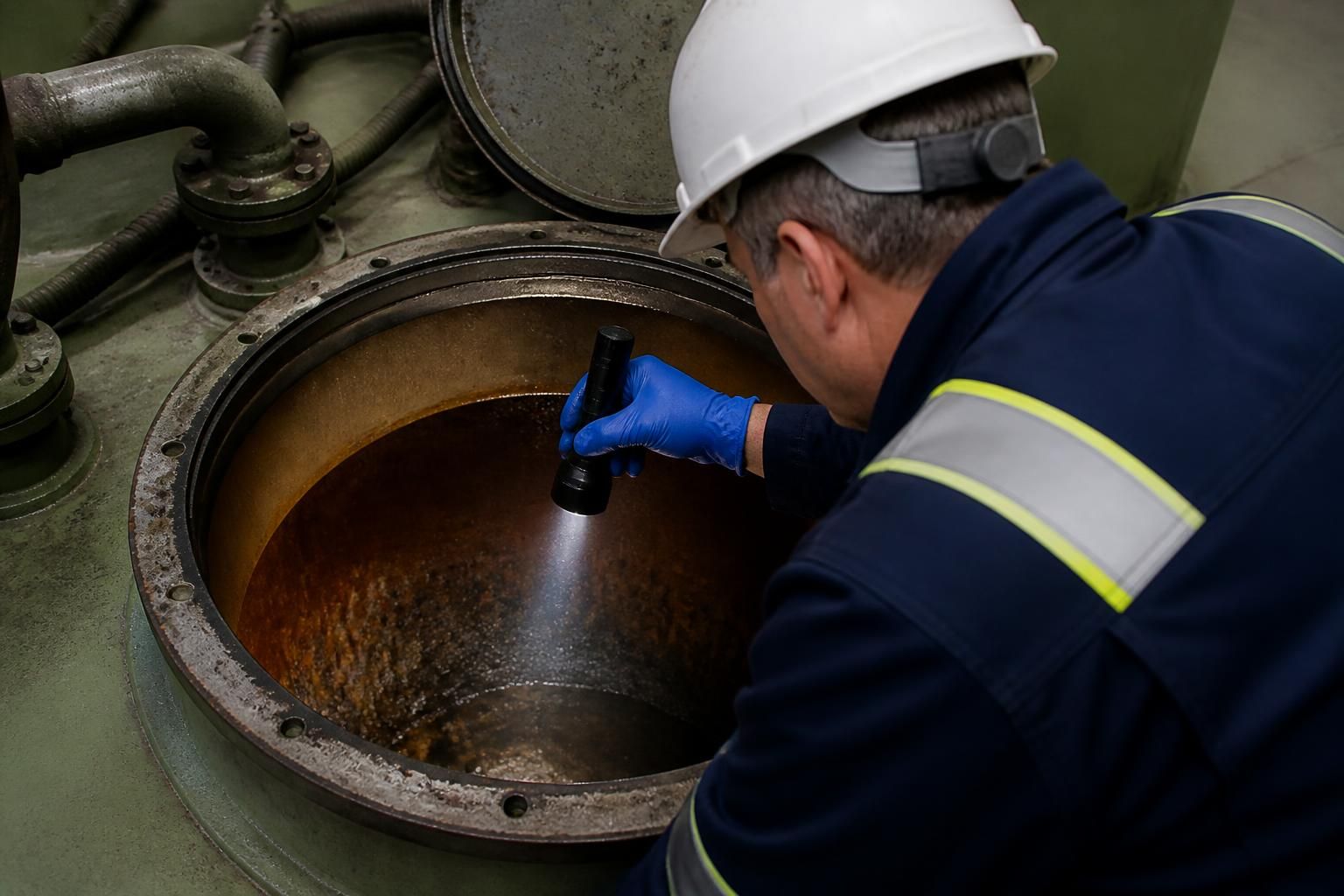
Diesel tank cleaning should be scheduled according to the tank’s condition, inspection history, fuel-storage risk and the importance of the equipment it supplies, rather than by applying one universal interval. A tank supporting critical plant may require closer monitoring and earlier intervention than a low-use tank, while a well-managed installation may not need cleaning simply because a calendar date has been reached.
A planned cleaning review should form part of the site’s fuel-management arrangements. The review should consider:
- the tank’s age, construction and internal condition;
- how often it is filled, topped up and drawn down;
- the length of time fuel is normally stored;
- previous inspection and cleaning findings;
- the sensitivity and importance of connected engines, generators or burners;
- the tank’s location and exposure to conditions that could affect fuel quality; and
- whether changes to the installation have altered its operating risk.
Where a tank is used infrequently, longer periods can pass between fuel movements and routine checks become particularly important. Low turnover does not automatically mean the tank needs cleaning, but it can allow settled material and water to remain undisturbed. Conversely, frequent fuel deliveries and high usage can introduce more opportunities for debris or water to enter the system. The appropriate cleaning interval should therefore be based on evidence from inspection, sampling and operating records.
Cleaning should also be considered after an event that could have affected the tank or its contents. Examples include damage to the tank, a faulty filling connection, flooding around the installation, an incorrect fuel delivery or work that has disturbed internal deposits. In these circumstances, the decision should follow an assessment of what entered the system and whether connected equipment may already have been exposed.
The timing of planned work matters operationally. Cleaning is normally arranged when the tank can be safely isolated, the available fuel can be managed appropriately and the connected equipment can remain protected. For installations supporting standby or emergency systems, the responsible person should confirm that an alternative fuel supply or other contingency is available before taking the tank out of service. This prevents a maintenance activity from creating a separate operational risk.
A competent assessment should establish whether cleaning is required throughout the tank or only in particular areas, and whether associated components need attention. The tank, filling point, vents, suction arrangements, filters and fuel lines can have different conditions. Cleaning the tank without checking these connected parts may leave the underlying problem unresolved or allow material to reach the equipment after the tank is returned to service.
After cleaning, the work should be recorded with the inspection findings, methods used, waste arrangements, any defects identified and the checks completed before recommissioning. These records help establish a defensible maintenance history and provide a sound basis for deciding when the next review or cleaning operation is needed. If records are incomplete, the tank’s condition is uncertain or the fuel system is safety-critical, a professional assessment is preferable to relying on an assumed cleaning interval.
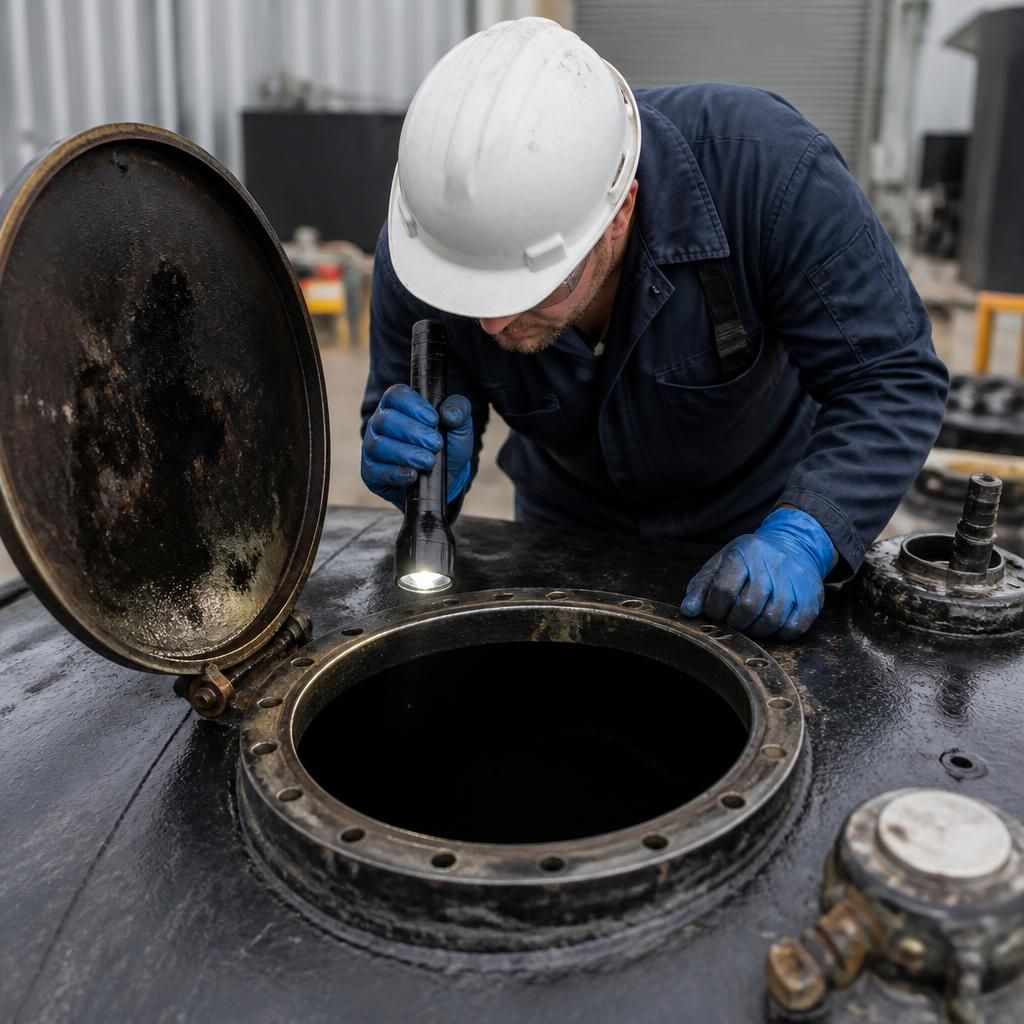
Diesel tank cleaning is most effective when it is planned before contamination begins to affect fuel delivery. If a scheduled inspection, fuel sample or maintenance review identifies a developing issue, arrange cleaning at that stage rather than waiting for blocked filters, poor engine performance or an unplanned shutdown. Early intervention can make it easier to determine whether the problem is confined to the tank or has also reached the wider fuel system.
The cleaning decision should be documented separately from the inspection decision. An inspection may confirm that the tank remains suitable for service, whereas evidence of settled deposits, water or biological contamination may justify cleaning. Keeping these findings together in the tank’s maintenance record supports consistent decisions when the system is reviewed again.
Arrange a Diesel Tank Cleaning Assessment
If you need to establish whether your diesel tank requires cleaning, contact Blue Fish Water Management Ltd to arrange an assessment of the tank and associated fuel system.