
What should be checked before returning a diesel tank to service?
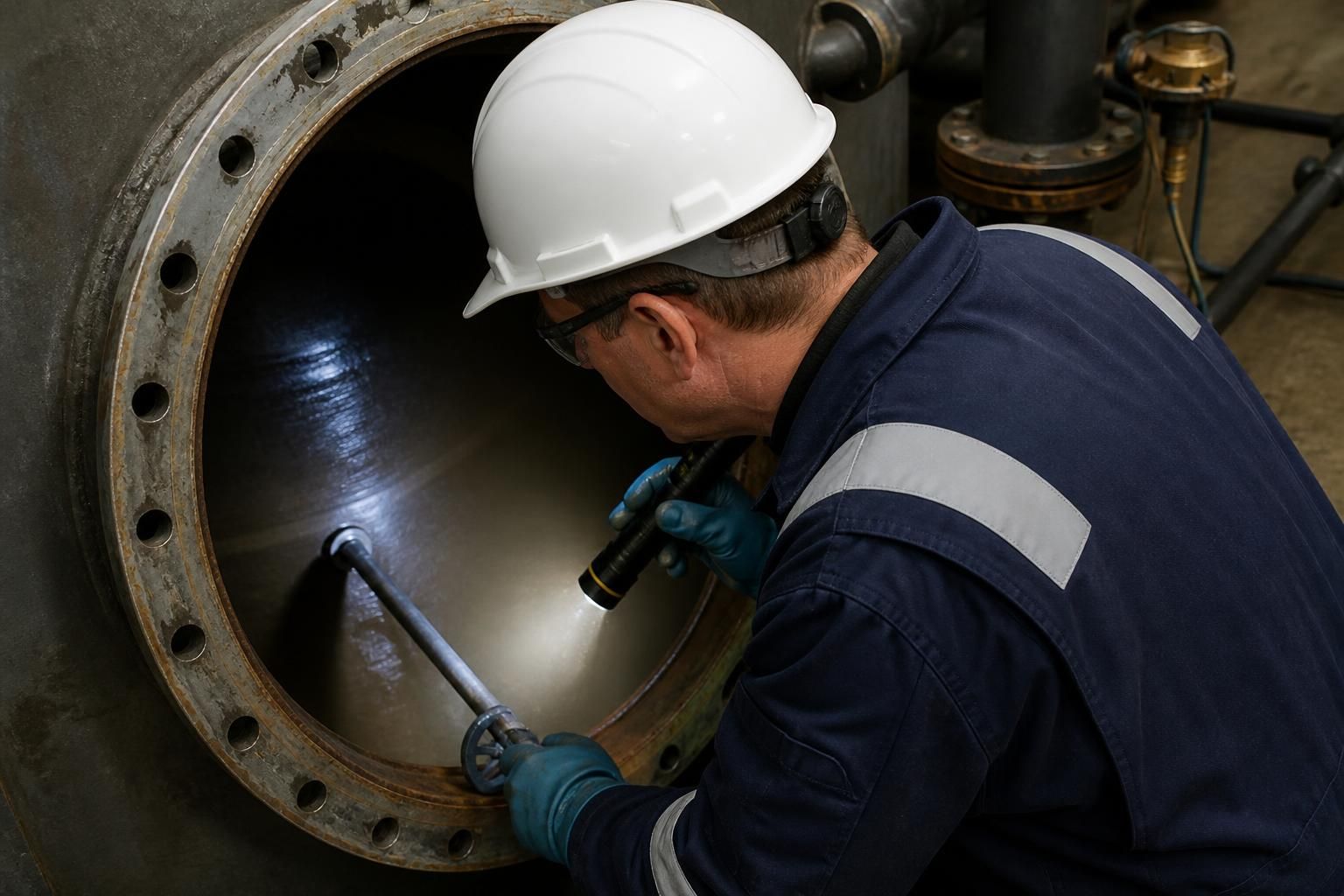
A diesel tank should only be returned to service after a documented recommissioning review confirms that the tank, transfer route, controls and surrounding installation are ready for operation. The review should cover the work completed, the intended fuel and operating conditions, environmental safeguards, control systems and the records needed to demonstrate that the installation can be used safely.
Before introducing fuel or restarting transfers, check the following:
- Completion of the work: Confirm that cleaning equipment, hoses, temporary blanks, absorbent materials and tools have been removed. Access covers, inspection plates and drain points should be correctly refitted, with suitable gaskets and fasteners in place.
- Valve and pipework configuration: Verify that valves are in their correct operating positions and that the intended flow path has been established. Check that unused connections are capped or blanked, filters and strainers are correctly installed, and no temporary bypass remains open.
- Fuel suitability: Confirm that the fuel placed back into the tank is the correct grade for the tank, pipework, pumps, filters and connected equipment. Where fuel has been retained during the work, establish that it is suitable for reuse rather than assuming that cleaning the tank has made it fit for purpose.
- Instrumentation and alarms: Function-test level indication, high-level alarms, overfill protection, leak-detection equipment and any automatic shut-off arrangements. Check calibration where applicable and make sure alarm signals reach the correct control point.
- Electrical safety: Confirm that electrical equipment removed or disconnected during the work has been reinstated correctly. Earthing and bonding arrangements should be checked by a competent person, particularly where fuel transfer can generate static electricity.
- Secondary containment and spill response: Check that the bund or other containment area is usable, that drains and isolation points are in their correct positions, and that rainwater or other liquid has not reduced available containment capacity. Spill-response materials and emergency instructions should be available to site personnel.
- Fire and site controls: Ensure that fire precautions, warning signs, access restrictions and ignition-source controls remain appropriate for the installation. Any permits, isolation certificates or contractor controls used during the work should be formally closed before operation resumes.
- Operating readiness: Confirm that pumps, hoses, meters and downstream equipment are compatible with the recommissioned tank and are ready for controlled use. The first transfer should be supervised so that abnormal readings, alarm conditions or unexpected changes in flow can be identified before normal operation continues.
- Regulatory and site requirements: Review the installation against relevant environmental, fire-safety, hazardous-area and insurer requirements. If the tank forms part of a wider regulated process, the responsible person should confirm that any required inspection, permit or management-system actions have been completed.
The final record should identify the tank and its location, describe the work carried out, list tests and checks completed, note any defects and show who authorised the return to service. Attach relevant test results, waste-transfer documentation, photographs, certificates and updated drawings or asset-register information where these apply. If a defect remains open, the tank should not be placed back into normal use unless a competent person has formally assessed and controlled the risk.
After recommissioning, the tank should be included in the site’s planned inspection and maintenance programme. The programme should reflect the fuel type, tank construction, usage, environmental risk and the performance of the monitoring equipment, rather than relying only on a one-off cleaning record.
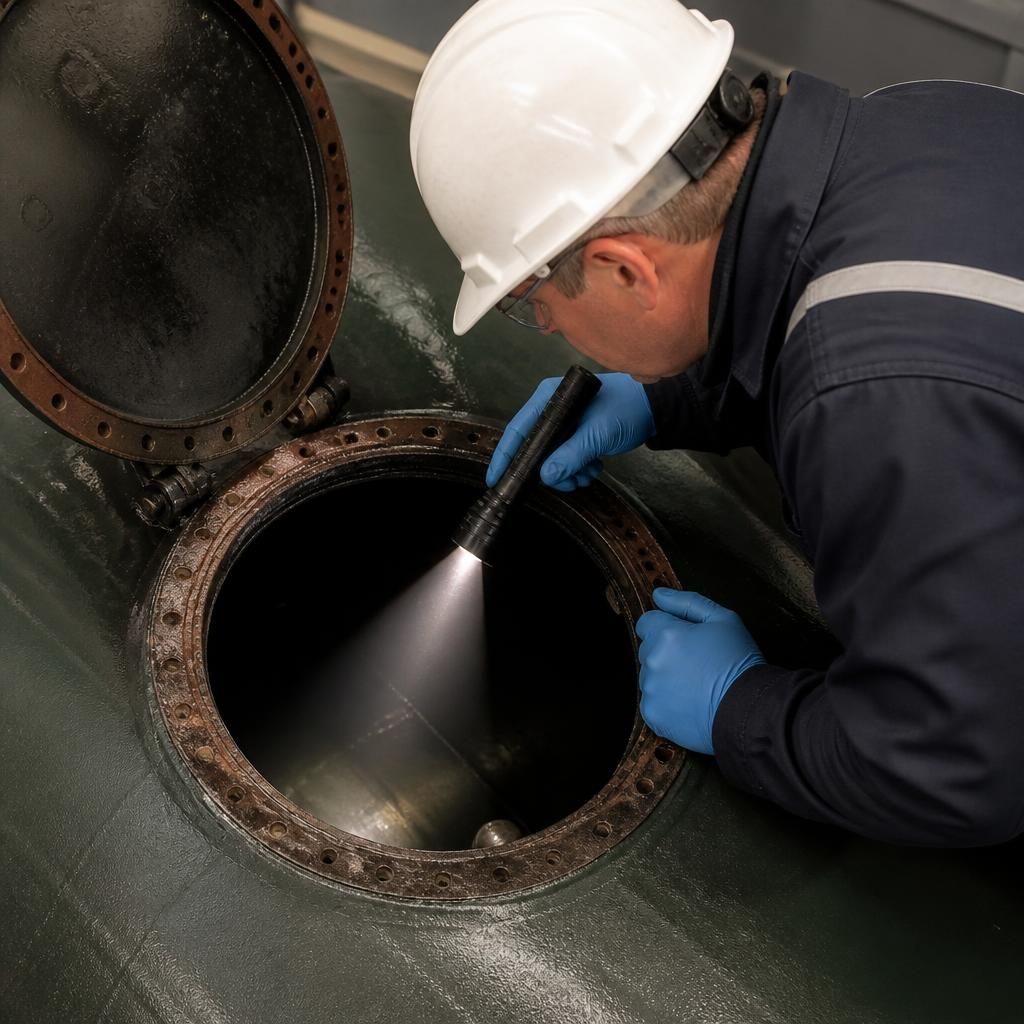
A visual inspection alone may not confirm that a diesel tank is ready for service. Take representative samples from low points and the fuel outlet, where free water, sediment or microbial debris may collect, and assess their appearance and condition. Where contamination or fuel deterioration is suspected, arrange suitable laboratory testing before the tank is recommissioned. Retain the sample results with the service record so the decision to return the tank to use is supported by evidence rather than inspection alone.
Need Advice Before Returning a Diesel Tank to Service?
If you need help confirming that a diesel tank is suitable for recommissioning, contact Blue Fish Water Management Ltd to discuss the inspection, testing or remedial work required.