
What contamination indicates a diesel tank needs cleaning?
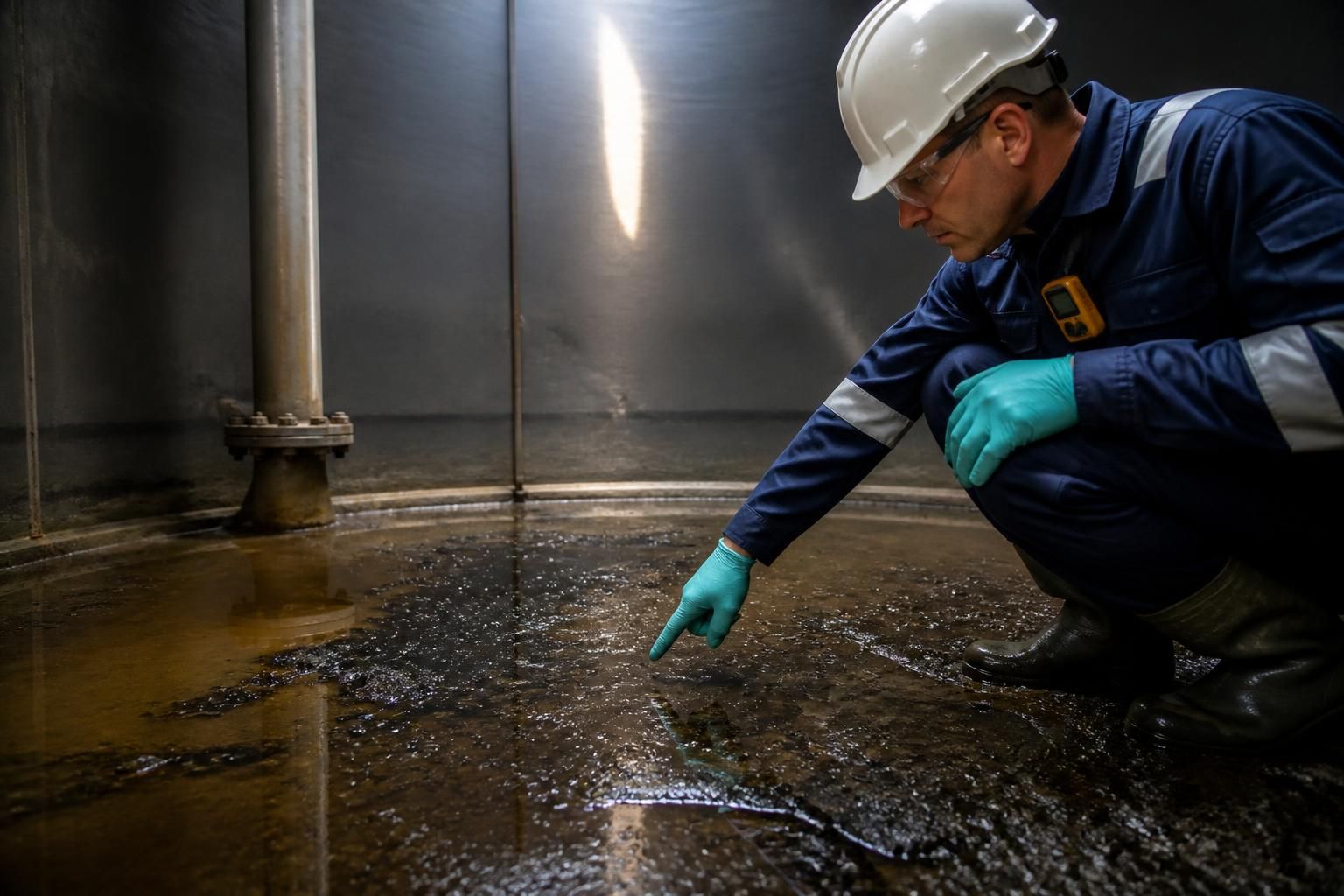
Diesel tank contamination indicates cleaning is needed when unwanted material is established inside the tank and cannot be removed reliably by routine draining, filtration or fuel treatment alone. The decision should be based on the contaminant’s location, quantity, persistence and effect on the fuel system, rather than on a single visual observation.
Contamination that has settled inside the tank is particularly significant. Material can collect at the lowest point, around the outlet, beneath internal fittings or in areas with limited fuel movement. Even if a sample taken from the upper part of the tank appears acceptable, settled contamination may be drawn into the fuel system when the tank level changes or the contents are disturbed. A tank inspection should therefore consider more than the fuel visible at the surface.
Cleaning is usually justified where contamination is persistent. If the same problem returns after water removal, fuel polishing or filter replacement, the tank itself may be acting as the source. This can happen when residue remains on internal surfaces, in pipework or in inaccessible areas. Repeated treatment without removing the underlying material may provide only temporary control and can allow the problem to spread through connected equipment.
Microbial contamination requires particular care. Microbial activity can create deposits that adhere to tank surfaces and produce by-products capable of affecting fuel quality and metalwork. A biocide may form part of the control strategy where appropriate, but chemical treatment does not necessarily remove established biomass or the residue associated with it. Where testing confirms an established microbial problem, physical cleaning, removal of contaminated material and an investigation into water entry are often needed alongside any treatment.
Water contamination does not always mean the whole tank needs immediate cleaning. A small, isolated amount may be removed by draining from the correct low point, followed by checks to confirm that it has not returned. Cleaning becomes more likely when water has been present for a prolonged period, has mixed with settled material, has reached internal components or continues to enter because the source has not been corrected. The cause may involve defective seals, poor vent protection, damaged access covers or condensation, so removal alone is not a complete solution.
Fuel sampling should support the decision. Samples from different levels or locations can help establish whether contamination is localised or distributed throughout the tank. Results should be considered with the tank’s construction, fuel use, connected equipment and operating history. A competent assessment may also involve examining the tank interior, checking suction arrangements and reviewing filter and maintenance records. Sampling only the delivery fuel or the upper layer can produce an incomplete picture.
Cleaning should also be considered when:
- contamination has accumulated near the fuel outlet or other points where it can be drawn into equipment;
- fuel quality cannot be maintained through normal filtration and storage controls;
- the tank has been disturbed, repaired or opened and its internal condition is uncertain;
- contamination is affecting connected pipework, pumps, generators, burners or other fuel-consuming equipment;
- internal surface residue or corrosion-related material is evident during inspection; or
- the tank is being prepared for a change of fuel, a major maintenance activity or a return to service after prolonged concern over fuel condition.
Not every abnormal sample calls for the same intervention. Where contamination is limited and the tank can be drained effectively, corrective maintenance may be sufficient. Where material is adhered to surfaces, distributed through the tank or repeatedly reintroduced into the fuel, cleaning is the more dependable way to remove the source. The tank should not be judged solely by whether the fuel looks clear after passing through a temporary filter.
Before cleaning, the contamination source and the safe method of access should be established. The fuel may need to be recovered, segregated or assessed before disposal, and the tank should be isolated from connected equipment. Work must account for flammable atmospheres, confined-space hazards and any site-specific controls. Once cleaning is complete, the fuel system should be checked again, with attention to low points, filters, pipework and the condition of the tank interior.
A diesel tank cleaning service can combine inspection, sampling, removal of contaminated fuel and residue, cleaning of accessible internal surfaces, and post-cleaning checks. The appropriate scope depends on the evidence found rather than the tank’s capacity alone. Keeping records of sampling, removed material, remedial work and follow-up checks also helps demonstrate that the contamination was addressed and that controls are in place to prevent recurrence.
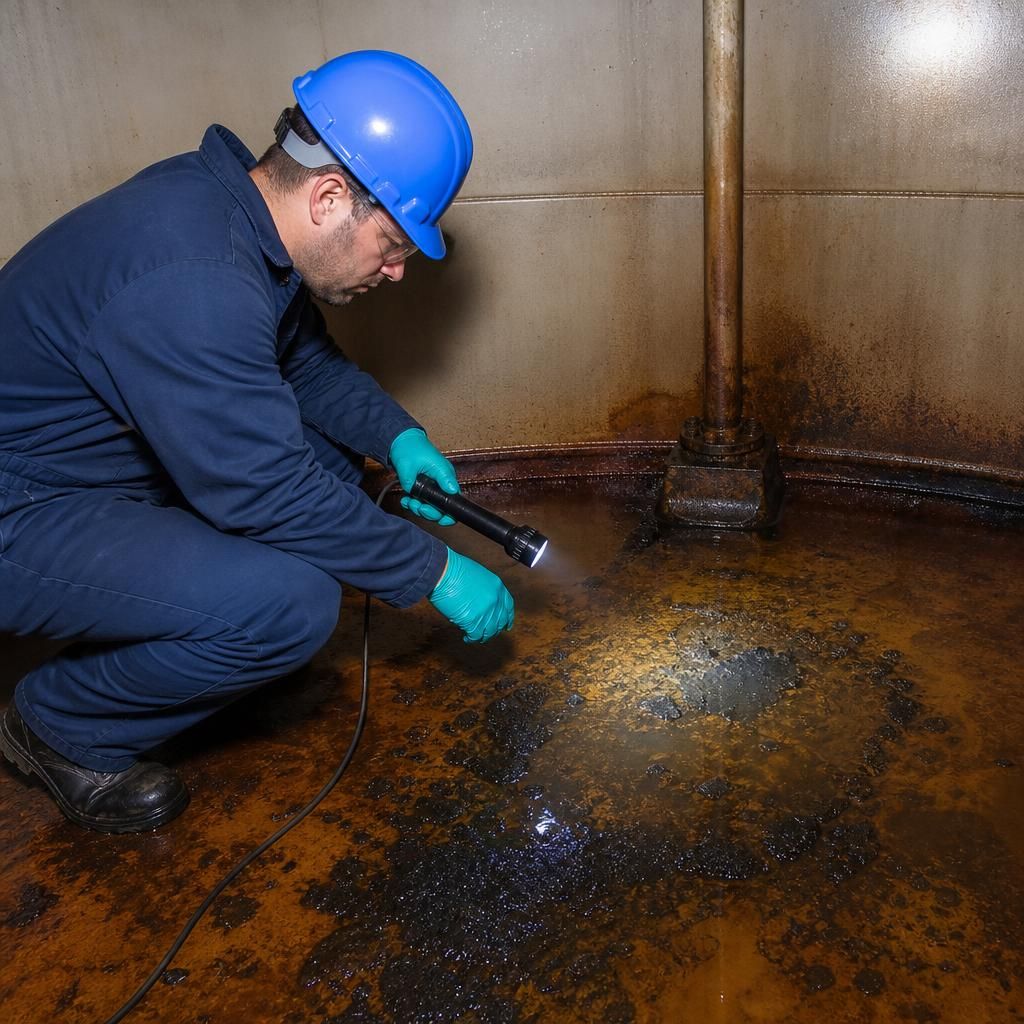
A diesel tank is more likely to need cleaning when contamination has bonded to internal surfaces rather than remaining as free water or loose particles. Sticky deposits, gum-like residue or a dark film can release intermittently as the fuel level changes, meaning the fuel may appear acceptable during one check but deteriorate again later. These deposits are not reliably removed by ordinary filtration because the source remains attached to the tank. Where inspection identifies this type of residue, physical removal is generally more appropriate than relying on repeated filter changes or fuel treatment alone.
Arrange a diesel tank contamination assessment
Arrange a diesel tank contamination assessment to establish the extent and source of the problem before deciding whether cleaning is required. The findings can help define an appropriate, safe scope of work for the tank and connected fuel system.