
Can diesel tank cleaning be carried out without removing the tank?
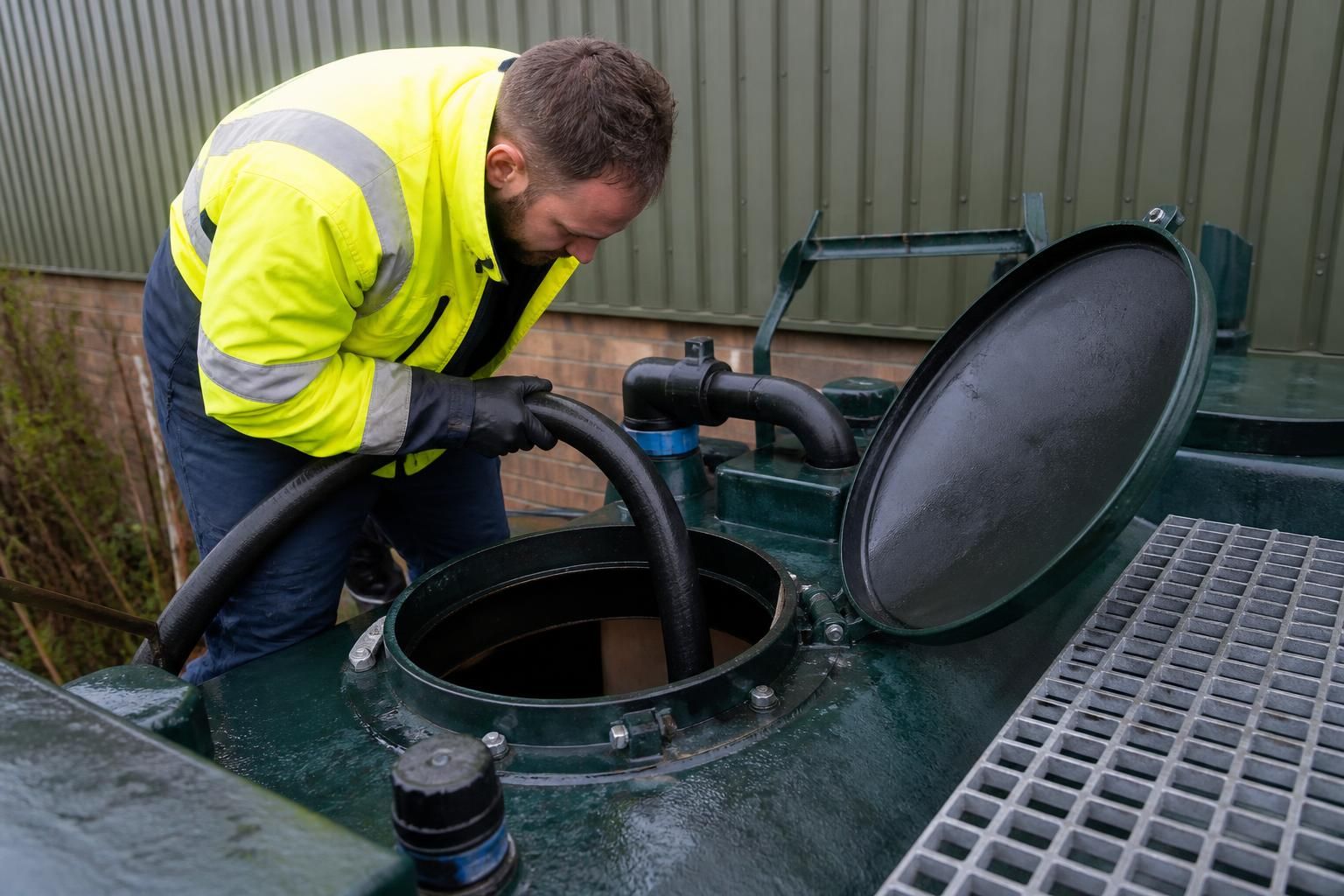
In-situ diesel tank cleaning is carried out by isolating the tank, removing the fuel and extracting contamination through the available access points. Depending on the installation, the work may combine fuel transfer, filtration, sludge removal, internal washing or vacuum extraction, followed by inspection and testing before the tank is put back into service.
How the cleaning method is selected
The tank’s construction has a direct bearing on the cleaning process. Access covers, inspection hatches, fill points, draw-off connections and drain points determine which equipment can be used and how thoroughly the base, walls and internal fittings can be reached. Baffles, sumps, pipework and irregular tank geometry can leave areas where water, sludge or microbial deposits collect, so a simple fuel transfer may not constitute a complete clean.
- Fuel removal and filtration: usable diesel can be pumped into suitable storage and passed through filtration equipment to remove suspended particles and some free water.
- Sludge and water extraction: settled material can be removed from the tank base using suitable suction or vacuum equipment, particularly where contamination has concentrated in a low point or sump.
- Internal cleaning: where access permits, deposits may be loosened and removed from accessible surfaces using appropriate mechanical or cleaning methods.
- Fuel system cleaning: connected lines, filters and associated components may need attention if contamination has migrated beyond the tank.
Fuel polishing alone should not automatically be treated as tank cleaning. Polishing improves the condition of the fuel by circulating it through filters and water separation equipment, but it may not remove firmly attached deposits, sediment beneath the suction level or contamination retained in inaccessible parts of the tank. The distinction matters where the objective is to clean the tank itself rather than simply improve fuel quality.
Typical stages of in-situ work
- The tank, fuel type, connected equipment and contamination are assessed, with attention paid to access, ventilation, ignition sources and the condition of the installation.
- The tank is isolated from generators, burners, vehicles or other equipment that could draw contaminated fuel during the work.
- Fuel is removed, segregated and assessed so that recoverable fuel is not unnecessarily treated as waste.
- Water, sediment, microbial residue and other waste are extracted using equipment appropriate to the tank and its contents.
- Accessible internal surfaces and relevant components are cleaned where deposits remain.
- The tank and fuel system are checked, with filters, seals, connections and draw-off arrangements examined before reconnection.
- Fuel is returned or replaced as appropriate, and the system is monitored for leaks, renewed contamination or operational problems.
Safety controls are essential because diesel tanks can contain flammable vapours, hazardous residues and oxygen-deficient atmospheres. A risk assessment should address isolation, electrical equipment, ventilation, static discharge, work at height, confined-space risks and the handling and disposal of contaminated fuel or sludge. Hot work, entry into the tank and the use of cleaning chemicals require additional controls and should not be undertaken as routine parts of a basic cleaning operation.
When removal may still be necessary
In-situ cleaning is not suitable for every installation. Tank removal or partial dismantling may be considered where there is no meaningful access, internal corrosion has affected the structure, heavy deposits cannot be reached, the tank has suffered physical damage or inspection cannot be completed adequately in its installed position. A tank that is leaking, structurally unsound or contaminated with material that cannot be safely removed in place should not simply be returned to service after surface-level cleaning.
After cleaning, the condition of the tank and connected fuel system should be documented. This may include recording the waste removed, noting visible defects, checking filters and connections, and carrying out fuel or cleanliness testing where the application requires it. For standby generators and other critical plant, the cleaned system should also be assessed under operating conditions so that fuel delivery, filtration and equipment performance are confirmed before reliance is placed on it.
For commercial and industrial sites, the most reliable approach is to match the cleaning method to the tank design, contamination profile and operational risk. This avoids treating a fuel-quality problem as a tank-cleaning problem, while also identifying cases where in-situ work cannot provide a sufficiently complete or safe result.
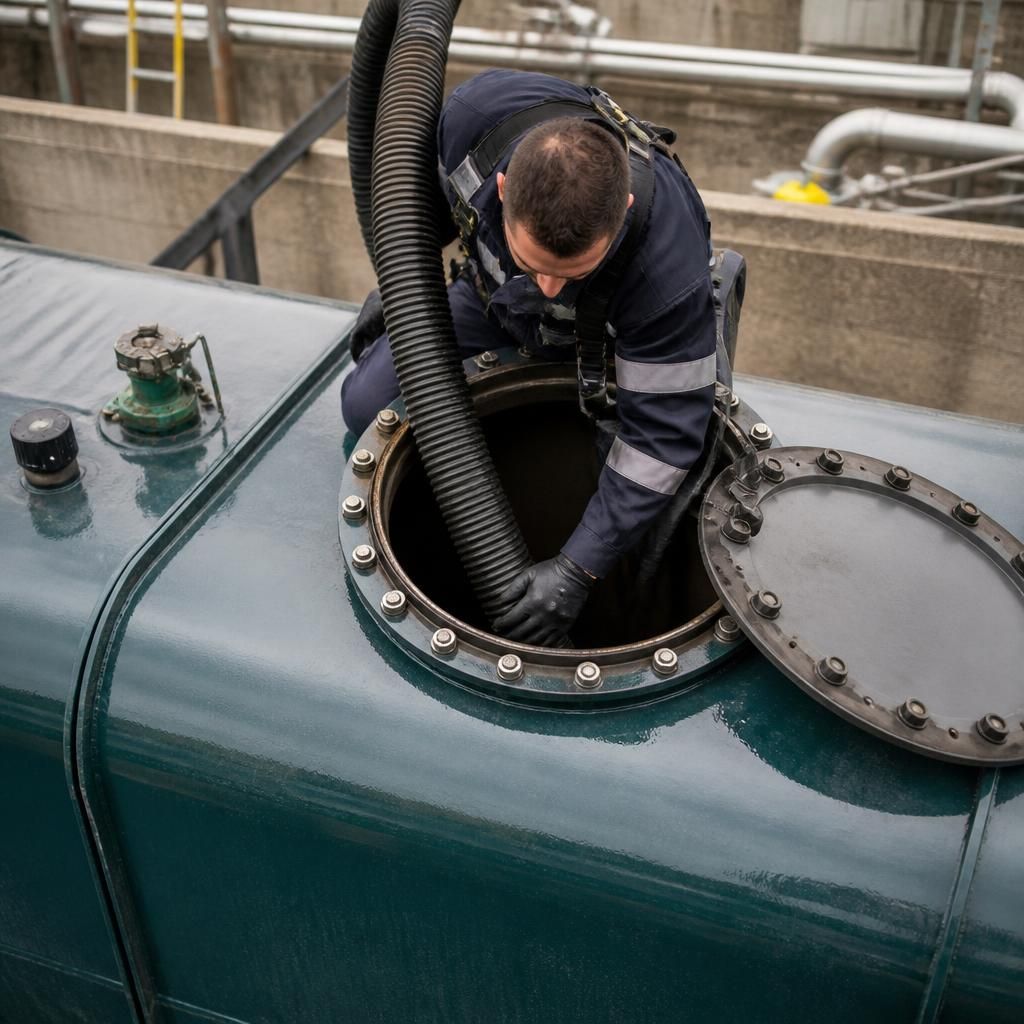
The important question is not only whether the tank can remain in place, but whether the chosen method can verify that contamination has been removed from the areas that matter. A suitable cleaning plan should identify the inspection points, explain how low spots and internal fittings will be checked, and set out what evidence will be recorded when the work is complete.
This is particularly relevant where diesel supplies standby generators or other critical equipment. The completion record should distinguish between fuel that has been filtered and the tank itself being cleaned, while noting any defects or limitations discovered during the work. That information supports a sound decision on whether the tank is ready for service or requires further remedial attention.
Assess whether in-situ diesel tank cleaning is suitable
If you need to establish whether in-situ cleaning is appropriate for your diesel tank, contact Blue Fish Water Management Ltd to discuss the tank design, access arrangements and contamination concerns before work is planned.