
What should businesses look for in a water tank disinfection contractor?
Businesses should choose a water tank disinfection contractor that can demonstrate relevant competence, understands applicable water hygiene requirements and provides a clear, risk-based method for the work. Check that the contractor includes suitable preparation, controlled chemical use, post-disinfection testing, completion records and practical advice on returning the system to service.
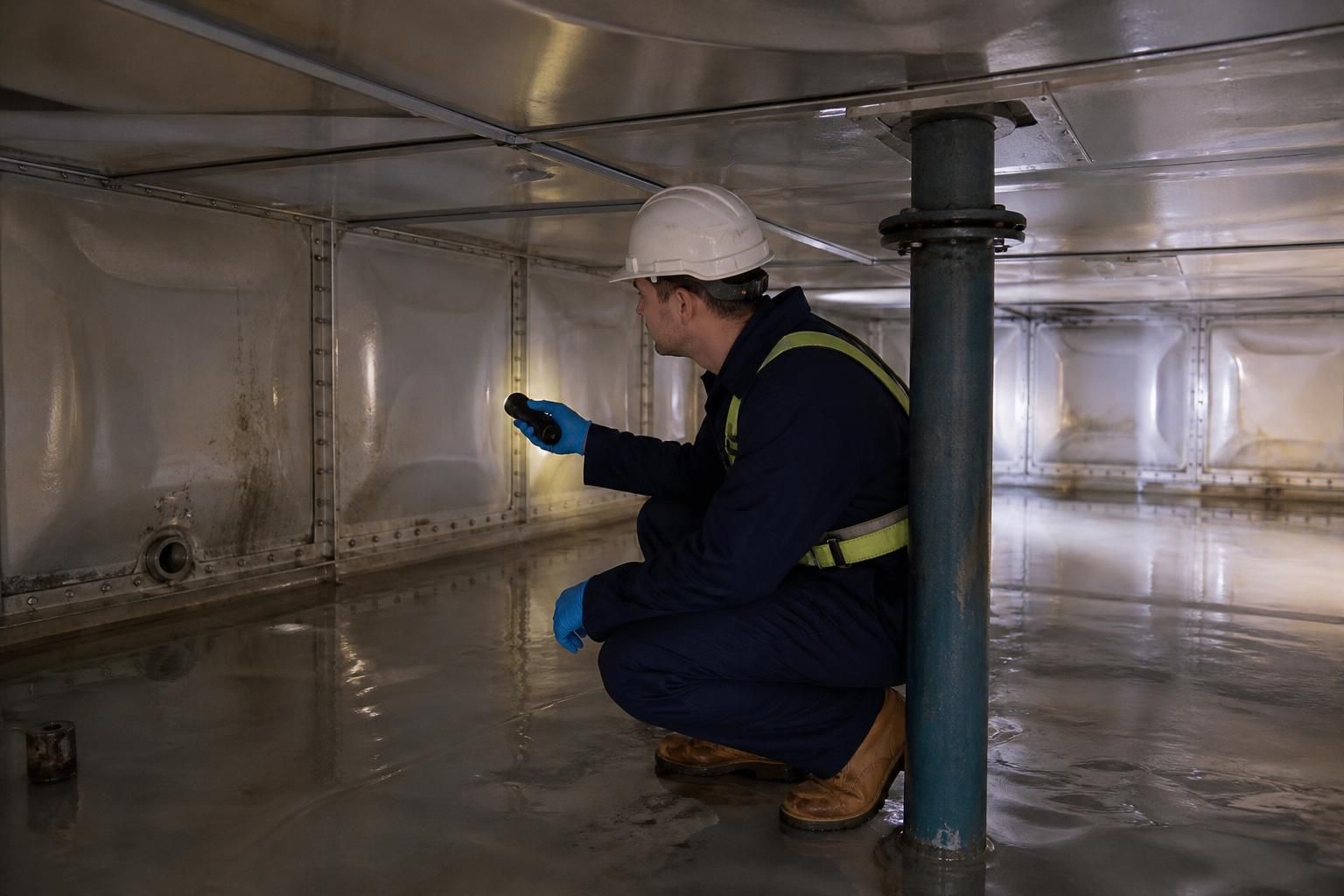
A suitable water tank disinfection contractor should be able to show that it can assess the whole storage arrangement, plan around the building’s operational needs and provide independent evidence that the work was completed correctly. The decision should be based on more than the quoted price: businesses also need to examine the contractor’s technical understanding, controls, communication and ability to identify problems that disinfection alone will not resolve.
Check the contractor’s experience with the specific installation
Water storage tanks vary in construction, capacity, configuration and condition. Ask whether the contractor has relevant experience with the type of tank and associated pipework on your premises, including systems serving healthcare, residential, industrial or commercial buildings where the consequences of water hygiene failures may differ.
The contractor should understand how the tank connects to the wider system. This includes inlet and outlet arrangements, booster sets, distribution pipework, dosing equipment, temperature controls, warning or overflow pipes and any sectional tanks. A contractor that focuses only on the tank may miss contamination risks elsewhere in the system or fail to recognise why the tank cannot be safely isolated.
Ask what information will be reviewed before the visit
A properly planned service should take account of available schematics, previous inspection findings, sampling results, maintenance records and known complaints or incidents. Where information is incomplete, the contractor should identify what needs to be verified on site rather than making assumptions about the system.
It is also reasonable to ask how the contractor will deal with restricted access, confined spaces, difficult lifting routes, fragile tank components, electrical equipment and other site hazards. These considerations affect the feasibility, cost and safety of the work and should be addressed before a date is agreed.
Look for a practical plan for service continuity
Disinfection normally requires parts of the water system to be isolated, drained, flushed or kept out of use. The contractor should explain which outlets or buildings may be affected, what the client must arrange in advance and how the system will be coordinated with occupants, facilities teams and other contractors.
Where the premises cannot simply lose its stored water supply, discuss whether separate tank sections, temporary arrangements or staged work are appropriate. The contractor should not assume that a standard sequence is suitable for every site. The proposed approach should reflect the building’s use, the people who rely on the supply and any critical processes dependent on water.
Examine how risks are controlled on site
Request site-specific risk assessments and method information before work begins, and check that these cover access, isolation, electrical hazards, work at height, manual handling, confined spaces and the protection of people who could be exposed to contaminated water. The contractor should also explain who controls the site, how permits and isolations are managed and how unexpected conditions will be escalated.
Ask whether operatives are appropriately trained for the tasks involved and whether subcontractors, if used, are subject to the same controls. Evidence of competence should relate to the actual work rather than consist only of general claims about water hygiene experience.
Review the proposed scope and quotation carefully
A useful quotation should state what is included and identify exclusions. It may need to distinguish between disinfection, tank cleaning, inspection, replacement of damaged components, sampling, remedial work and any return visit. This prevents a low initial price from concealing necessary tasks or leaving the client uncertain about who is responsible for them.
Ask how additional defects will be handled if the contractor finds corrosion, sludge, damaged coatings, unsuitable lids, defective valves, poor drainage or evidence of ingress. The contractor should report such findings separately from the agreed disinfection work and explain their significance without treating every defect as an automatic reason for unplanned expenditure.
Confirm how results will be interpreted
Testing is useful only when the sampling locations, timing and results are considered in relation to the system. Ask which points will be sampled, how samples will be identified and transported, and who will interpret a result that is unsatisfactory or inconsistent with earlier findings. The contractor should be able to distinguish between a result that relates to the tank and one that may indicate a wider distribution-system issue.
Find out what happens if the system does not meet the required acceptance criteria after the initial work. A reliable contractor should have a defined process for investigating the cause, recommending proportionate further action and agreeing any additional work with the client before proceeding.
Check the quality of communication and handover
The contractor should identify a named contact and agree how site restrictions, changes to the programme, unexpected contamination or damaged equipment will be communicated. Clear communication matters particularly where the work affects multiple tenants, production areas, residents or critical water users.
At handover, the business should receive information that enables its responsible person or facilities team to understand what was done, what was found and what action remains outstanding. The contractor should also explain any changes to operating arrangements, inspection needs or monitoring that follow from the work. This supports the client’s ongoing water safety management rather than treating disinfection as an isolated task.
Consider the contractor’s broader reliability
Before appointment, businesses may wish to check suitable insurance, relevant policies, references for comparable installations and the contractor’s approach to quality control. A written scope, clear assumptions and transparent variation process are often more useful indicators than a generic service description.
For larger or higher-risk premises, procurement teams should also establish whether the contractor can work with existing consultants, estates teams and responsible persons, and whether its reporting format can be incorporated into the site’s compliance records. The best choice is the contractor that can demonstrate a controlled, evidence-led service and explain its limitations plainly, not simply the one offering the shortest quotation.
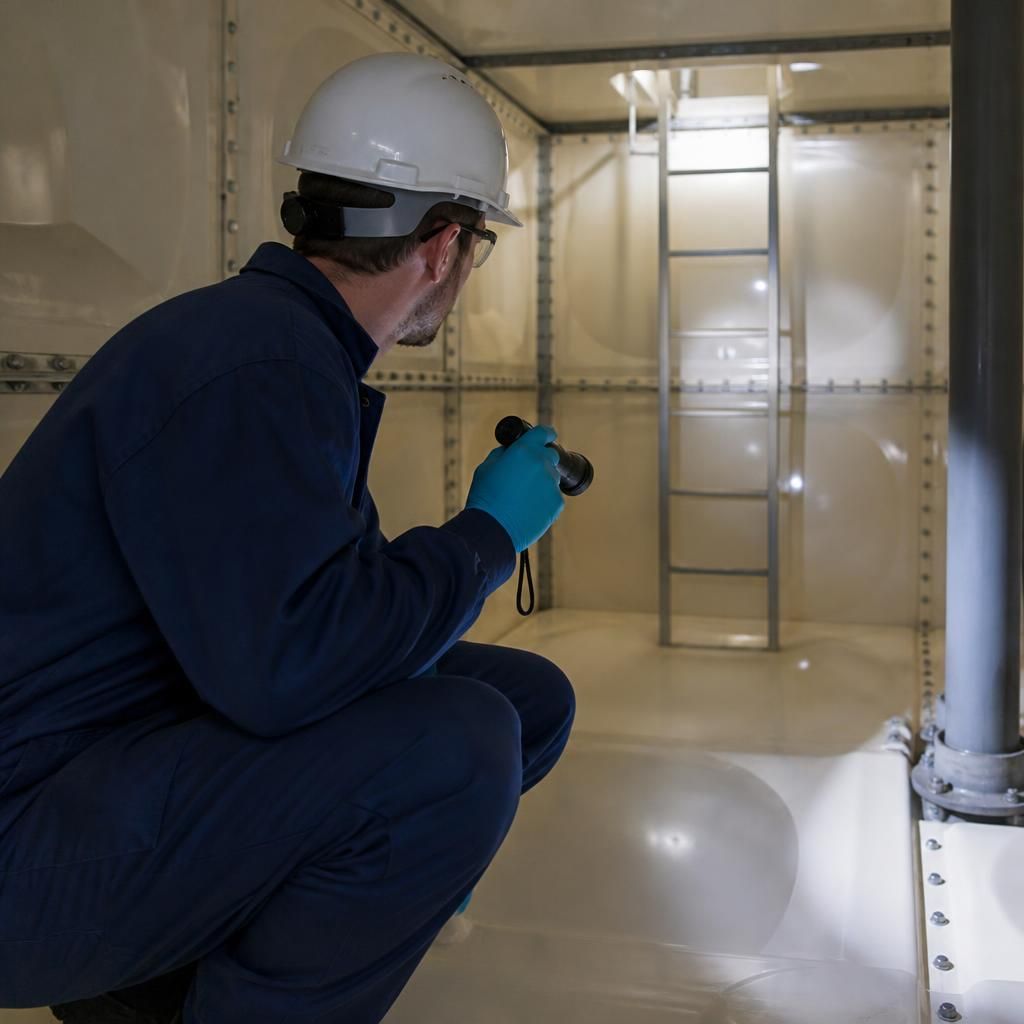
A competent water tank disinfection contractor should explain how disinfectant will be selected, controlled and removed without damaging the tank, connected equipment or the wider water system. The proposed treatment should reflect the tank’s materials, condition, capacity and operational connections, rather than relying on an unexplained standard dose.
Ask the contractor to clarify how it will control contact time and concentration, prevent chemical exposure to users, protect incompatible components and manage flushing afterwards. It should also explain how spent disinfectant and contaminated water will be discharged in accordance with site requirements and environmental controls. These details indicate whether the method has been properly developed for the installation.
The contractor should record the treatment used, relevant checks and any deviations from the agreed method. If conditions on site prevent the planned process from being completed safely or effectively, work should pause while the implications are assessed and discussed with the client.
Discuss your water tank disinfection requirements
Discuss your water tank disinfection requirements with Blue Fish Water Management Ltd to clarify the appropriate scope, controls and documentation for your system.