
What if a water storage tank cannot be disinfected effectively?
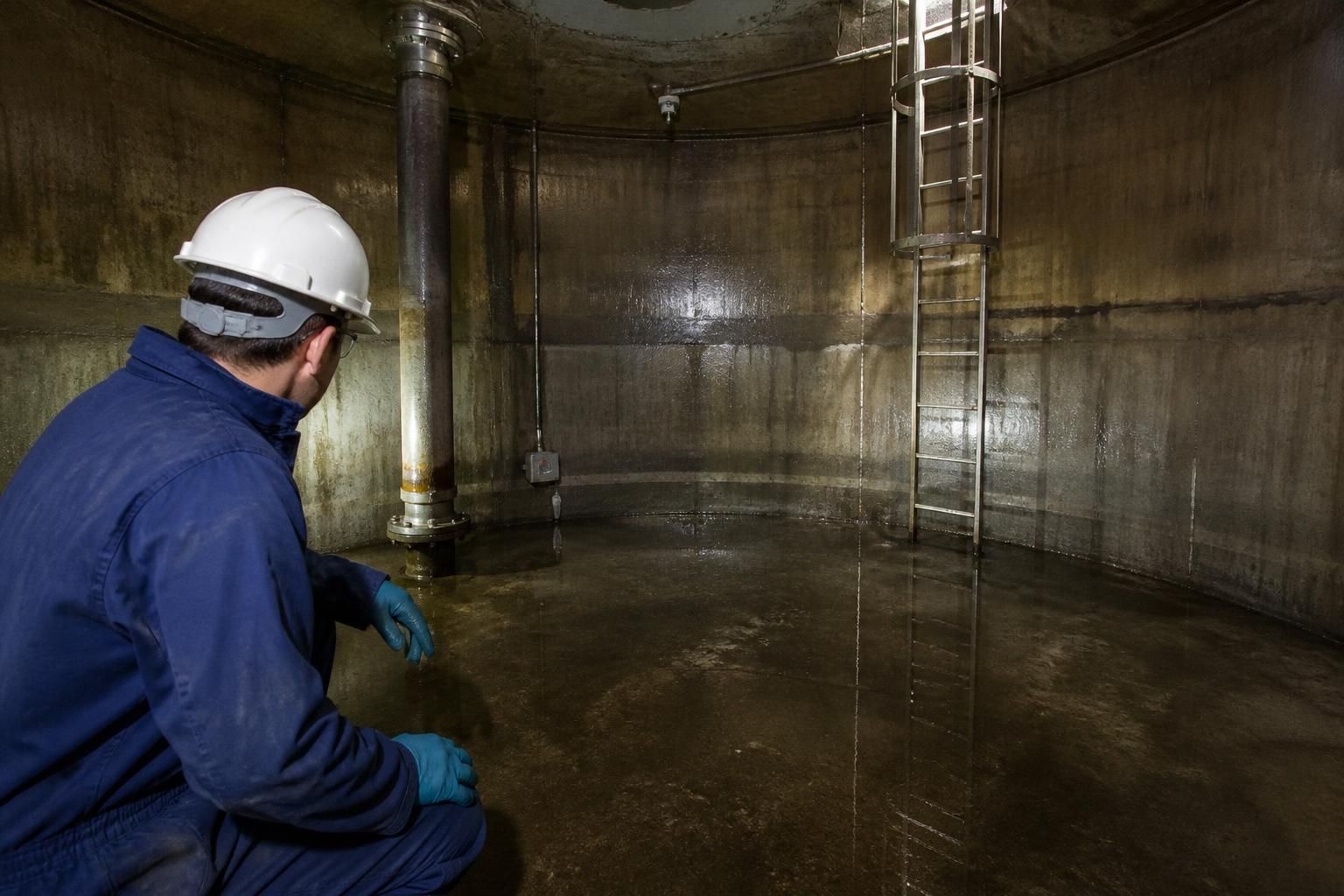
An ineffective water storage tank disinfection is usually a sign that the underlying contamination, system condition or disinfection method has not been adequately addressed. Simply increasing the chemical dose or repeating the same procedure may not resolve the problem. The tank and associated water system should be assessed to determine why the treatment has failed and what evidence is needed to demonstrate that the risk has been controlled.
Common reasons for unsuccessful disinfection include:
- Organic deposits or biofilm: sediment, slime, scale and other deposits can protect microorganisms from contact with the disinfectant.
- Inadequate access: a tank may not have suitable access points for inspection, cleaning or the safe application of disinfectant to all internal surfaces.
- Unsuitable contact conditions: the disinfectant may not have reached every part of the tank or connected pipework at the required concentration for the required contact period.
- Contamination from elsewhere: incoming water, outlets, bypasses, dead legs, overflow arrangements or connected systems may reintroduce contamination after treatment.
- Defective construction or equipment: damaged coatings, cracked components, poorly sealed covers, corroded fittings or faulty valves can allow contamination to persist or recur.
- Incorrect preparation or monitoring: inaccurate dosing, poor mixing, unsuitable sampling points or unreliable test equipment can undermine the treatment and the evidence produced.
The next step should be a structured investigation rather than an assumption that the tank itself is the only source. This normally involves reviewing the tank design, recent maintenance, water usage, temperature control, inspection records, previous treatment results and any changes to the system. A competent person may also inspect the tank internally, where this can be done safely, and examine connected pipework and fittings.
Where deposits or biofilm are present, physical cleaning is often needed before chemical treatment can be effective. This can involve draining the tank, removing sediment, cleaning internal surfaces and inspecting components for damage. Cleaning waste must be managed appropriately so that it does not contaminate other parts of the system or create an environmental hazard. If access is too restricted to clean the full internal surface, improving access or replacing the tank may be more effective than carrying out repeated incomplete treatments.
The disinfection method should then be reviewed against the tank materials, system configuration and intended use. Important controls include the choice and concentration of disinfectant, contact time, circulation or mixing, isolation of sensitive equipment, and protection of users from exposure. Disinfectant should not be introduced into a live supply without suitable isolation and control measures, particularly where the system serves showers, healthcare environments, process equipment or other vulnerable users.
Some failures require remedial work rather than another treatment cycle. Examples include:
- repairing or replacing a defective tank cover, inlet, valve, overflow or drain;
- removing redundant pipework or dead legs that retain stagnant water;
- correcting poor flow, inadequate turnover or unsuitable temperature conditions;
- improving tank access, drainage, insulation or inspection arrangements; and
- replacing a tank where its materials, lining or structural condition prevent reliable cleaning and disinfection.
Water samples should be taken from appropriate locations after the corrective work and treatment have been completed. Sampling should support the risk assessment rather than rely on a single result in isolation. Results need to be interpreted alongside the condition of the tank, the operating controls and the history of the system. Where laboratory analysis is required, testing by a UKAS-accredited laboratory provides appropriate assurance about the competence of the testing process.
If the tank forms part of a wider domestic hot and cold water system, the investigation should consider whether other components also need attention. A clean tank can become contaminated again if connected pipework, outlets or secondary storage remain affected. Conversely, a result from one sampling point may not represent conditions throughout the system, so the sampling plan should reflect how water is stored, distributed and used.
During the investigation, the responsible organisation should maintain suitable interim controls. These may include restricting use of affected outlets, providing an alternative supply, increasing monitoring or applying other measures identified by the risk assessment. The appropriate control depends on the type of premises, the users exposed and the nature of the suspected contamination. Records should show the reason for the restriction, the actions taken, who authorised them and the evidence used to change the control measures.
Before the tank is brought back into normal operation, the responsible person should ensure that the completed work is documented. The record should cover the identified cause, cleaning or remedial work, disinfection parameters, inspection findings, sampling locations, laboratory results and any continuing precautions. It should also identify whether the water system's written scheme, risk assessment and maintenance schedule need updating.
Where repeated disinfection has failed, obtaining independent technical advice can help distinguish between a treatment problem and a fundamental design or condition issue. Blue Fish Water Management provides legionella control, water hygiene, water testing, compliance audits and remedial support for organisations that need to investigate and manage these failures as part of their wider water safety arrangements.
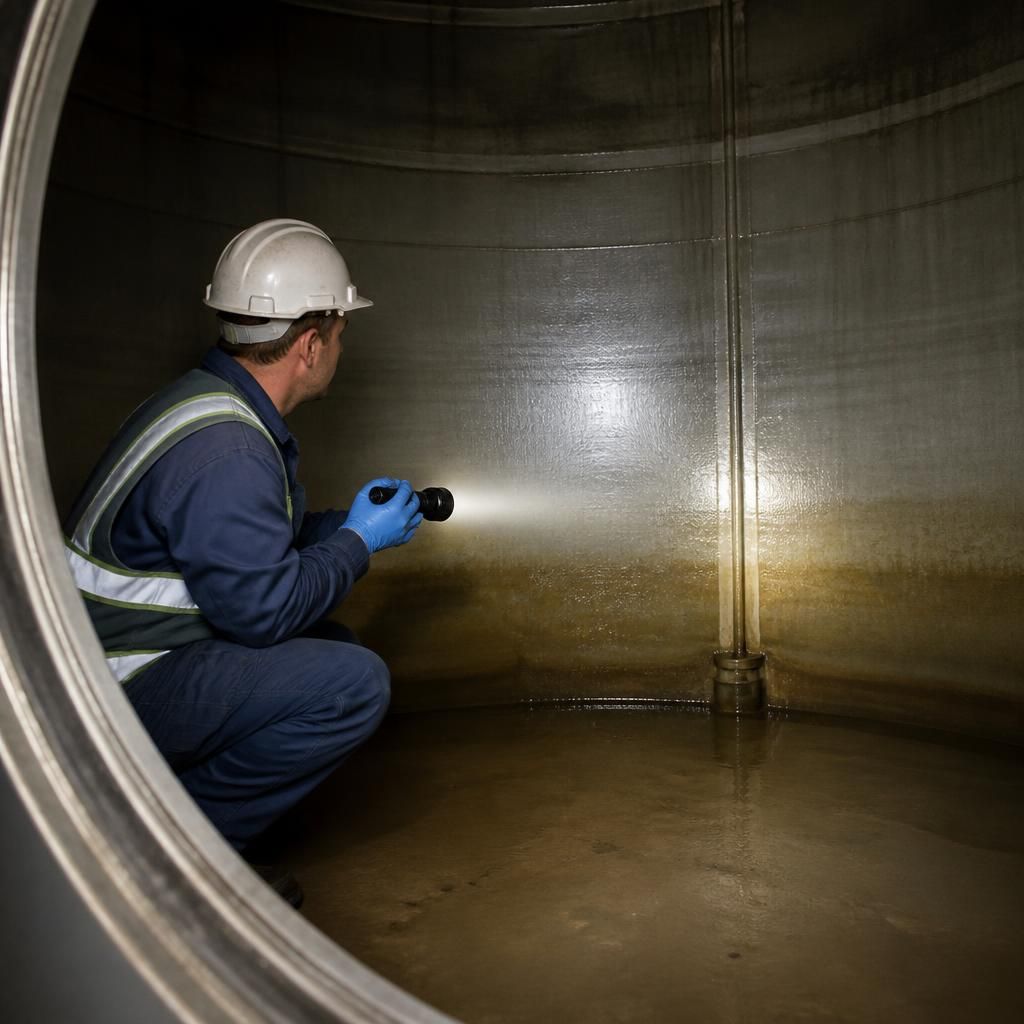
A tank should not be judged safe for service solely because the water looks clear, has no unusual odour or shows a disinfectant residual. These observations do not confirm that contamination has been removed from internal surfaces, fittings or connected pipework.
Acceptance should be based on documented evidence that the treatment was suitable for the system and that the required controls are operating. If the available evidence is incomplete or contradictory, the result should be treated as unresolved rather than assumed to be a successful disinfection. This distinction helps prevent a tank being returned to use on the basis of appearance alone.
Need expert advice after failed tank disinfection?
If repeated treatment has not resolved the problem, discuss the available evidence and next investigative steps with Blue Fish Water Management. Their water hygiene and legionella control specialists can help organisations assess the failure and determine whether further remedial support is appropriate.