
What qualifications should a cold water storage tank cleaning contractor have?
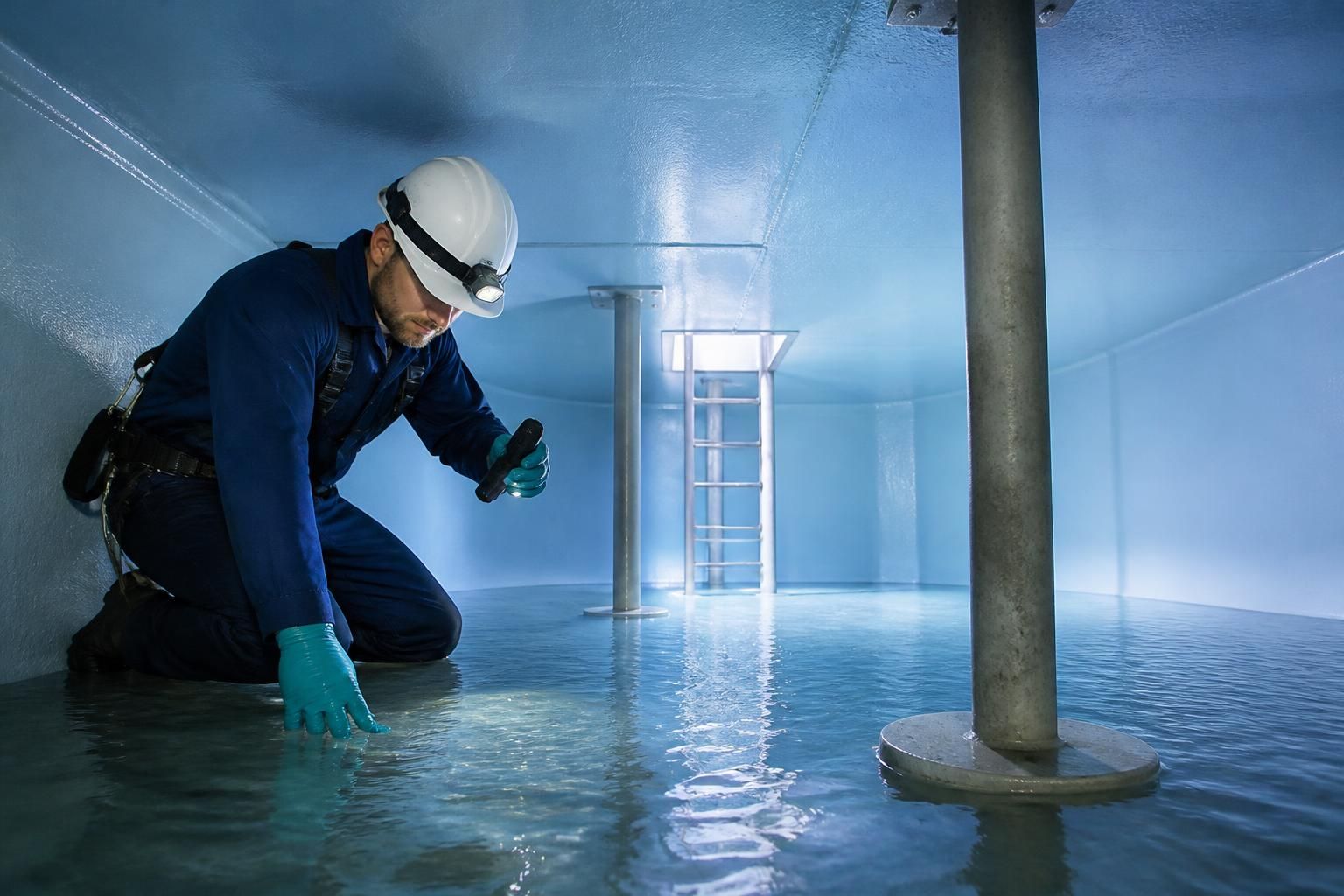
There is no single statutory licence that qualifies a contractor to clean every cold water storage tank in the UK. A competent contractor should instead be able to demonstrate relevant, current training, verified practical competence, and procedures that match the type of tank, water system and work being undertaken.
Look for evidence in the following areas:
- Water hygiene and legionella training: Training should cover the principles of contamination control, tank inspection, cleaning, disinfection and the risks associated with stored water systems. Certificates should identify the course, date, learner and training provider rather than simply using a general claim of competence.
- Practical assessment: A certificate alone does not prove that an operative can carry out the work safely. The contractor should be able to explain how operatives are assessed in practice, who verifies their competence and how that assessment is kept current.
- Relevant experience: Experience should relate to the actual installation. A contractor working on a small domestic tank may not have the same competence required for large commercial storage, sectional tanks, high-level tanks or systems serving vulnerable occupants. Ask for anonymised examples of comparable work and details of the controls used.
- Water system knowledge: The contractor should understand tank construction, inlet and outlet arrangements, ball valves, lids, screens, overflow protection, temperature control and dead legs. This helps them identify defects that could allow recontamination, rather than treating cleaning as an isolated task.
- Disinfection competence: Operatives should understand how the selected disinfectant is prepared, applied, controlled and removed, including the checks needed before the system is returned to use. They should also know when a result indicates that further investigation or remedial work is necessary.
- Access and specialist work: Where the task involves roof spaces, plant rooms, ladders, lifting equipment, electrical plant or restricted access, the contractor should hold or arrange the specific competence required for those activities. This may involve additional training beyond water hygiene.
Check the contractor’s management arrangements as well as individual certificates. A suitable provider should have a competence matrix showing which people are authorised for each task, arrangements for supervision, and a process for refresher training where knowledge or site conditions require it. Training should be supported by written procedures, inspection records and clear allocation of responsibility.
If sampling or laboratory analysis forms part of the service, ask who performs the analysis and whether the laboratory is UKAS accredited for the relevant tests. UKAS accreditation applies to the laboratory’s stated scope; it does not, by itself, prove that the contractor is qualified to clean a tank. The contractor should also explain which results will be reported, how they will be interpreted and who will advise on corrective action.
It is also reasonable to request evidence of insurance, employee vetting where site rules require it, health and safety arrangements, and records from previous comparable work. Trade or health-and-safety scheme memberships may demonstrate that a business has passed an administrative or procurement assessment, but they should not be treated as a substitute for technical water hygiene competence.
Before appointment, ask for a sample report or agree the information the completion report will contain. It should normally identify the tank and system, describe the condition found, record the work completed, note defects or limitations, and provide any relevant test results and recommendations. These records allow the responsible person to demonstrate that the cleaning was properly planned, carried out and followed up.
The most reliable assessment therefore combines documented training with questioning, evidence of comparable work and a review of the proposed method. If a contractor cannot explain who will perform the work, how competence is checked, what the cleaning includes or what documentation will be supplied, their qualifications are difficult to verify regardless of the number of certificates presented.
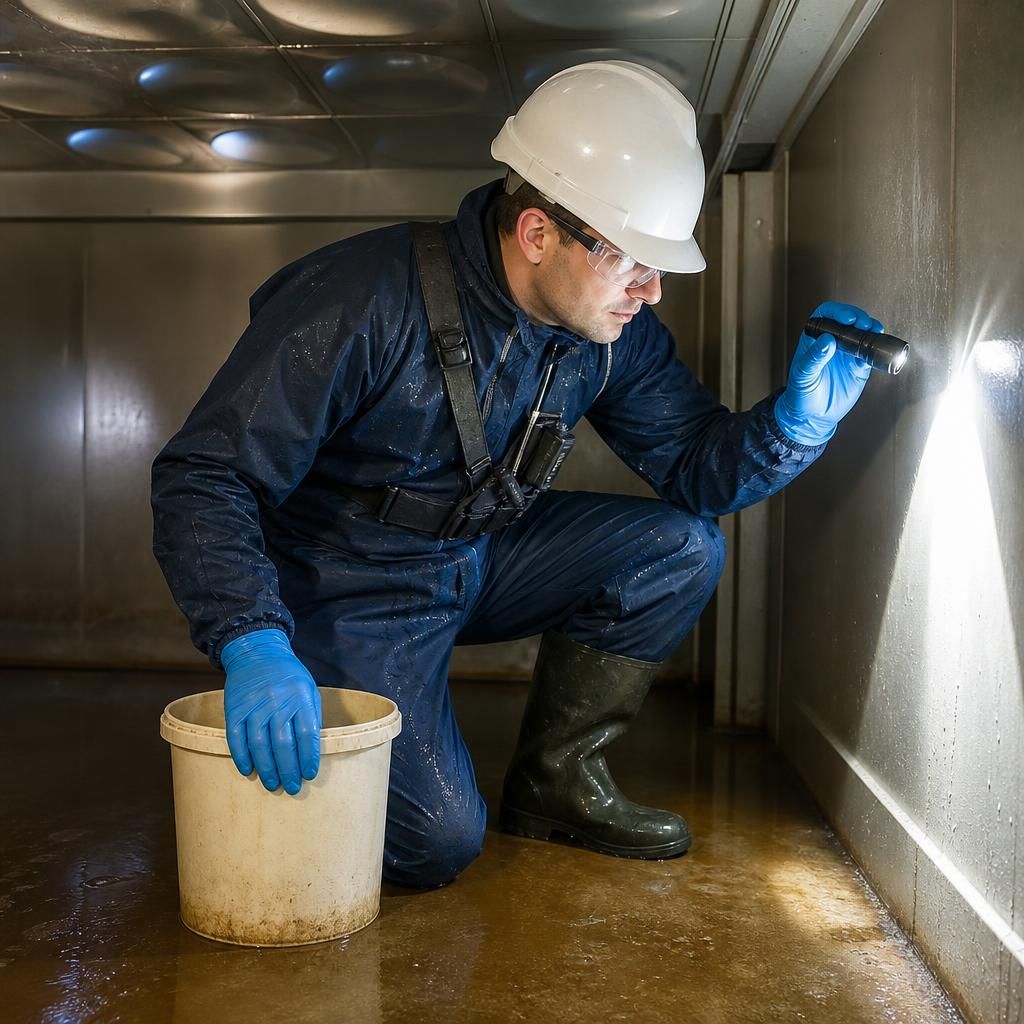
The most relevant qualification is one that matches the contractor’s specific role. Tank cleaning competence is not automatically demonstrated by a general health-and-safety certificate, a plumbing qualification or experience in another type of water-system work.
Ask the contractor to identify which person is responsible for each part of the task, including:
- planning and assessing the cleaning method;
- carrying out the physical inspection, cleaning and disinfection;
- making decisions about defects or restrictions on returning the tank to service; and
- reviewing any sampling or laboratory information.
If subcontractors are used, the same evidence should be available for those individuals rather than relying only on the main contractor’s credentials. This makes it possible to check that the people actually entering and working on the tank have qualifications and experience appropriate to the work they will perform.
Discuss Your Cold Water Storage Tank Cleaning Requirements
Contact Blue Fish Water Management Ltd to discuss your cold water storage tank cleaning requirements and the evidence needed to assess the proposed work. Their team can help clarify the appropriate scope, documentation and follow-up for your water system.