
What does cold water storage tank cleaning involve?
Cold water storage tank cleaning involves isolating and draining the tank, removing sediment and contamination, cleaning and disinfecting the tank and associated components, then refilling and checking the system. The work should include inspection of the tank’s condition and appropriate verification that the water is hygienically safe for use.
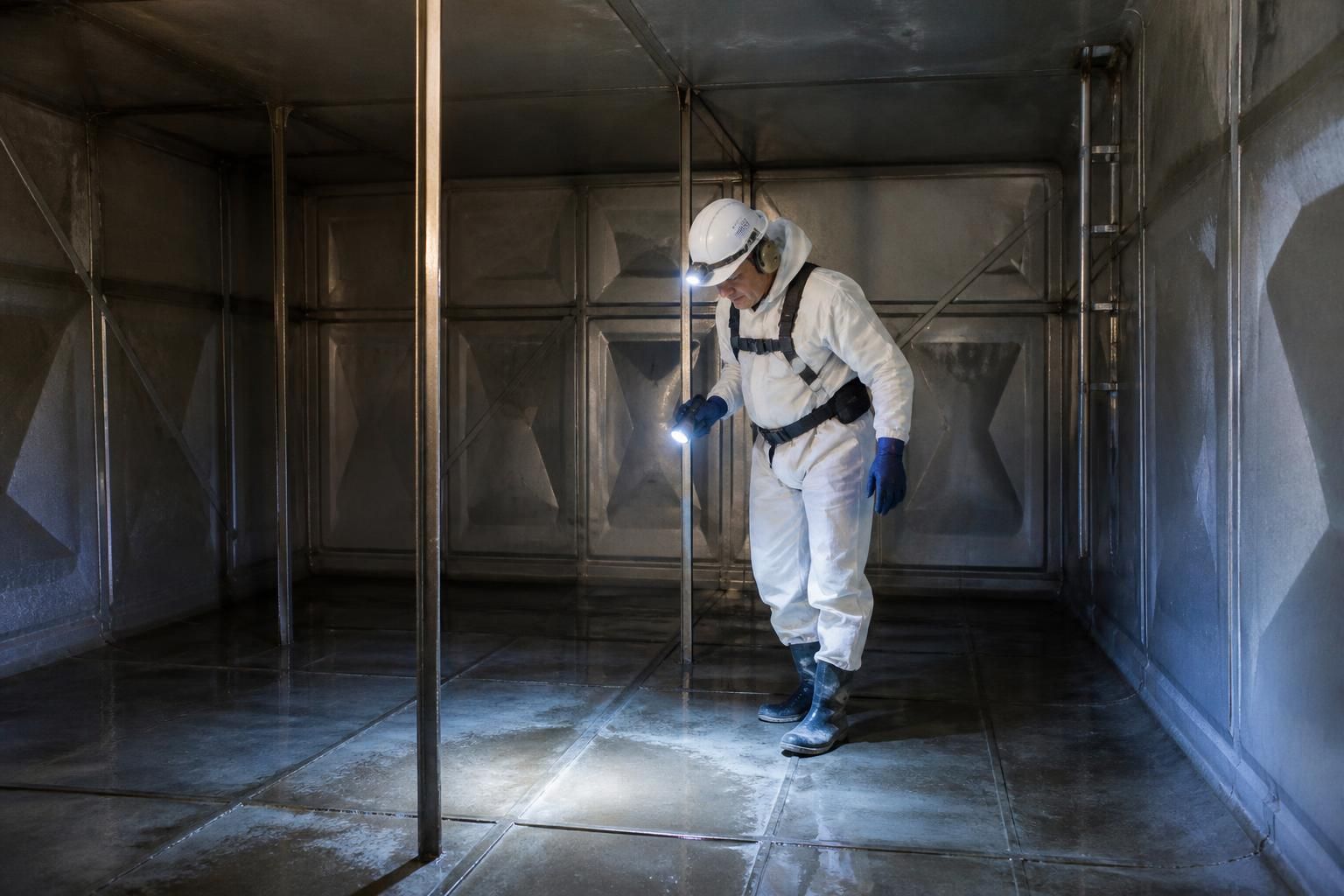
Cold water storage tank cleaning is a controlled water-hygiene procedure that removes accumulated material, addresses contamination risks and confirms that the tank and its connected components are suitable to return to service. The exact method depends on the tank’s construction, condition, capacity, access arrangements and the type of premises supplied.
1. Review the system and prepare the work
Before work begins, the contractor should review available schematic drawings, previous inspection records, risk assessments and details of the outlets supplied by the tank. This establishes how the tank can be taken out of service without creating an unacceptable interruption or introducing a backflow or cross-connection risk.
The work area should be assessed for safe access, confined-space hazards, electrical equipment, fragile covers, working at height and any contamination that could enter the tank during the process. Suitable clean equipment and protective clothing should be used, and the tank should not be opened until the surrounding area is controlled.
2. Isolate the tank correctly
Inlet, outlet, warning and overflow arrangements are checked before isolation. Valves should be operated in a controlled sequence so that the tank is separated from the wider water system and cannot refill unexpectedly. Where the tank supplies critical facilities, temporary measures or an agreed shutdown procedure may be needed.
Isolation is more than closing one valve. A competent technician checks whether valves pass, whether water can enter through another connection and whether stored water remains in downstream pipework. Poor isolation can dilute cleaning chemicals, expose workers to moving water or allow contaminated water back into service.
3. Drain and inspect the tank
Once isolated, the stored water is removed through an appropriate drain point. The base, corners, joints, internal surfaces, float-operated valve, inlet arrangement, outlet, drain, overflow, lid and insect screen can then be examined. Inspection looks for sludge, scale, rust, biofilm, damaged coatings, gaps, defective seals and evidence of animal or insect ingress.
The condition of the tank matters because cleaning cannot correct every defect. A cracked cover, corroded panel, ineffective seal or poorly positioned overflow may continue to create a water-hygiene risk after the internal surfaces have been cleaned. Findings should therefore be recorded separately from the cleaning activity, with remedial work recommended where necessary.
4. Remove deposits and clean internal surfaces
Loose sediment and debris are removed using methods appropriate to the tank material and the nature of the deposit. Internal surfaces are then cleaned to remove adherent dirt, slime and other deposits. Abrasive methods or chemicals that could damage a tank lining, release residues or affect potable water quality should be avoided.
Particular attention is required at low points, around fittings, beneath inlet pipework and along seams. These areas can retain deposits even when the main tank surfaces appear clean. Removable components may be cleaned separately, provided they can be handled without introducing further contamination.
5. Apply disinfection where required
Disinfection is a separate stage from physical cleaning. Once deposits have been removed, an appropriate disinfectant is applied at a controlled concentration and for the required contact period, taking account of the tank material and the wider system. The method should be suitable for water intended for domestic or operational use and managed to prevent exposure to people or damage to equipment.
The contractor should follow the relevant procedure for the chosen disinfectant, including controls for handling, ventilation, contact time and disposal. Disinfectant must not be left in the system at a concentration that could make the water unsuitable for use. Where connected pipework or outlets also require treatment, the scope should be agreed in advance because tank cleaning alone may not address contamination elsewhere in the system.
6. Reassemble and return the system to service
After treatment, the tank and fittings are rinsed or otherwise cleared in accordance with the method used. Covers, screens, seals, valves and other components are refitted securely. The tank is then refilled under controlled conditions, with checks for leaks, correct valve operation, adequate overflow arrangements and any abnormal flow or pressure conditions.
Outlets may need to be flushed until the water is clear and residual disinfectant levels are acceptable. Water should not be released for normal use until the responsible person is satisfied that the cleaning method has been completed and the system has been safely reinstated.
7. Verify and document the work
Verification can include a visual inspection, measurements of disinfectant residuals and water sampling where the risk assessment, site procedure or client requirements call for it. Samples should be collected in a way that avoids accidental contamination and sent for appropriate analysis when laboratory confirmation is required. A test result is useful evidence, but it does not replace correcting visible defects or poor system design.
The completion record should identify the tank, date of work, isolation arrangements, observed condition, cleaning and disinfection method, products used, inspection findings, sample details where applicable, outstanding defects and recommendations for follow-up. Photographs can provide useful evidence of the tank’s condition before and after work.
Why the wider system matters
A storage tank is one part of a water system. Temperature control, stagnation, low usage, dead legs, poor turnover, defective insulation and unsuitable pipework can all influence the likelihood of microbial growth. For that reason, tank cleaning should be considered alongside the site’s legionella risk assessment and planned monitoring arrangements rather than treated as an isolated cosmetic task.
For commercial and industrial premises, the person responsible for water safety should check that the contractor’s method matches the system risk, that affected occupants and site teams understand any restrictions during the work, and that defects are tracked to completion. A properly documented clean provides both practical hygiene control and evidence that the storage tank has been managed as part of the wider water-safety programme.
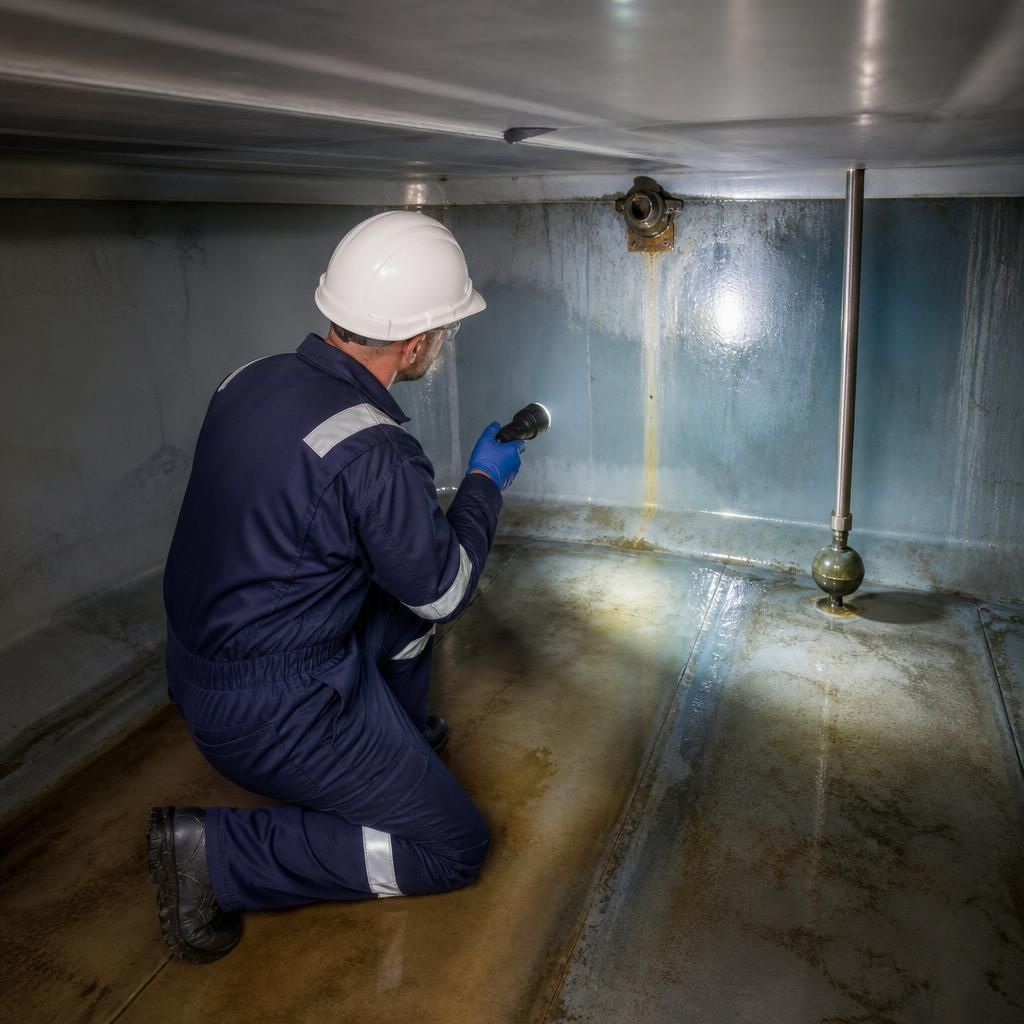
Cold water storage tank cleaning should also assess whether the tank can be maintained hygienically after the work is complete. Restricted access, ineffective drainage, damaged internal surfaces or fittings that cannot be removed may allow sediment and biofilm to accumulate again. These issues should be recorded as maintenance or remedial recommendations rather than treated as part of the cleaning itself.
This distinction helps the responsible person decide whether a clean has addressed the immediate hygiene issue or whether improvements to the tank or its installation are needed. It also provides useful evidence for future inspections and for reviewing the site’s wider water-safety arrangements.
Discuss your cold water storage tank cleaning requirements
Discuss your cold water storage tank cleaning requirements with Blue Fish Water Management Ltd to identify an appropriate scope of work for your premises and water system.