
How often should cold water storage tanks be cleaned?
Cold water storage tanks do not have a universal cleaning interval; the frequency should be set by the system’s Legionella risk assessment. They should be inspected at least annually and cleaned and disinfected when inspection identifies contamination, sediment, corrosion, deterioration or other conditions that could affect water hygiene, as well as after relevant remedial work or contamination incidents.
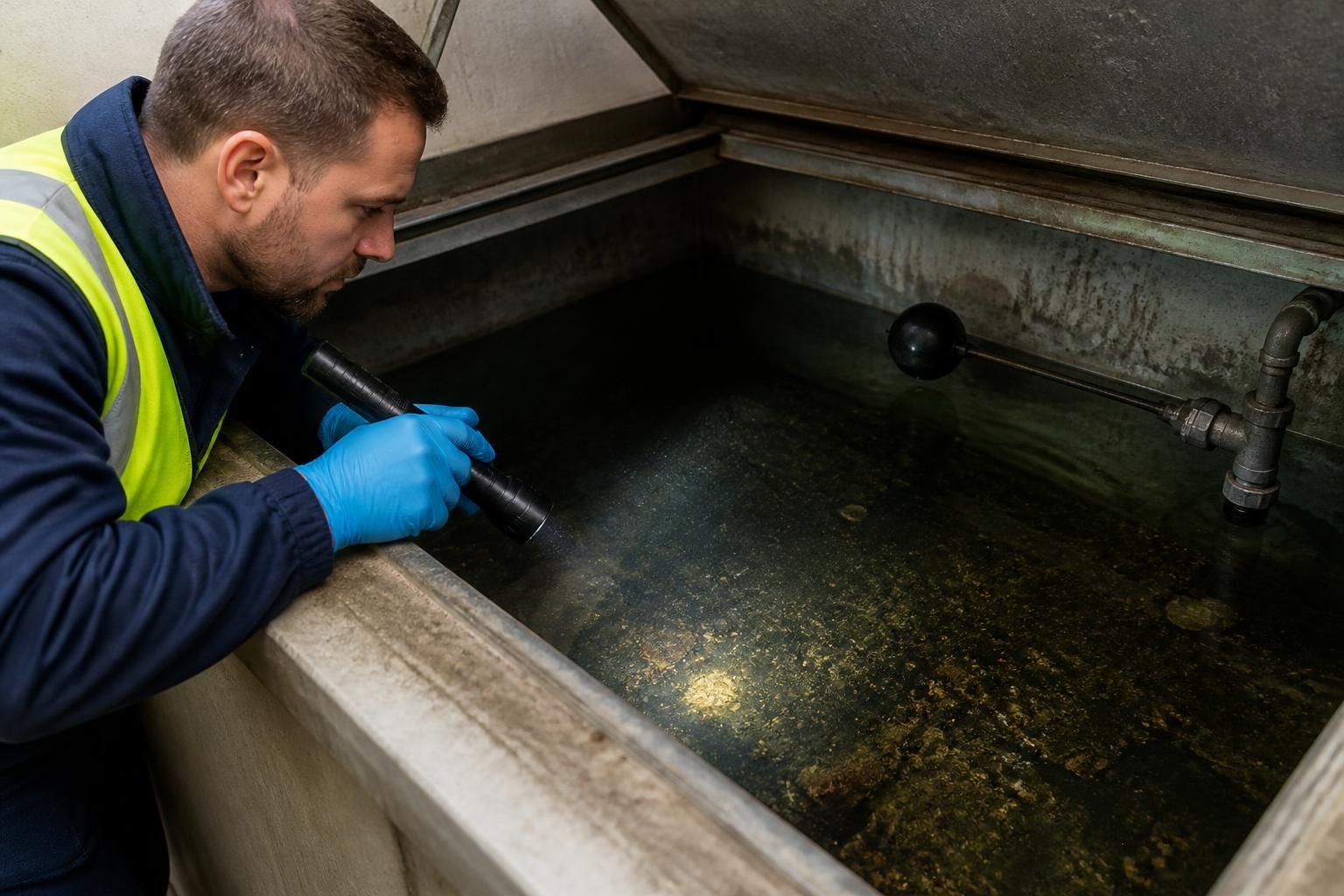
The appropriate cleaning interval for a cold water storage tank is the interval justified by the system’s documented Legionella risk assessment. A tank in a well-maintained, regularly used system may need less frequent cleaning than one exposed to low turnover, temperature problems, sediment or repeated contamination. Cleaning should therefore be scheduled according to evidence about the tank and its operating conditions, rather than applied as an arbitrary calendar exercise.
Factors that affect the cleaning frequency include:
- Water turnover: Low demand or intermittently occupied premises can allow water to stagnate, increasing the opportunity for microbial growth and sediment accumulation.
- Temperature control: Cold water should be kept suitably cool, while stored hot water systems require their own temperature controls. Persistent temperature deviations should prompt investigation rather than waiting for the next planned clean.
- Tank condition: Corrosion, damaged lids, poor insulation, ineffective screens and deteriorating internal surfaces can introduce or retain contamination.
- Visible deposits: Sludge, scale, rust, biofilm or other debris indicate that the tank’s condition should be assessed and may require cleaning and disinfection.
- System use and occupancy: Healthcare, care, residential and other settings containing people who may be particularly susceptible to Legionella require especially careful control.
- Previous findings: Repeated adverse inspection results, unsatisfactory water hygiene samples or earlier contamination incidents may justify a shorter interval or additional control measures.
Cleaning is not the same as routine monitoring. Temperature checks, inspections and water sampling can identify warning signs, but sampling alone does not remove sediment or contamination from the tank. The tank, associated pipework and fittings should be considered as part of the wider cold water system, because a clean tank can be affected by defects elsewhere in the installation.
A suitable risk assessment should define what is checked, who is responsible, what findings require action and how the outcome is recorded. Records should normally identify the tank or system inspected, the date, the condition found, any samples or measurements taken, the work completed and any recommendations that remain outstanding. These records provide evidence that the cleaning decision was based on the system’s actual condition.
An earlier clean may be appropriate following building alterations, tank replacement, major plumbing work, a confirmed contamination event or a period in which the system has been left unused. The need for cleaning after such events depends on the work undertaken and the findings of the subsequent assessment; it should not be assumed that every interruption requires the same response.
Where cleaning is required, the work should be planned to protect users from exposure to contaminated water and disinfectant. A competent contractor should assess access, isolation, safe drainage, cleaning methods, disinfection, flushing and the return of the system to service. Any defect that contributed to contamination, such as an insecure cover or damaged insulation, should be corrected rather than relying on repeated cleaning alone.
For a commercial or industrial premises, the most useful approach is to treat the cleaning interval as one part of the written water safety arrangements. The responsible person should review the interval whenever there is a change in occupancy, usage, equipment, water quality, system condition or risk profile. Blue Fish Water Management can help businesses assess these factors through Legionella risk assessment, water hygiene monitoring and remedial advice, enabling the cleaning schedule to reflect the installation rather than a generic template.
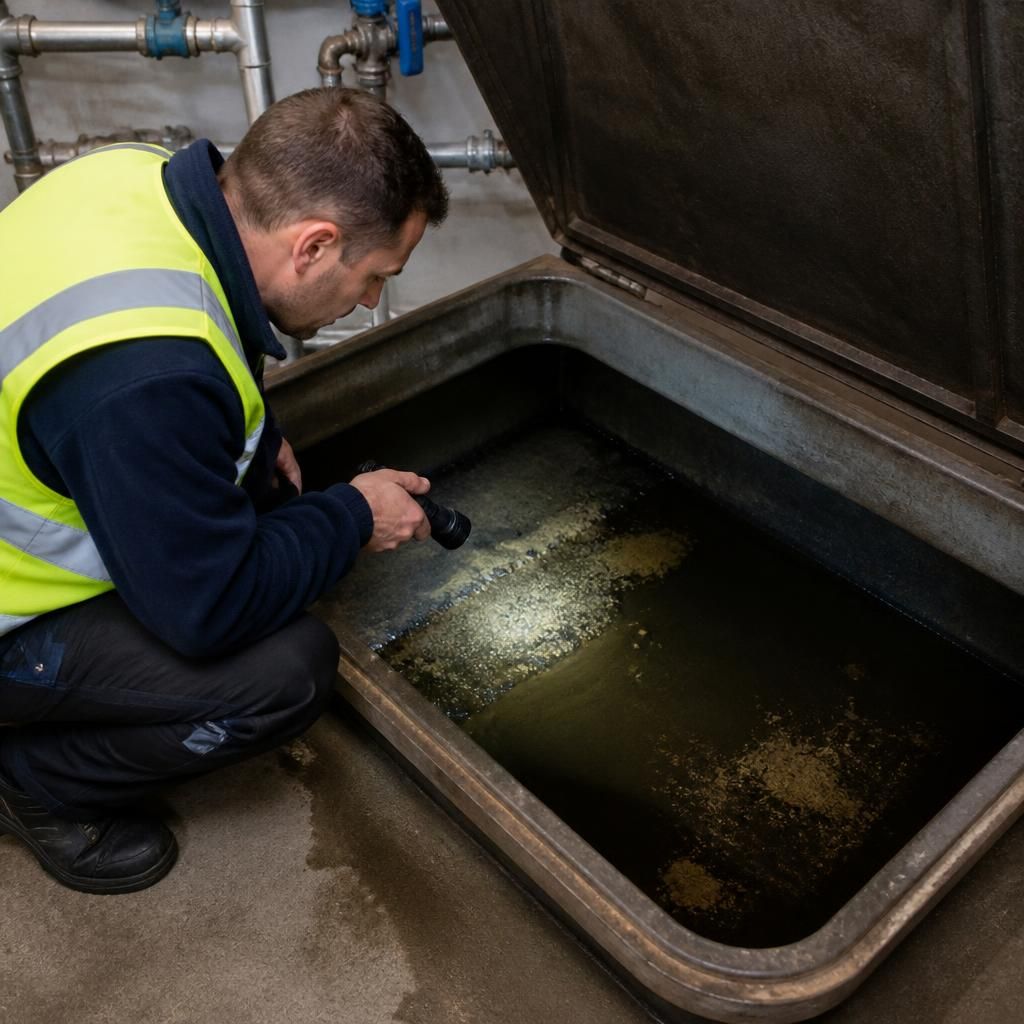
Where no current Legionella risk assessment supports a cleaning interval, a cold water storage tank should not simply be cleaned to an inherited calendar schedule. The responsible person should first obtain a competent assessment of the tank, its connected system and the way the premises are used. This establishes whether cleaning is currently necessary and what future findings should trigger an earlier review.
The assessment should also distinguish between a clean that forms part of planned maintenance and one required because of a specific event. A documented reason for each clean—such as an inspection finding, contamination investigation or significant system change—helps demonstrate that the frequency is proportionate and allows later decisions to be based on evidence rather than habit.
Need advice on your tank cleaning schedule?
For help reviewing your cold water storage tank cleaning schedule, speak to Blue Fish Water Management about a Legionella risk assessment and practical water hygiene advice for your premises.