
When should a clean water tank be repaired or replaced?
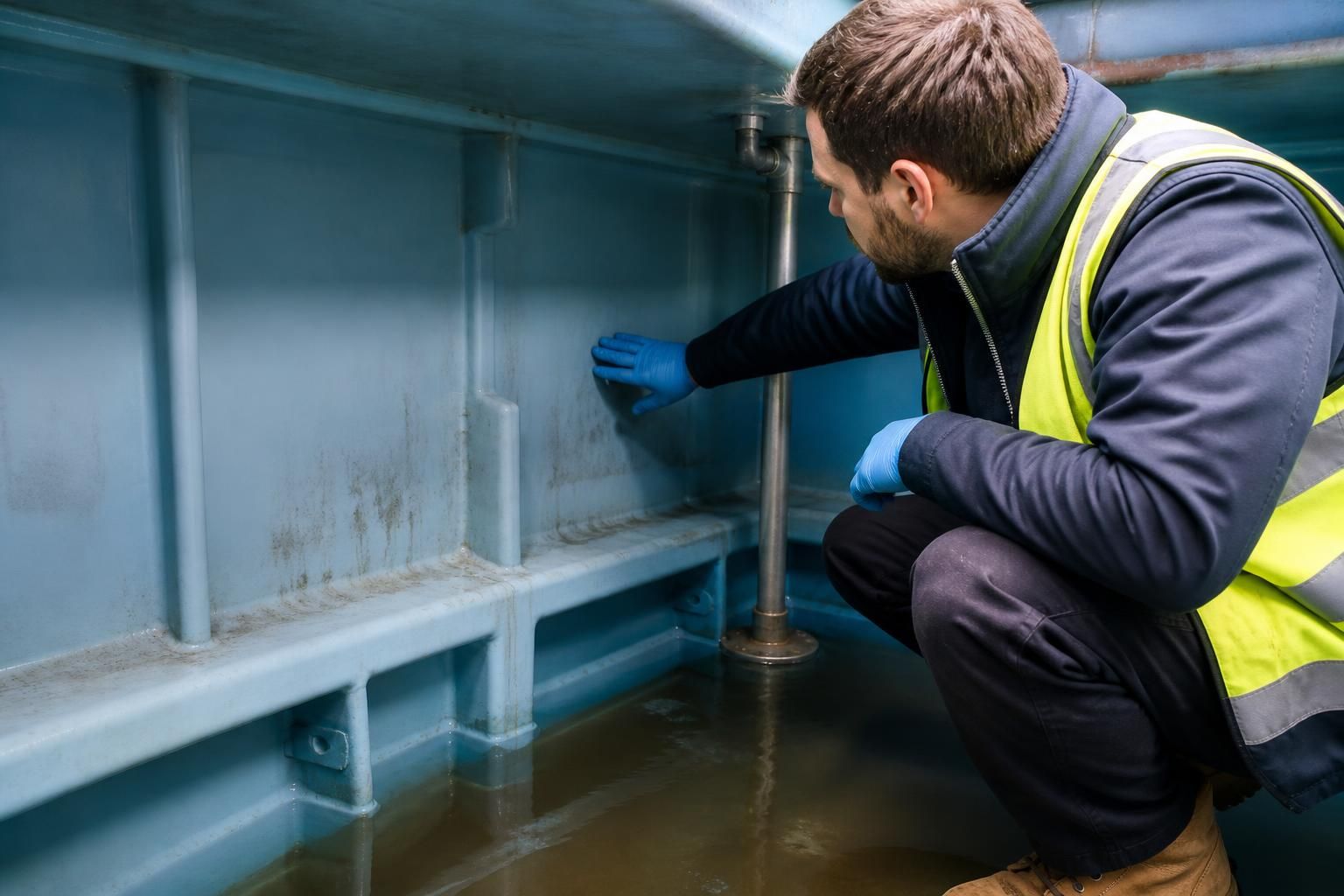
A clean water tank should remain in service only when it can be maintained in a hygienic, structurally sound and compliant condition. Repair is generally suitable where the problem is limited, accessible and capable of being rectified without compromising the tank or the quality of the stored water. Replacement becomes the more appropriate option when defects are widespread, recurring or connected with the tank’s design, materials or inability to support effective inspection, cleaning and disinfection.
The decision should be based on a competent condition assessment. A visual inspection should consider the tank, cover, inlet, outlet, warning pipe, overflow, ball valve, supports, insulation and associated pipework. Where necessary, this should be supported by water hygiene testing, a review of maintenance records and an assessment of how the tank is used. A defect that appears minor in isolation may have greater significance if it allows contamination, encourages stagnation or prevents the system from being safely maintained.
Repair may be appropriate where:
- the defect is confined to a replaceable component, such as a valve, cover seal, fitting or section of associated pipework;
- a small area of damage can be repaired using a suitable method and materials that are appropriate for contact with potable water;
- the tank body remains stable and its internal surfaces can still be cleaned and disinfected effectively;
- the defect has a clear cause that can be addressed, rather than being part of continuing material failure;
- repairs will not create inaccessible joints, rough surfaces or other areas where sediment and microorganisms can accumulate; and
- the repaired tank can continue to meet the operational and hygiene requirements of the premises.
Repairs should not be treated as a permanent solution simply because they stop visible leakage. A patch or seal may conceal progressive deterioration, and an unsuitable repair can introduce contamination or make future cleaning more difficult. The repair method should therefore be recorded, inspected after completion and included in the tank’s ongoing maintenance arrangements.
Replacement is more likely to be required where:
- corrosion, cracking, distortion or other deterioration affects multiple areas of the tank;
- leaks recur after previous repairs or cannot be reliably located and rectified;
- the tank, cover or supports no longer provide adequate structural security;
- internal surfaces are pitted, flaking, porous or otherwise difficult to clean and disinfect;
- the cover does not prevent the entry of dust, insects, light or other contamination;
- the design creates persistent dead legs, stagnation or sediment accumulation that cannot be managed effectively;
- the tank is difficult to access for inspection, sampling, cleaning or maintenance; or
- the available repair would be temporary, extensive or unsuitable for the tank’s intended use.
Age alone does not determine whether a tank must be replaced. An older tank may remain suitable if its condition, design and maintenance history are satisfactory, while a newer tank may need replacement if it has been damaged, poorly installed or exposed to conditions that have accelerated deterioration. The material is also relevant: corrosion, brittleness, delamination and degradation present different risks and require different remedial approaches.
Water hygiene risk must be considered alongside physical condition. A tank that cannot be kept covered, clean and protected from contamination may present a greater risk even if it is not visibly leaking. Sediment, biofilm, scale and organic matter can provide conditions that support microbial growth, including Legionella. If cleaning cannot remove those deposits because the internal surface is damaged or inaccessible, replacement may offer a more reliable way to restore hygienic control.
The surrounding system should be assessed before specifying a replacement. The required capacity, operating temperatures, turnover, access arrangements, insulation, pipework configuration and protection against backflow all affect the suitability of the new installation. Replacing the tank without addressing poor turnover, inappropriate storage arrangements or defective components may leave the underlying water hygiene risk unresolved.
A sound repair-or-replace decision should normally document:
- the defects found and their locations;
- the likely cause and whether the problem is isolated or systemic;
- the effect on structural integrity, water quality and maintenance access;
- the proposed repair, including materials and quality controls;
- the reasons replacement is or is not considered necessary; and
- any follow-up cleaning, disinfection, testing or monitoring required after the work.
Where a tank is repaired, the system should be returned to service only after the relevant works have been completed and the required hygiene controls have been carried out. Where it is replaced, commissioning should confirm that the new tank is correctly installed, protected from contamination and suitable for the system’s intended operation. A risk assessment and maintenance plan should then reflect the condition and configuration of the tank in service.
For commercial and industrial premises, the assessment should be integrated with the site’s written water safety arrangements. A suitably competent water hygiene professional can distinguish a repairable defect from evidence of wider failure, identify associated risks and set out proportionate remedial works rather than relying on leakage or appearance alone.
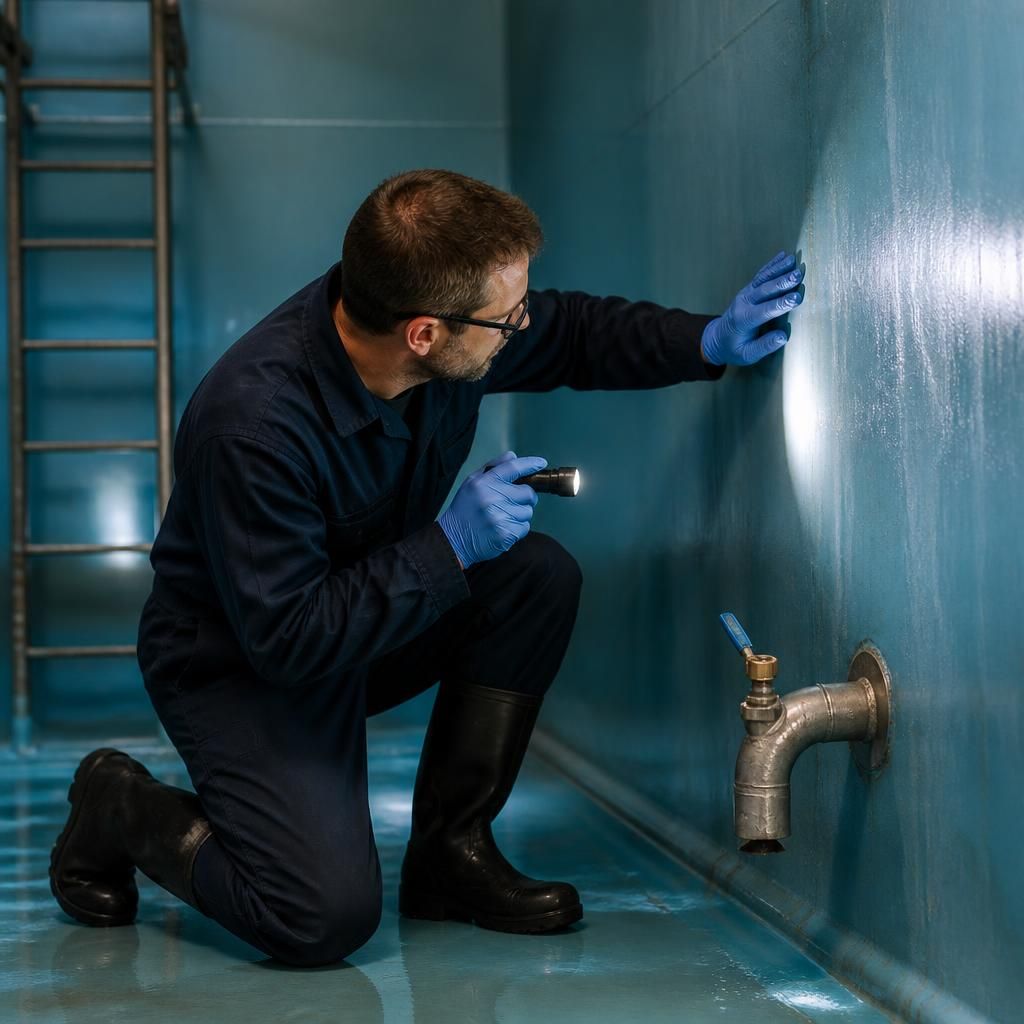
The repair-or-replace decision should consider whole-life suitability, not just the immediate cost of the proposed work. A low-cost repair may be less appropriate if it is likely to require repeated access, recurring isolation, additional cleaning or further remedial work. Conversely, replacement may involve greater initial disruption but provide a more maintainable arrangement where the existing tank has become difficult to service.
When comparing the options, assess the expected durability of the repair, access requirements, effects on water hygiene controls, future inspection needs and any work required to keep the system operational during the intervention. The preferred option is the one that provides a defensible balance between structural reliability, hygienic control and practical maintenance over the tank’s remaining service life.
Discuss Your Clean Water Tank Repair or Replacement Needs
Arrange a competent clean water tank inspection to establish whether repair or replacement is the more appropriate course for your system. Blue Fish Water Management Ltd can help assess the tank’s condition and define proportionate remedial works.