
What factors determine the scope of clean water tank cleaning?
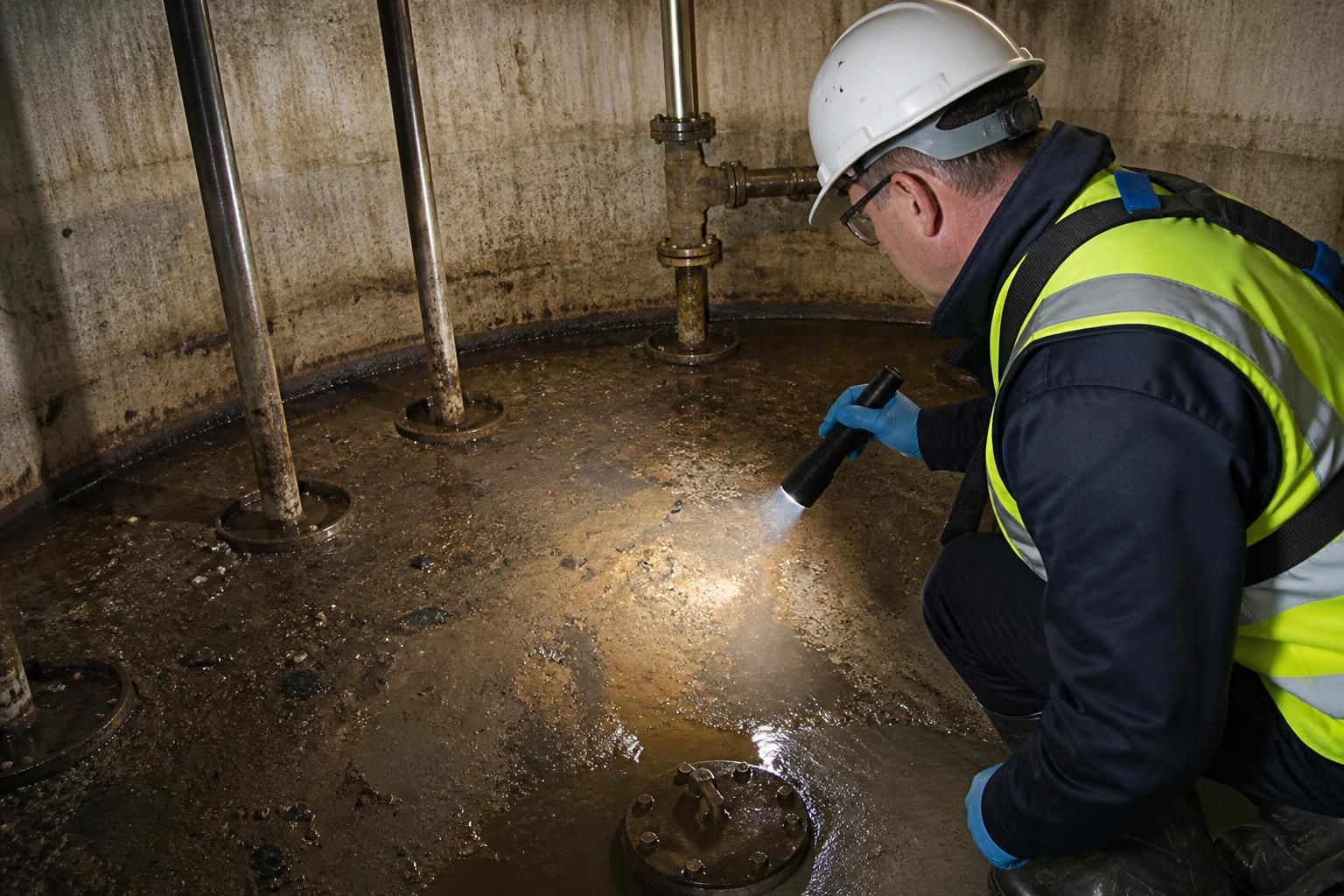
The scope of clean water tank cleaning is established through a site-specific assessment of what must be cleaned, how it can be cleaned safely, and what evidence is needed afterwards. It is not determined by tank capacity alone. The assessment should define the work area, cleaning method, disinfection requirements, associated components, safety controls, verification and any remedial action needed to leave the system suitable for continued use.
The tank’s function and risk profile influence the level of control required. A tank supplying drinking water, welfare facilities, healthcare premises, production processes or other critical operations may require different planning and verification. The assessment should consider who uses the water, whether vulnerable people could be exposed, whether the tank provides an essential supply, and whether a temporary interruption or alternative supply is needed during the work.
Tank construction and internal arrangement affect both the cleaning technique and the time involved. Relevant features include the tank material, sectional or one-piece construction, internal coatings, lids, access covers, partitions, inlet and outlet positions, overflow arrangements, screens, valves and internal fittings. A tank with separate compartments may require each compartment to be isolated, drained, cleaned and disinfected individually rather than treated as one open volume.
Internal condition is assessed before work begins. Inspectors may look for sediment, scale, biofilm, corrosion, damaged coatings, sludge, staining, insects, debris and signs of ingress. Light deposits may be removable through routine draining and mechanical cleaning, whereas established scale, damaged surfaces or persistent contamination may require additional treatment or repair. The findings should be recorded so that the agreed scope reflects the actual condition rather than an assumption based on previous visits.
The source and nature of contamination can change the work plan. Sediment accumulated through normal operation may require a different response from contamination caused by a defective cover, failed insect screen, backflow event, nearby construction or an unused section of pipework. Where contamination has entered connected distribution pipework, cleaning the tank alone may not address the full issue. The investigation may therefore extend to outlets, valves, adjacent storage tanks and representative sections of the distribution system.
Access and safe working conditions are practical determinants of scope. The plan should account for the route to the tank, working space around access points, lighting, ventilation, drainage, lifting arrangements and the handling of hoses and equipment. Entry into a tank is not automatically required and should not be treated as routine. Where entry is unavoidable, confined-space hazards, atmospheric conditions, rescue arrangements, hygiene controls and suitable personal protective equipment must be addressed in the method statement and risk assessment.
Isolation and continuity of supply also need to be established. The operative should be able to identify and control the inlet, outlet, drain, overflow and any interlinked tanks or boosted systems. Poorly understood valve arrangements can allow the tank to refill during cleaning or permit untreated water to re-enter the cleaned section. The scope may include valve checks, temporary blanking or segregation, controlled draining and a defined process for returning the tank to service.
Water quality and system history provide useful context. Previous laboratory results, inspection records, cleaning certificates, maintenance reports, complaints, temperature records and details of alterations can show whether the issue is isolated or recurring. Results from appropriately selected water samples may indicate whether further investigation is justified, but sampling does not replace a physical inspection of the tank and its connected system.
Once the conditions are understood, a cleaning specification normally addresses the following stages:
- isolation, controlled shutdown and draining of the tank;
- removal of sediment, loose deposits and accessible debris;
- mechanical cleaning of internal surfaces and fittings using methods compatible with the tank materials;
- rinsing and removal of waste water in accordance with site arrangements;
- disinfection using a controlled process appropriate to the system;
- inspection of the cleaned surfaces, fittings, covers and protective devices;
- refilling, flushing and reinstatement of the system; and
- post-cleaning checks, sampling or other verification where required by the risk assessment or site procedures.
The specification should distinguish between cleaning and remedial work. Cleaning removes deposits and contamination; it does not by itself repair a cracked tank, renew a failed seal, replace a missing cover, correct an inadequate overflow screen or resolve defective insulation. If such defects are found, they should be documented separately, with their effect on water hygiene and the order in which they need to be addressed. In some cases, cleaning may need to be followed by repair and repeat disinfection before the tank can be considered suitable for use.
Compliance and verification requirements determine how the work is evidenced. The completed record may include the tank identification, pre-cleaning condition, isolation arrangements, products and methods used, contact conditions, rinse or flushing details, inspection findings, sample results where taken, defects identified and the date of return to service. The level of documentation should match the organisation’s water safety arrangements and provide a clear audit trail for responsible persons and contractors.
For that reason, the final scope should be agreed only after reviewing the tank, its operation and the available records. A sound specification explains what is included, what is excluded, how unexpected contamination or defects will be handled, what access the site must provide, and what checks will confirm completion. This prevents a nominal tank clean from overlooking the surrounding system issues that may continue to affect water hygiene.
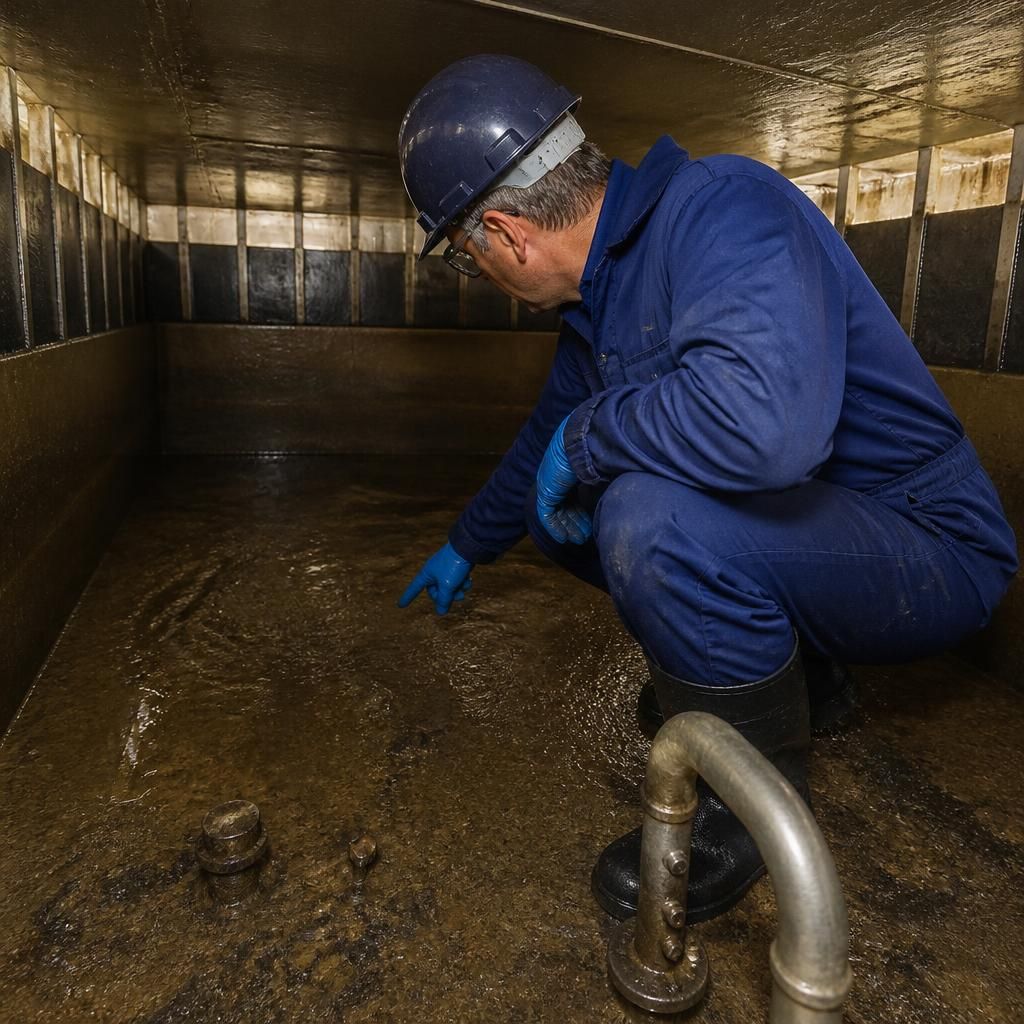
The reason for the cleaning is an important determinant of its scope. A routine planned clean may involve the agreed tank, its fittings and standard verification, whereas work following an abnormal water quality result, contamination incident or prolonged stagnation may require a broader investigation. In those circumstances, the specification should include checks to establish whether the cause has been removed, rather than treating cleaning alone as the complete solution. The inspection findings and the reason for the work should therefore be recorded together, so that any additional checks or follow-up actions are proportionate to the original concern.
Discuss your clean water tank cleaning requirements
Discuss your clean water tank cleaning requirements with Blue Fish Water Management Ltd to review the relevant site information and define an appropriate scope of work.