
How often should clean water tanks be professionally cleaned?
Clean water tanks should generally be professionally inspected and cleaned at least annually, but the correct frequency depends on the risk assessment and the condition, use and water quality of the system. More frequent cleaning may be necessary where contamination has occurred, tanks are poorly maintained or water serves people who are particularly vulnerable to infection.
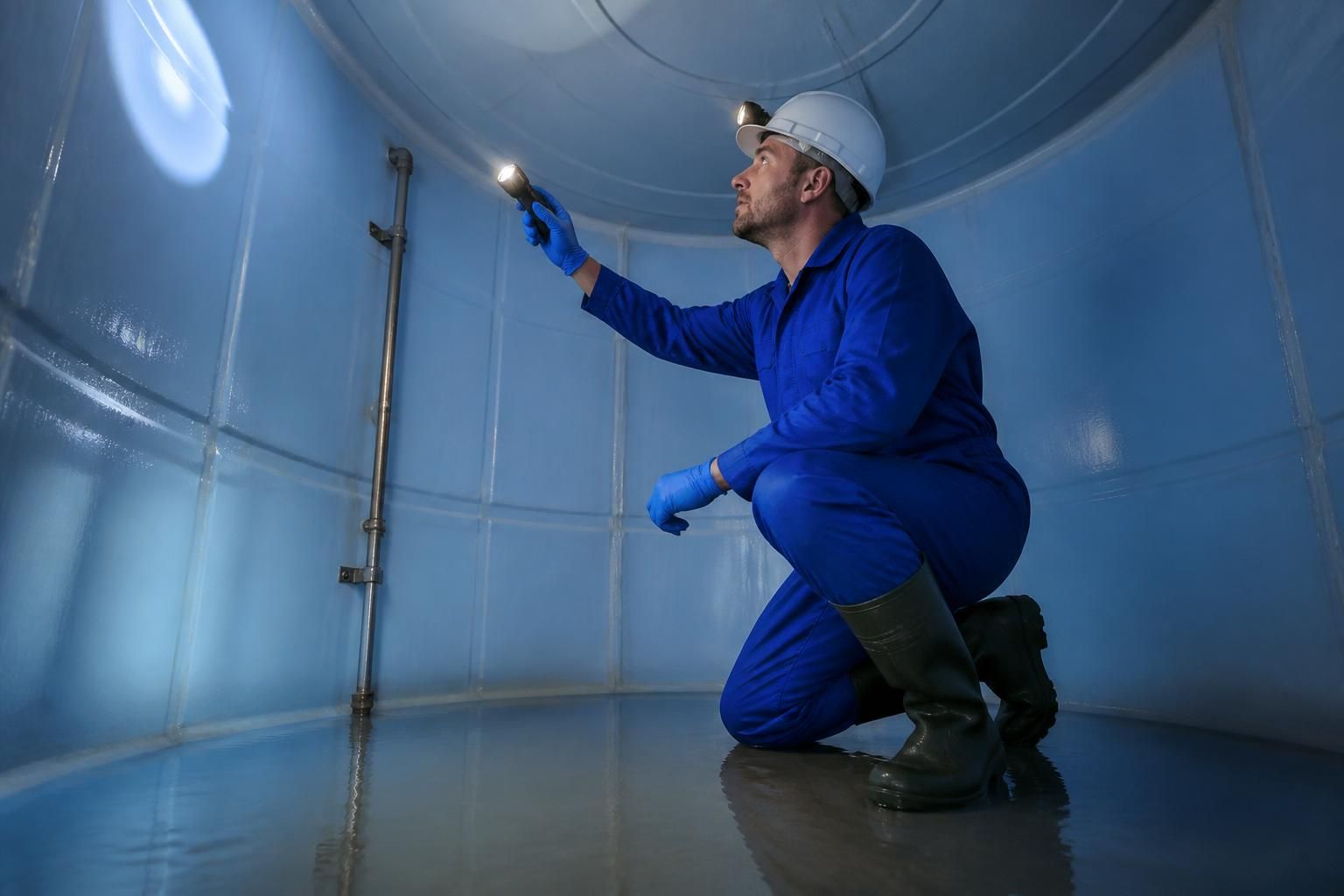
There is no single cleaning interval that is suitable for every clean water tank. The professional cleaning schedule should be set by the site-specific legionella risk assessment, then adjusted when inspection findings, water quality results, system use or site conditions change. A tank in a well-managed, regularly used system may require a different programme from one with low turnover, persistent sediment or a history of contamination.
It is important to distinguish between inspection, monitoring and cleaning. Inspection checks the tank, its cover, inlet, outlet, overflow, ventilation and internal condition. Monitoring may include temperature checks, water quality sampling and reviewing changes in use. Cleaning is a physical and, where appropriate, disinfection process carried out when deposits, contamination or other risk factors make it necessary. A tank can appear serviceable externally while containing sediment or biofilm internally, so visual checks should not be treated as a substitute for a competent assessment.
The frequency recommended by a risk assessor will normally take account of:
- Water turnover: Low-use tanks and systems with periods of stagnation can accumulate sediment and provide more favourable conditions for microbial growth.
- Tank condition and design: Damaged covers, ineffective seals, inadequate insulation, corrosion, poor access or unsuitable materials can increase the likelihood of contamination.
- Water temperature: Storage and distribution conditions that allow water to remain within a temperature range favourable to legionella growth require closer management.
- Incoming water and deposits: Sediment, scale, rust and other debris can enter through the supply or develop within the tank, affecting both water quality and system hygiene.
- System complexity: Large or interconnected systems, multiple storage tanks, infrequently used outlets and dead legs can make contamination harder to identify and control.
- Occupant vulnerability: Where water is used by people who may be more susceptible to serious infection, the risk assessment may justify tighter controls and more frequent intervention.
- Previous results and history: Unsatisfactory samples, repeated temperature failures, earlier contamination, remedial work or unexplained changes in water quality should influence the next cleaning date.
Professional cleaning may also be required outside the planned programme. Triggers can include visible contamination, unusual colour, taste or odour, a damaged or open tank cover, flooding, an interruption to the water supply, prolonged stagnation, building works or evidence that vermin or foreign material has entered the tank. A significant change in occupancy, water demand or system operation should prompt a review rather than relying on the existing calendar date.
A competent contractor should establish the tank’s condition before work begins and define the scope in a written method statement. Depending on the findings, the work may involve isolating the tank, removing stored water and sediment, cleaning internal surfaces, disinfecting the tank and associated components, flushing the system and carrying out appropriate checks before returning it to service. The precise process should reflect the tank construction, the wider system and the level of contamination; a standard procedure applied without considering those factors may leave the underlying risk unresolved.
After cleaning, the responsible person should retain records showing why the work was required, what was found, which parts of the system were treated, the products and procedures used, any samples taken, and outstanding remedial actions. These records support the legionella control scheme and help the next assessor determine whether the chosen interval remains appropriate. Cleaning should not be regarded as a permanent correction where the cause is a failed cover, poor insulation, excessive storage capacity, stagnation or inadequate temperature control.
Blue Fish Water Management can support UK businesses with legionella risk assessments, water quality testing, system monitoring and remedial works relating to clean water tanks. Its approach is to use the condition and risk profile of the system to inform the cleaning programme, rather than applying an arbitrary frequency to every site.
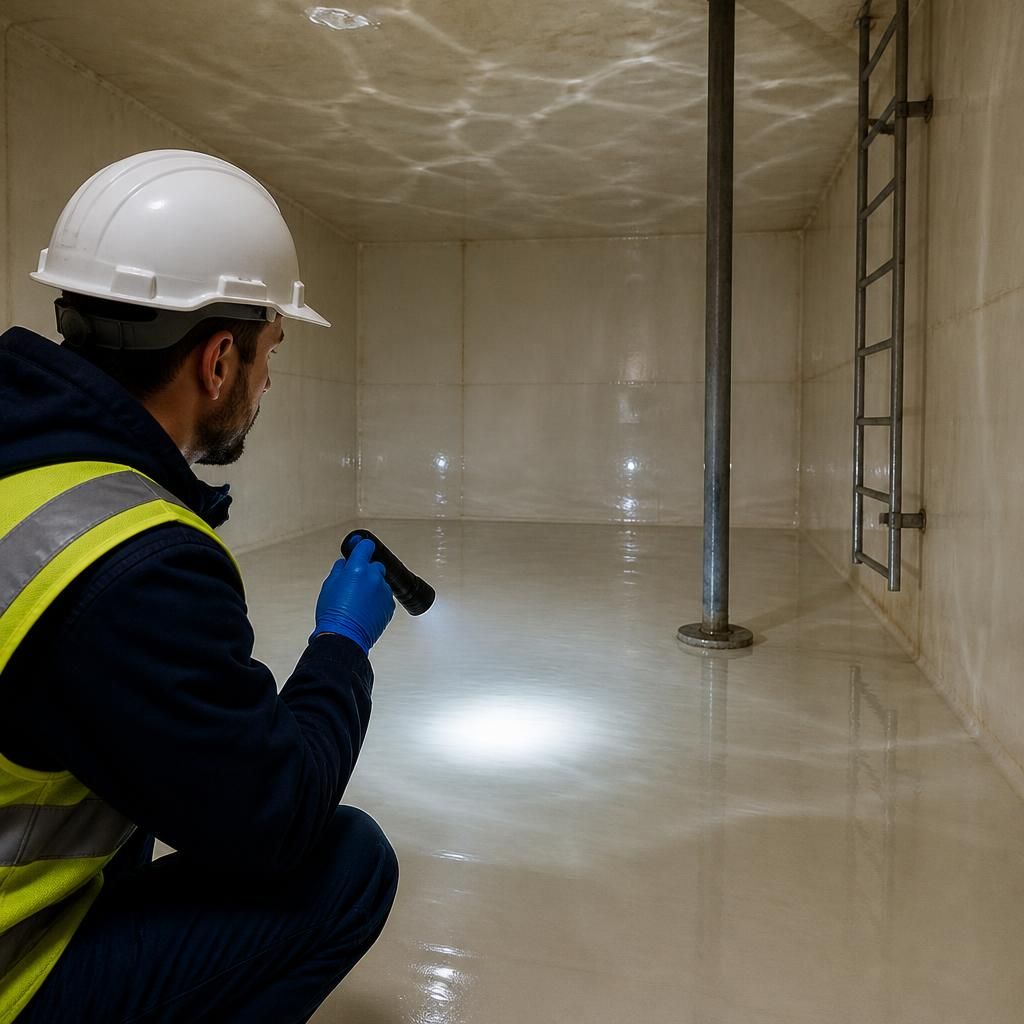
Where a site has several clean water tanks, each tank should be considered on its own condition and risk profile rather than automatically assigning the same cleaning date to all of them. Differences in turnover, sediment accumulation, access, cover condition and connection to the wider system can mean that one tank needs attention sooner than another.
Cleaning one tank may also be insufficient if tanks are linked or if contamination can remain in connected pipework, outlets or associated components. The cleaning programme should therefore define the equipment included, explain how the wider system will be checked, and record any follow-up work needed. This helps ensure that the selected interval reflects the actual system rather than an administrative calendar.
Discuss your clean water tank cleaning frequency
Ask Blue Fish Water Management to review your clean water tank cleaning programme against the system’s current condition and legionella risk profile. Their specialists can help identify whether further assessment, testing or remedial work is appropriate.