
How do you choose a clean water tank services provider?
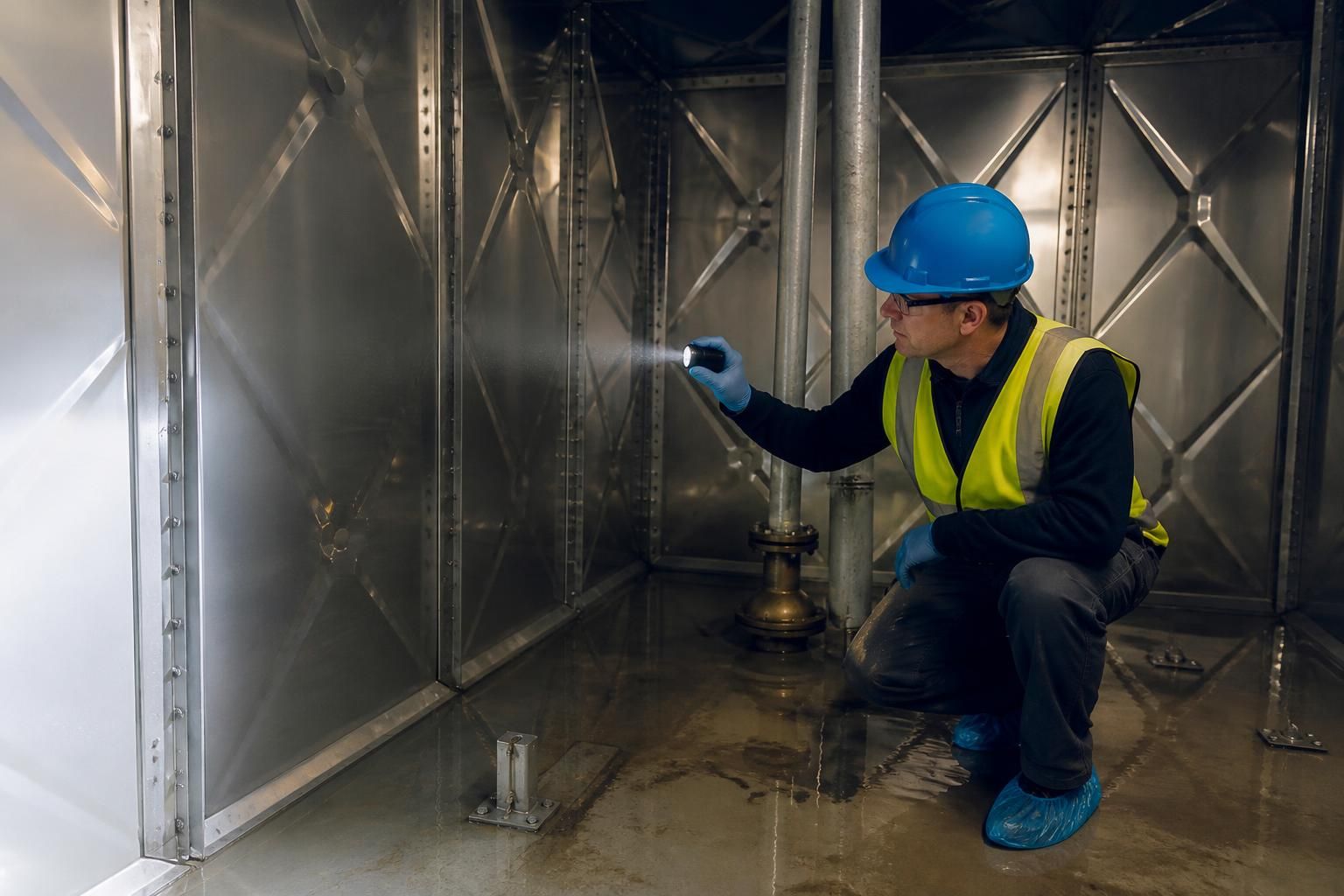
The right clean water tank services provider should be selected on its ability to understand the whole water system, define the work precisely and provide evidence that its advice is technically sound. Price is relevant, but it should be compared alongside competence, scope, independence, documentation, site controls and the provider’s ability to manage issues identified during the work.
Before approaching providers, establish the basic requirements for the site. Useful information includes the number and location of tanks, their capacity and construction, the water uses they serve, access restrictions, known defects, previous cleaning dates and any relevant risk assessment or inspection records. A provider can then distinguish between routine tank cleaning and work requiring inspection, disinfection, sampling, repair or further investigation.
When comparing potential providers, consider the following points:
- Relevant technical experience: Ask whether the provider has worked with tanks and water systems comparable with yours. Domestic, commercial and industrial installations can differ substantially in size, access, operating pressures, storage arrangements and consequences of interruption. Experience should relate to the actual type of site, rather than simply to general water hygiene.
- A clearly defined scope: The quotation should state which tanks, chambers and associated components are included, what preparation is required, how the system will be isolated or drained, and what is excluded. Ambiguous descriptions such as “tank service” make it difficult to compare quotations or establish whether important tasks have been omitted.
- Suitable health and safety controls: Tank work may involve confined spaces, restricted access, work at height, manual handling, electrical equipment and interaction with live water services. Ask how the provider assesses these hazards, controls access and protects employees, occupants and other contractors. The proposed arrangements should be appropriate to the site rather than copied from a generic template.
- Sound disinfection and hygiene practice: Find out how equipment, hoses and other materials are kept clean and how contamination is prevented during the work. The provider should be able to explain the principles behind its cleaning and disinfection process, including how it deals with sediment, biofilm, corrosion and damaged surfaces where these are present.
- Appropriate testing arrangements: Where sampling is required, establish who undertakes the analysis, which laboratory is used and how samples are identified, handled and interpreted. A provider should explain what a result can and cannot demonstrate. Laboratory results are most useful when considered alongside the tank’s condition, operating arrangements and relevant site history.
- Inspection capability: Cleaning can expose defects that are not visible beforehand. Confirm whether the provider can record issues such as cracked or displaced covers, defective screens, damaged linings, corrosion, poor overflow protection or inadequate security. It should also distinguish observations from recommendations so that the client can make an informed decision about priorities.
- Transparent pricing: A useful quotation separates labour, equipment, access requirements, sampling, disposal and any optional or contingent work. Ask what circumstances could change the price, such as heavy contamination, difficult access, additional tanks or the discovery of defects. This is more informative than selecting the lowest headline figure without knowing what it includes.
- Quality of records: Check what information will be supplied after the work and how it will be linked to the relevant tank or system. A useful record normally allows the dutyholder to identify the date, location, work undertaken, observations, samples and any actions requiring attention. Records should be sufficiently clear for later review, audit or handover to another responsible person.
- Ability to work within site controls: In a commercial or industrial environment, the contractor may need to follow induction procedures, permit systems, safeguarding rules, isolation plans and coordination requirements. Discuss these before appointment, particularly where water services support occupied premises, production processes, healthcare settings or other critical activities.
- Clear responsibility for follow-on decisions: Ask how the provider separates routine service work from specialist repairs or capital improvements. If a defect is found, the client should receive enough technical information to understand its significance and decide whether further investigation, repair, replacement or monitoring is appropriate. Recommendations should not be presented as compulsory without explaining the reason and risk involved.
It is also sensible to check the provider’s business processes. Confirm who will manage the instruction, who will attend site, whether subcontractors may be used and who will remain accountable for the completed work. Request evidence of relevant training, insurance and quality procedures, and check that the provider is willing to answer technical questions before work begins. These checks help distinguish a planned service from a basic tank-emptying exercise.
For larger portfolios, assess whether the provider can apply a consistent approach across multiple properties while still adapting to individual system conditions. Useful features may include a single record structure, asset identification, action tracking and arrangements for reviewing recurring defects. A consistent process supports oversight, but it should not replace a site-specific assessment of each tank.
Finally, compare quotations on a like-for-like basis. Check that each provider has allowed for the same tanks, access conditions, cleaning standard, disinfection requirements, sampling, waste handling and documentation. The most suitable choice is the one that gives the responsible organisation a clear understanding of the work, its limitations, the evidence that will be produced and the decisions that may follow.
Blue Fish Water Management Ltd provides clean water tank services as part of a broader water hygiene offering for domestic, commercial and industrial clients across the UK. Its wider capability includes water testing, compliance audits, system monitoring, training and remedial works, which can be relevant where tank cleaning forms part of a wider water safety programme.
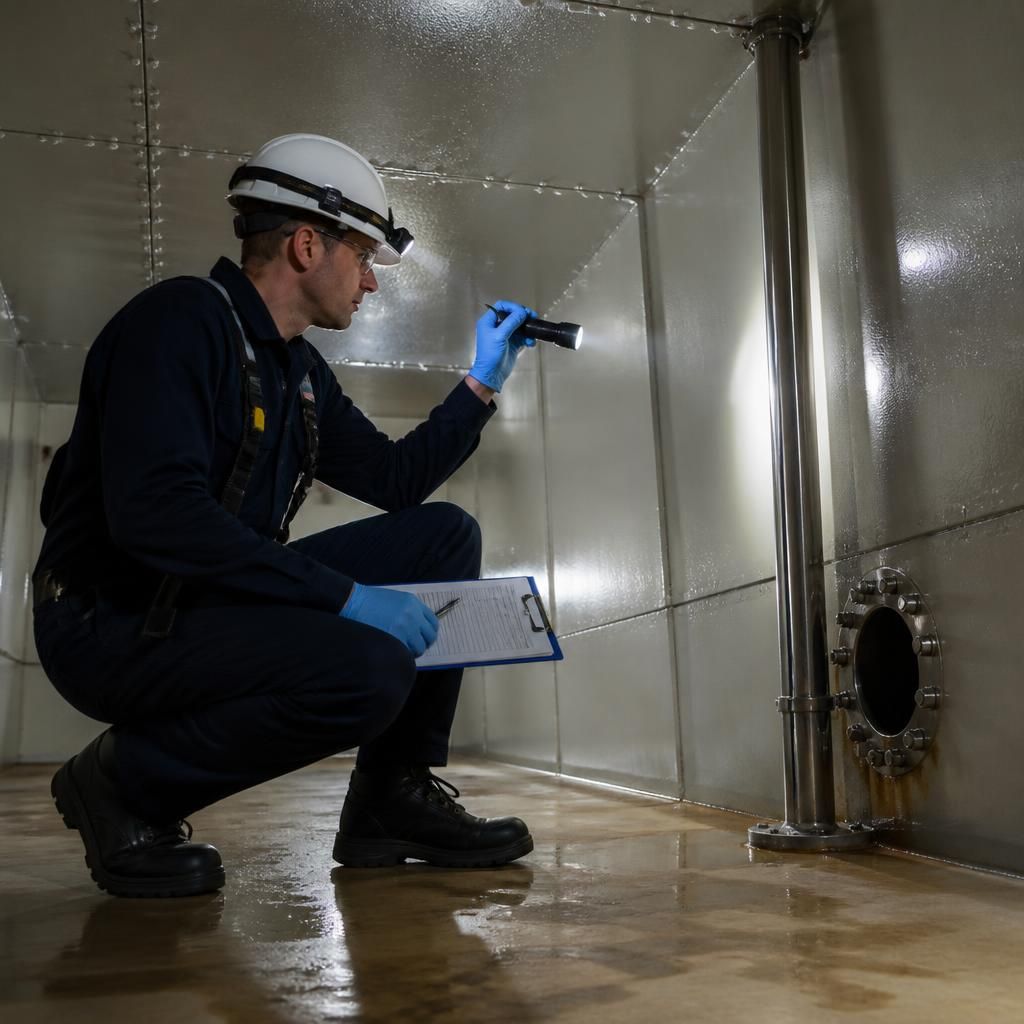
An important selection criterion is whether the clean water tank services provider can give impartial advice when the inspection identifies a problem. The provider should distinguish clearly between evidence observed in the tank, the potential water hygiene consequence and any remedial option it proposes. This makes it easier to assess whether recommended work is necessary, urgent or better addressed through monitoring or further investigation.
Before appointment, ask how the provider manages recommendations for repairs, replacement or additional services. A sound process should include:
- photographic or written evidence supporting significant findings;
- an explanation of how the finding may affect water quality, system operation or compliance;
- separate identification of essential actions and discretionary improvements;
- clear assumptions, limitations and requirements for specialist follow-up; and
- enough information for the responsible organisation to obtain an informed second opinion where appropriate.
This approach helps prevent routine tank cleaning from becoming an automatic route to unplanned remedial work. It also gives the dutyholder a defensible basis for deciding what should happen next.
Discuss your clean water tank service requirements
Discuss your clean water tank service requirements with Blue Fish Water Management Ltd to clarify the appropriate approach for your site and receive advice based on its water hygiene needs.