
Which responsibilities remain with the system owner during chlorine water treatment?

The system owner remains the accountable dutyholder throughout chlorine water treatment, even when a specialist contractor carries out the practical work. Their responsibility is to make sure the treatment is compatible with the water system, properly governed, communicated to relevant people and followed through until any outstanding risks have been addressed.
Define the dutyholder arrangements. Where ownership, occupation and facilities management are split between different organisations, the owner should establish who is responsible for each part of the system. This should include responsibility for approving the treatment, controlling access, communicating restrictions, reviewing results and authorising the system’s return to normal operation. Written responsibilities help prevent gaps where a landlord, managing agent, occupier or maintenance company assumes that another party is dealing with the risk.
Confirm that treatment is appropriate for the system. The owner should ensure that the proposed chlorine treatment takes account of the system’s construction, materials, water uses, storage arrangements, dead legs, temperature controls and any connected equipment. Compatibility matters because chlorine concentrations used for disinfection can affect components, fittings, membranes, process equipment and sensitive end uses. Any limitations identified before treatment should be resolved or formally accepted before work proceeds.
Protect users and essential water services. The owner should identify who may be affected by restricted or interrupted water use, including employees, residents, visitors, patients, tenants and contractors. Clear instructions should explain which outlets or activities are affected, what must not be done during treatment and when normal use can resume. Where water is needed for critical operations, welfare or infection control, suitable contingency arrangements should be considered in advance.
Maintain control of site safety. The owner should ensure that site rules, emergency arrangements and access controls are understood by everyone involved. This includes preventing unauthorised use of outlets, managing interaction with other contractors and ensuring that treatment chemicals are handled, stored and transported under suitable controls. The contractor’s chemical risk controls do not remove the owner’s responsibility for wider site hazards or for providing relevant information about the premises.
Make relevant information available to the treatment team. In addition to general system access, the owner should provide current details of changes that could affect the work, such as alterations to pipework, changes in occupancy, unusual water demand, previous contamination, known faults or sensitive equipment. They should also identify outlets or processes that cannot be taken out of service and explain any restrictions on isolation, draining or flushing.
Review evidence rather than treating completion as the end of the process. The owner should examine treatment records, chlorine readings, laboratory results, flushing information, exceptions and any recommendations arising from the work. A certificate alone may not demonstrate that every part of a complex system has been adequately addressed. Where results are unsatisfactory or coverage is incomplete, the owner should ensure that the cause is investigated and that further action is agreed before normal use is accepted.
Manage deviations and remedial work. If the treatment identifies poor circulation, failed valves, damaged storage tanks, excessive stagnation or other system defects, these issues remain relevant to the owner’s legionella control arrangements. The owner should prioritise corrective work according to risk, define who will complete it and retain evidence that it has been completed or appropriately controlled. Re-treatment may be necessary where the original objective has not been achieved.
Keep the water safety arrangements current. Treatment findings should be considered when reviewing the legionella risk assessment, written control scheme, monitoring schedules and maintenance instructions. Changes may be needed to outlet flushing, temperature checks, sampling locations, tank inspection, valve operation or future disinfection intervals. Records should be sufficiently clear to show what was treated, what was found, what decisions were made and who approved any follow-up action.
Ensure ongoing monitoring reflects the remaining risk. Chlorination is a control measure, not a substitute for managing the conditions that allow legionella to multiply. The owner must continue to oversee relevant temperature control, circulation, storage, outlet use, cleanliness and maintenance arrangements after treatment. Any increased monitoring specified because of the system’s condition should remain in place until the underlying issue has been resolved and the control strategy has been reviewed.
In practical terms, the owner should be able to demonstrate a clear chain from identified risk, through authorised treatment and controlled water use, to reviewed evidence and continuing prevention. Delegating the physical disinfection does not delegate accountability for the system’s condition or for maintaining effective legionella controls afterwards.
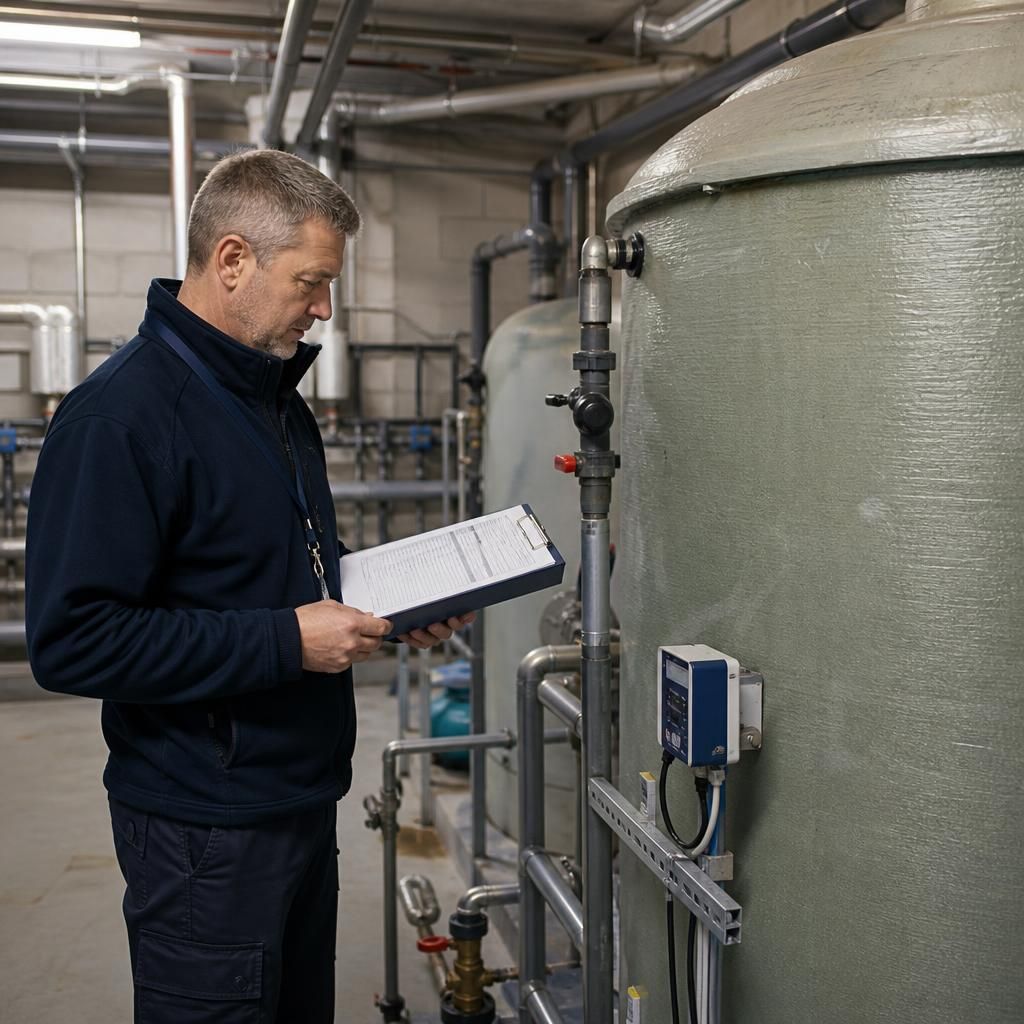
The system owner should agree the treatment acceptance criteria before chlorine water treatment begins. These criteria should define the areas and outlets to be covered, the evidence the provider must supply, how results will be assessed and who has authority to accept exceptions. Establishing this in advance prevents a contractor’s completion note from being treated as automatic approval when parts of the system were inaccessible, isolated or treated differently.
The owner should also retain responsibility for the final operational decision. If the agreed evidence is incomplete or identifies unresolved defects, the system should remain subject to suitable restrictions until the implications have been assessed and the next action recorded. This creates a clear distinction between the provider confirming what work was carried out and the system owner confirming that the water system can safely return to its intended use.
Discuss your system owner responsibilities for chlorine water treatment
Discuss your system owner responsibilities for chlorine water treatment with Blue Fish Water Management Ltd and clarify the evidence, decisions and follow-up actions your arrangements should cover.