
What timescale should a provider allow for water treatment using chlorine?
There is no fixed timescale for water treatment using chlorine: the provider should allow enough time for system preparation, the required chlorine contact period, thorough flushing and verification testing. The final programme depends on the system’s size and condition, contamination findings, access arrangements and any remedial work identified during the assessment.
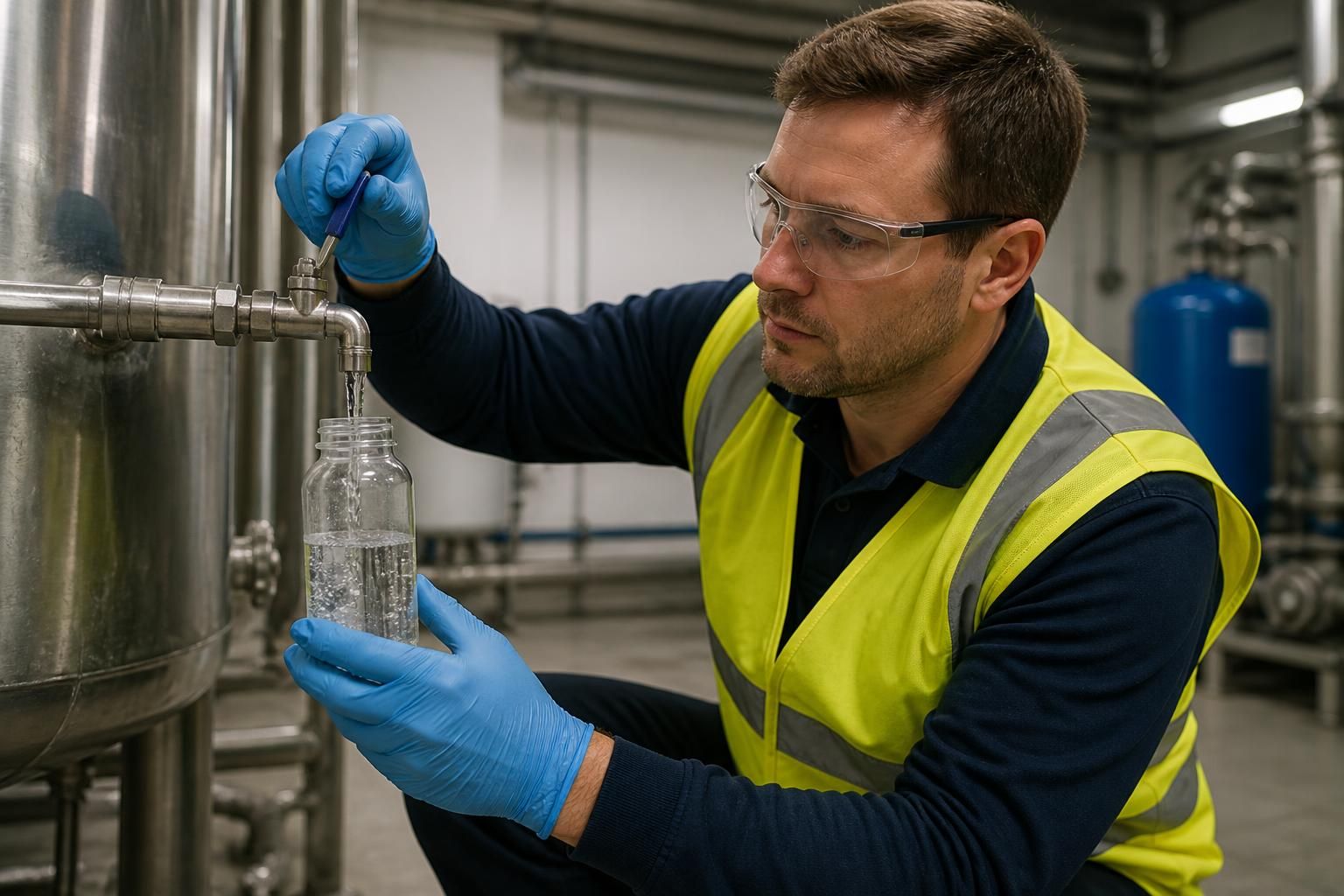
A suitable timescale for water treatment using chlorine is the period needed to complete the treatment safely and demonstrate that the system is satisfactory afterwards. The programme should therefore be built around defined stages and acceptance criteria, rather than reduced to the time taken to introduce chlorine into the pipework.
A competent provider should allow time for the following activities:
- Pre-treatment planning: review the system schematic, identify outlets and storage arrangements, confirm isolation points, and agree how the system will remain controlled while treatment takes place.
- Preparation: remove or manage obstructions that could prevent disinfectant reaching all parts of the system. This may include cleaning tanks, addressing dead legs, checking valves and making sure outlets can be accessed safely.
- Disinfection: apply the chlorine solution in accordance with the selected method and maintain the specified concentration and contact period throughout the relevant parts of the system. The required period can vary with the treatment objective, water temperature, pH, system configuration and the level of contamination.
- Flushing and restoration: remove the disinfectant in a controlled manner, flush the system thoroughly and return it to the required operating condition. Flushing must cover representative outlets and not simply the most accessible points.
- Verification: take samples at agreed locations and arrange suitable analysis. The system should not be treated as complete merely because the chlorine has been flushed away; completion depends on the results and the agreed criteria.
- Reporting and handover: provide treatment records, readings, sample information, certificates or reports where applicable, and any recommendations arising from the work.
The treatment period itself may be relatively straightforward on an accessible, well-maintained installation. The overall programme can be longer where the system has multiple branches, storage tanks, infrequently used outlets, restricted access or a history of unsatisfactory results. Large or interconnected systems may also need to be divided into manageable sections so that each area receives effective treatment and can be checked properly.
Timescales should also account for the condition of the installation. Scale, biofilm, sediment, corrosion, incorrect valve positions and poorly recorded alterations can all interfere with chlorine contact. If these issues prevent consistent circulation or make parts of the system inaccessible, remedial work may need to precede disinfection. A provider should identify this before setting a completion date, rather than treating remedial tasks as an unexpected addition to the programme.
Sampling and analysis are an important distinction when planning the work. Flushing may be completed on site, but final confirmation can depend on sample collection, laboratory processing and the interpretation of results. If a result is unsatisfactory, the provider should allow time to investigate the cause, correct the underlying issue, repeat relevant treatment or flushing, and obtain further evidence. The possibility of this additional stage should be explained to the system owner before work begins.
For an occupied commercial or industrial premises, the programme should be coordinated with the people responsible for building operations. The plan may need to cover access to risers, plant rooms and outlets, temporary restrictions on water use, protection of sensitive equipment, communication with occupants and arrangements for restoring normal operation. These controls are part of safe delivery and should not be compressed to meet an arbitrary timetable.
A useful quotation or method statement should therefore describe the sequence of work, the factors that could alter the duration, the evidence required for completion and the actions that will follow an inconclusive or unsatisfactory result. This gives the system owner a realistic programme and makes clear that effective chlorine water treatment is complete only when the system has been treated, flushed, checked and documented to the agreed standard.
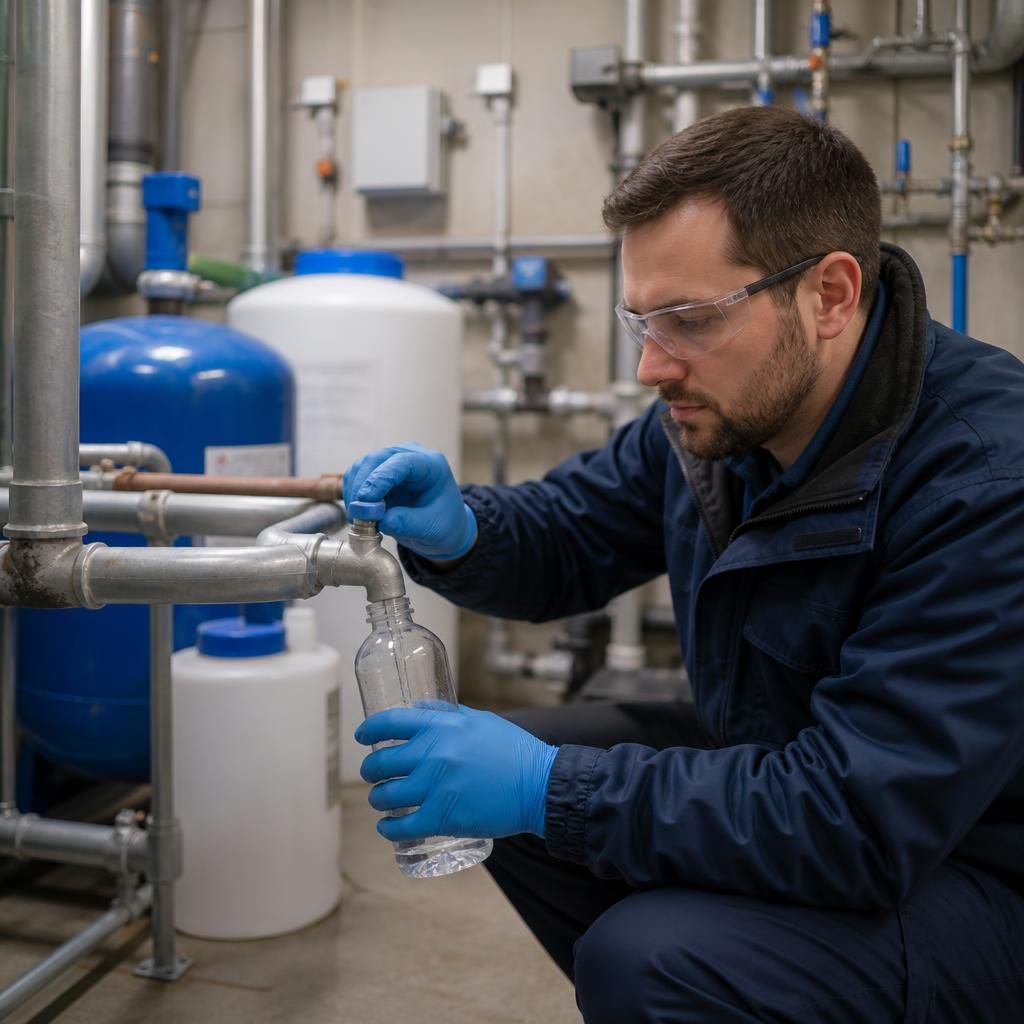
The treatment objective should be agreed before a timescale is set. A planned disinfection of a defined section may require a different programme from treatment following an adverse sample result, suspected contamination or significant alteration to the installation. The provider should explain what the treatment is intended to demonstrate and which parts of the system are included.
This distinction helps the system owner assess whether a proposed duration is realistic. A short site visit may represent only the application stage, while a complete programme may also involve establishing the baseline condition, confirming the treatment scope and reviewing the evidence produced afterwards. The quotation should make these stages clear so that the stated timescale reflects the work required for the particular objective, rather than a standard duration applied to every system.
Discuss your chlorine water treatment timescale
Discuss your proposed chlorine water treatment timescale with Blue Fish Water Management Ltd, including the system scope, site constraints and evidence required for completion. Their team can help you assess whether the planned programme is appropriate for your water system.