
What risks should chlorine disinfection controls address?
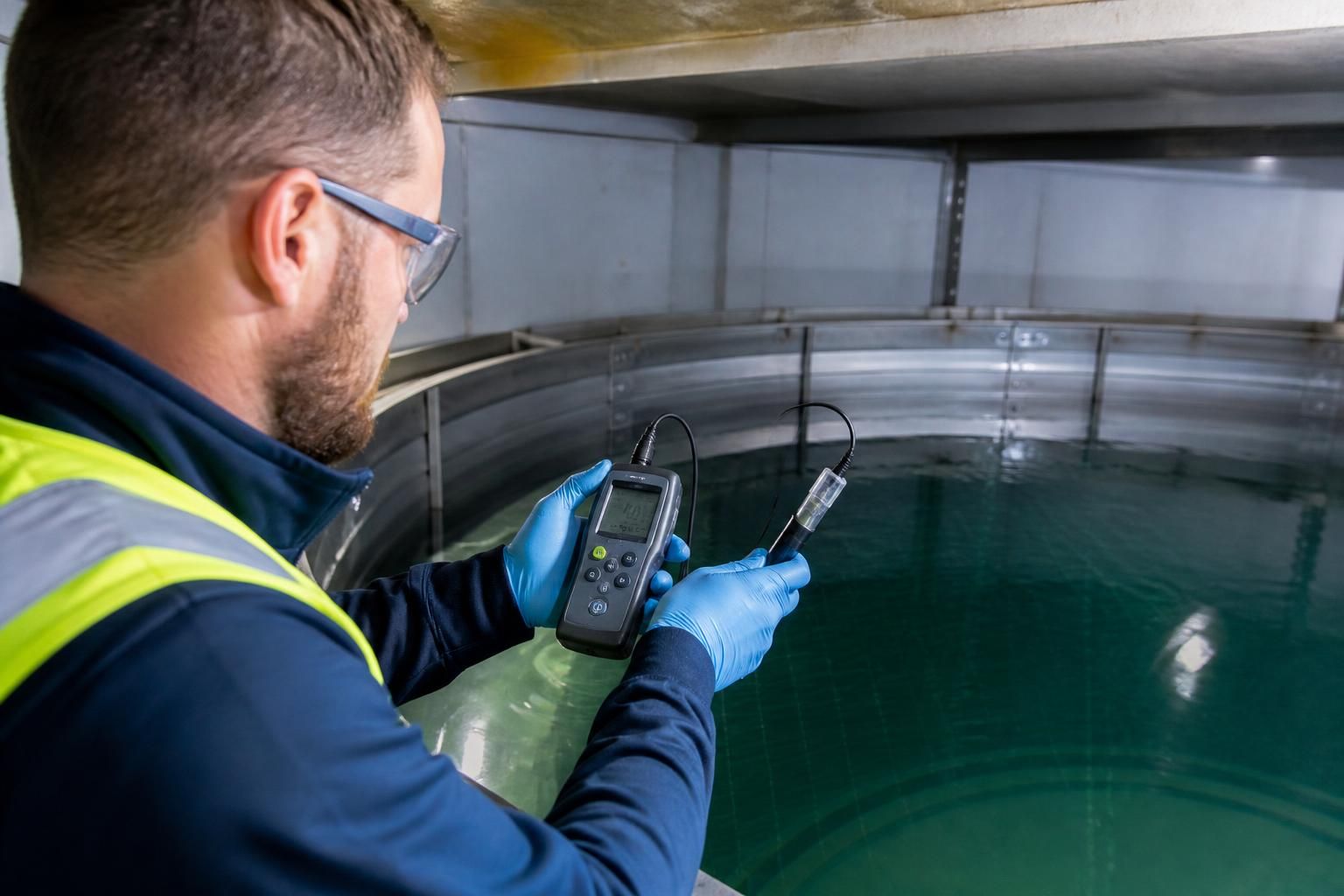
Chlorine disinfection controls should address two linked risks: the risk that harmful microorganisms are not adequately controlled, and the risk that chlorine treatment itself creates unsafe conditions. A suitable control framework therefore covers the treatment design, chemical safety, water quality, system operation, verification and actions required when results are outside acceptable limits.
Microbiological risks must be assessed in context. Chlorination should be capable of controlling the organisms relevant to the particular water system, its use and its operating conditions. The assessment should consider the system’s construction, water usage, storage arrangements, temperature profile, known contamination history and the people who may be exposed. Healthcare, care, accommodation and other settings serving susceptible individuals may require more cautious controls because the consequences of exposure can be more serious.
Insufficient treatment is only one side of the risk. Controls should also prevent excessive chlorine concentrations. Overdosing can make water unsuitable for use, create unpleasant taste and odour, irritate skin or eyes, and increase the potential for corrosion or damage to system components. The chosen operating range should be supported by a documented rationale rather than by an assumed dose that is applied to every system.
Contact conditions must be controlled. Disinfection depends on the relationship between chlorine concentration, pH, temperature and the time available for the disinfectant to act. A control plan should establish how these factors are assessed and how the required contact conditions are maintained. It should also identify points where water may be taken into use before adequate treatment has occurred, or where treated water could be diluted or replaced by untreated water.
Chemical handling presents separate occupational risks. Chlorine-based products should be stored, labelled and handled in accordance with the relevant safety information and site procedures. Controls should address incompatible chemicals, leaks, spills, ventilation, personal protective equipment, access to storage areas and arrangements for dealing with an incident. Operators need appropriate instruction so that errors in chemical transfer, connection or preparation do not expose people to hazardous substances.
Disinfection by-products and changes in water chemistry should not be overlooked. Chlorine can react with organic material in the water and may form by-products. The likelihood and significance of this risk depend on the source water, system condition, treatment method and duration of exposure. Water quality controls should therefore consider whether additional investigation or testing is appropriate, particularly where treatment is repeated or maintained for an extended period.
Materials and infrastructure may be affected by treatment. Chlorine can contribute to corrosion or deterioration where concentrations, exposure times or material compatibility are unsuitable. The assessment should consider tanks, pipework, seals, valves, dosing equipment and instruments. Any remedial work should be planned so that damaged or incompatible components do not undermine the disinfection process or introduce contamination after treatment.
Recontamination after treatment is another important risk. A system may meet its treatment objective and then become contaminated through poor reinstatement, unclean hoses, open tanks, unauthorised connections or inadequate control of access. Procedures should cover the return to service, cleaning of equipment used during the work, protection of openings and confirmation that the system is ready for normal operation.
Controls should define what happens when conditions change. Examples include a change in water source, altered occupancy, building refurbishment, new storage capacity, changes to operating temperatures or a modification to the dosing arrangement. These events can change the original risk profile and should trigger a review rather than reliance on historic records.
In practice, effective chlorine disinfection controls should specify:
- the hazards being controlled and the parts of the system within scope;
- the treatment parameters and operating limits, with reasons for their selection;
- who is responsible for chemical management, checks, sampling and escalation;
- the safety precautions for staff, contractors, building users and the environment;
- the evidence required to demonstrate that treatment was completed as intended;
- the action to take if a limit is exceeded, equipment fails or a result is inconclusive; and
- the review arrangements following changes, incidents, remedial work or abnormal results.
For UK sites, these controls should sit within the wider water safety management system and be consistent with the site’s risk assessment, written procedures and relevant health and safety duties. The objective is not simply to add chlorine, but to control exposure, protect the system and provide defensible evidence that the treatment was properly managed.
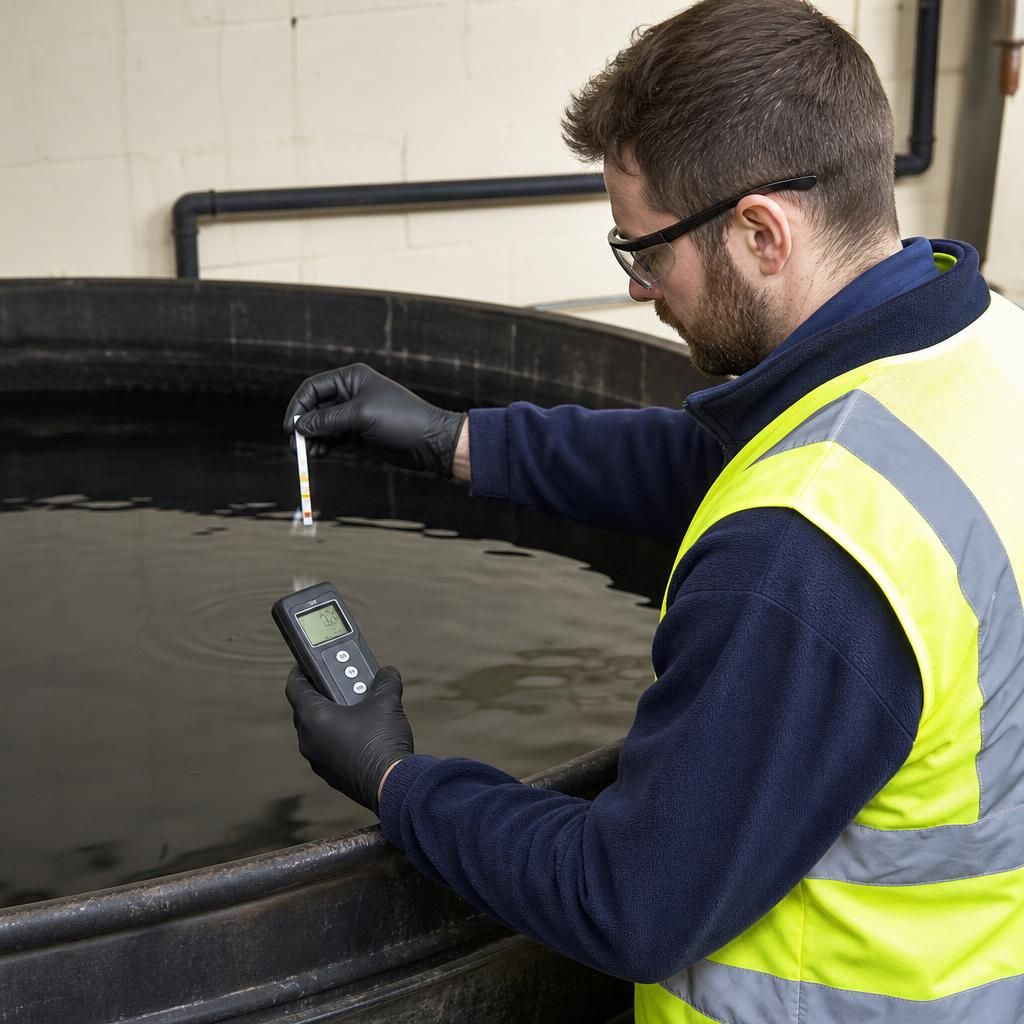
Chlorine disinfection controls should also address the risk of releasing chlorinated water into drains, watercourses or areas where it could harm people, animals or the environment. Treatment plans should identify where discharge will occur, whether neutralisation is needed and how residual chlorine will be checked before release.
Discharge arrangements should be agreed before work begins, with suitable containment and controls to prevent uncontrolled flow, splashing or contact with untreated surfaces. Records should show how the discharge was managed and confirm that water was not returned to use, released or connected to the wider system until the relevant safety checks had been completed.
Discuss your chlorine disinfection control requirements
Discuss your chlorine disinfection control requirements with Blue Fish Water Management Ltd to identify the relevant hazards, monitoring arrangements and compliance evidence for your water system.