
How is chlorine disinfection verified after treatment?
Chlorine disinfection is verified by measuring chlorine residuals at representative points and confirming through water testing that treatment has achieved the required level of control. Results, sampling details, treatment conditions and any corrective actions should be recorded to provide auditable evidence that the system was treated effectively.
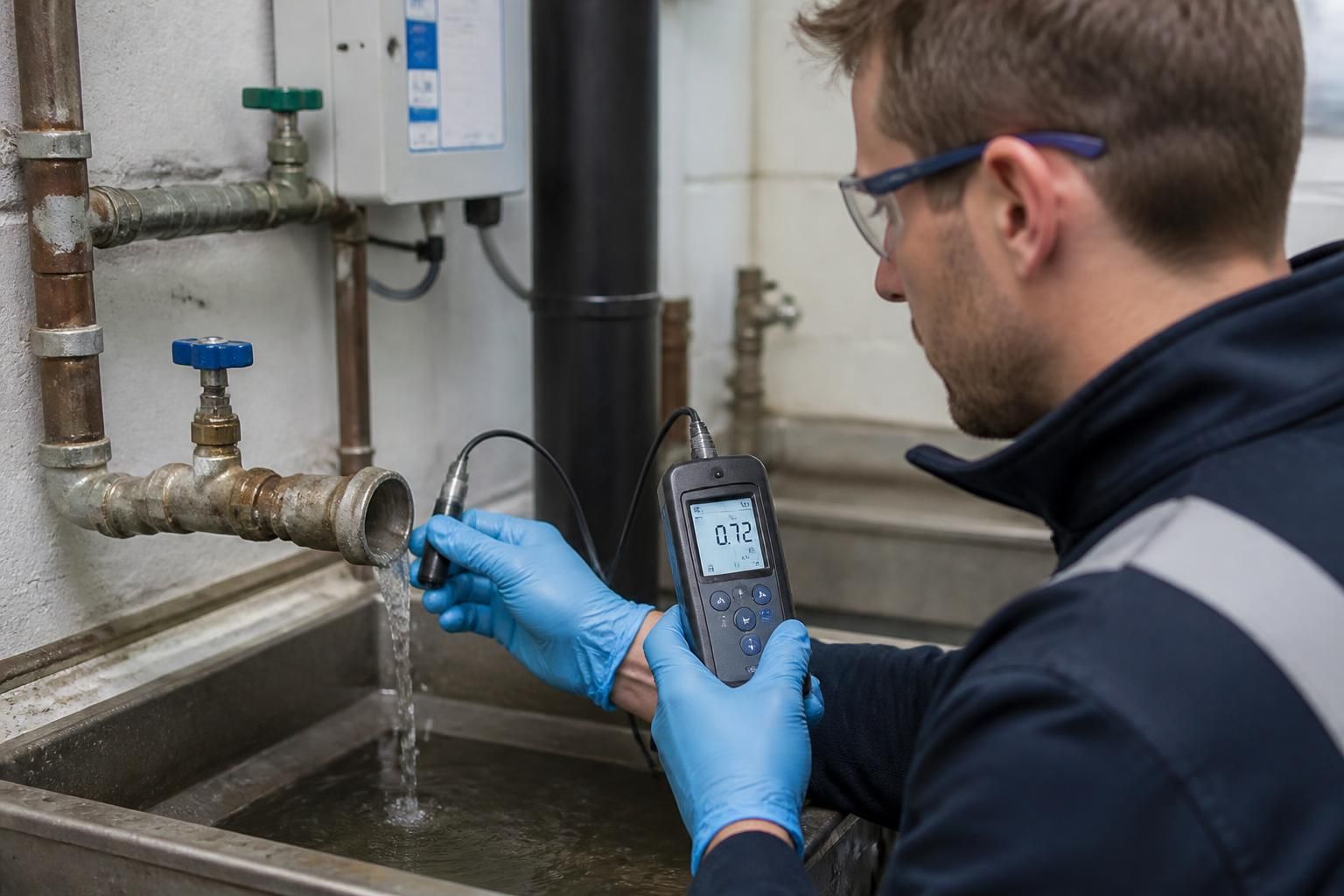
Chlorine disinfection is verified through a documented sign-off process that compares treatment evidence with pre-agreed acceptance criteria. The review should establish that the disinfectant reached the intended parts of the system, remained effective for the specified contact period, was removed or reduced to a suitable level before use, and that follow-up checks support the decision to return the system to service.
The verification process should begin with the treatment plan. This provides the benchmark against which the work is assessed and should identify:
- the sections of the water system included in the treatment;
- the disinfectant concentration and contact conditions required;
- the outlets, tanks, vessels, branches and return circuits requiring confirmation;
- the method and timing for post-treatment checks; and
- the criteria for accepting the treatment or requiring further action.
Residual results need to be interpreted in context rather than treated as isolated readings. The reviewer should consider where each sample was taken, whether the point is representative of the system, when it was collected in relation to dosing and flushing, and whether the result is consistent with the treatment conditions. A result that appears satisfactory at one accessible outlet may not demonstrate adequate circulation through infrequently used branches, low-flow areas, storage arrangements or parts of the system that were difficult to access.
Physical checks are also important. The person verifying the work should confirm that valves were in the correct position, temporary bypasses or dosing arrangements were removed or reinstated appropriately, dead legs or inaccessible sections were considered, and outlets were flushed in accordance with the treatment plan. Any part of the system excluded from the disinfection should be clearly identified, with a separate assessment of whether that exclusion affects the overall conclusion.
Water samples provide additional evidence, but their meaning depends on sample quality and timing. Samples should be taken using a defined method by a competent person, handled correctly and submitted within the required conditions. The report should identify the sampling locations and distinguish between sample types where relevant, such as initial outlet samples and flushed samples. Results should be reviewed against the purpose of the treatment and the system's wider monitoring history, rather than interpreted without reference to previous findings or operating conditions.
Microbiological results may not be available immediately, so the system's status should be managed while those results are pending. A responsible person should decide whether the system can be used, requires restrictions, or needs further treatment based on the completed checks, the risk assessment and the nature of the water system. A negative or acceptable result does not remove the need for routine control measures, because disinfection is a corrective or preventative intervention, not a substitute for maintaining temperatures, circulation, cleanliness and appropriate monitoring.
The completed verification record should allow another competent reviewer to reconstruct what happened. It should normally link the following information:
- the system or asset treated and the boundaries of the work;
- the treatment date and relevant start and finish times;
- the disinfectant used and the dosing or contact conditions;
- the points checked, including any locations that could not be accessed;
- instrument identification and calibration information where applicable;
- laboratory reports and sample references;
- flushing, neutralisation and reinstatement details;
- deviations from the planned method; and
- the name and authority of the person who reviewed the evidence and approved the outcome.
Where a result does not meet the agreed criteria, the correct response is not simply to file the report. The deviation should be assessed to determine whether it arose from inadequate contact, poor circulation, incomplete flushing, sampling error, contamination after treatment or an underlying system defect. Corrective action may include additional dosing, repeat flushing, further sampling, engineering work or changes to the monitoring regime. The reason for the decision and any residual restrictions should be recorded.
Verification is therefore complete only when the evidence supports a clear operational decision: the system has been treated as planned, outstanding limitations are understood, post-treatment water quality is acceptable for the intended use, and follow-up controls have been assigned. Blue Fish Water Management Ltd can support this process through legionella risk assessment, water testing, compliance review and remedial advice where the evidence identifies a continuing control issue.
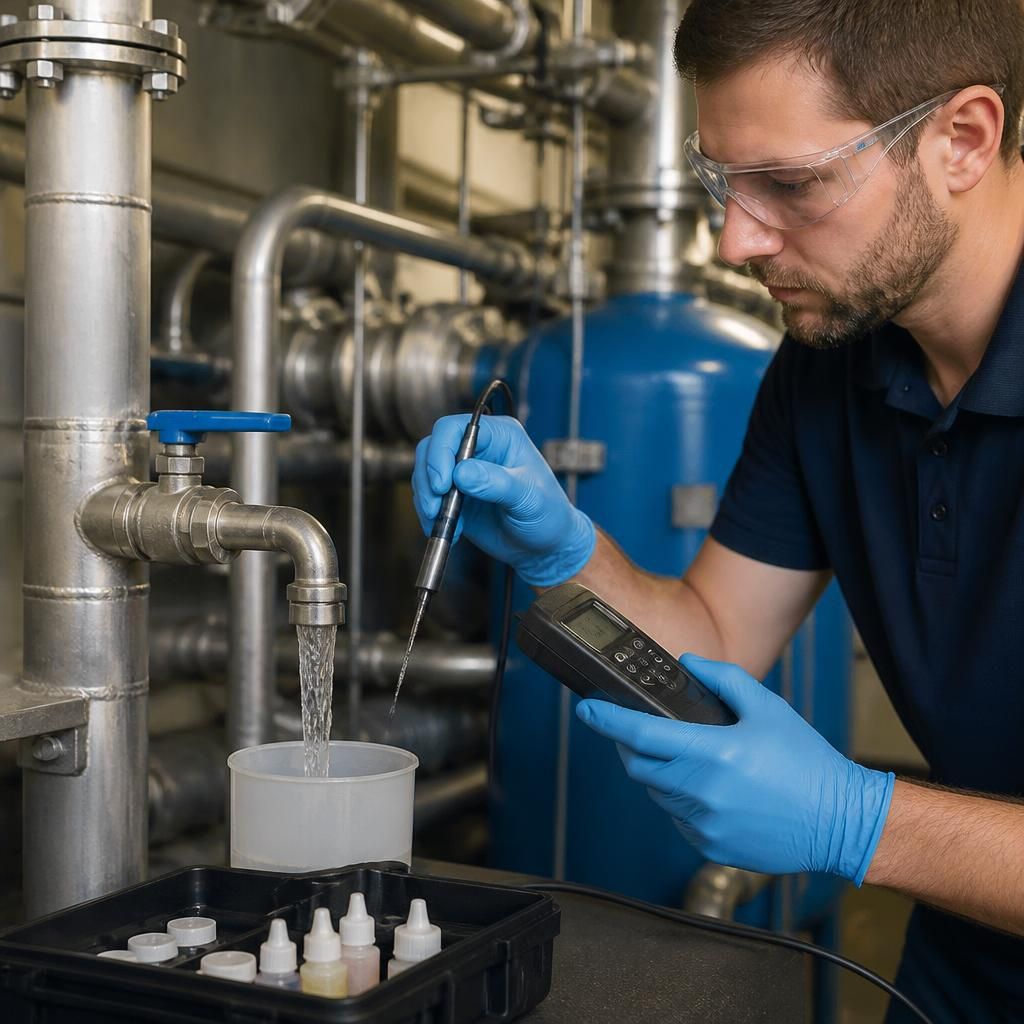
A chlorine residual reading is reliable only when the correct chlorine parameter and measurement method are identified. Verification should state whether the result represents free chlorine or total chlorine, as the two measurements do not provide the same evidence about disinfectant remaining in the system.
Measurements should be taken using a suitable, maintained instrument or test method, with the result linked to the sample location and collection time. The person carrying out the check should also consider factors that can alter the reading, including delay before analysis, contaminated sample containers and interference from other substances in the water. Where relevant, pH and temperature should be recorded because they affect how effectively chlorine provides disinfection.
These details make it possible to judge whether a recorded residual reflects the treatment condition rather than a testing artefact. They also give a competent reviewer enough information to repeat or challenge the measurement if the result is unexpected.
Discuss your chlorine disinfection verification requirements
Discuss your chlorine disinfection verification requirements with Blue Fish Water Management Ltd to review the evidence needed for your system and identify any appropriate follow-up checks or remedial advice.