
When is chlorination water treatment appropriate for a business water system?
Chlorination water treatment is appropriate when a business water system requires controlled disinfection, such as after contamination, significant alterations, commissioning, or where monitoring identifies a microbiological risk. The method should be selected following a competent assessment of the system, its condition and the nature of the risk, with controls in place to protect people and maintain compliance.
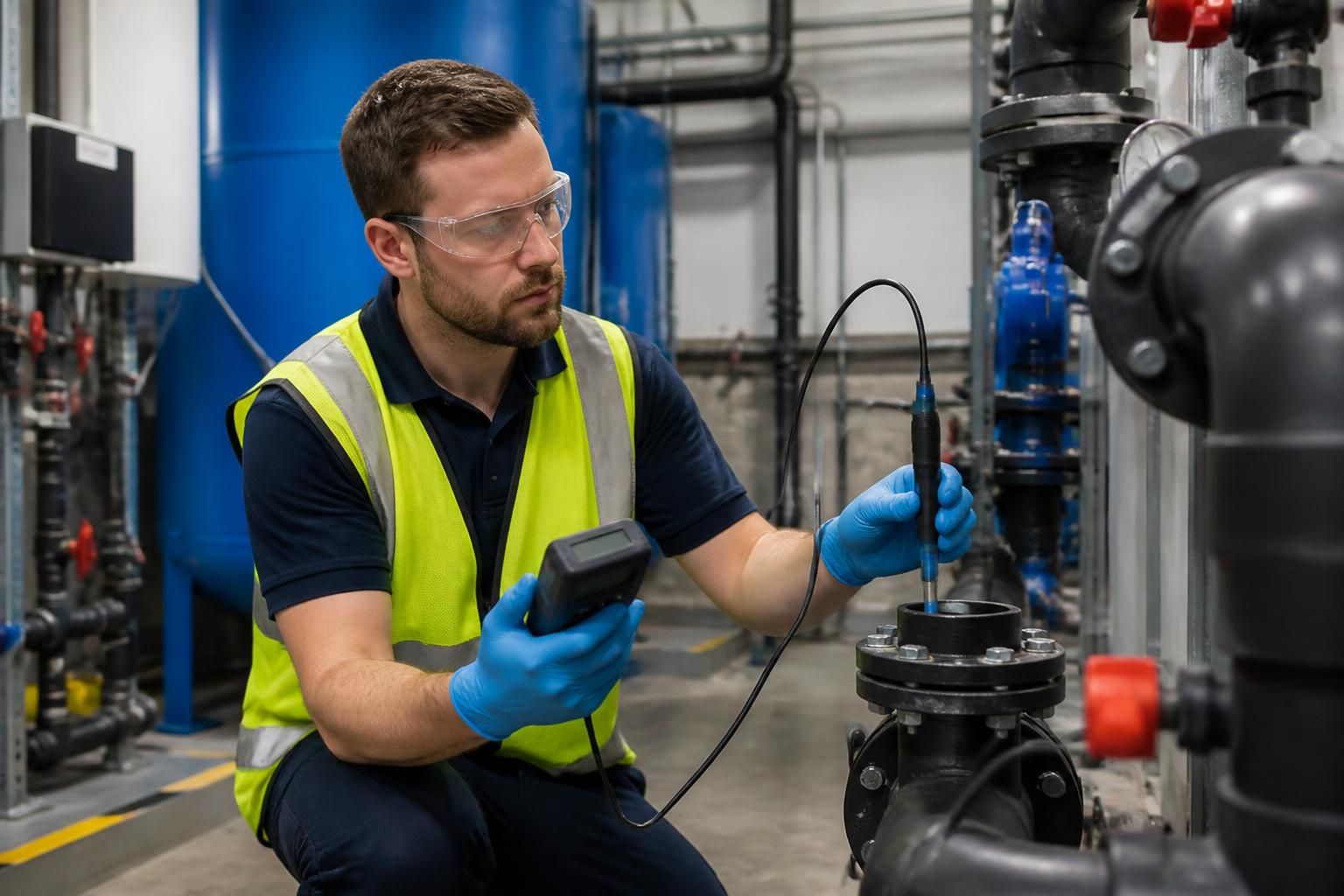
Chlorination water treatment is appropriate where a business needs a controlled chemical disinfection process for a water system and the system can be safely isolated, treated, flushed and verified. It is not a universal maintenance measure: the decision should follow an assessment of the suspected microbiological hazard, the system’s design and condition, and whether chlorination will address the underlying cause.
It is particularly relevant when:
- the water system contains areas where water can stagnate, including little-used outlets, storage vessels, dead legs or poorly circulating branches;
- there is evidence that normal control measures are not keeping microbiological risks within acceptable limits;
- pipework, tanks, calorifiers or other components require whole-system disinfection rather than treatment at one outlet;
- a system has been out of use and needs a controlled return to service; or
- the responsible person needs an auditable intervention as part of a wider risk-control programme.
The condition and configuration of the system are central to the decision. Chlorine solution must reach the relevant surfaces at a suitable concentration and for a controlled contact period. Poor circulation, blocked strainers, closed valves, scale, biofilm or inaccessible sections can prevent adequate contact. A system that cannot be isolated or flushed effectively may therefore be unsuitable for straightforward chlorination, even where a microbiological concern exists.
The treatment should also be compatible with the installation. The responsible contractor should consider pipe and component materials, seals, tanks, pumps, dosing points and any equipment that could be damaged by the proposed chemical conditions. Water quality can affect how chlorine behaves, while organic matter and deposits can consume disinfectant before it reaches the intended surfaces. Cleaning or remedial work may therefore be needed before disinfection, rather than relying on a stronger dose to compensate for a poorly prepared system.
Chlorination is generally a remedial or project-specific measure, not a replacement for ongoing water hygiene management. If the underlying problem is inadequate temperature control, poor circulation, excessive storage, unsuitable design or ineffective monitoring, disinfection alone may provide only temporary control. The longer-term response may require changes to pipework, valves, controls, storage arrangements, outlet use, cleaning regimes or monitoring arrangements.
It may not be the best option in every case. A competent assessment should compare chemical disinfection with other suitable interventions, such as thermal disinfection, targeted component replacement, mechanical cleaning or engineering changes. The choice depends on the type of system, the nature and location of the risk, the condition of the installation, environmental constraints and the effect on business operations. Chlorination should not be selected simply because it is familiar or because a single sample result has been obtained without considering the wider system.
Business users and building operations also influence appropriateness. Treatment may require outlets to be taken out of service, water to be discharged safely and affected areas to be managed until flushing and verification are complete. Premises with vulnerable occupants, healthcare-related activities, food processes or strict water-quality requirements may need additional planning and evidence before the system is returned to normal use.
A suitable plan should define the parts of the system included, the treatment objective, preparation requirements, chemical controls, flushing method and checks needed before reinstatement. Verification should demonstrate that the process reached the intended parts of the installation and that the water is suitable for the system’s intended use. Results, observations, deviations and any follow-up actions should be retained with the business’s water safety records.
For UK businesses, the decision should sit within the site’s written water safety arrangements and be made by someone with suitable competence, taking account of relevant HSE guidance and recognised water hygiene practice. Blue Fish Water Management can help businesses assess whether chlorination is proportionate to the identified risk and whether additional remedial or monitoring measures are needed to support ongoing control.
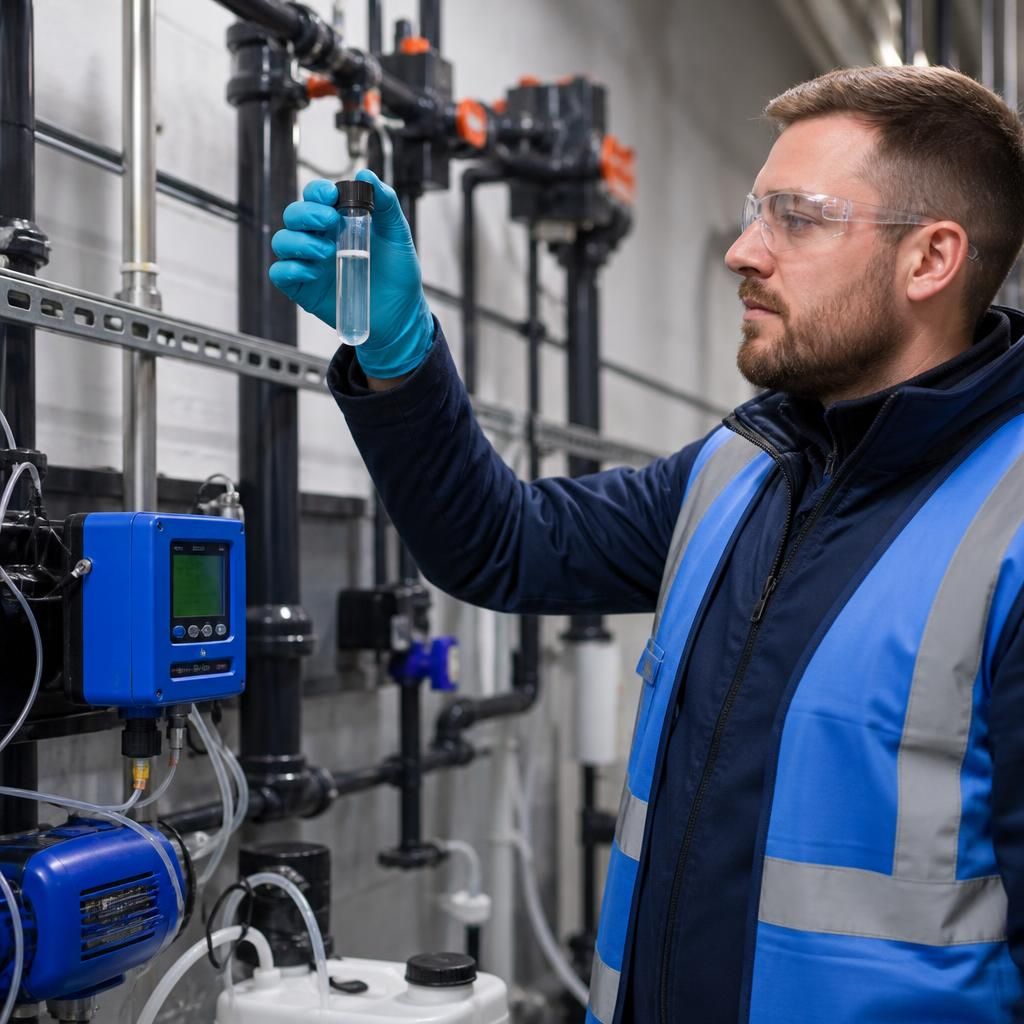
Chlorination water treatment is most appropriate for systems carrying water where the disinfectant can reach the wetted surfaces and the installation can be safely flushed afterwards. It should not be treated as a universal solution for every business water circuit. Closed heating systems, process-water installations and systems connected to manufacturing activities may have different treatment requirements, chemical compatibility limits or discharge controls.
The intended use of the water is therefore an important part of the decision. A competent assessment should consider whether chlorination could affect materials, production processes, water quality or downstream equipment, and whether the treated water can be discharged without creating an environmental or operational issue. Where those conditions cannot be controlled, another form of intervention may be more appropriate.
Assess whether chlorination is appropriate for your business water system
If you are unsure whether chlorination is proportionate to an identified risk, ask Blue Fish Water Management to review the system, proposed treatment and evidence required before work proceeds.