
What safety controls are needed during chlorination water treatment?
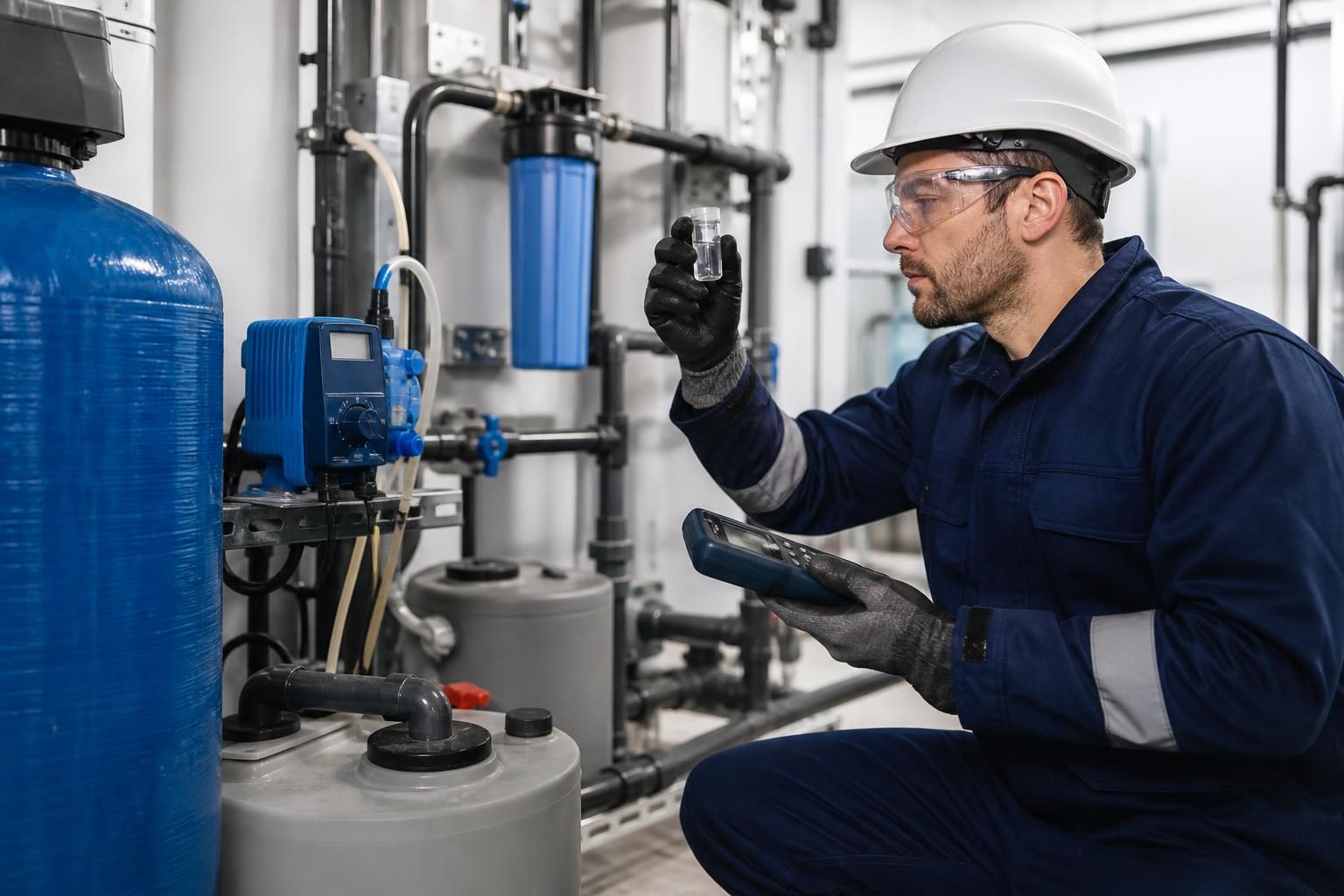
Safety controls during chlorination water treatment should manage three separate risks: exposure to the treatment chemicals, unintended exposure to treated water, and harm caused by changes to the water system. Effective control therefore begins before chemicals are introduced and continues until the system has been verified as suitable for return to use.
Use a substance-specific control plan. The treatment method should be assessed under the Control of Substances Hazardous to Health requirements, with current product information and safety data available to everyone involved. The assessment should identify the hazards of the particular disinfectant, including the risk of corrosive contact, harmful vapour and dangerous reactions with incompatible substances. It should also set out the quantities and concentrations to be used, approved storage arrangements, transfer procedures and actions to take following a spill or accidental exposure.
Chlorine-based products must be kept in suitable, clearly identified containers and separated from incompatible chemicals. Storage areas should be stable, secure and protected from damage, with arrangements for containing a leak without allowing chemicals to enter drains or watercourses. Containers should not be decanted into unlabelled vessels, and staff should follow the supplier’s handling instructions rather than relying on the appearance or smell of the product.
Control access and work interfaces. A named person should coordinate the work where several parties are involved, such as a water treatment contractor, facilities team, building manager and mechanical contractor. The control plan should identify who can authorise each stage, who can stop the work, and how information is passed between shifts or contractors. Particular attention is needed in occupied buildings, healthcare environments, care settings, schools and premises where people may be less able to recognise or report a problem.
Before treatment starts, the operator should establish which outlets, storage vessels, process connections and areas are affected. Temporary restrictions should be communicated to occupants and users in a form they can understand. Where the system supplies drinking water, showers, food preparation areas or production processes, alternative arrangements may be needed. Labels, notices or physical barriers should remain in place until the responsible person confirms that the relevant outlets can safely be used again.
Provide task-appropriate personal protective equipment. PPE should be selected from the chemical risk assessment and used as a final layer of protection, not as a substitute for safer handling arrangements. Depending on the task, this may include chemical-resistant gloves, protective clothing, eye or face protection and suitable respiratory protection. PPE must be compatible with the product, correctly fitted, inspected before use and removed in a way that avoids transferring contamination to skin, clothing, vehicles or clean areas. Reusable equipment needs appropriate cleaning, storage and replacement arrangements.
Emergency arrangements should be practical rather than limited to a written statement. Workers should know the location of first-aid facilities, eyewash provision, spill-control equipment and emergency contact details. The procedure should distinguish between a minor contained spill and an incident requiring evacuation or specialist assistance. Any exposure, release or equipment failure should be reported, investigated and reviewed before the treatment continues.
Protect the system as well as the people operating it. Chlorination can affect materials, seals, membranes, dosing equipment and other components, particularly where the installation is old, has unknown materials or contains sensitive process equipment. The treatment plan should identify components that need to be isolated, bypassed or protected and should consider the effect on connected systems. Unintended flow into another service, process line or neighbouring property should be prevented through suitable isolation and checks of the system arrangement.
Water discharged after treatment should be directed only to an approved receiving point and handled in accordance with the relevant site and environmental requirements. The discharge route should be checked before work begins, particularly where there are sensitive drainage systems, watercourses, treatment plants or trade effluent controls. If neutralisation is required, it should be carried out using a controlled method by competent personnel, with the resulting water assessed before release.
Verification is an important safety control because visual completion does not demonstrate that the installation is ready for use. The responsible person should review test results, confirm that all temporary connections and restrictions have been removed safely, and check that outlets have been reinstated correctly. Where a system has been opened, modified or contaminated during the work, additional inspection or sampling may be appropriate before it is returned to normal operation.
Records should link the work to the exact system and date, identify the products and equipment used, and document any deviations, incidents, corrective actions and approval to return the system to service. Keeping this information with the site’s water hygiene documentation supports later investigation, demonstrates that the controls were applied and helps inform future maintenance or treatment decisions.
For complex or occupied premises, an independent review of the method statement and risk assessment can help identify hazards that the treatment team may not see from the dosing task alone. A competent water hygiene provider should be able to explain the control measures, evidence their application and identify any remaining restrictions before the system is handed back to the business.
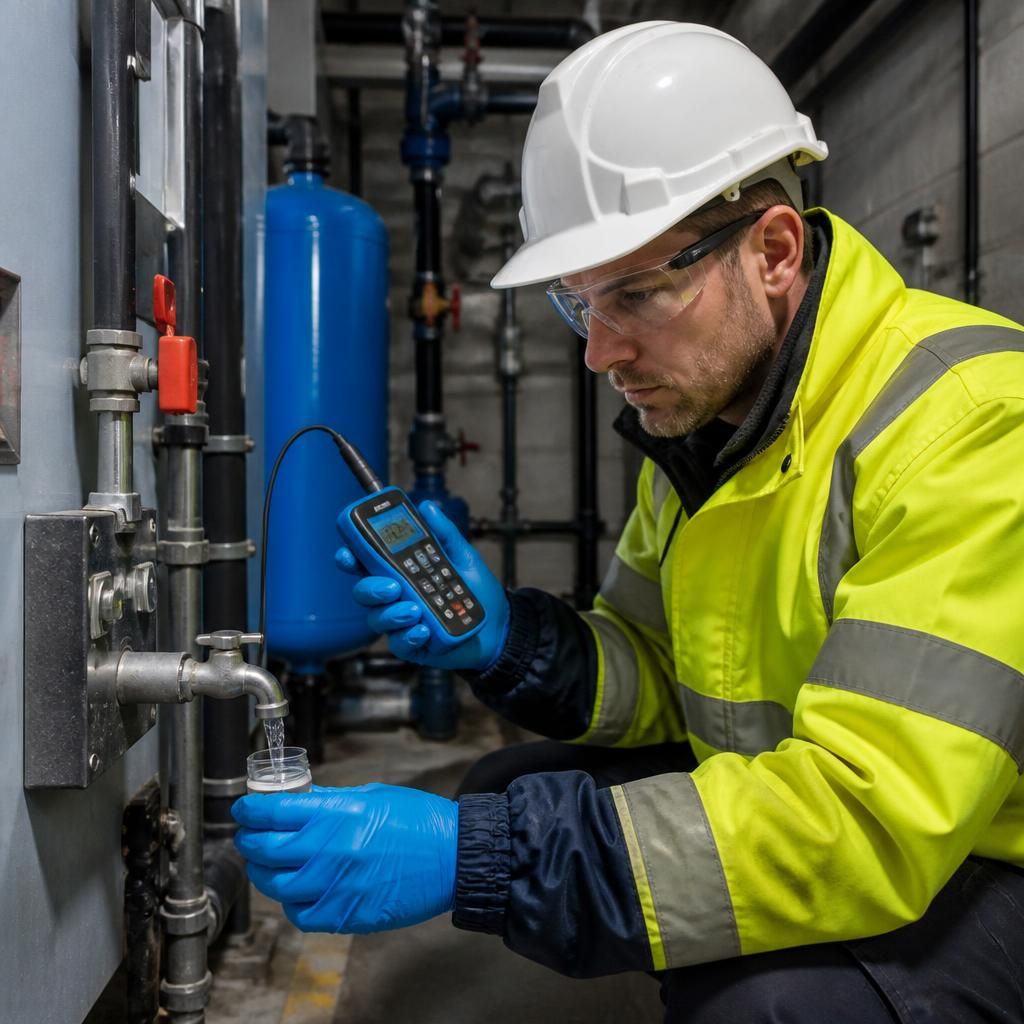
A safe return to use depends on representative sampling, not a single chlorine reading from a convenient outlet. The sampling plan should reflect the system layout and, where relevant, include storage tanks, remote branches, low-use outlets and points where disinfectant may have been less evenly distributed. This helps identify areas that could remain inadequately treated after the main dosing stage.
Each sample should be linked to the outlet, date, time and test method, with results assessed against the treatment plan before restrictions are removed. Where the risk assessment requires it, follow-up microbiological sampling can provide additional evidence that the system has recovered safely. A result from one outlet cannot, by itself, confirm that every connected part of a complex water system is suitable for use.
Review Your Chlorination Water Treatment Safety Controls
If you need to confirm that proposed chlorination work is suitably controlled, speak to Blue Fish Water Management about reviewing the arrangements before treatment begins.