
What evidence should chlorination water treatment produce for compliance?
Useful compliance evidence from chlorination is not limited to a certificate. It should form a traceable record that links the treatment to the system’s water safety arrangements, identifies who carried out and authorised each stage, and supports a clear decision on whether the system can be returned to service.
The evidence should identify the system precisely. Records should name the site, building or plant area, relevant water system, outlets or sections included, and any parts that were excluded. Where a system has several branches, tanks, risers or secondary circuits, the documentation should show which areas were treated and how the boundaries were established. Asset references, drawings, photographs or an annotated schematic can help demonstrate that the work covered the intended installation rather than an unidentified section of pipework.
The treatment record should explain the basis for the work. It should be possible to connect the chlorination to a commissioning activity, alteration, contamination concern, remedial programme, risk assessment finding or other defined requirement. The records should also show the relevant pre-treatment condition, including known limitations such as inaccessible outlets, dead legs, defective valves or areas that could not be isolated. This context helps an auditor judge whether the treatment was appropriate and whether any residual risk remains.
Method statements and control documents provide supporting evidence. A suitable file may include the approved method statement, task risk assessment, control-of-substances information, isolation arrangements, discharge plan and details of how occupants, contractors and other affected parties were protected. These documents demonstrate that the work was planned rather than carried out as an unexplained dosing exercise. They should reflect the actual system and work undertaken, not just a generic template.
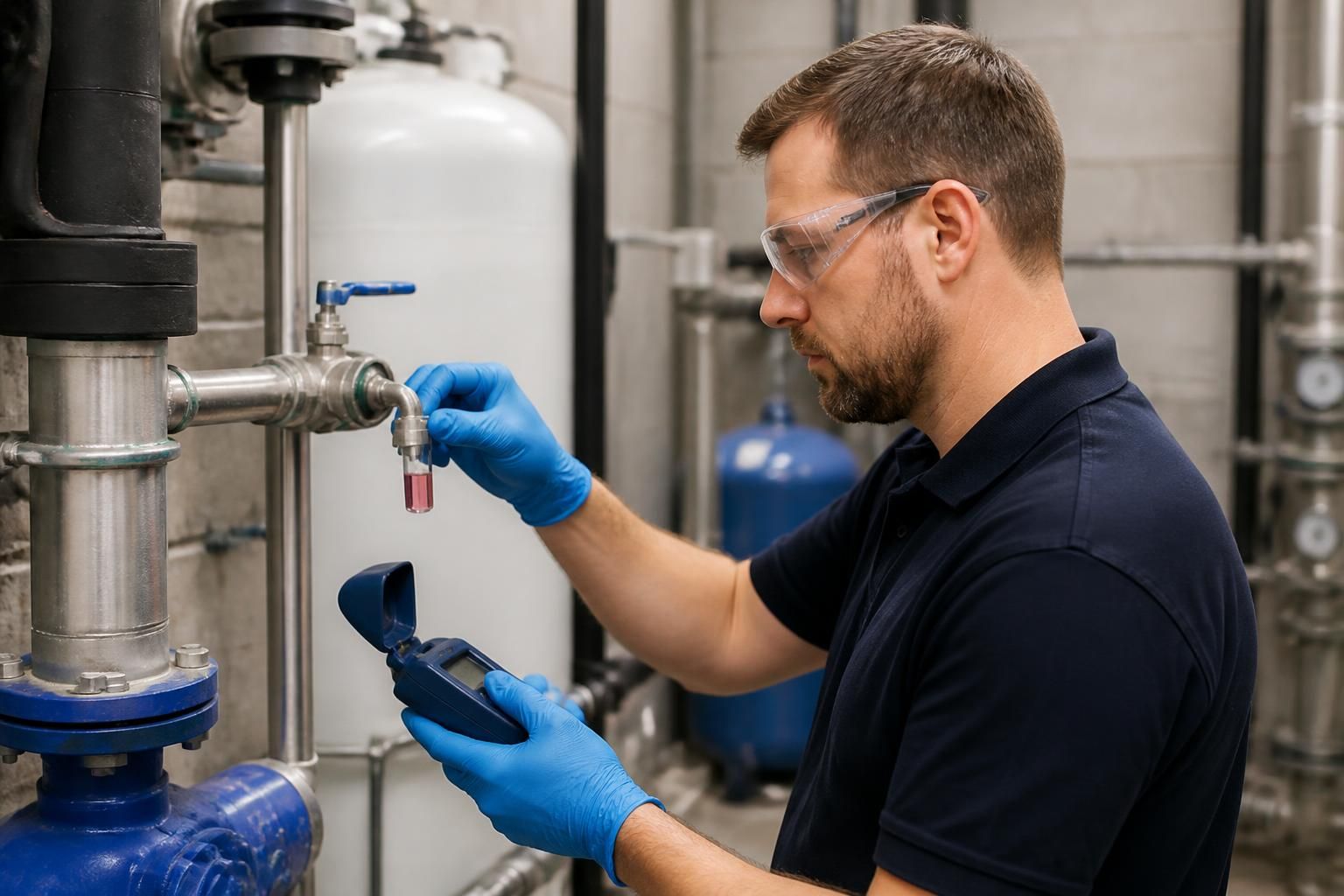
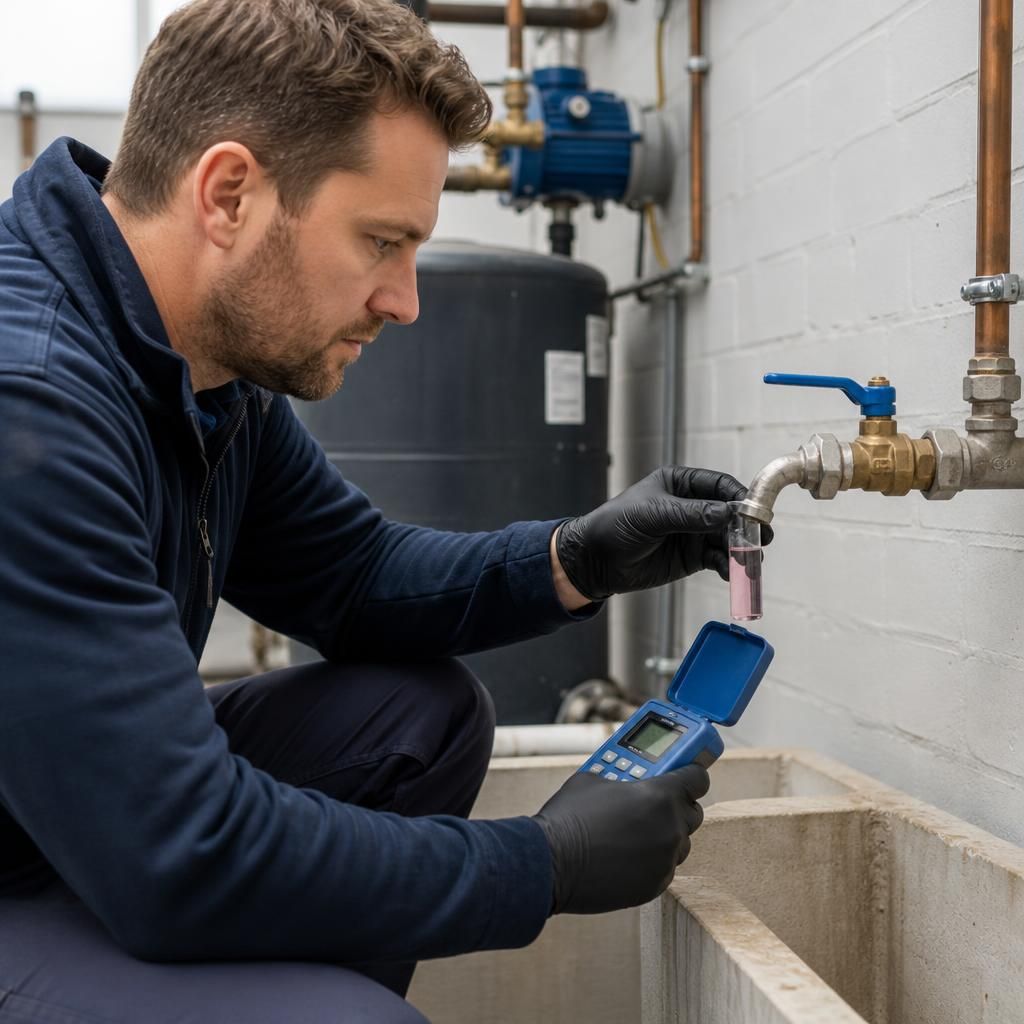
Measurements should be attributable and understandable. Where instruments are used, the record should identify the equipment, its relevant calibration or verification status, the measurement points and the date and time of readings. Units and sampling locations should be clear, with enough information to distinguish initial readings, process checks and final checks. If a reading was repeated, adjusted or excluded, the reason should be recorded rather than silently replacing the original result.
Independent laboratory evidence may be needed for microbiological conclusions. A laboratory report should be traceable to the samples collected, with sample identifiers, collection details, requested analyses and reporting information. The organisation should be able to show who collected or handled the sample, how it was conveyed, and which result relates to which outlet or system section. Laboratory findings should be read alongside the treatment record and the system’s risk assessment; a single report should not be treated as proof that every future condition will remain controlled.
Competence and authorisation should be visible in the records. Documentation should state the names or identifiable roles of the people who planned, carried out, checked and accepted the work. It should distinguish between the person taking measurements, the person reviewing results and the person responsible for authorising return to use. Where specialist contractors are involved, the client should retain relevant competence information and the agreed scope of responsibility.
Any departure from the planned process requires an explanation. Examples include an outlet that could not be accessed, a failed isolation valve, an interruption to circulation, an unexpected loss of disinfectant, an unsafe discharge route or a section that required separate treatment. The record should state the effect of the departure, the immediate control applied and the action needed before the system can be considered complete. Evidence of closure is important: an open action should not be presented as a completed treatment.
Acceptance should be recorded as a reasoned decision. The responsible person should be able to see whether the agreed criteria were met, whether further work is required and who approved the outcome. If the system was only partially treated or was placed back into use subject to controls, those restrictions should be explicit. A signed or electronically approved completion record can establish accountability, but a signature by itself does not replace the underlying technical evidence.
For an effective compliance file, retain the documents in an organised sequence:
- the defined scope, system identification and reason for treatment;
- the approved risk controls, isolation and discharge arrangements;
- the contemporaneous treatment and measurement records;
- laboratory documentation and sample traceability, where testing was undertaken;
- details of exclusions, deviations, defects and corrective actions;
- the completion review and formal acceptance decision; and
- the follow-up requirements entered into the water safety management arrangements.
The file should be controlled so that later changes do not obscure the original record. Dated versions, document identifiers, reviewer details and a defined retention approach help demonstrate that evidence has not been retrospectively rewritten. It should also be readily available to the responsible person, auditor or enforcement body who needs to understand the treatment history.
Finally, chlorination evidence should feed into ongoing management rather than being archived in isolation. The findings may require the risk assessment, schematic, monitoring schedule, maintenance plan or remedial action log to be updated. Reviewing the evidence in that wider context shows whether chlorination addressed the identified issue and what controls are needed to prevent the system returning to an unsatisfactory condition.
Discuss Your Chlorination Compliance Evidence
Discuss your chlorination compliance evidence with Blue Fish Water Management Ltd to identify gaps in your records and clarify any follow-up requirements. Their team can advise on suitable testing, review and water safety documentation for your system.