
What does a chlorination water treatment plan include?
A chlorination water treatment plan sets out the system scope, treatment objectives, preparation requirements, chlorine dosing method, contact time, flushing arrangements and verification checks. It should also define responsibilities, sampling requirements, acceptance criteria and the records needed to demonstrate that the work was properly controlled.

A chlorination water treatment plan is a site-specific control document that converts the water system’s risks and treatment requirements into a defined sequence of work. It explains how the system will be assessed, prepared, treated, reinstated and reviewed, while identifying the information and approvals needed to show that the process was completed correctly.
A well-developed plan normally begins with a description of the system and the reason chlorination is being considered. This may include a newly installed or modified system, suspected contamination, an outbreak investigation, or a remedial requirement identified through water hygiene monitoring. The plan should distinguish the affected assets from connected systems that must remain in service and identify any areas that cannot be treated by the proposed method.
- System information: relevant tanks, pipework, outlets, pumps, valves, storage arrangements and connection points;
- Condition and configuration: access limitations, deposits, corrosion, dead legs, low-use outlets and sections that may prevent effective circulation;
- Pre-treatment requirements: cleaning, repair, removal of obstructions or other work needed before chlorination can be relied upon;
- Operational constraints: areas that need to remain supplied, vulnerable equipment, water uses that must be suspended and arrangements for notifying affected occupants or operators;
- Acceptance arrangements: the checks and decision points that determine whether the system can be returned to normal use.
The plan should also set out the technical basis for the treatment. This includes the selected chlorine compound, the calculation method used for the required dose, how the chemical will be introduced and distributed, and how representative points will be checked. Where system volume is uncertain, the method for establishing or validating that volume should be recorded rather than relying on an unverified estimate.
Preparation is a significant part of the plan. It should explain how tanks and pipework will be made accessible, how outlets will be operated, and how trapped air, stagnant sections or restricted flow will be addressed. It should identify isolation points and any temporary alterations needed to prevent untreated water entering the treated section or chlorinated water reaching equipment that could be damaged. A plan that deals only with chemical application, without considering the physical condition and layout of the system, may not produce a reliable treatment.
The work sequence should be clear enough for the appointed team to follow and for the client’s representative to review. It commonly sets out:
- the pre-work inspection and confirmation that the system is ready;
- the order in which sections, tanks and outlets will be treated;
- the points at which chemical measurements or observations will be made;
- the conditions that must be met before progressing to the next stage;
- the process for dealing with a failed check, inaccessible section or unexpected change in system condition; and
- the steps for returning equipment and outlets to their normal configuration.
Responsibilities should be allocated rather than assumed. The document can identify who authorises isolation, who controls chemical handling, who operates the system, who takes samples, who reviews the results and who gives permission for reinstatement. It should also state how changes to the agreed method will be approved and recorded. This is particularly important where the contractor, building operator, facilities team and water safety adviser have different roles.
Water quality controls form another essential part of the plan. The sampling approach should explain how samples will be identified, where they will be taken, how sampling equipment will be used and whether analysis will be carried out on site or by a competent laboratory. Samples should be traceable to the relevant location and stage of treatment. The plan should also allow for results that require repeat testing, further flushing, additional investigation or escalation to the person responsible for water safety.
Reinstatement arrangements should be considered before treatment begins. The plan should describe how treated water will be discharged or flushed without creating an uncontrolled exposure or damaging drainage, plant or the environment. It should explain how normal water quality will be confirmed, how affected users will be informed that the system is suitable for use, and how temporary labels, hoses, dosing equipment and isolation measures will be removed or retained.
The completed document should provide a clear audit trail. In addition to the method itself, this may include the approved plan, site inspection notes, chemical information, equipment checks, measurement sheets, sample results, photographs where useful, records of deviations and evidence of final authorisation. Any limitation should be stated, such as an inaccessible branch, an unverified volume or a section excluded from treatment. These details help the responsible person decide whether further work or monitoring is necessary.
For a business water system, the plan should therefore be reviewed against the site’s water safety arrangements before work starts and incorporated into the wider compliance record afterwards. Blue Fish Water Management Ltd can support this type of review through legionella risk management, water testing, compliance auditing and remedial water hygiene work, with the treatment plan tailored to the system rather than used as a generic template.
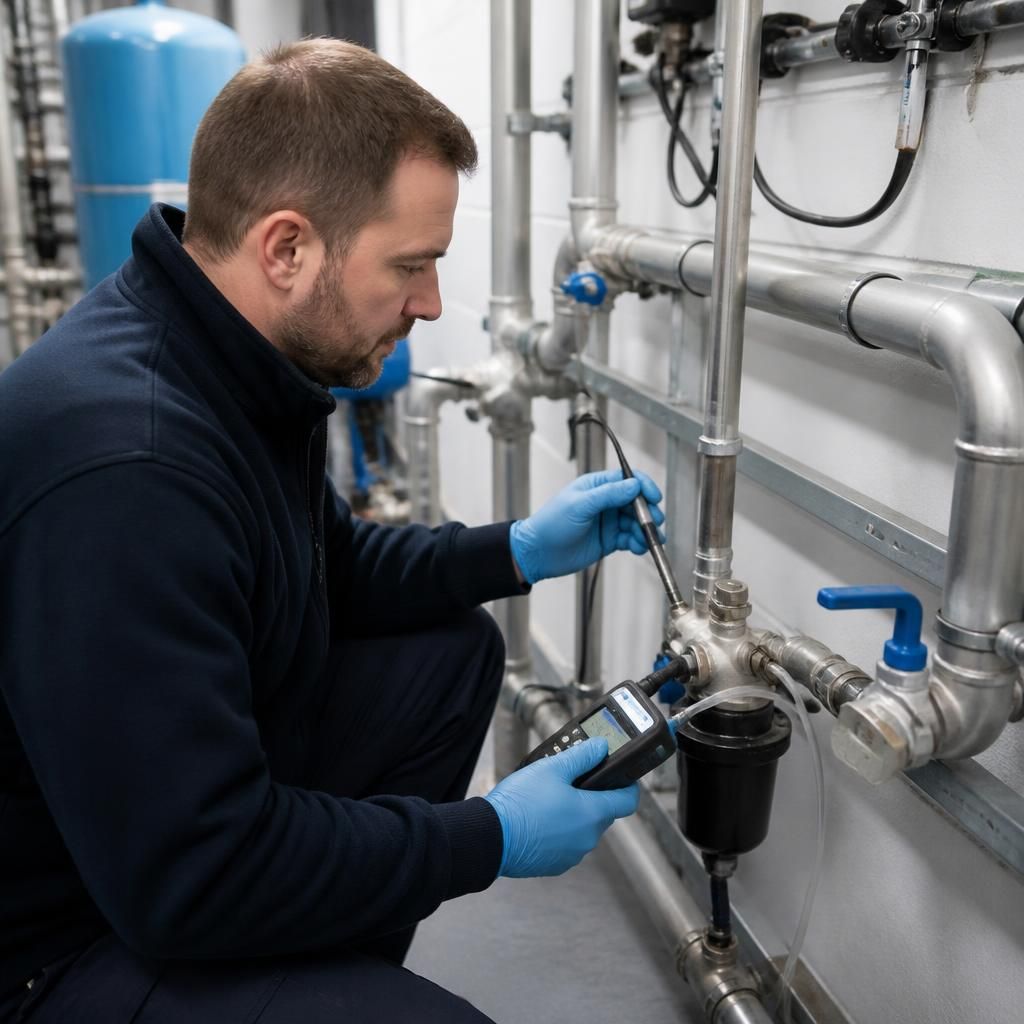
A chlorination water treatment plan should include a clear drawing or marked-up schematic of the treated system. This should identify tanks, pipework sections, valves, outlets, dosing and discharge points, isolation boundaries and sampling locations. Each location should correspond with the labels used on site records, so the treatment team and the client’s representative are working from the same system description.
The schematic is particularly useful where pipework is concealed, services are spread across several areas or only part of a building is being treated. It can show excluded branches and temporary isolation points as well as the areas included in the work. Keeping the marked-up drawing with the completed treatment records provides a practical reference for future inspections, modifications and repeat disinfection.
Review your chlorination water treatment plan
Have your proposed chlorination water treatment plan reviewed against your site’s water safety arrangements before work begins. Blue Fish Water Management Ltd can provide practical guidance on plan suitability, supporting evidence and any issues requiring further attention.