
What competence should a potable water chlorination provider demonstrate?
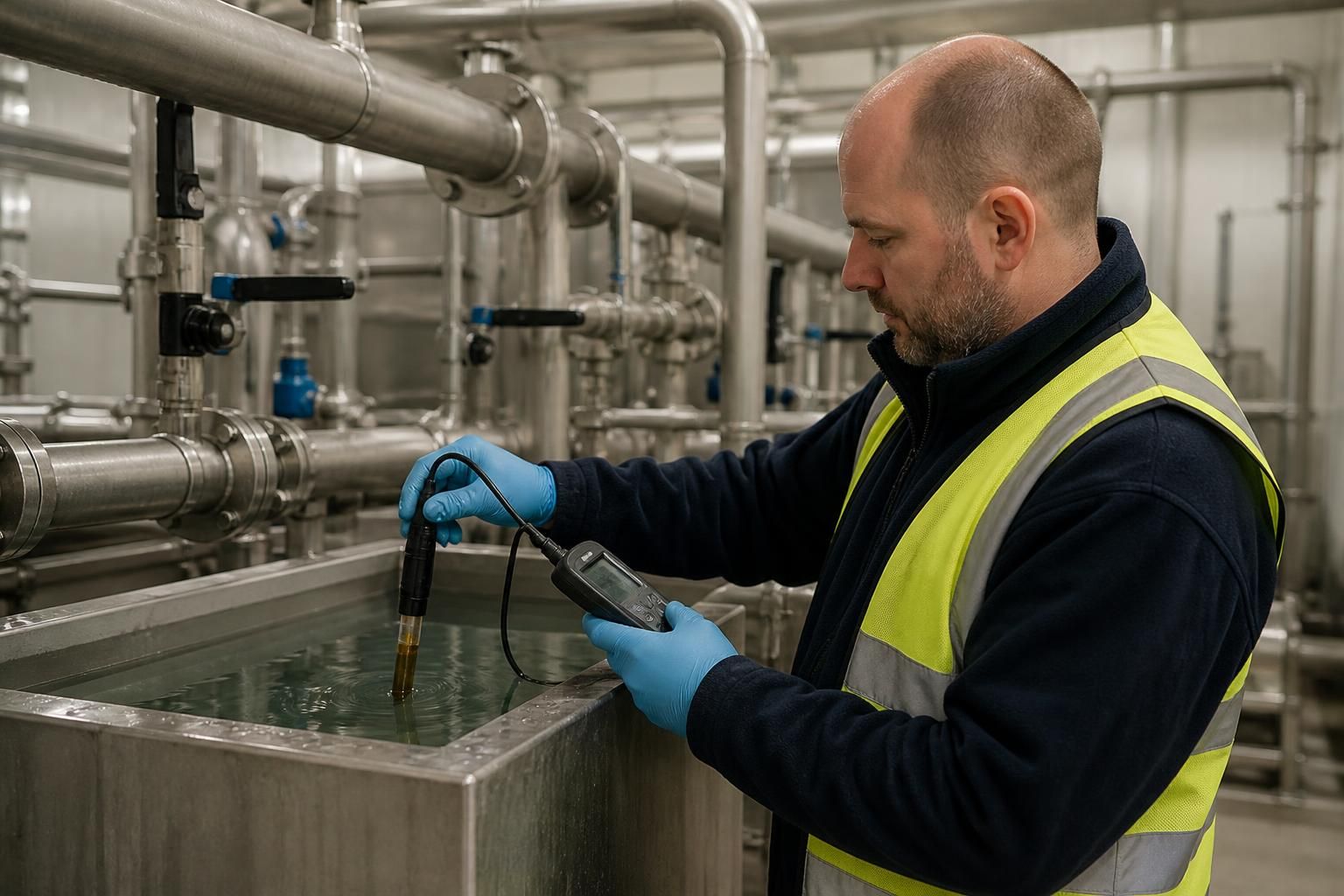
A competent potable water chlorination provider should be able to manage the complete disinfection process: establish what the system requires, control the work safely, verify the result and produce evidence that another responsible person can understand and audit. Competence is demonstrated through the quality of the planning, site controls, technical decisions and records, not simply through the application of chlorine.
System knowledge and planning
The provider should understand how potable water systems are configured and how design affects disinfection. This includes storage tanks, distribution pipework, secondary return systems, outlets, pumps, valves, flexible connections and sections that may be poorly circulated or difficult to access. Before work begins, the provider should review available drawings, identify changes made to the system and confirm the purpose of the chlorination, such as commissioning, remedial work or post-maintenance verification.
A suitable plan should define the areas included, the proposed disinfectant, contact conditions, monitoring points, flushing arrangements and acceptance criteria. It should also identify limitations, including inaccessible pipework, stagnant sections, unsuitable materials or equipment that could be damaged by the treatment. If the system cannot be treated as planned, a competent provider should explain the issue and agree a technically appropriate alternative rather than applying a standard procedure without adjustment.
Control of health, safety and water-quality risks
Chlorination involves chemical, operational and public-health risks. The provider should have documented arrangements for chemical storage and handling, personal protective equipment, spill control, ventilation, safe dosing and emergency action. The work plan should address isolation of the system, prevention of unauthorised use, warning notices and communication with building users or other contractors.
Competence also includes protecting the potable water system from contamination during the work. Hoses, pumps, containers and other equipment should be suitable for the application and managed hygienically. The provider should understand how excessive chemical exposure, poor flushing or incorrect reconnection could affect fittings, materials and water quality.
Accurate monitoring and interpretation
A provider should be able to select monitoring points that represent the system rather than relying on a single convenient outlet. Measurements should be taken using maintained and suitable equipment, with sampling conditions and results recorded clearly. Where test results are obtained from a laboratory, the provider should understand what the result demonstrates, what it does not demonstrate and whether further investigation is needed.
Results should be interpreted alongside the system history and the work completed. A satisfactory result at one point does not automatically confirm that every branch, tank or outlet has been disinfected. Equally, an unexpected result may indicate inadequate circulation, residual contamination, sampling error or a system defect. A technically competent provider will investigate these possibilities before recommending further treatment.
Evidence, reporting and follow-up
The completed record should allow the client or responsible person to reconstruct the work. It should normally identify:
- the system or areas treated and the reason for disinfection;
- the date and relevant site conditions;
- the method, chemicals and equipment used;
- the monitoring locations and observations made;
- chemical measurements, flushing information and test results;
- any exclusions, deviations, problems or remedial actions; and
- the conclusion, including any restrictions on using the system.
Good reporting avoids unsupported statements such as declaring an entire installation safe when only part of it was accessible or tested. It should distinguish between completion of the chlorination procedure and confirmation of the resulting water quality. Where results are unsatisfactory, the provider should set out practical next steps, which may include additional flushing, repeat sampling, investigation of dead legs or corrective work to the system.
People, procedures and quality assurance
Staff carrying out the work should have relevant training, defined responsibilities and supervision appropriate to the complexity of the installation. The provider should use consistent procedures for equipment checks, sample identification, record keeping and review of results. Internal quality checks are particularly important where several operatives, subcontractors or sites are involved, because consistency affects the reliability of the evidence supplied to the client.
When assessing a provider, a prospective client can ask for an example of a suitably anonymised chlorination plan and completion report, details of the proposed sampling process, evidence of staff competence and an explanation of how failed or inconclusive results are handled. These questions test whether the provider can demonstrate controlled, traceable work rather than merely describe chlorination in general terms.

Competence also includes understanding the limits of chlorination. Disinfection does not correct poor pipework design, unsuitable materials, cross-connections or a continuing source of contamination. Where installation changes or defects are identified, the provider should explain whether they may affect water fittings compliance or ongoing water quality, and indicate when another specialist or the relevant water undertaker needs to be involved.
This boundary is important when reviewing a completion certificate. A chlorination record should confirm what treatment was carried out, but it should not be presented as approval of the whole installation or proof of indefinite potable water quality. Clear separation between disinfection, remedial work and regulatory responsibilities is a useful indicator of sound professional judgement.
Discuss Your Potable Water Chlorination Requirements
Discuss your potable water chlorination requirements with Blue Fish Water Management Ltd to identify the appropriate scope, controls and verification process for your system. Their team can provide practical guidance tailored to your compliance needs.