
What chlorination method will be used for my potable water system?
The method will depend on the potable water system’s design, condition, use and any findings from the risk assessment or water testing. Common approaches include continuous chlorine dosing for ongoing control and shock chlorination to disinfect a system following contamination, remedial work or other identified risks.
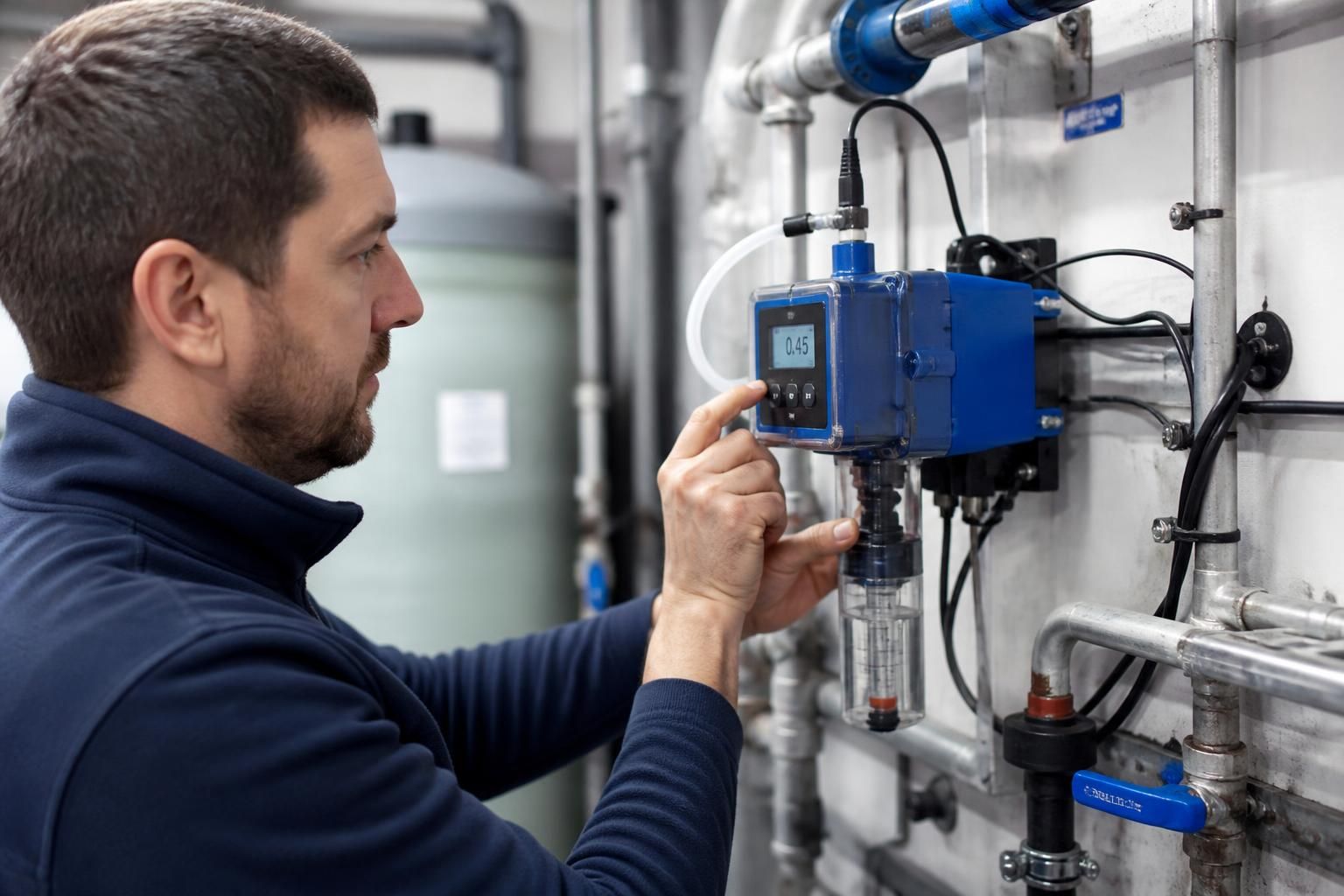
The chlorination method selected for a potable water system will be the one that achieves effective disinfection without compromising water quality, system materials or continued operation. The decision is normally based on the system’s construction, flow and storage arrangements, the nature of any contamination, the results of sampling, and whether the work is intended as a one-off disinfection or as ongoing control.
Continuous dosing is used where a system requires a maintained disinfectant residual rather than a single treatment. A dosing unit introduces a controlled quantity of chlorine into the incoming supply or a circulating loop. The dose may be adjusted in relation to flow, with monitoring used to check that chlorine remains present at representative points in the system. This approach can be relevant to larger or higher-risk systems, particularly where water is stored or recirculated and the risk cannot be managed adequately through periodic disinfection alone.
Shock chlorination is a treatment of the system as a whole. Chlorinated water is introduced to pipework, tanks, calorifiers and outlets, then held in contact with internal surfaces for the specified treatment period. Every part of the system must be reached, including infrequently used outlets and sections that may otherwise remain stagnant. The treated water is subsequently flushed and checked before the system is returned to normal use. Sampling may be undertaken to verify that the treatment has been effective and that the water is suitable for use.
In some cases, a targeted treatment is more appropriate than dosing the entire installation. For example, an isolated storage tank, branch, outlet or section of pipework may require attention where investigation has identified a localised problem. This decision depends on whether the affected area can be reliably isolated and whether untreated sections could allow the problem to persist or spread. Local treatment should not be used to avoid addressing wider faults such as dead legs, poor circulation, inadequate turnover or defective temperature control.
The chemical used and the way it is introduced must be compatible with the installation and the intended use of the water. The assessment should consider:
- pipework, tank and component materials, including their susceptibility to corrosion or chemical damage;
- the presence of scale, sediment, biofilm or organic matter, which can reduce the effectiveness of disinfection;
- the volume and layout of the system, including storage vessels, return loops, dead ends and rarely used outlets;
- water pressure, flow and access points needed to distribute the disinfectant;
- the need to isolate equipment or protect sensitive components during treatment;
- how treated water will be discharged and whether dechlorination is needed before disposal; and
- the sampling and monitoring required to confirm both treatment performance and water quality.
Chlorination is most effective when it forms part of a wider corrective process. Cleaning tanks, removing sediment, improving circulation, eliminating redundant pipework and repairing leaks may be necessary before or alongside chemical treatment. Chlorine cannot reliably compensate for a system that continues to provide stagnant areas, unsuitable temperatures or conditions that encourage microbial growth.
For an ongoing dosing system, the provider should explain the dosing point, control method, monitoring locations, alarm arrangements and maintenance requirements. For a shock treatment, the method statement should identify the sections to be treated, isolation arrangements, contact requirements, flushing procedure, reinstatement checks and any restrictions on use during the work. These details allow the responsible person to understand how the chosen method will be controlled rather than relying solely on the name of the treatment.
The final method should be recorded with the reason for its selection, the areas treated, the chemical and concentration used, relevant contact information, flushing and dechlorination measures, test results, and any remedial recommendations. If the findings indicate that chlorination alone will not provide durable control, the appropriate outcome may be further investigation or physical remedial work rather than repeating the same chemical treatment.
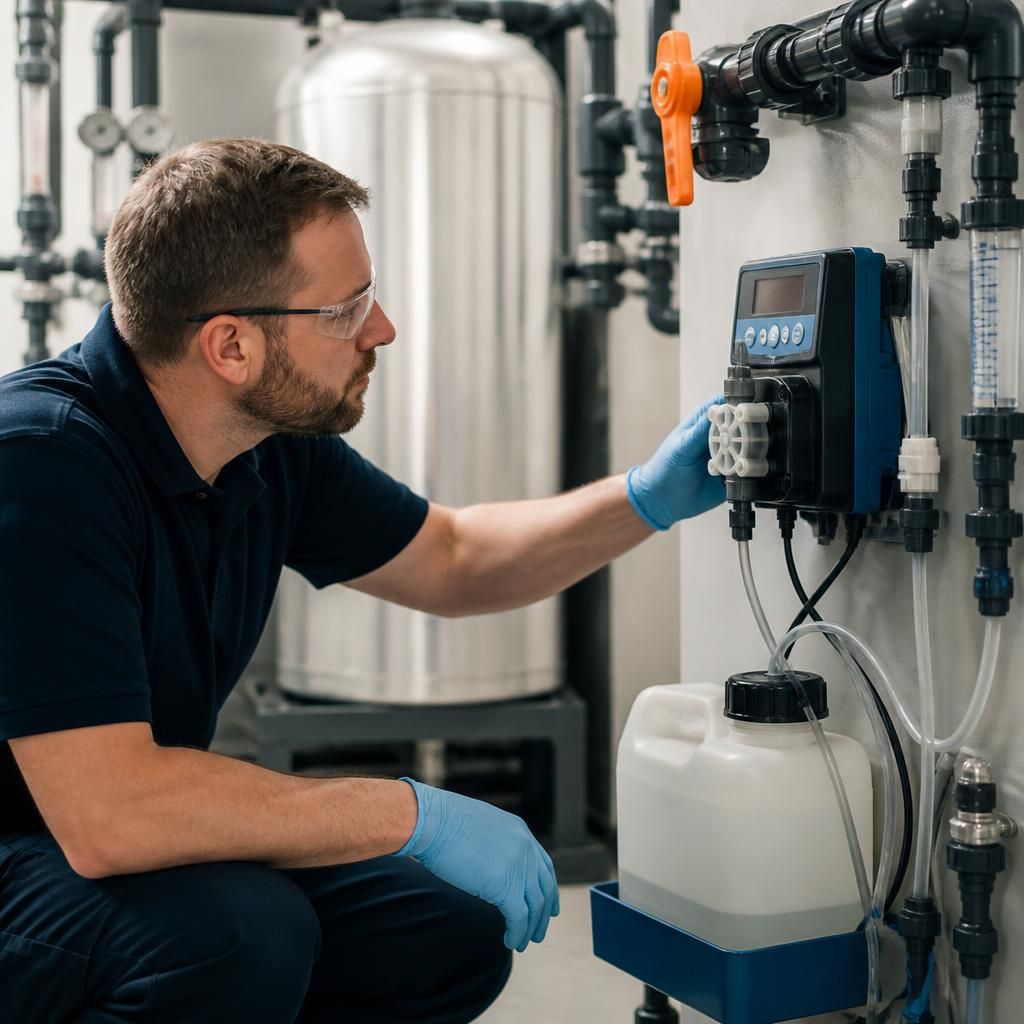
Chlorine residual alone does not prove that a potable water system has been effectively disinfected. A measurable residual can be present even where biofilm, sediment or poorly flushed sections remain, so the result must be considered alongside microbiological sampling, system conditions and the treatment records.
This is why verification should be planned as part of the chosen method rather than added afterwards. The provider should establish which samples are needed, where they will be taken and what findings would require further investigation before the system is accepted for normal use. A suitable method is therefore one that can be evidenced, not simply one that introduces chlorine into the pipework.
Discuss your potable water system chlorination method
Discuss your potable water system with Blue Fish Water Management Ltd to identify a chlorination approach suited to its design, condition and operational requirements. Request expert guidance on the appropriate treatment and verification process for your installation.