
How is potable water chlorination verified after treatment?
Potable water chlorination is verified by checking chlorine residuals at representative outlets after treatment, then confirming results against the required control limits. Where appropriate, laboratory samples are also tested for microbiological quality, with readings, sampling details and any corrective action recorded for compliance evidence.
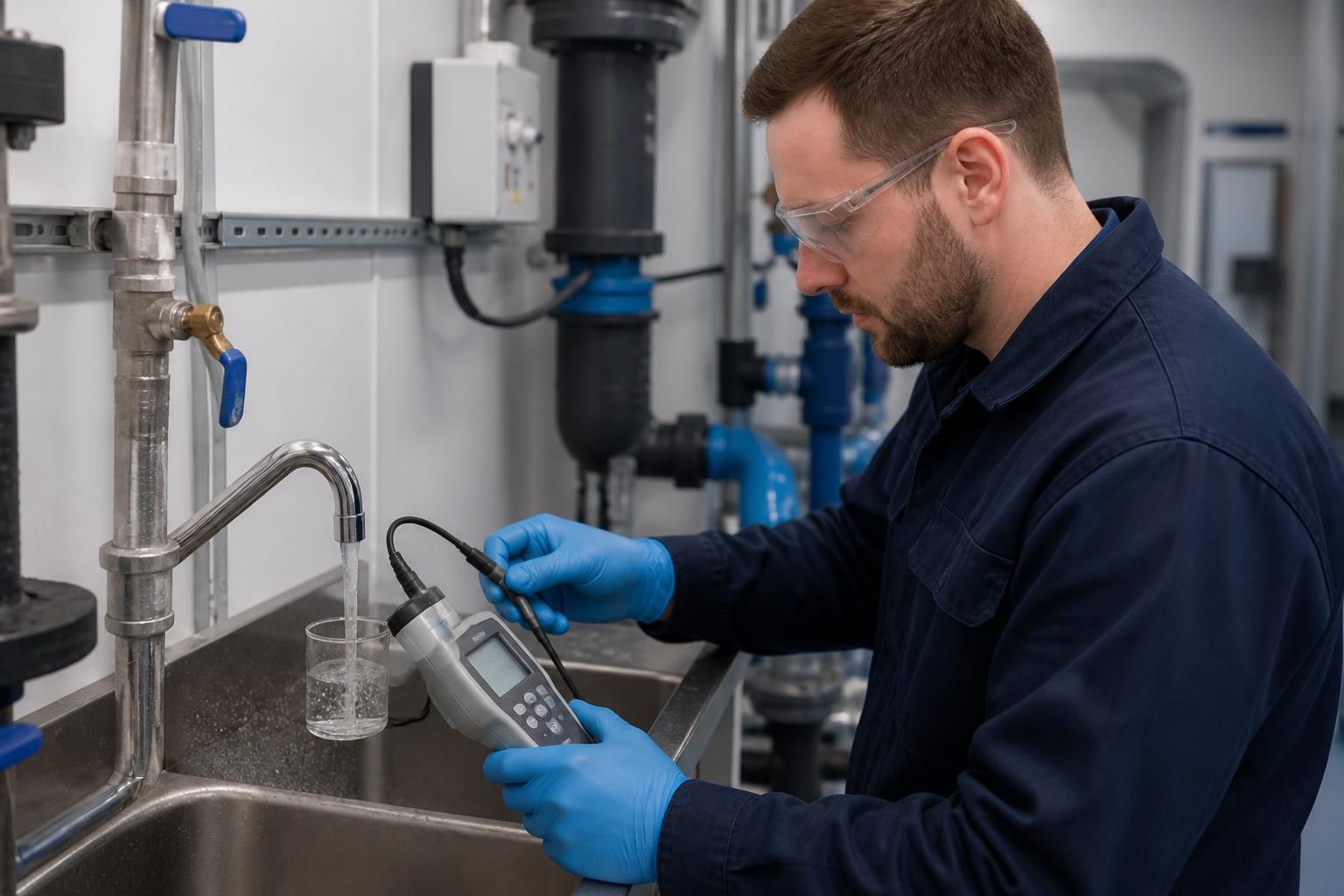
Verification after potable water chlorination is a documented review of whether the treatment was applied correctly, maintained the required contact conditions and achieved acceptable water quality. It involves more than recording a single chlorine reading: the evidence should show what was treated, how the process was controlled, where checks were taken, when they were taken and how any abnormal result was addressed.
The verification process commonly considers the following treatment information:
- the section of the water system treated, including tanks, pipework, outlets and any isolated areas;
- the disinfectant used and the method of application;
- the chlorine concentration achieved during treatment;
- the contact period allowed before flushing or returning the system to use;
- the sequence used to open outlets and distribute treated water throughout the system; and
- any parts of the installation that could not be treated or sampled.
These details are important because a satisfactory result at one point does not necessarily demonstrate that every branch, storage vessel or seldom-used outlet received the same treatment. The verification plan should therefore reflect the system design and the purpose of the chlorination work. Large or complex installations may require additional sampling points, staged checks or separate records for different sections.
Chlorine measurements should be taken with equipment suitable for the water and concentration being assessed. The instrument or test kit should be maintained and checked in line with the manufacturer's instructions, with its identity, condition and any calibration or verification information recorded. The person carrying out the test should also record the sample location, date, time, result, units and relevant treatment stage. This makes it possible to distinguish a result taken during disinfection from one taken after flushing or when the system has been returned to normal operation.
Interpretation should take account of the treatment objective and the control limits set by the applicable specification, risk assessment, client requirements or regulatory guidance. A result outside the expected range does not automatically prove that the whole system has failed, but it does require investigation. Possible causes include inadequate circulation, a closed valve, dead-leg pipework, high demand at an outlet, insufficient contact time, excessive chlorine demand from deposits or an error in sampling or measurement.
Laboratory verification provides an additional level of assurance where microbiological quality needs to be demonstrated. Samples should be collected using an appropriate method, clearly labelled and submitted with enough information to identify the system, sampling point and treatment status. The laboratory report should be reviewed alongside the treatment records rather than considered in isolation. A negative or acceptable laboratory result is meaningful only when the sample represents the treated system and was collected at the correct stage of the process.
Good verification records normally include:
- the site and system identification;
- the reason for treatment and the work dates;
- the treatment method and chemicals used;
- chlorine readings and contact-time records;
- sampling locations and sample timings;
- equipment details and the name of the person taking each reading;
- laboratory reports, where samples were submitted; and
- deviations, corrective actions and the final decision on system release.
If verification identifies an unsatisfactory result, the system should not simply be signed off without assessment. The responsible person should determine whether further flushing, repeat treatment, valve or pipework checks, cleaning, additional sampling or specialist remedial work is appropriate. Any decision to place the system back into service should be supported by the available evidence and recorded by the person responsible for water safety.
For organisations managing more than one site or system, consistent forms and review criteria help make results comparable and make gaps easier to identify. A competent water hygiene specialist can review the treatment records, assess whether the sampling approach was representative and advise on further action where the evidence does not support completion.
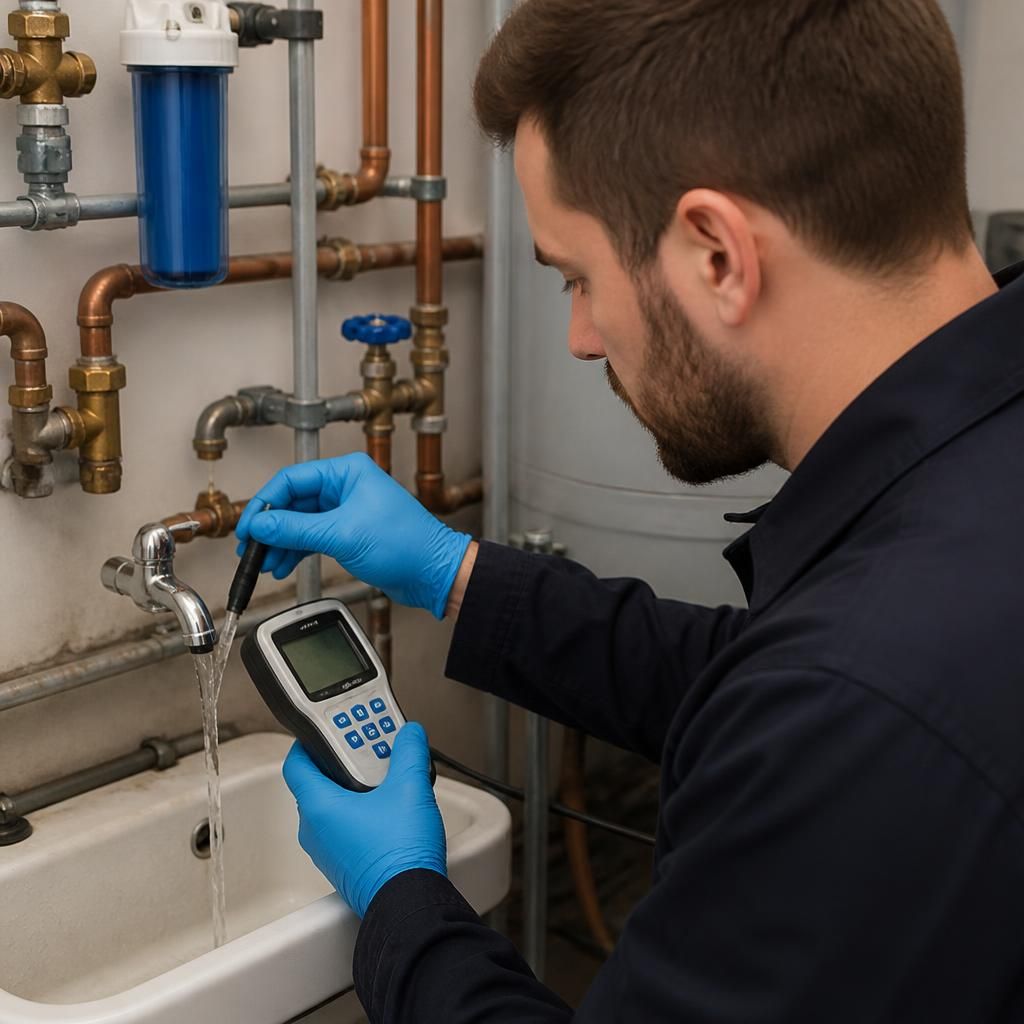
Verification is strongest when the treatment evidence can be traced from the original reading to the final release decision. Record results as they are obtained, rather than relying only on a later summary, and retain the original field sheets or electronic entries. Any correction should remain auditable, with the reason for the change and the person making it identified.
A competent reviewer should then check the records for gaps, inconsistent results or readings that do not fit the system’s configuration. This review helps distinguish a genuine water-quality concern from an isolated testing error and confirms that the evidence supports returning the treated supply to use.
Need support verifying potable water chlorination?
If your organisation needs help checking whether its potable water chlorination evidence supports system release, speak to Blue Fish Water Management Ltd about reviewing the treatment records, sampling approach and follow-up actions.