
Which drinking water systems require chlorination?
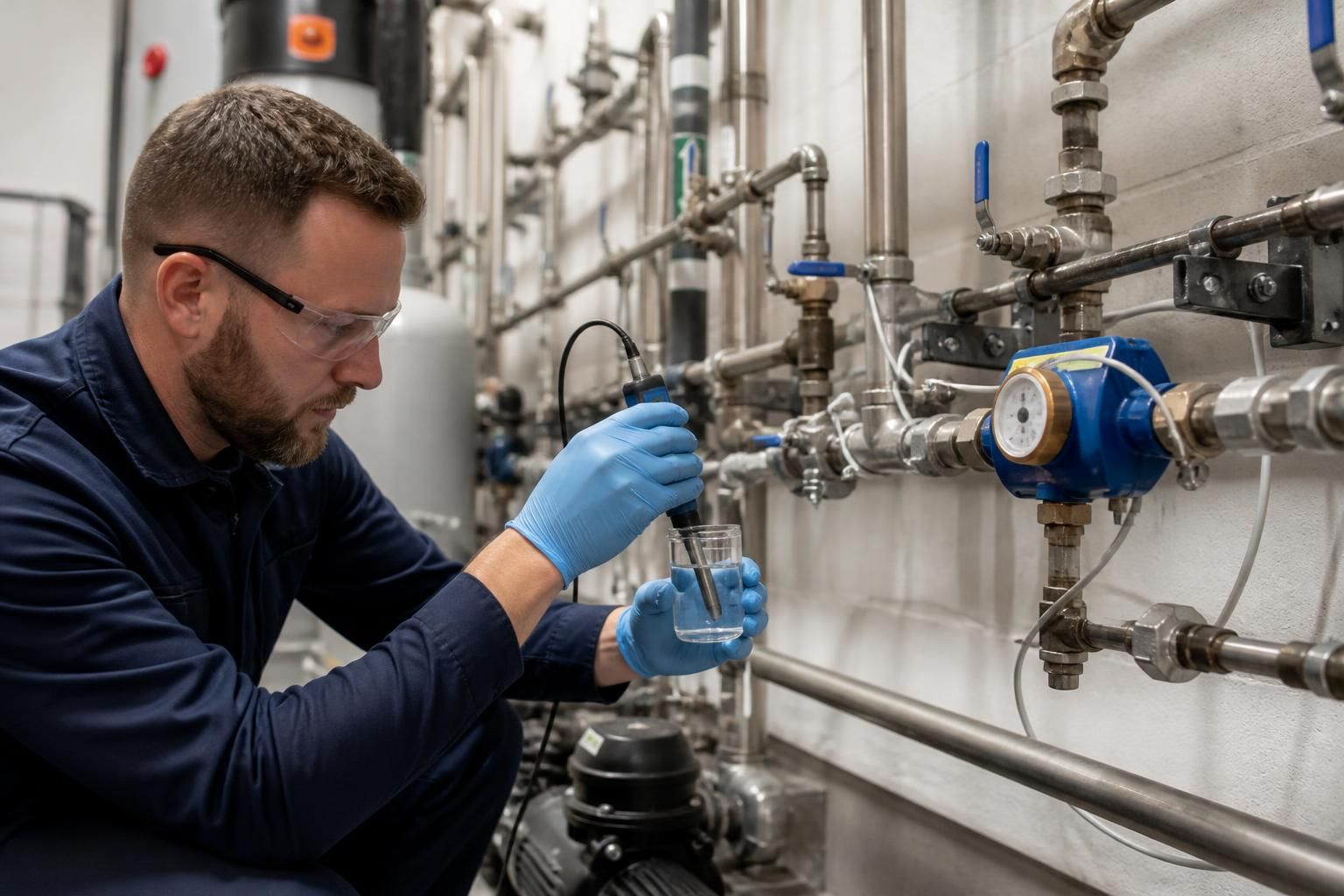
The drinking water systems most likely to require chlorination are those being commissioned, significantly modified, repaired after contamination or supplied from a source where microbial quality cannot be assumed. This can include mains-fed systems, private water supplies, stored-water installations and complex commercial systems. The exact requirement should be established from the system specification, risk assessment, water quality information and relevant UK standards or guidance.
Newly installed systems
A new drinking water installation is commonly disinfected before it is handed over or connected to normal use. This applies to pipework serving offices, factories, schools, healthcare premises, residential developments, hotels and other commercial buildings. The purpose is to remove contamination introduced during manufacture, transport, storage and installation, including contamination from handling, jointing materials, dust or site conditions.
Disinfection may apply to the complete installation or to defined sections, depending on how the system has been constructed and tested. Tanks, distribution pipework, drinking water outlets, filling points and associated equipment should be considered rather than treating the incoming supply alone as representative of the whole system.
Extended or substantially altered systems
Existing systems can require chlorination when new branches, risers, tanks, calorifiers, booster sets or other components are added. It may also be appropriate where pipework has been replaced, opened for repairs or disconnected for a significant period. The work should be planned so that disinfectant reaches all relevant parts of the altered system and does not leave untreated sections that could affect water quality after recommissioning.
A minor repair does not automatically mean that the entire building system needs chlorinating. The decision depends on the extent of the work, the components exposed, the possibility of ingress and the findings of the responsible person or competent water hygiene professional.
Systems with storage, boosting or complex distribution
Storage tanks and long or complicated distribution networks can present more opportunities for stagnation, ingress and localised water quality problems. Systems with multiple buildings, low-use outlets, boosted supplies, pressure-reducing equipment or extensive secondary pipework may therefore need disinfection during commissioning or after intrusive maintenance.
These features do not, by themselves, create a requirement for continual chlorination. A properly designed and maintained drinking water system normally relies on good turnover, temperature control where relevant, hygienic construction, inspection and monitoring. Continuous dosing should not be introduced simply because a system is large or contains a storage tank; it requires a separate technical and risk-based justification.
Private and alternative water supplies
Private water supplies, boreholes, springs and other sources need particular attention because their microbiological quality can vary with source conditions, weather, treatment arrangements and surrounding land use. Chlorination may form part of initial commissioning, corrective action or ongoing treatment where testing and assessment identify a need.
Source treatment and building disinfection are different matters. Treating water as it enters a site does not necessarily disinfect internal tanks and pipework, while chlorinating internal pipework does not correct an unsuitable or contaminated source. Both parts of the arrangement should be assessed, with sampling used to confirm whether controls are working.
Following contamination or a water quality incident
Chlorination can be required after a confirmed or suspected contamination event, including ingress into a tank, loss of integrity, flooding, cross-connection, major maintenance failure or a microbiological test result outside the expected standard. The appropriate response depends on the organism or indicator detected, the affected area, the likely route of contamination and whether vulnerable people may have been exposed.
In these circumstances, disinfection is only one part of the response. The source of contamination should be identified and corrected, affected outlets may need to be restricted, and follow-up samples should demonstrate that the system is suitable for return to use.
Healthcare and other higher-risk premises
Healthcare settings, care environments and premises used by people who may be particularly susceptible to infection generally require a more formal approach to water safety. New or altered drinking water systems in these settings may be subject to project specifications, estates procedures and specialist infection-control requirements in addition to general water hygiene guidance.
Schools, hospitality premises, industrial sites and multi-occupancy buildings may also need enhanced controls where there are many outlets, periods of low occupancy or a history of water quality problems. However, the type of premises does not automatically determine that chlorination is needed. The decision remains linked to the system condition, use, design and documented risk assessment.
Systems that do not normally require routine chlorination
An established drinking water system that is hygienically designed, maintained and producing acceptable test results does not normally need permanent chlorination solely because it supplies a commercial building. Routine dosing can alter taste and may create operational or material-compatibility issues if poorly controlled. It should therefore be distinguished from one-off disinfection carried out for commissioning or remedial purposes.
Non-potable systems, closed process-water circuits and fire-protection installations are not automatically included in drinking water chlorination requirements. They must be considered separately unless they are connected to, share components with or could contaminate the wholesome water system. Any cross-connection or backflow risk requires prompt assessment and suitable protection.
How the requirement is determined
- Identify whether the system supplies water intended for drinking, food preparation, personal washing or other wholesome uses.
- Review the source, system design, storage arrangements, materials, history and areas affected by the work.
- Assess contamination risks, vulnerable users, stagnation and any previous microbiological results.
- Check the project specification, contractual requirements and applicable UK water hygiene guidance.
- Define the disinfection method, contact conditions, safety controls, flushing and sampling requirements.
- Keep records showing what was treated, how it was treated and whether verification testing supported return to service.
Where the position is unclear, a competent water hygiene specialist can assess the installation and advise whether targeted disinfection, full-system chlorination or another control measure is proportionate. UKAS-accredited laboratory testing may be used where independent microbiological evidence is needed to support the decision and confirm water quality after the work.
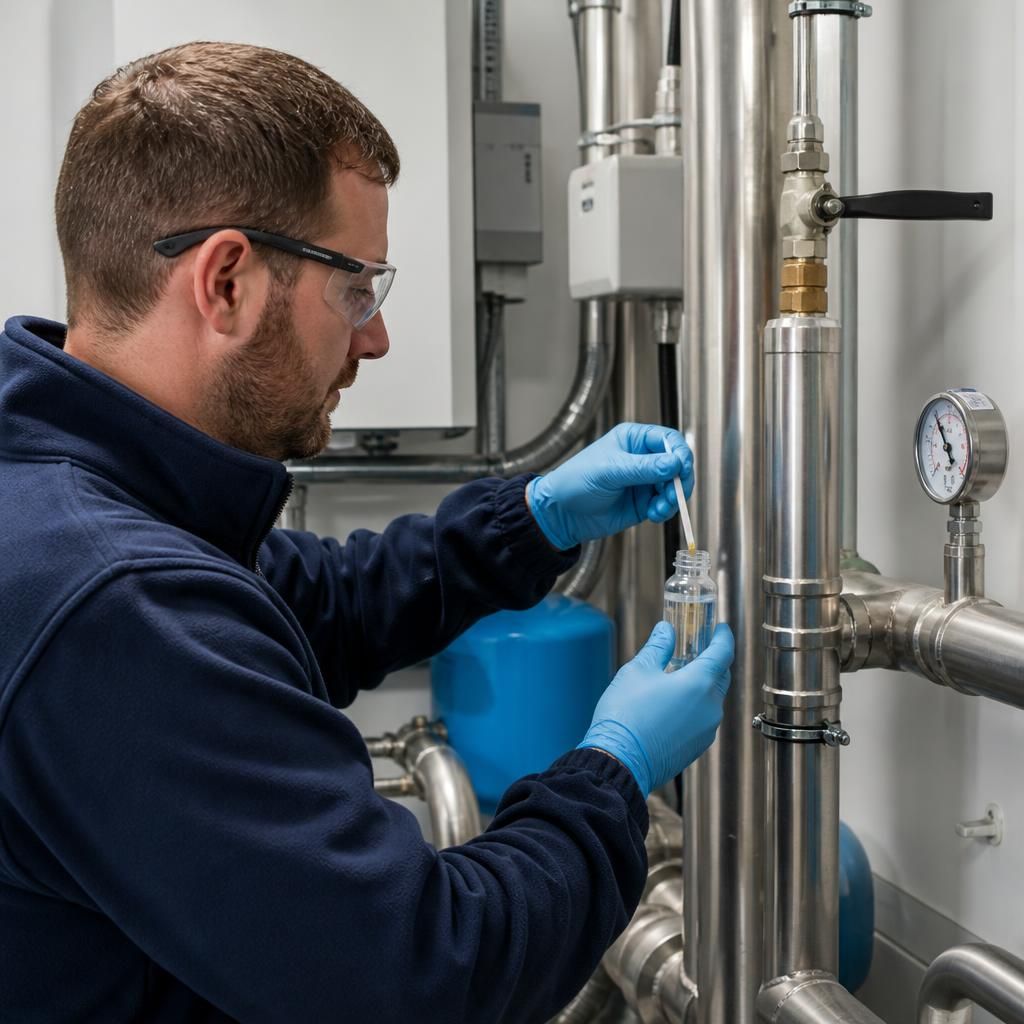
A drinking water system may require disinfection without chlorine being the appropriate method in every circumstance. The choice depends on the system materials, configuration, discharge arrangements, water quality risk and the requirements of the project or responsible person. Chlorination is widely used for commissioning and remedial work, but another validated method may be more suitable where chlorine could damage components, create disposal difficulties or fail to reach the required parts of the installation.
The important question is therefore not simply whether a building has a drinking water system, but what disinfection objective must be achieved and how it can be demonstrated safely. The chosen method should be documented, applied by a competent person and followed by appropriate flushing and water quality checks before the system is returned to normal use.
Discuss your drinking water chlorination requirements
If you need to establish whether your drinking water system requires chlorination, discuss the installation and its disinfection requirements with Blue Fish Water Management Ltd. Their water hygiene specialists can help you determine an appropriate, proportionate next step based on the system and available evidence.