
How should a business choose drinking water chlorination support?
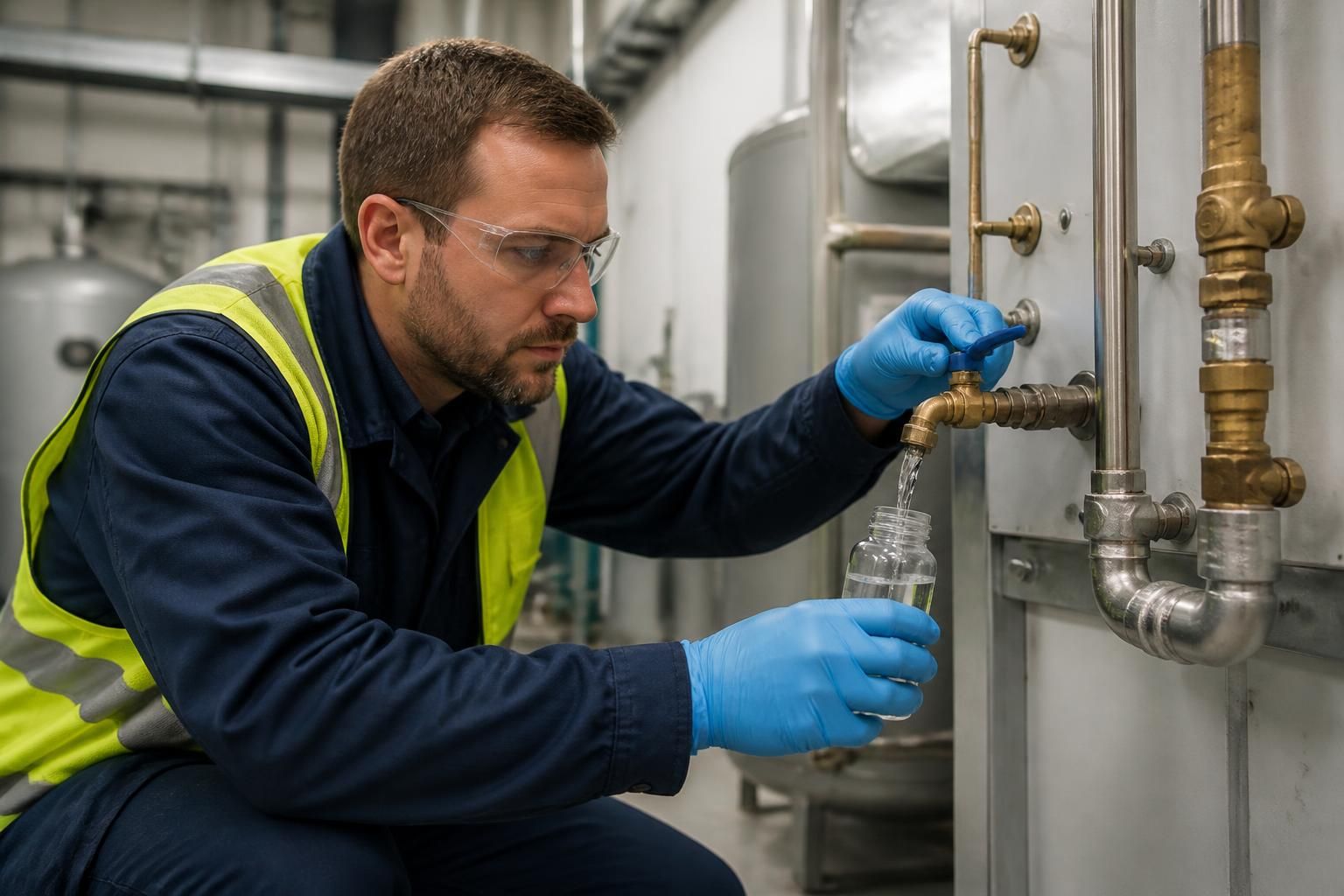
Choose drinking water chlorination support by comparing the provider’s technical competence, treatment methodology, testing arrangements, documentation and ability to work within your organisation’s water safety procedures. The right provider should be able to explain why chlorination is required, what the proposed process will involve, how the system will be protected during the work and what evidence will demonstrate that it has been completed effectively.
Start with the reason for the work. Chlorination may be required for a newly installed or altered system, following contamination, after prolonged stagnation, as part of remedial action, or during commissioning. These circumstances can require different preparation, treatment controls and follow-up sampling. A provider should review the reason for disinfection, the system’s design and use, any known water quality concerns, and whether vulnerable users or critical operations could be affected.
Check the proposed method in detail. A quotation should do more than describe the work as “chlorination”. It should identify the parts of the system included, the disinfectant to be used, the intended concentration and contact period, flushing arrangements, restrictions on water use, and how residual disinfectant will be managed before the system returns to service. The provider should also explain how dead legs, tanks, storage vessels, outlets and other areas of potential stagnation will be addressed. If the system contains materials or equipment that could be affected by the treatment, this should be considered before work starts.
Assess how the provider controls risk during treatment. Drinking water systems may serve offices, factories, residential buildings, healthcare premises or other workplaces with different operational constraints. The provider should identify the points at which water must not be used, explain how users will be informed and set out arrangements for isolation, flushing and reconnection. It should also consider the risk of releasing contaminated or highly chlorinated water into drainage systems and specify suitable precautions. A clear method statement and risk assessment are useful evidence that the work has been planned rather than treated as a routine chemical application.
Examine the testing arrangements. Reliable support includes a sampling plan appropriate to the system and the reason for treatment. Ask which outlets or parts of the installation will be sampled, whether samples will be taken before and after disinfection, which microbiological parameters will be examined, and how samples will be identified and transported. Testing should be undertaken through a suitably competent laboratory, with UKAS-accredited water testing used where the required test falls within the laboratory’s accredited scope. The report should make clear which methods were used and whether any result is pending, inconclusive or outside the expected criteria.
Do not treat a satisfactory chlorine reading at one point as proof that every part of the system has been adequately disinfected. On-site measurements can help confirm treatment conditions, but they do not replace representative microbiological sampling where that is required. Results should be interpreted alongside the system layout, flushing records, treatment readings and any history of contamination or stagnation.
Review the provider’s reporting. Useful completion records should allow a facilities manager, water safety group or auditor to understand exactly what happened. Depending on the scope of work, this may include:
- the areas and outlets included or excluded;
- the date and sequence of isolation, dosing, contact and flushing;
- chemical details, treatment readings and any adjustments made;
- sample locations, dates, laboratory reports and result interpretation;
- deviations from the planned method and corrective actions;
- confirmation of reinstatement, or details of any restrictions that remain; and
- recommendations for preventing recurrence.
Records should be compatible with the organisation’s existing water safety file and document-control arrangements. If a provider supplies only a brief invoice or an unlabelled laboratory result, it may be difficult to demonstrate what was treated and whether the evidence relates to the correct installation.
Consider what happens after disinfection. Chlorination can address a specific contamination or commissioning requirement, but it may not resolve the underlying cause of poor water quality. The provider should identify relevant issues such as low use, inadequate turnover, unsuitable temperatures, damaged storage, poor pipework configuration or outlets that are difficult to flush. Where further action is needed, the recommendation should distinguish between urgent controls, remedial work and routine monitoring rather than presenting every issue as the same type of problem.
Compare quotations on scope, not just price. Before accepting a proposal, confirm whether it includes site information gathering, access equipment, sampling, laboratory charges, flushing, dechlorination, repeat visits and the final report. Clarify what would happen if test results do not demonstrate satisfactory control and whether any additional work requires separate approval. A lower initial price may not represent better value if important outlets, testing or documentation are excluded.
It is also sensible to ask for evidence of relevant experience with systems similar to your own, examples of the records provided, details of staff competence and confirmation that the proposed work can be integrated with your responsible person’s procedures. Blue Fish Water Management Ltd combines drinking water chlorination support with water hygiene advice, UKAS-accredited water testing, compliance auditing and remedial services, allowing businesses to consider treatment and its supporting evidence as part of a wider control programme.
The final choice should therefore be based on whether the provider can give a technically justified plan, control the practical risks, produce defensible test evidence and explain any further action in terms that the business can implement. Those checks provide a more reliable basis for selecting support than a generic description of chlorination or a standalone price.

Choosing drinking water chlorination support also involves checking how the provider manages the work on site. Ask whether the proposed team has suitable competence for chemical handling, sampling, access arrangements and the safe disposal or discharge of chlorinated water. Where specialist access, isolation or other site controls may be needed, these responsibilities should be identified before the quotation is accepted.
It is also useful to confirm who will supervise the work, who can approve changes to the treatment plan and how unexpected conditions will be escalated. Clear arrangements reduce the risk of decisions being made informally while the system is isolated or being returned to use. This provides a practical test of whether the provider can work within the business’s existing management procedures, rather than supplying chlorination as a standalone task.
Get Advice on Choosing Drinking Water Chlorination Support
For guidance on selecting drinking water chlorination support, speak to Blue Fish Water Management Ltd about your system, treatment requirements and the evidence needed for compliance.