
How is chlorination of drinking water systems verified?
Chlorination of drinking water systems is verified by checking disinfectant residuals at representative outlets and taking water samples for appropriate microbiological analysis. The results, sampling locations and test records are reviewed against the disinfection objectives and applicable water safety requirements.
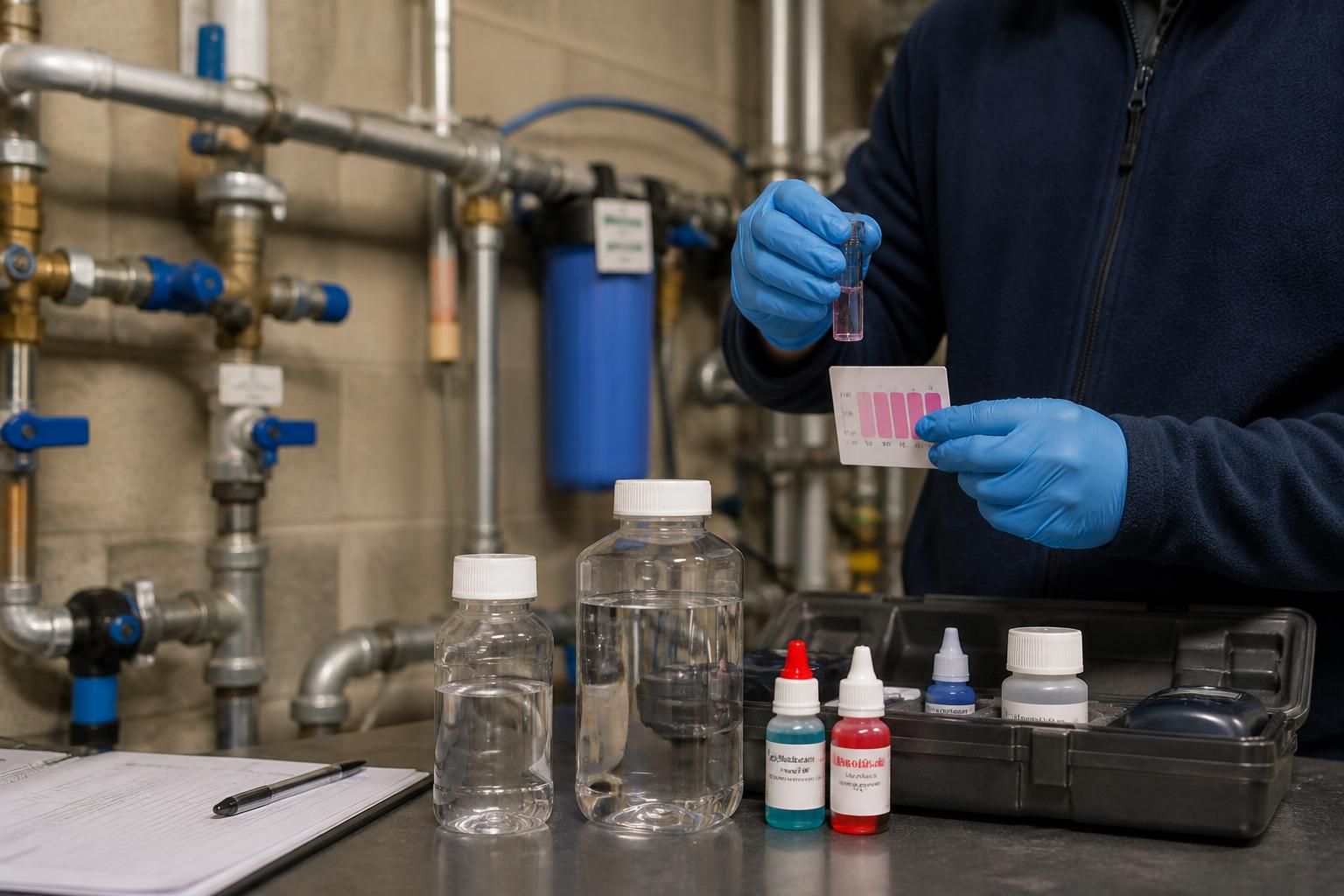
Verification of drinking water system chlorination is a documented process that demonstrates whether the disinfection treatment achieved its intended outcome. It combines evidence from the chlorination process, on-site measurements, microbiological examination and a review of the system’s condition and records. A single chlorine reading is not sufficient on its own to confirm that a system is safe to return to use.
Before work begins, the responsible person should define the verification criteria. These may include the disinfectant used, the target concentration and contact period, the required pH range, the outlets or sections to be checked, and the microbiological results needed before reinstatement. The criteria should reflect the type and condition of the installation, the reason for chlorination and the relevant water safety requirements.
During treatment, the operative records the conditions that affect disinfection. These can include:
- the concentration of free chlorine introduced into the system;
- contact time and any evidence that the solution reached the intended parts of the installation;
- pH and temperature where these affect disinfectant performance;
- the sequence in which tanks, pipework, outlets and branches were treated; and
- any sections that could not be adequately dosed, isolated or flushed.
On-site residual checks help establish whether disinfectant remains present at selected points and whether the treatment solution has travelled through the system. Measurements should be taken using suitable, maintained equipment and recorded with the time, location and relevant operating conditions. Readings need to be interpreted in context: a residual at one outlet does not confirm that every branch, storage vessel or infrequently used section received equivalent treatment.
After the required contact period, the system is normally flushed and returned towards its intended operating condition. Verification then involves checking that disinfectant has been reduced to an appropriate level before the system is put back into normal drinking water use. The flush should be managed carefully, particularly where discharge could affect people, drainage systems or the environment.
Microbiological sampling provides an additional line of evidence. Samples should be taken from locations selected in accordance with the sampling plan, which may include storage tanks, representative outlets, terminal points, low-use areas and sections where contamination was suspected. Sampling technique matters: outlets may need preparation, samples must be collected in suitable containers, and transport and laboratory handling must preserve the integrity of the sample. Testing through a suitably competent, UKAS-accredited laboratory can provide an independent analytical record.
Results are assessed against the acceptance criteria established for the work. A satisfactory result usually requires the process records, residual checks and laboratory findings to tell a consistent story. If results are unsatisfactory, the responsible person should not simply repeat sampling without investigation. Possible causes include inadequate contact time, poor circulation, deposits or biofilm, dead legs, contaminated tanks, ineffective flushing, sampling error or recontamination after treatment.
Where verification identifies a problem, corrective action may involve further cleaning, repair, removal of redundant pipework, adjustment of operating arrangements or repeat disinfection. Follow-up samples should be taken when appropriate, with the reason for the additional work and the outcome recorded. The system should only be released when the agreed criteria have been met or a competent person has documented a justified alternative decision within the water safety management process.
A complete verification file should be retained with the site’s water safety records. It may include the method statement, risk assessment, chemical and equipment details, dose and contact records, field readings, flushing records, sample locations, laboratory reports, deviations, corrective actions and authorisation to return the system to use. These records allow the responsible person to demonstrate what was done, where it was done and why the conclusion was reached.
For complex premises, verification should also be considered alongside the wider legionella and water hygiene controls. Chlorination addresses a defined disinfection requirement, but it does not remove the need to manage storage, temperature, stagnation, cleanliness, system alterations and ongoing monitoring. A competent water hygiene specialist can help establish a defensible sampling plan, interpret results and identify remedial work where the evidence does not support release of the system.
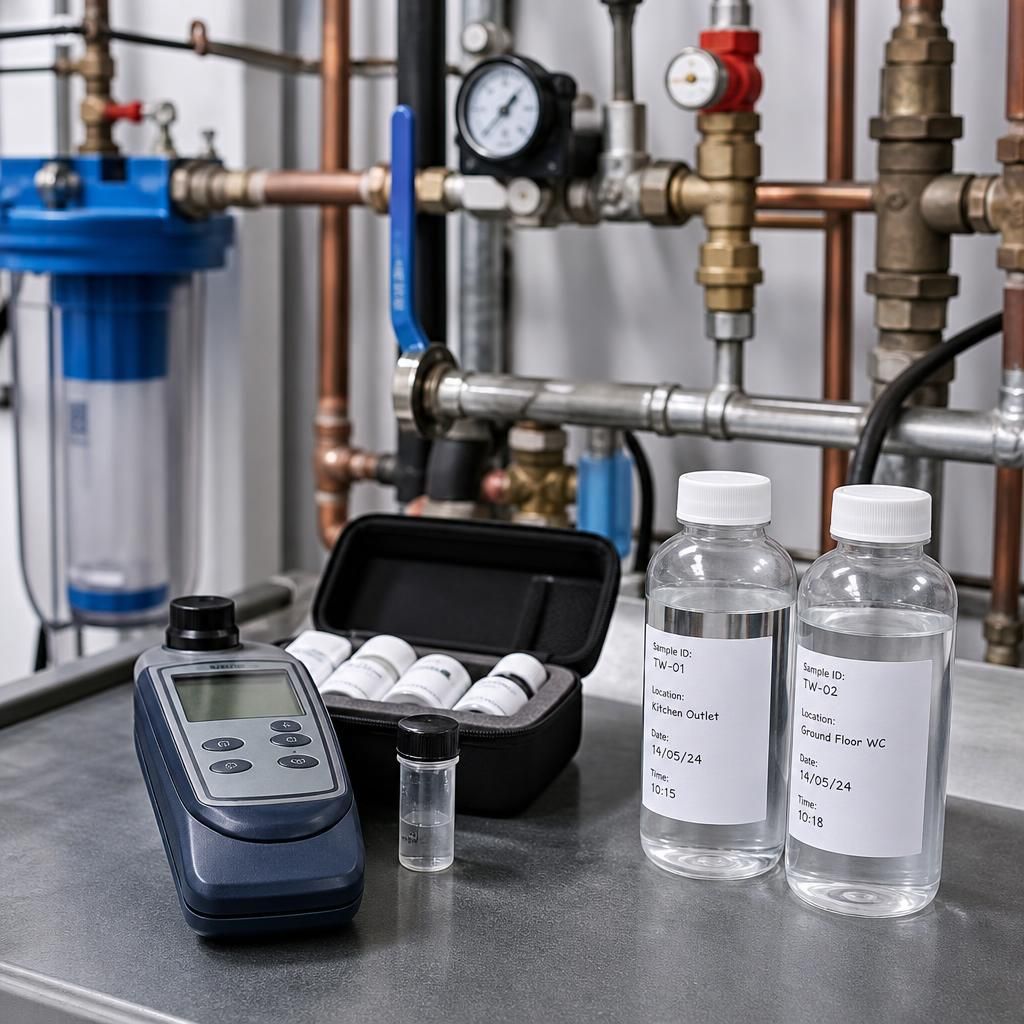
Verification is more reliable when every measurement and sample can be traced back to the part of the system and stage of treatment it represents. Chlorine-testing equipment should have evidence of suitable calibration or performance checks, while each sample record should identify the location, date, time and sampling point.
Sample labels, submission details and laboratory reports should correspond, so that results cannot be confused with samples from another outlet or treatment stage. Any missing information, damaged container, unexplained delay or inconsistency between field records and laboratory documentation should be assessed before the result is used to support a return-to-use decision.
Discuss verification of your drinking water chlorination
Discuss your drinking water chlorination verification requirements with Blue Fish Water Management Ltd and identify the evidence needed to support a properly documented return-to-use decision.