
When is ongoing pool chlorination management necessary?
Ongoing pool chlorination management is necessary whenever a swimming pool remains in regular use, because chlorine demand changes with bather load, water temperature, contamination and plant performance. It should be a planned process of testing, adjustment, record-keeping and review, with additional attention after changes to usage, treatment equipment, water quality or a period of closure.
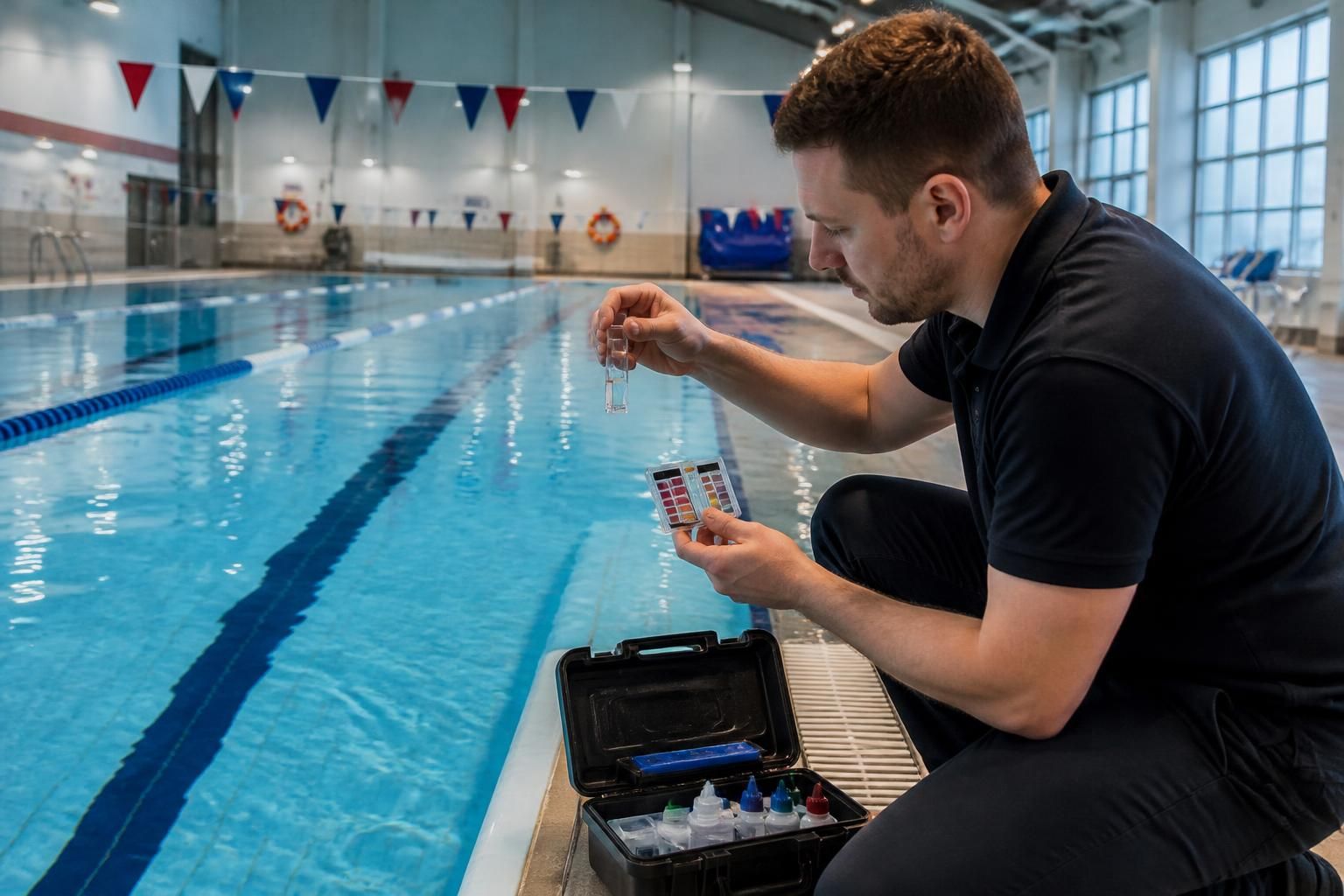
Ongoing pool chlorination management is necessary whenever water is being used by swimmers and its disinfectant balance can change between checks. It is not a one-off dosing exercise: effective management combines routine testing, controlled adjustment, plant checks, accurate records and formal review so that chlorine remains effective without creating avoidable water-quality problems.
It is particularly important in the following circumstances:
- Commercial or public use: swimming pools operated by leisure facilities, hotels, schools, care settings and other organisations need a defined process because different people may use the water throughout the operating period. The organisation responsible for the pool must be able to demonstrate that water quality is being monitored and managed.
- Variable or heavy bather loading: swimmers introduce organic material, cosmetics and other contaminants. These consume disinfectant and can affect clarity, odour and the performance of the treatment system. A management approach should account for actual usage rather than relying on a fixed chlorine setting.
- Warm-water environments: higher water temperatures can increase disinfectant demand and affect the behaviour of the treatment process. Pools, hydrotherapy facilities and similar installations may therefore require closer oversight than a lightly used, cooler pool.
- Complex treatment systems: automated dosing, filtration, circulation and control equipment must work together. A chlorine reading can be misleading if water is not circulating properly, sensors are inaccurate, filters are overloaded or chemicals are not being introduced correctly.
- Users who may be more vulnerable to poor water quality: facilities serving children, older people or people receiving therapeutic care should take a particularly disciplined approach to testing, records and escalation when results are outside the site’s control limits.
Management should also continue when test results appear satisfactory. A single acceptable result only describes the water at the time of sampling. Regular checks help identify trends such as gradually increasing chlorine demand, unstable pH, deteriorating filtration or inconsistent dosing before these develop into a more serious control issue. The frequency and scope of checks should reflect the pool design, usage, treatment equipment and findings from the site’s risk assessment.
Ongoing management normally includes:
- testing disinfectant levels, pH and other relevant water-quality parameters at an appropriate frequency;
- checking that sampling points provide representative results and that test equipment is suitable, maintained and used correctly;
- reviewing automated dosing, chemical storage, circulation, filtration and control instrumentation;
- adjusting treatment in response to measured conditions rather than applying chemicals without confirming the cause of a result;
- recording readings, actions, faults, corrective measures and any decision to restrict or suspend use;
- investigating recurring issues rather than repeatedly treating the symptom; and
- reviewing procedures after incidents, maintenance, alterations or changes in the way the facility operates.
Additional management is necessary when results fall outside the pool’s defined operating limits, when the water becomes cloudy or discoloured, when unusual odours or skin irritation are reported, or when plant alarms and dosing faults occur. These signs do not identify a single cause. They may indicate inadequate disinfection, excessive combined chlorine, pH imbalance, poor circulation, filtration problems or contamination. The appropriate response is to investigate the whole treatment process, follow the site’s written procedures and document the outcome.
Recommissioning after a period without normal operation also requires a controlled review. Before swimmers return, the responsible operator should confirm that the pool, circulation system, filters, dosing equipment and test instruments are ready for use, then carry out the checks and corrective actions required by the site’s procedures. Simply adding chlorine without checking circulation and water quality does not demonstrate that the system is under control.
Where a pool has repeated excursions, unreliable equipment, poor records or uncertainty about chemical control, specialist input can help establish the underlying problem. A pool chlorination provider may review the treatment arrangement, assess monitoring records, test water through an appropriate laboratory, audit compliance arrangements, provide operator training or specify remedial work. The purpose is to create a management system that is practical for the facility and proportionate to its risks.
In summary, ongoing pool chlorination management is necessary whenever a pool remains part of an operating facility, and it becomes especially important where usage, temperature, equipment complexity or user vulnerability increases the potential for water-quality variation. The process should be continuous and evidence-led, with testing, maintenance, records and review working together rather than being treated as separate tasks.
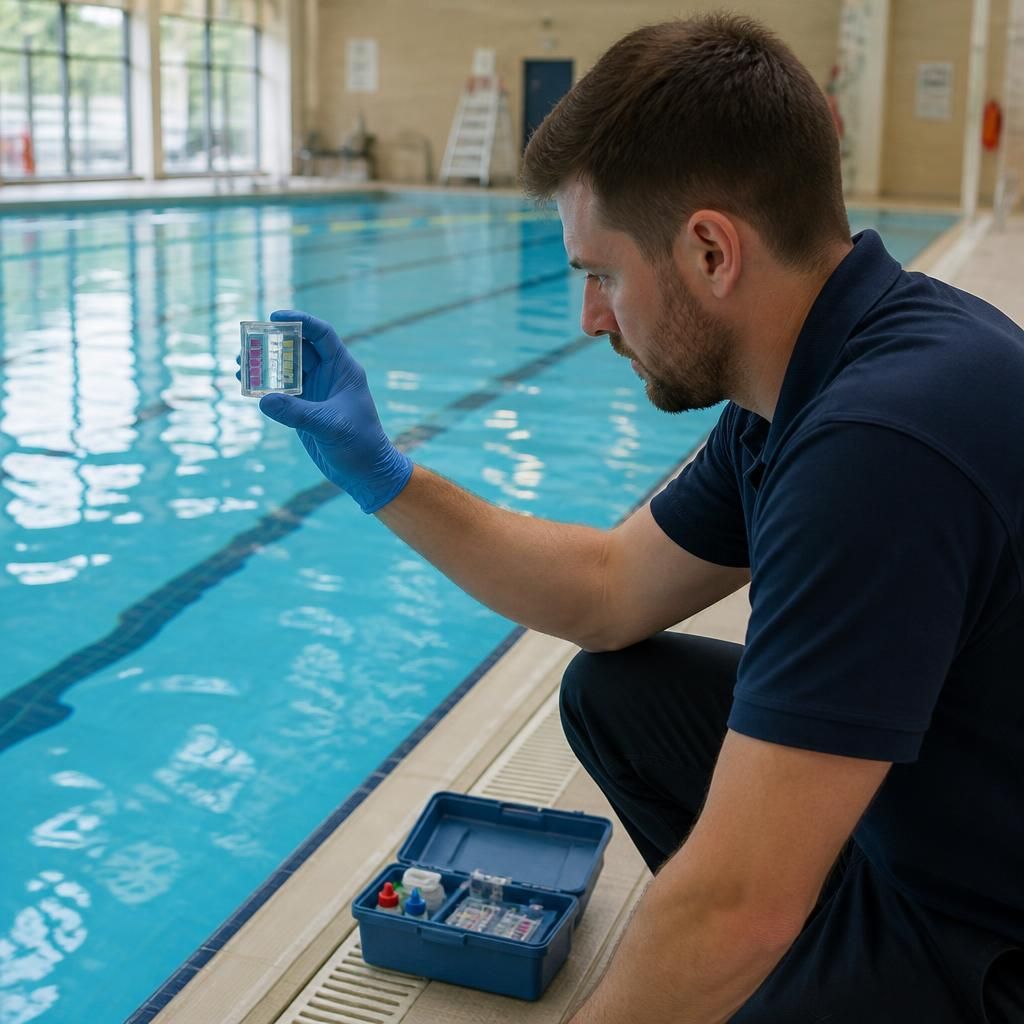
Ongoing pool chlorination management is necessary because chlorine performance depends on more than the measured disinfectant level. pH affects how effectively chlorine works, so a satisfactory chlorine reading does not by itself confirm that the water is adequately controlled.
Routine management should therefore consider chlorine and pH together, while also checking for trends that may indicate dosing imbalance, chemical feed problems or changes in water quality. Uncontrolled pH can reduce disinfection effectiveness and contribute to corrosion, scaling or swimmer discomfort. Reviewing related readings as part of the same process gives the operator a more accurate understanding of whether treatment remains effective.
Discuss Your Ongoing Pool Chlorination Management Needs
If you are unsure whether your current arrangements provide sufficient oversight, discuss your pool’s ongoing chlorination management needs with Blue Fish Water Management Ltd. A review can help identify appropriate monitoring, documentation and corrective actions for your facility.