
What signs indicate a pool needs a chlorination review?
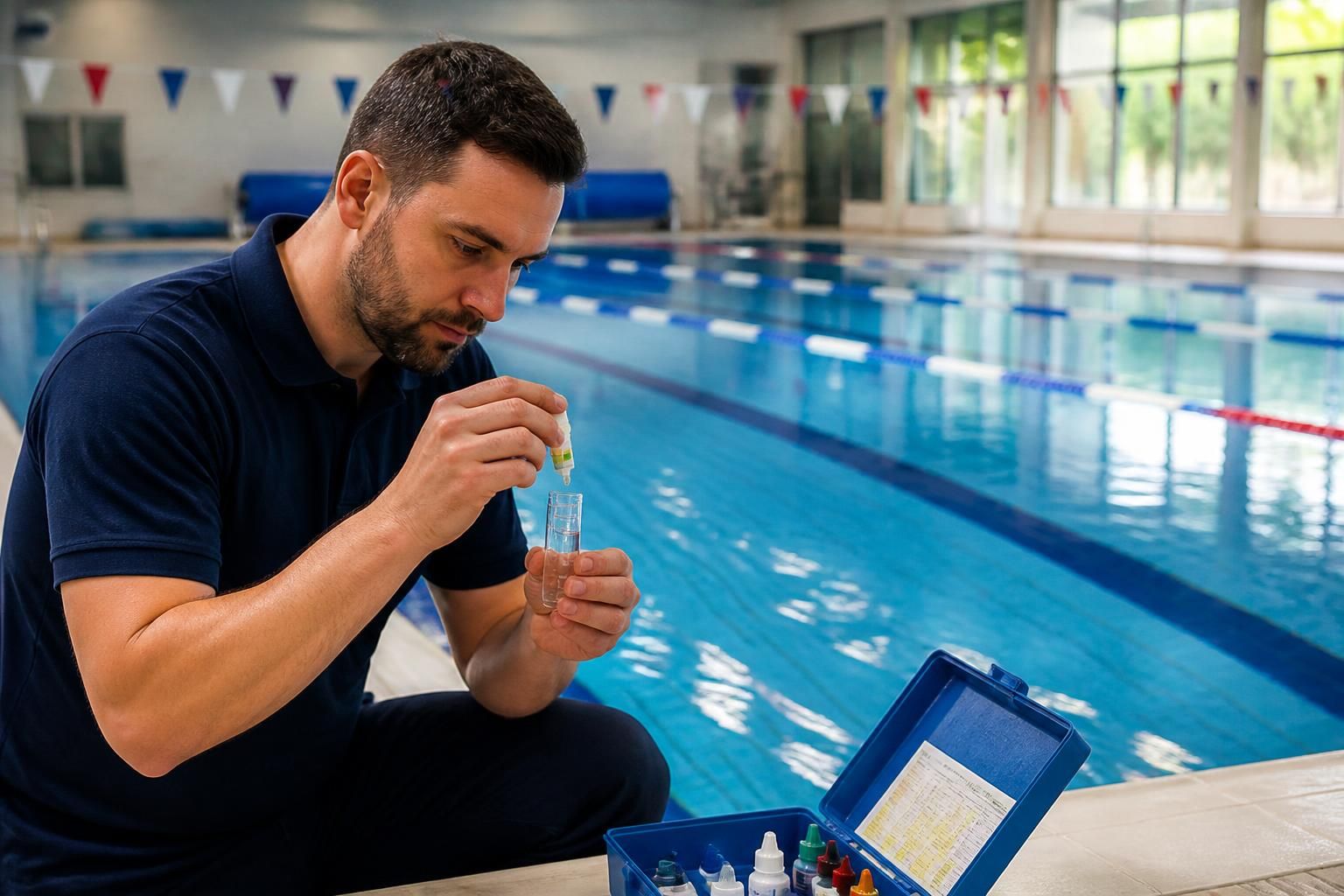
A pool needs a chlorination review when available evidence no longer demonstrates that disinfection is being controlled consistently and in line with the pool’s operating requirements. The clearest indicators are adverse trends in test results, unexplained changes in chemical demand, weaknesses in dosing or circulation equipment, incomplete records, and changes to the way the water-treatment system is operated.
Some warning signs are visible in routine monitoring rather than in the water itself. A review should be considered where:
- free chlorine or combined chlorine results repeatedly approach, exceed or fall below the site’s defined operating limits;
- pH requires frequent manual correction or moves away from the intended control range despite normal chemical dosing;
- chemical consumption rises without an obvious explanation, suggesting increased chlorine demand, inaccurate dosing or a developing treatment problem;
- test results vary significantly between sampling points or between shifts, indicating possible circulation, sampling or mixing issues;
- automatic dosing equipment generates repeated alarms, loses prime, operates intermittently or appears to be injecting chemicals inconsistently;
- chlorine and pH probes require repeated adjustment, fail calibration checks or do not agree with reliable manual test results; or
- filters, pumps, strainers, injectors or circulation controls have been repaired, replaced or altered without a subsequent assessment of the complete treatment arrangement.
Records can reveal a need for review even when individual test results appear acceptable. Missing entries, unexplained gaps, results recorded after corrective action rather than at the required monitoring point, or repeated values that do not reflect normal operating variation can make it difficult to demonstrate effective control. A review is also appropriate where staff are using different testing methods, applying different action limits or recording corrective actions inconsistently. These issues may indicate a weakness in the management system rather than a failure of the disinfectant itself.
Water-treatment trends are more useful than a single isolated result. An occasional abnormal reading may follow cleaning, maintenance or another identifiable event. Repeated drift, however, warrants investigation. Relevant trends include a gradual increase in chlorine demand, persistent elevation of combined chlorine, recurring pH instability, regular failure to reach the required residual after dosing, or differences between results from the pool, balance tank and return line. The review should establish whether the cause is chemical, mechanical, procedural or related to water movement.
Changes to the physical system are another reason to reassess chlorination controls. Examples include alterations to pipework, the addition or removal of treatment equipment, a change in filter media, a modified turnover arrangement, new dosing points or work that may have affected circulation. A system can continue to operate after such work while no longer distributing disinfectant evenly. Reviewing the design and operating controls helps identify poorly mixed areas, inadequate contact conditions and parts of the system that are not being monitored effectively.
Competence and procedure should also be examined. A review is sensible if responsibility for testing or chemical handling has changed, if written instructions are no longer current, or if operators are relying on informal adjustments. It may identify the need for clearer sampling locations, defined escalation points, equipment checks, calibration arrangements or additional training. The objective is to make the control process repeatable and auditable, not simply to increase the amount of chlorine being added.
External findings can provide a further trigger. An inspection, audit, water test or maintenance report may identify poor documentation, unsuitable sampling, inadequate plant-room controls or an unresolved deviation from the pool’s operating plan. These findings should be considered alongside routine records and engineering information so that any corrective action addresses the underlying cause.
A chlorination review should normally examine the pool’s operating parameters, recent test history, chemical storage and dosing arrangements, probe calibration, circulation and filtration performance, sampling practice, cleaning procedures and staff instructions. It should then distinguish between an immediate operational correction and a wider remedial requirement. For example, recalibration may resolve a measurement problem, while persistent variation between sampling points may require investigation of circulation or dosing-point design.
The review should be documented with the evidence considered, the identified cause or possible causes, actions assigned, and the checks needed to confirm that the corrective measures have worked. If results indicate an immediate risk to water quality, the pool operator should follow the site’s established escalation and water-safety procedures while the cause is investigated. Regularly reassessing the arrangements after significant maintenance, operational change or adverse trends helps ensure that the chlorination process remains suitable for the pool rather than relying on historical settings.
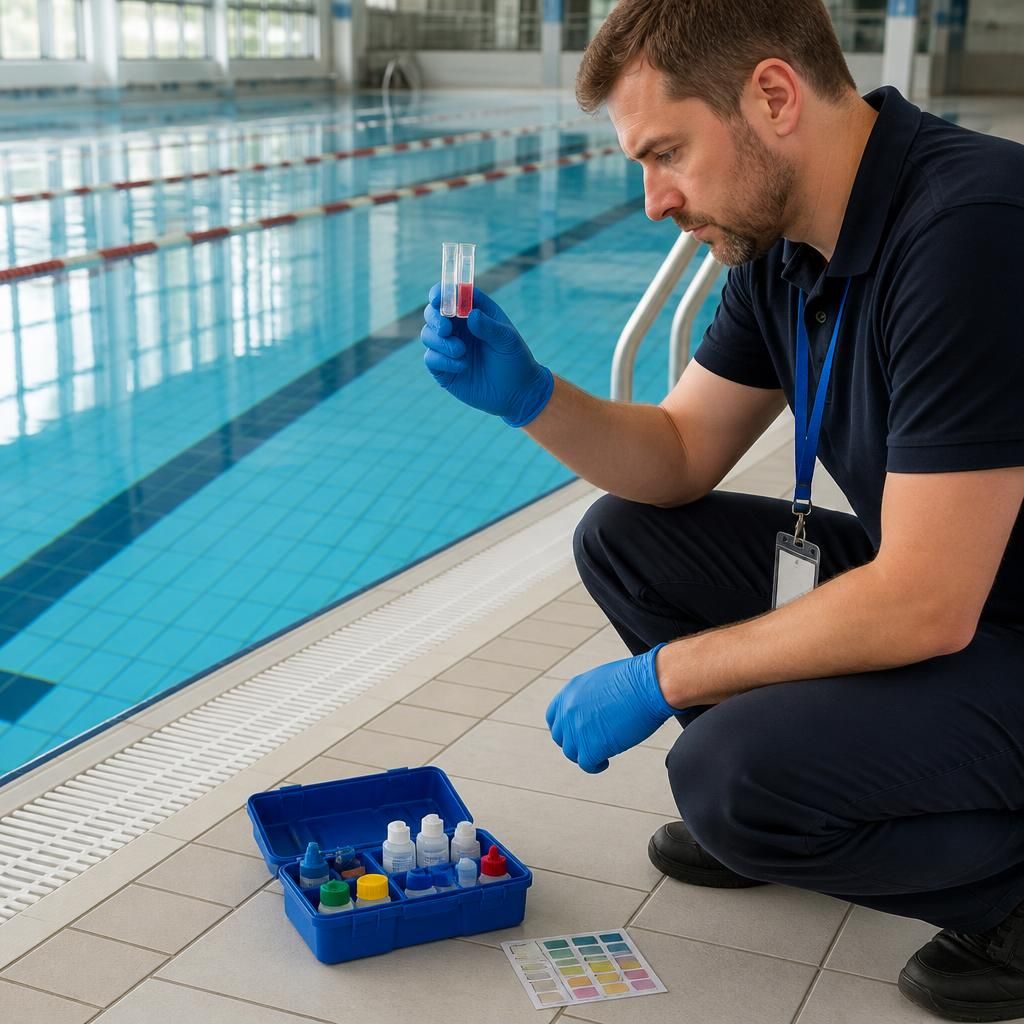
Swimmer complaints can justify a chlorination review, but they should be treated as evidence to investigate rather than proof that chlorine levels are too low. Reports of eye or skin irritation, strong chemical odour, or discomfort should be recorded with the time, pool area, activity taking place and any relevant operating conditions. Comparing these details with water-test results and plant records can show whether the concern relates to disinfection control, pH, combined chlorine, contamination, cleaning practices or another factor.
A review is particularly useful when similar complaints recur, occur after changes in pool use, or cannot be explained by the available records. The investigation should consider whether sampling represents the areas used by swimmers and whether corrective actions were followed by checks demonstrating that conditions returned to the intended operating range. This creates a clearer basis for deciding whether the chlorination arrangements need adjustment, further testing or wider remedial work.
Discuss whether your pool needs a chlorination review
Discuss your pool’s chlorination review with Blue Fish Water Management Ltd to assess the available evidence and determine whether further investigation or corrective work is appropriate.