
What information does a pool chlorination provider need?
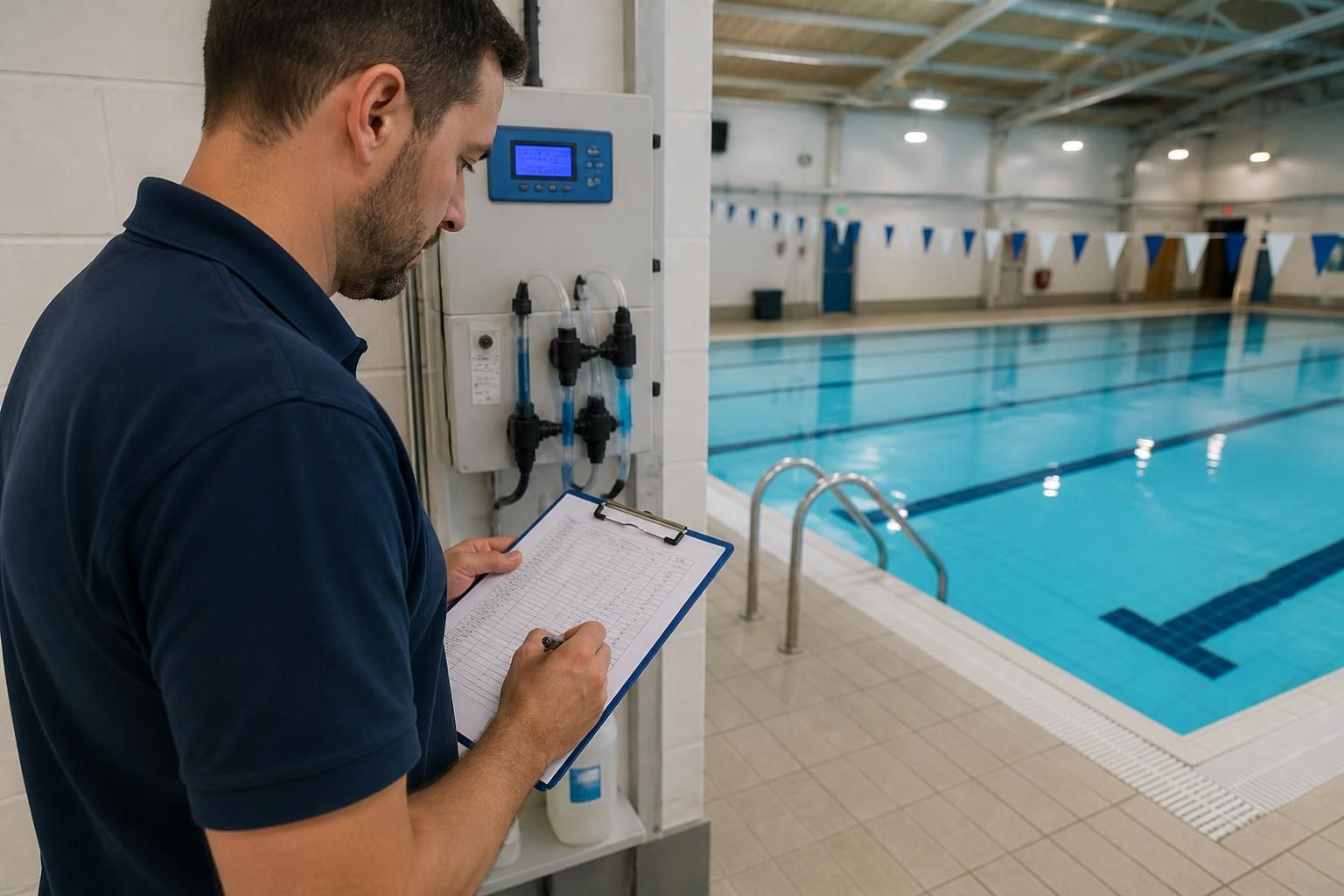
A pool chlorination provider needs enough information to understand how the pool is governed, operated and chemically controlled, not just the pool’s basic specification. The most useful information includes management responsibilities, operating records, chemical safety arrangements, previous assessments, unusual events and any practical constraints that could affect treatment or verification.
Management and compliance information
Provide the name or role of the person responsible for pool water safety and explain which duties the provider is expected to undertake. This may include testing, reviewing control measures, adjusting treatment, maintaining records, advising staff or completing remedial work. A clear division of responsibility prevents important tasks from being assumed rather than assigned.
Relevant documents may include:
- the current pool water management plan or operating procedures;
- previous risk assessments, inspection reports and compliance audits;
- internal procedures for responding to out-of-range results or equipment failure;
- staff training records and role descriptions;
- records of complaints, illness allegations, incidents, closures or enforcement correspondence; and
- any planned refurbishment, change of use or alteration to the treatment arrangement.
These documents give the provider context that cannot be obtained from a single visit. They can also show whether a recurring issue results from equipment, operating practice, record-keeping or unclear responsibility.
Operating records
Routine records help establish how the pool behaves between formal visits. Share available logs for chemical checks, automated controller readings, dosing adjustments, filter operation, backwashing, cleaning and maintenance. It is also useful to identify whether readings are taken manually, automatically or by both methods, and where the relevant instruments are located.
The provider may need to compare recorded values with the pool’s control limits and investigate gaps or inconsistencies. For example, a stable result recorded by an automatic controller may not tell the same story as a manual sample taken at a remote point. Records should therefore show the date, time, sampling location, result, action taken and name or role of the person completing the check where those details are available.
Chemical safety and storage details
Information about the chemicals on site is essential before treatment is reviewed or changed. Supply the product names and safety data sheets, together with details of storage locations, container sizes, transfer arrangements, ventilation and segregation from incompatible substances. The provider should also know how staff handle spills, leaks, empty containers and accidental chemical mixing.
Relevant COSHH assessments, written procedures and emergency arrangements should be made available. Explain whether chemicals are manually added or injected through a dosing system, and identify who is authorised to handle them. This allows the provider to consider treatment performance alongside the risks created by storage and handling.
Instrumentation and control information
Where automatic control equipment is installed, provide calibration records, alarm settings, maintenance reports and details of any probes, controllers, interlocks or remote monitoring. The provider may also need to know what happens when a reading moves outside its permitted range: whether dosing stops, an alarm activates, staff are notified or the system continues operating.
Include records of repeated alarms, unexplained dosing, loss of prime, blocked injection points or equipment that has been bypassed. A chlorination review should examine how the equipment is intended to work and how it actually operates in practice.
Water use and unusual conditions
Tell the provider about circumstances that may affect treatment demand or interpretation of results. Examples include seasonal changes in use, large organised activities, periods of low use, temporary shutdowns, heavy contamination events, building works or the introduction of new water features. If the pool is connected to a wider leisure facility, identify any shared plant, shared drainage or linked treatment arrangements that could affect the review.
Explain the practical outcome required from the visit. The objective might be an independent review, investigation of a control problem, preparation for reopening, validation after remedial work or development of a monitoring procedure. Defining the purpose helps the provider select appropriate checks and report the findings in a useful form.
Information to prepare before the visit
A concise document pack is usually more useful than isolated records. Organise the available procedures, assessments, logs, chemical safety documents, calibration reports and previous findings in date order. Mark any missing records and note when a process has changed. Do not recreate results from memory; identify them as unavailable instead.
The provider may still need to verify information during a site inspection, take independent samples or observe operating practices. Accurate background information does not replace those checks, but it helps the assessment focus on the points most likely to affect safe, compliant pool chlorination.
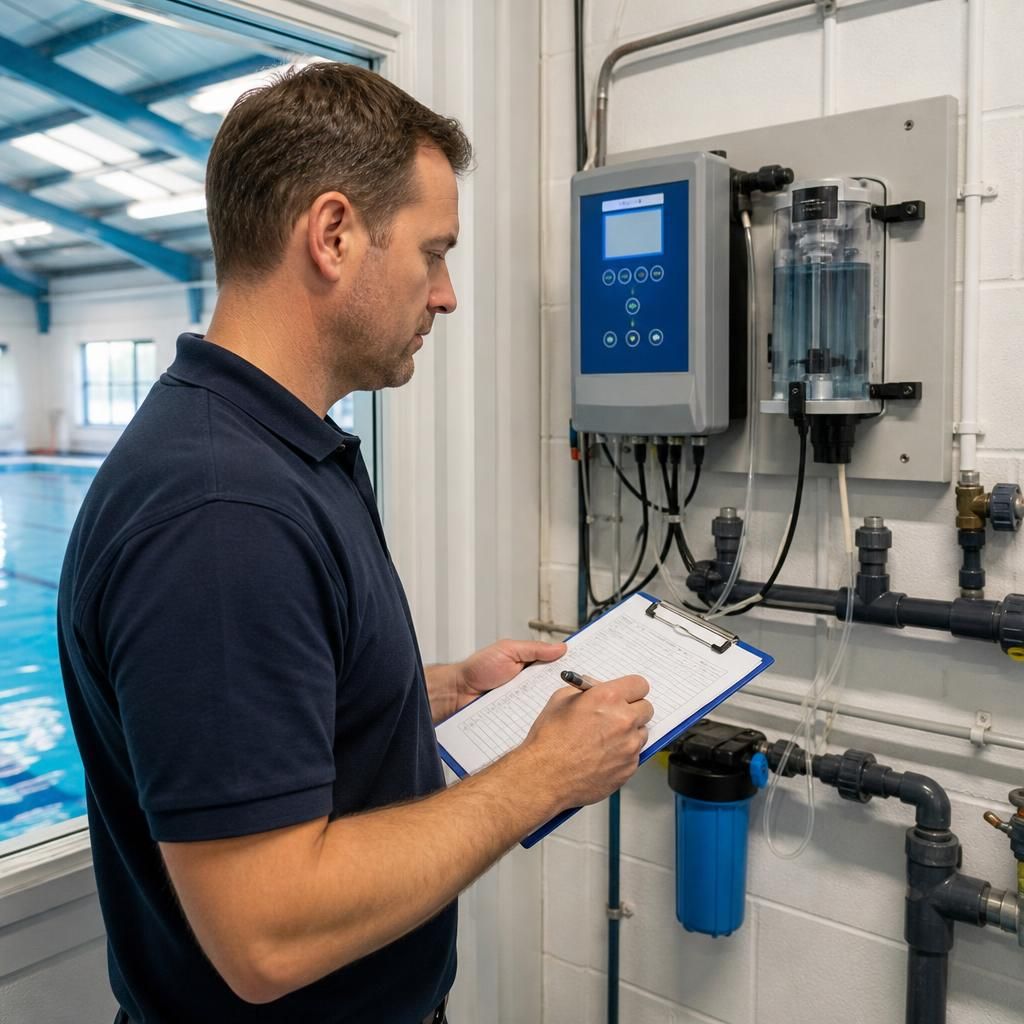
Information about the pool’s incoming and replacement water helps a chlorination provider assess whether changes in supply could affect treatment results. State whether the pool is filled or topped up from mains water, a private supply, a storage tank or more than one source.
- Explain how replacement water enters the system and whether it is treated before use.
- Identify any filtration, softening or other conditioning equipment on the incoming supply.
- Provide available records of supply interruptions, unusual appearance, odour or contamination concerns.
- Note whether separate pools, spas or water features share the same incoming supply or storage arrangement.
This information helps distinguish a problem originating in the pool treatment process from one associated with the water entering the system.
Discuss your pool chlorination information requirements
Discuss your pool chlorination information requirements with Blue Fish Water Management Ltd to identify which records and site details are relevant to your review. Their team can advise on the information needed to support appropriate water safety checks.