
When are mains water chlorination services required?
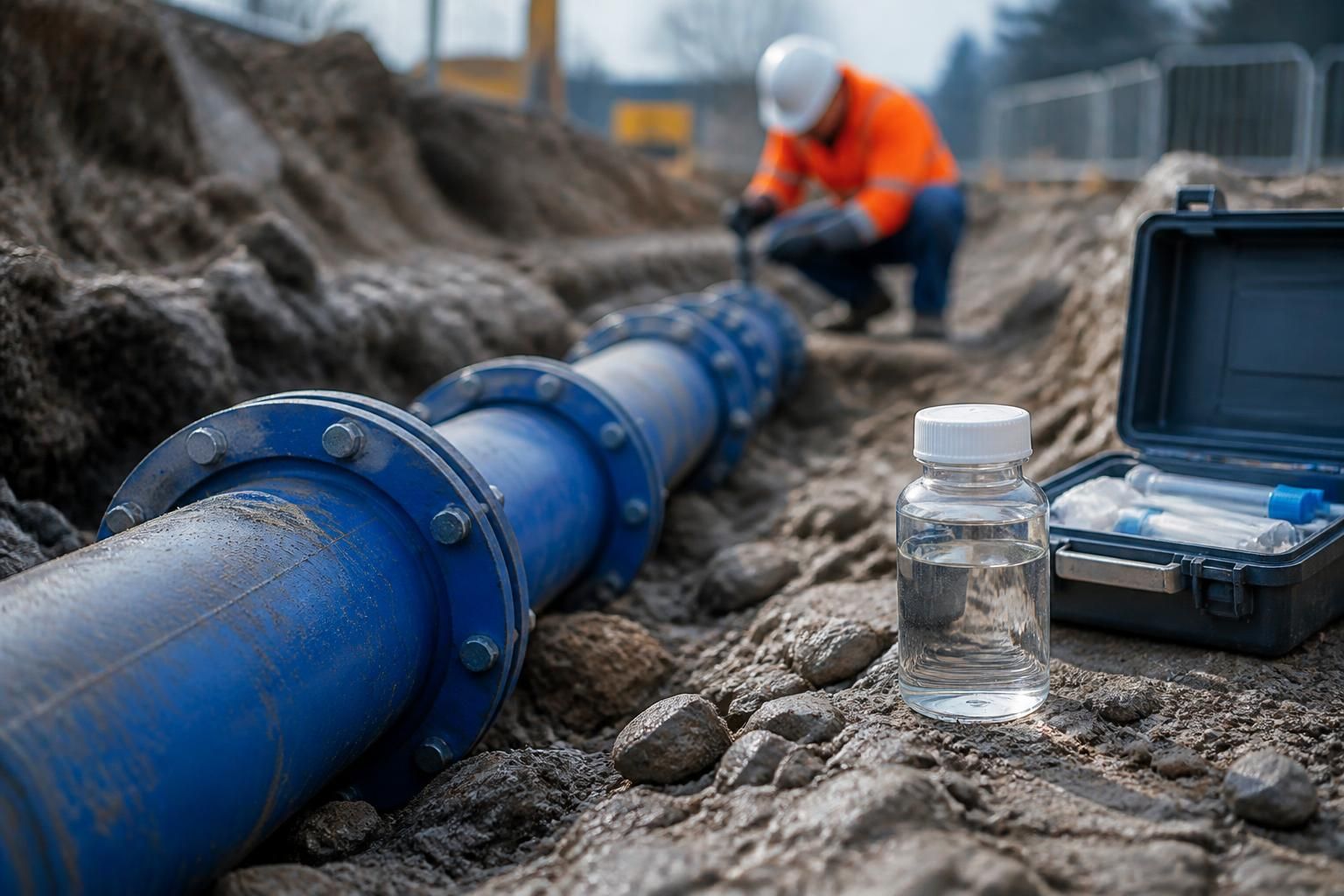
Mains water chlorination is required where construction, alteration or repair work may have affected the cleanliness or integrity of a potable water main. It is a commissioning and verification measure, rather than a routine treatment for an undisturbed supply. The exact requirement depends on the type of work, the condition of the pipework, the project specification and any requirements set by the relevant water undertaker or approving body.
Typical situations requiring chlorination include:
- new mains installed as part of a development, infrastructure project or site connection;
- extensions, diversions, replacement sections and tie-ins to an existing main;
- repairs involving cutting into, opening or replacing sections of pipework;
- works that have left a main open, inadequately capped or exposed to ingress;
- mains that have been drained, taken out of service or left unused for a significant period;
- incidents involving suspected contamination, including contact with dirty water, soil, floodwater or unsuitable materials; and
- works where the contract, water undertaker or client’s water safety procedures specifically require disinfection and sampling.
The need for chlorination is determined by the risk created by the work, not simply by the age or length of the main. Even a short connection or repair can introduce contamination if the pipe is opened or if fittings, tools and working surfaces are not adequately controlled. Conversely, some non-intrusive activities may not require full mains chlorination when the pipe’s integrity has not been affected. The decision should be recorded as part of the project’s water hygiene and commissioning documentation.
New installations and development works
New mains normally need to be disinfected before they are connected to the live network or placed into service. This applies to many types of development, including commercial premises, industrial sites, housing projects and infrastructure works. The process helps demonstrate that construction materials and site activities have not left the new pipework unsuitable for conveying drinking water.
Where a new main connects to an existing supply, the connection arrangement also matters. A newly disinfected section can be put at risk if the connection point, temporary bypass, valve chamber or adjacent pipework is not managed hygienically. Project planning should therefore cover the whole commissioning sequence, including isolation, flushing, disinfection, sampling and the controlled return to service.
Repairs, alterations and contamination events
Repair work should be assessed before the main is reopened. Replacing a damaged section, installing a valve, making a service connection or altering the route can expose internal surfaces and create an opportunity for contamination. If the work has involved an open pipe, unclean conditions or uncertainty about what entered the system, disinfection may be required before the supply is restored.
Additional controls may be appropriate after a contamination event or an unexplained water quality concern. In these circumstances, chlorination is not a substitute for investigating the cause. The affected section may need to be isolated, flushed, disinfected and sampled, with further action based on the findings and on advice from the relevant water authority or competent water hygiene professional.
Chlorination compared with routine maintenance
Mains chlorination is not automatically required for every inspection, valve operation or above-ground maintenance task. A competent assessment should consider whether the task has exposed the inside of the main, introduced new components, disturbed deposits or created a route for contamination. Routine flushing or operational checks may be sufficient for some low-risk activities, while intrusive work generally requires a more formal disinfection and sampling process.
It is also important to distinguish a water main from internal building services. Disinfecting an incoming main does not necessarily address risks within storage tanks, internal distribution pipework, showers or other outlets. Where work extends beyond the main, the building’s water safety assessment should identify whether separate cleaning, disinfection or commissioning checks are needed.
How the requirement is confirmed
Before work begins, the project team should establish the applicable specification and agree the acceptance criteria. These may be influenced by the water undertaker, the client, the principal contractor, the design requirements and the condition of the existing supply. The method should define the section to be treated, isolation arrangements, disinfection controls, flushing requirements, sampling points and the action to take if results are unsatisfactory.
Water samples are used to verify that the main is suitable to return to service. Sampling should be carried out by a competent provider using appropriate procedures, with results linked clearly to the disinfected section and the relevant stage of the works. If results do not meet the required criteria, the main should not simply be accepted without investigation; further flushing, repeat disinfection or additional assessment may be necessary.
Blue Fish Water Management can support organisations with the assessment, disinfection planning, water sampling and records needed for mains water commissioning. This provides a structured basis for deciding whether chlorination is necessary and for demonstrating that the completed work has been checked before the supply is used.
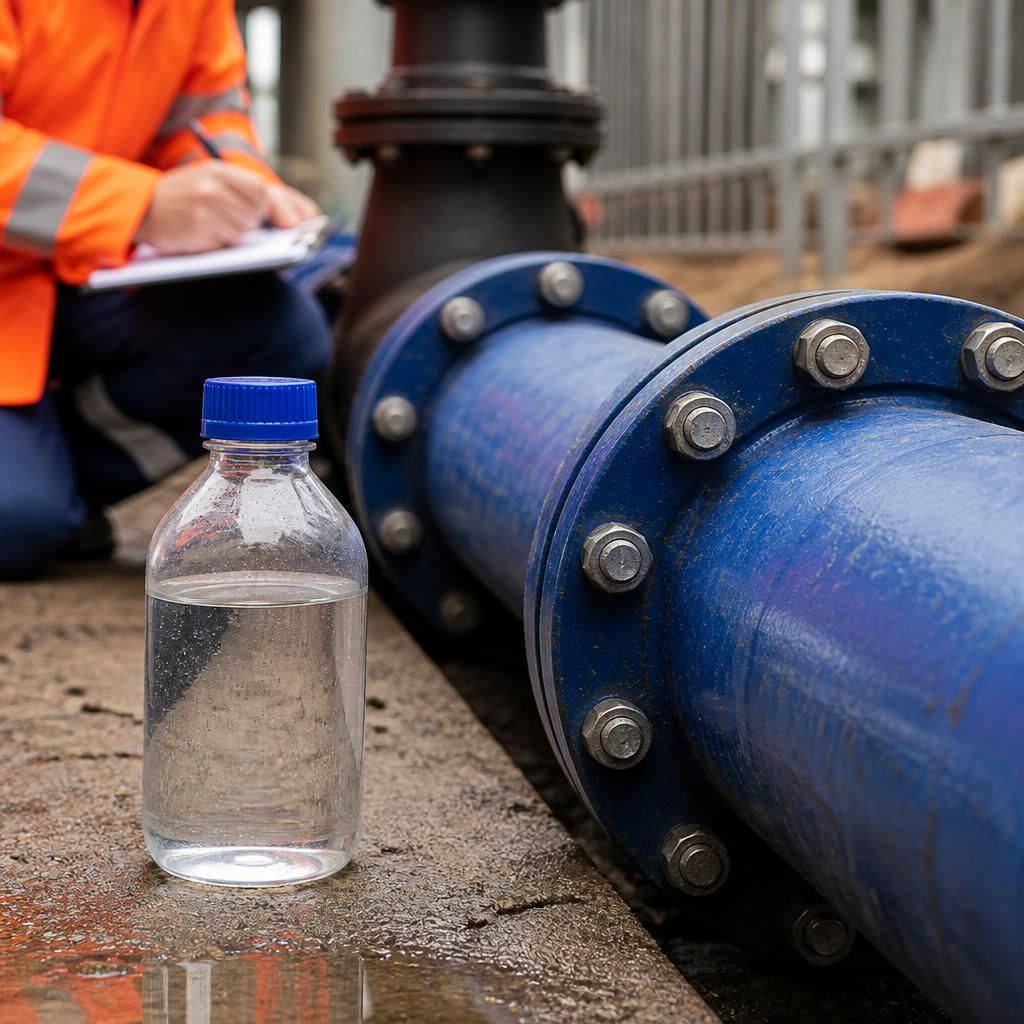
Mains water chlorination is a pre-use control: the treated section should remain out of service until the required disinfection, flushing and verification have been completed. This prevents a newly installed or disturbed section from being accepted solely because the connected supply was previously satisfactory.
For projects involving several contractors or staged handovers, the commissioning record should identify the precise section covered, the relevant sample points and the person authorised to approve its return to service. This creates a clear boundary between construction completion and operational use, particularly where different parts of the water main are brought into service at different stages.
Discuss your mains water chlorination requirements
Discuss your project’s mains water chlorination requirements with Blue Fish Water Management to clarify the appropriate commissioning controls and documentation. Provide details of the planned works so the requirements can be assessed before the main is returned to service.