
What safety controls are needed during mains water chlorination?
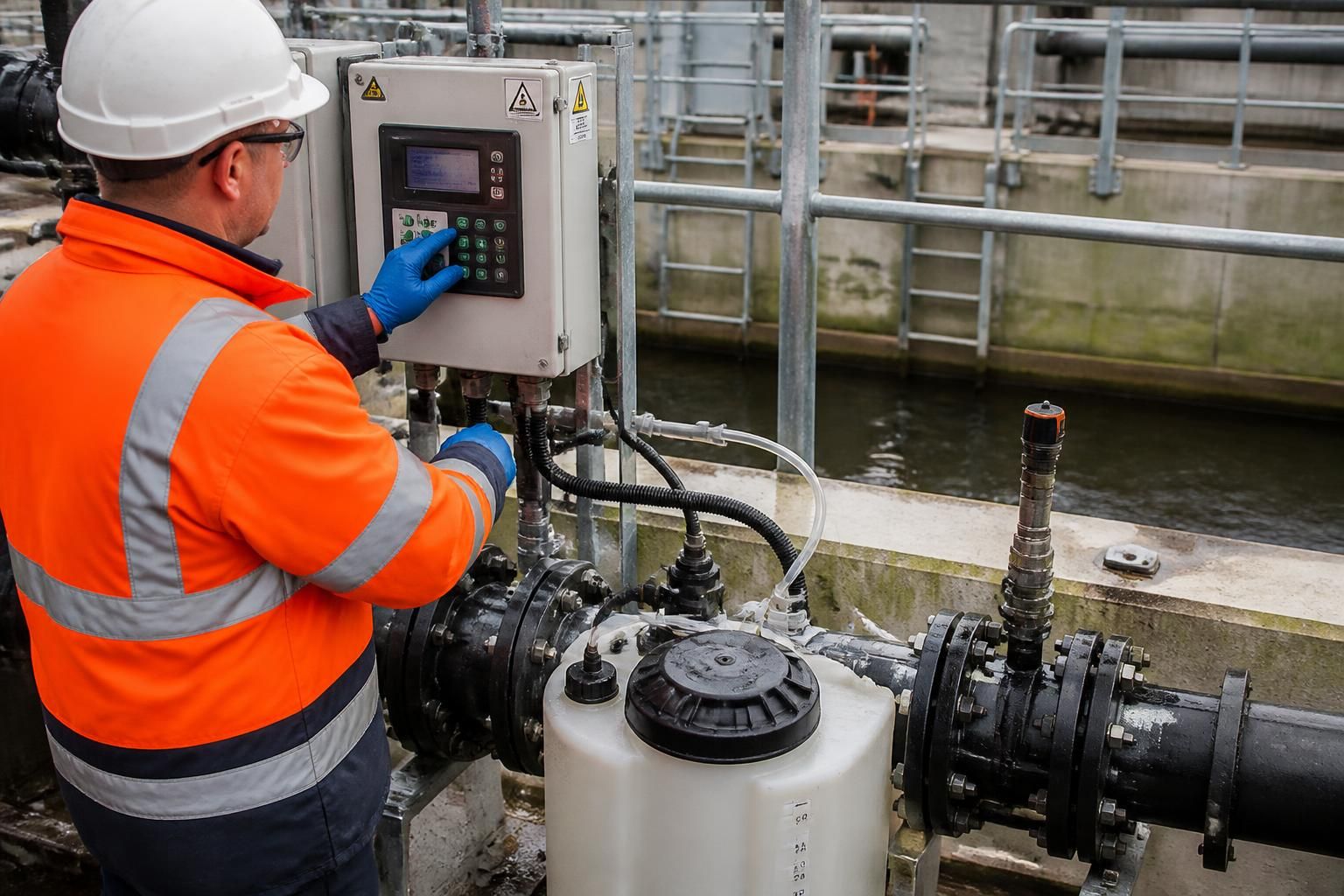
Safe mains water chlorination depends on coordinated controls for chemical handling, system operation, site access, communication and reinstatement. The controls should be set out in a site-specific method statement and supported by a suitable risk assessment, COSHH assessment and emergency procedure before work begins.
Planning and competence
Chlorination should be planned by people who understand the design and operation of the water main, the properties of the disinfectant and the risks created by introducing treated water into a live or partially completed system. The method should identify the sections to be treated, injection and sampling points, valves, discharge routes, nearby occupancies and any connected systems that could be affected.
Only personnel with appropriate training and instruction should prepare chemicals, operate dosing equipment, take samples or decide whether the system can be reinstated. A clear chain of responsibility is important, particularly where the principal contractor, water contractor, building operator and water supplier have separate duties. A permit-to-work or equivalent authorisation can help confirm that prerequisites have been met before dosing starts.
Chemical handling controls
- Keep the disinfectant in its original, correctly labelled container and consult the current safety data sheet before use.
- Store chemicals securely, upright and away from incompatible substances. Chlorine-releasing products must not be mixed with acids or other cleaning chemicals, as this can produce dangerous gases.
- Use suitable transfer equipment and inspect hoses, connections, dosing pumps and containers for damage before operation.
- Provide adequate ventilation where chemicals are prepared or used, especially in chambers, plant rooms and other enclosed spaces.
- Keep an eyewash facility, clean water and a suitable spill response kit available, with instructions for dealing with skin, eye or inhalation exposure.
PPE should be selected from the COSHH assessment rather than treated as a substitute for safer working methods. Depending on the product and task, this may include chemical-resistant gloves, protective clothing, eye or face protection and suitable footwear. Respiratory protection should only be used as part of a properly assessed control system; it must be appropriate for the hazard, correctly fitted and maintained.
Control of the work area
The treatment area should be clearly identified and access restricted to authorised personnel. Warning notices should explain that chlorination is in progress and that the water must not be used or consumed. Where work takes place near roads, occupied premises or shared plant, the site arrangements should also address traffic, public access, vulnerable occupants and the possibility of unauthorised valve operation.
Before dosing, operators should confirm that valves are in the intended positions and that untreated or treated water cannot enter parts of the network that remain in service. Backflow prevention and physical disconnection may be needed where there is a risk of cross-connection. Any temporary hose, pump or fitting should be installed in a way that prevents contamination of the supply and protects it from pressure changes.
Operational safeguards
Dosing equipment should be operated in accordance with the approved method, with the injection rate and contact conditions controlled rather than estimated informally. Operators should watch for leaks, abnormal pressure, damaged fittings and unexpected changes in flow. Enclosed spaces require particular care: entry should be avoided where possible, and any necessary entry should be covered by a separate confined-space assessment and procedure.
The discharge route must be established before work starts. Chlorinated water should not be released to a drain, watercourse, ground or neighbouring system without considering the effects on people, the environment and downstream assets. Where required, discharge water should be managed or neutralised in a controlled manner, and the receiving system should be protected from excessive flow, pressure or chemical concentration.
Communication and emergency arrangements
Everyone who could be affected should know what is being treated, which outlets or sections are unavailable, what warning signs mean and who controls the work. The site team should have a reliable method for stopping dosing and isolating the equipment if a leak, exposure, loss of control or unexpected connection is discovered.
Emergency arrangements should cover chemical contact with the eyes or skin, inhalation, spillage, loss of containment, accidental ingestion and entry of chlorinated water into an unintended part of the system. They should state how to raise the alarm, obtain first aid, contact the emergency services where necessary and preserve information about the substance involved.
Records and handover
Good records demonstrate that the controls were applied. The project file should normally include the approved method statement, COSHH information, equipment checks, chemical details, valve or isolation confirmation, dosing records, observations, incidents, discharge arrangements and sample results. Any deviation from the planned method should be recorded and reviewed by the responsible person.
Before handover, the operator should confirm that warnings have been removed only when safe, temporary dosing equipment has been taken out correctly, affected outlets and valves are in their intended condition, and the system has been formally released for use. The completion information should be retained with the water system's compliance records so that future maintenance or investigations are based on an accurate account of the work.
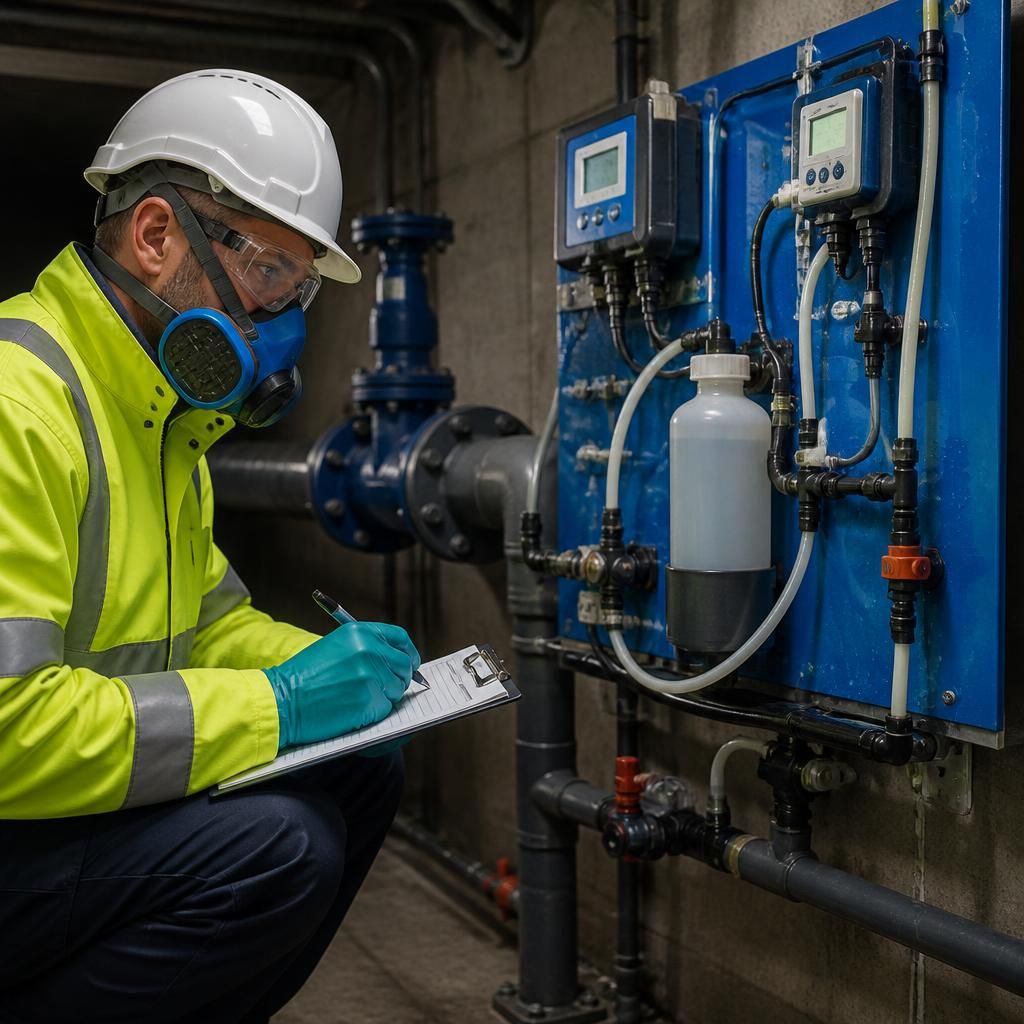
A formal stop-and-review process is an important safety control when site conditions differ from the approved chlorination plan. Work should pause if an isolation point cannot be confirmed, the flow rate changes unexpectedly, a connection is found that is not shown on the drawings, or the planned discharge route is unavailable.
The responsible person should reassess the risk, amend the method where necessary and communicate the change before dosing or discharge continues. This prevents operators from improvising around an unfamiliar valve, altered pipework or unexpected site condition, which could expose people to chlorinated water or affect parts of the supply that were not intended to be treated.
Discuss your mains water chlorination safety controls
Discuss your mains water chlorination safety controls with Blue Fish Water Management Ltd to identify any gaps in your planned approach and determine what evidence is needed for safe system reinstatement.