
What happens when mains water chlorination results are unsatisfactory?
Unsatisfactory mains water chlorination results require investigation before the water main is accepted or put into service. The cause is identified, corrective action is completed, and the affected section is flushed, disinfected and retested until the required water quality results are achieved and properly documented.
When mains water chlorination results are unsatisfactory, the affected main should not be accepted for use until the failure has been assessed and the required evidence has been obtained. The next steps depend on whether the result indicates inadequate disinfection, contamination after disinfection, a sampling problem or an issue with the main itself.
The result is reviewed first. The competent person should check the chlorination records, contact time, disinfectant concentration, flushing arrangements, sampling points and chain of custody. The laboratory report should also be examined to confirm which parameter failed and whether the sample was received, handled and tested correctly. A single unsatisfactory result does not remove the need for investigation, but it may indicate a different response from a failure repeated across several samples.
Common causes include:
- insufficient disinfectant concentration or contact time;
- incomplete circulation of disinfectant through the full length of the main;
- sediment, biofilm or construction debris within the pipework;
- contamination introduced through fittings, open ends, valves or connections;
- inadequate flushing after disinfection; and
- sampling technique, container, transport or laboratory handling issues.
Investigators should establish whether the failure is isolated to one location or affects the wider section. Sample points, valve arrangements and the sequence of installation and connection can help identify where contamination may have entered. If the result concerns microbiological quality, the main should be treated as potentially contaminated until the investigation and subsequent verification are complete.
Corrective action is selected according to the cause. This may involve inspecting the affected section, removing debris, correcting a temporary connection, sealing an open pipe end, cleaning fittings, improving flushing or repeating the disinfection procedure. If the disinfectant was not distributed adequately, the procedure may need to be recalculated and carried out again under controlled conditions. Any action should be recorded, including the section affected, the people responsible, the method used and the reason for selecting it.
Following corrective work, the main is flushed in a controlled manner so that disinfectant residues and loosened material are removed without creating a further contamination risk. The discharge route, flow and receiving drainage arrangements should be suitable for the work. Where there is a risk to connected systems or the wider supply, isolation and communication arrangements should be maintained until the verification process is complete.
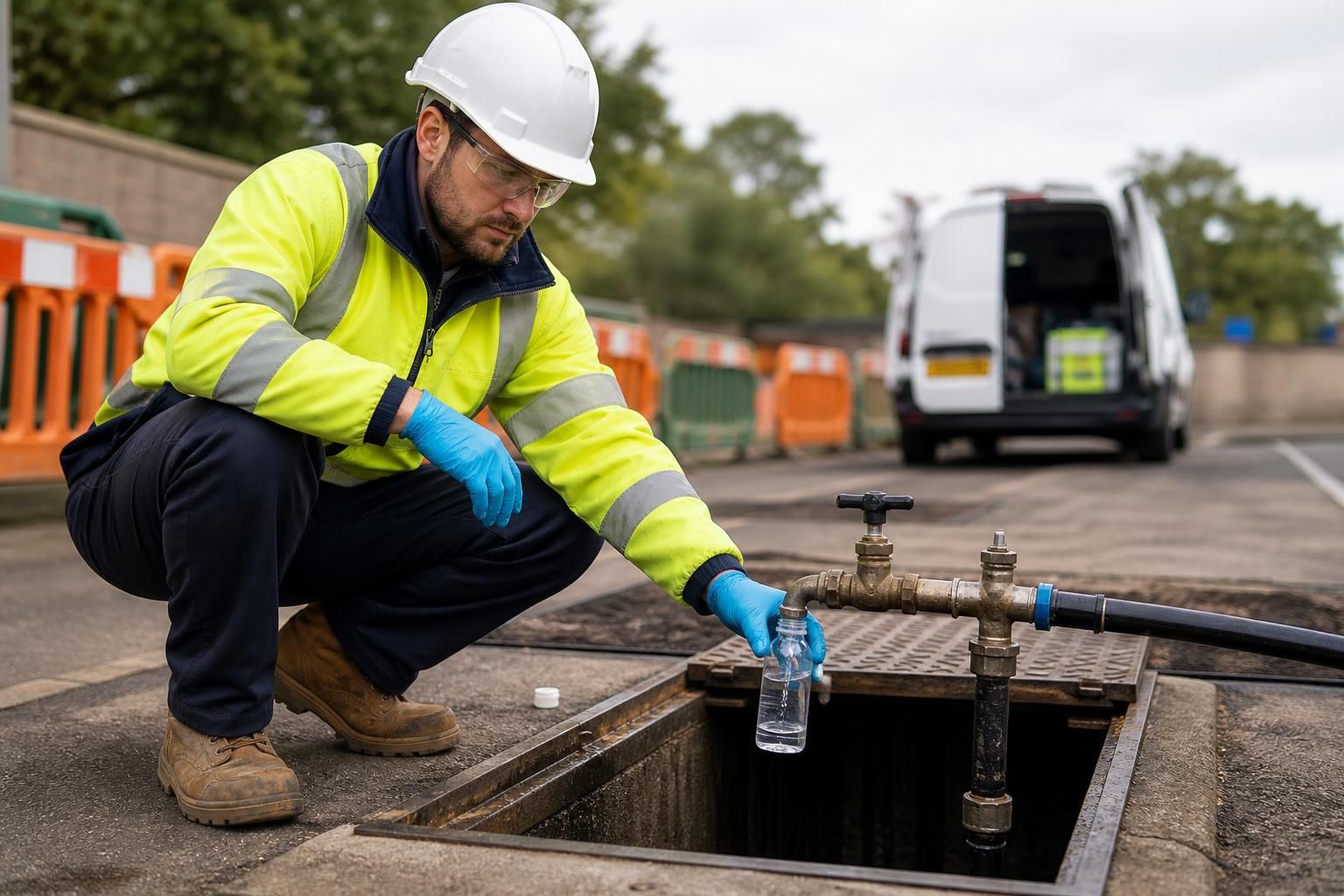
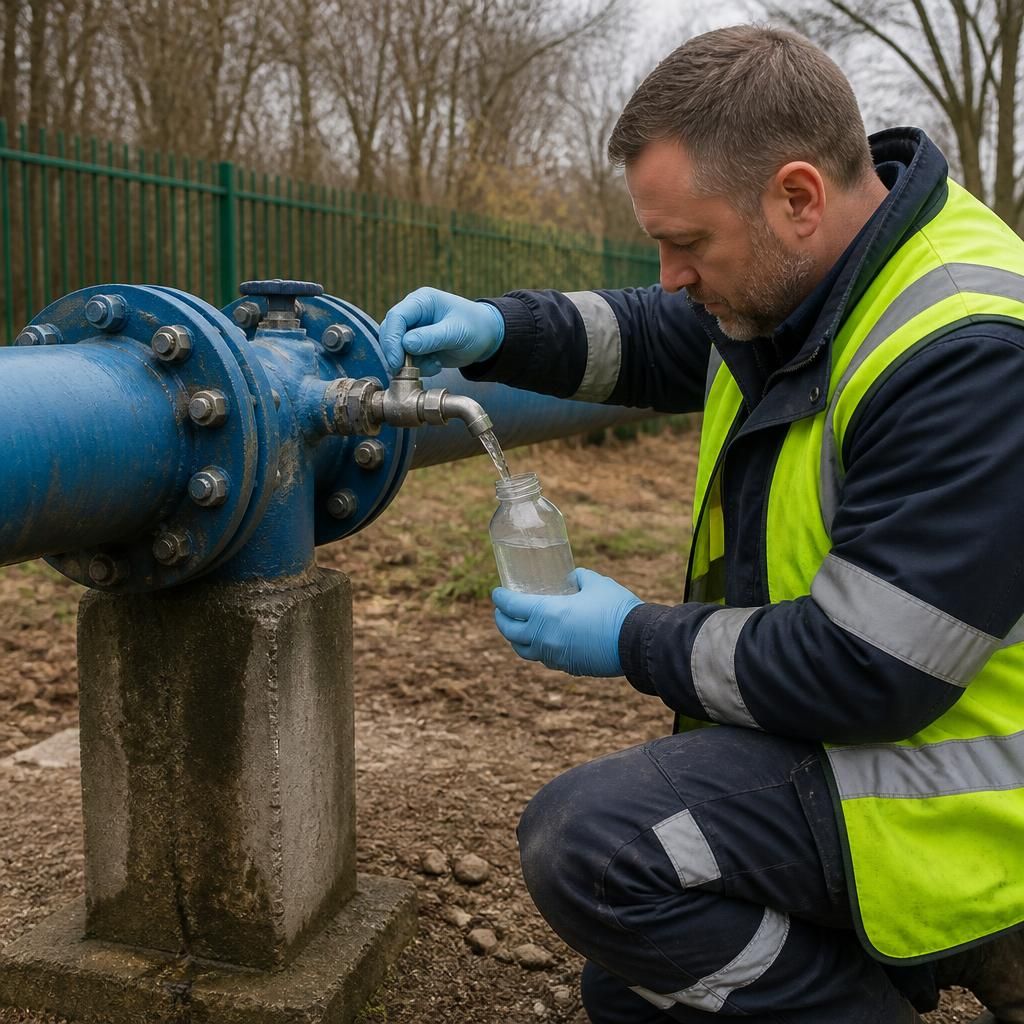
Further samples are then taken from appropriate locations. Sampling should represent the affected main and any points that could have been exposed to the cause of the failure. Samples need to be collected using suitable containers and procedures, labelled accurately and sent to a competent laboratory under the required conditions. Retesting only one convenient point may not demonstrate that the underlying problem has been resolved, particularly where the failure was associated with a connection, dead end or specific section of pipework.
If repeat results remain unsatisfactory, the investigation should be widened rather than relying on repeated testing alone. This may require a further review of the design and installation, additional sampling, targeted inspections, renewed disinfection or remedial work to the pipework and fittings. Persistent failures can indicate an ongoing ingress route, trapped contamination or a defect that has not been addressed by flushing.
The main should remain subject to the project’s hold points and acceptance procedure. It should not be connected to an occupied building or placed into normal service merely because the disinfection process has been completed. The client, principal contractor, water undertaker or other responsible parties may need to review the investigation and accept the corrective evidence before commissioning proceeds. The exact approval route depends on the ownership of the main, the project specification and the relevant water-supply arrangements.
A complete compliance file will normally bring together the chlorination method statement, risk assessment, disinfectant records, contact-time calculations, flushing details, sample locations, laboratory reports, non-conformance records, corrective actions and final acceptance decision. Keeping the failed results as well as the satisfactory results is important: it shows what happened, how it was investigated and why the final outcome can be relied upon.
Where the interpretation is unclear or a failure persists, an independent water hygiene specialist can review the evidence, advise on proportionate remedial measures and coordinate suitable retesting. The objective is not simply to obtain a passing report, but to demonstrate that the main has been properly disinfected, that the cause of the failure has been addressed and that the water quality evidence supports safe commissioning.
Discuss your unsatisfactory chlorination results
Discuss your unsatisfactory chlorination results with Blue Fish Water Management Ltd to clarify the findings and identify the appropriate next step for your project.