
When is chlorine disinfection for mains required?
Chlorine disinfection for mains is generally required before a new, extended, replaced or substantially modified water main is brought into service, and after work or an incident that may have introduced contamination. It may also be required where testing, inspection or the water undertaker’s requirements identify a risk to water quality.
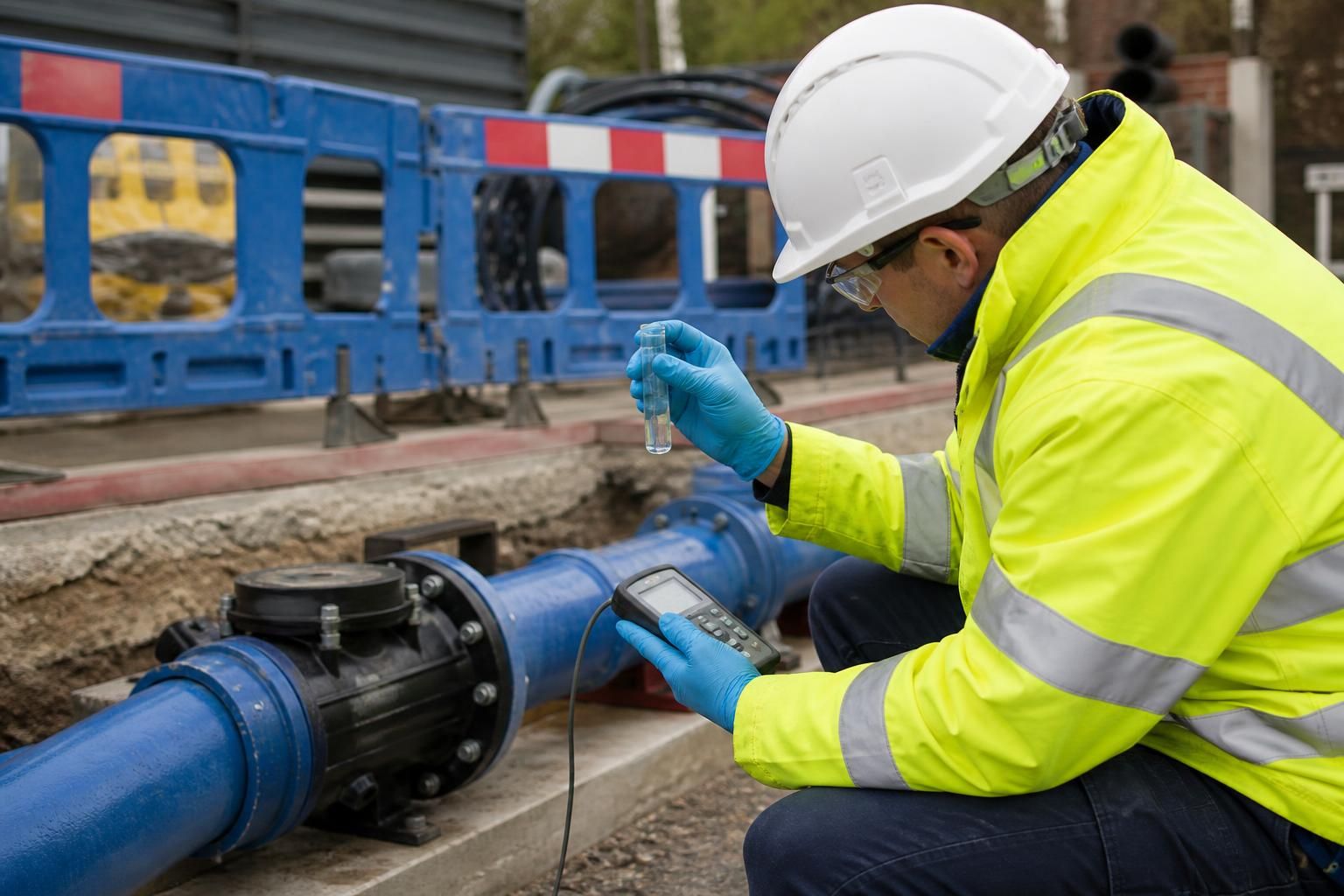
Chlorine disinfection for mains is required when a water main could have been contaminated during construction, alteration, repair, storage or an operational incident, and before the affected section is returned to potable use. The exact requirement depends on the work completed, the condition of the pipework, the contamination risk and the requirements of the relevant water undertaker or drinking water regulator.
Typical situations requiring mains disinfection include:
- commissioning a newly installed water main or service connection;
- bringing an extension, replacement section or diverted main into service;
- replacing, relining or substantially modifying existing potable water pipework;
- opening a main for a repair, valve installation, connection or other intrusive work;
- recommissioning a section that has been isolated, drained or left out of service where water quality may have deteriorated;
- responding to a loss of pressure, backflow, flooding or other event that could have allowed contaminated water to enter the main; and
- addressing unsatisfactory water quality results or a specific instruction from the water undertaker.
Disinfection is particularly important where the inside of a pipe, fitting or valve has been exposed to the environment. Soil, dirty water, construction materials, tools and handling can introduce microorganisms even when the pipe looks clean. A main can therefore require disinfection after relatively limited work if the work has broken the integrity of the potable water system.
Not every activity involving a water main automatically calls for the same treatment. For example, an external excavation that does not open or affect the pipe may not create the same risk as a cut-in, repair or replacement. Similarly, routine valve operation or a controlled shutdown may be managed through the water undertaker's procedures without full disinfection. The decision should be based on the actual work and contamination pathway rather than on the length or diameter of the main alone.
For new mains, the requirement is normally established during the design, construction and commissioning process. The installer or project team should confirm the water undertaker's acceptance criteria before work starts. These criteria can cover approved materials, cleanliness controls, flushing, disinfectant concentration and contact time, sampling, documentation and authorisation to connect the new section to the live supply. A private development may also need to demonstrate that the proposed arrangement meets the relevant water fittings and drinking water requirements.
Existing mains require a more risk-based judgement. Disinfection should be considered where work has involved:
- cutting, drilling or opening the pipe;
- removing or replacing fittings;
- exposing internal surfaces to unclean conditions;
- using temporary pipework, hoses or storage arrangements;
- recovering from a pressure failure or suspected ingress; or
- isolating a section for long enough for stagnation or deterioration to become a concern.
Where contamination is suspected, simply flushing the main may not be sufficient. Flushing removes loose debris and reduces stagnant water, but it does not provide the same controlled microbial treatment as chlorination. A competent person should assess the incident, identify the affected length, determine whether adjacent sections could also be involved and agree the remedial action with the responsible water authority or asset owner.
There is not one universal legal trigger that applies identically to every mains project. Requirements arise from the relevant water supply regulations, drinking water quality duties, industry guidance, contract specifications and the water undertaker's own commissioning procedures. The responsible party should obtain the applicable requirements before work begins, particularly where a new main will be adopted by a water company or connected to a public supply.
A suitable decision process normally records:
- what work was carried out and which parts of the main were affected;
- whether the pipe was opened, drained, depressurised or exposed to possible contamination;
- what materials, tools, temporary connections and cleaning controls were used;
- whether an incident could have allowed contaminated water to enter the system;
- which sections require isolation, flushing or disinfection; and
- what sampling and release criteria must be met before the main is placed into service.
Chlorination should be planned rather than treated as an informal final task. The method statement should define the disinfectant, application method, contact conditions, safety controls, flushing arrangements, sampling points and arrangements for managing the treated water. The work must also prevent the disinfectant from entering a live supply or a surface water drainage system without suitable controls.
The main should not be released for normal potable use solely because the disinfection has been completed. Flushing, neutralisation where required, sampling and review of the results are part of the commissioning decision. If results are unsatisfactory, the affected section may need further investigation, repeat treatment or additional corrective work before acceptance.
For a project-specific decision, Blue Fish Water Management can help interpret the contamination risk, define an appropriate disinfection approach and identify the evidence needed for compliance. The final requirement remains subject to the asset owner's procedures and, where applicable, the water undertaker's approval.
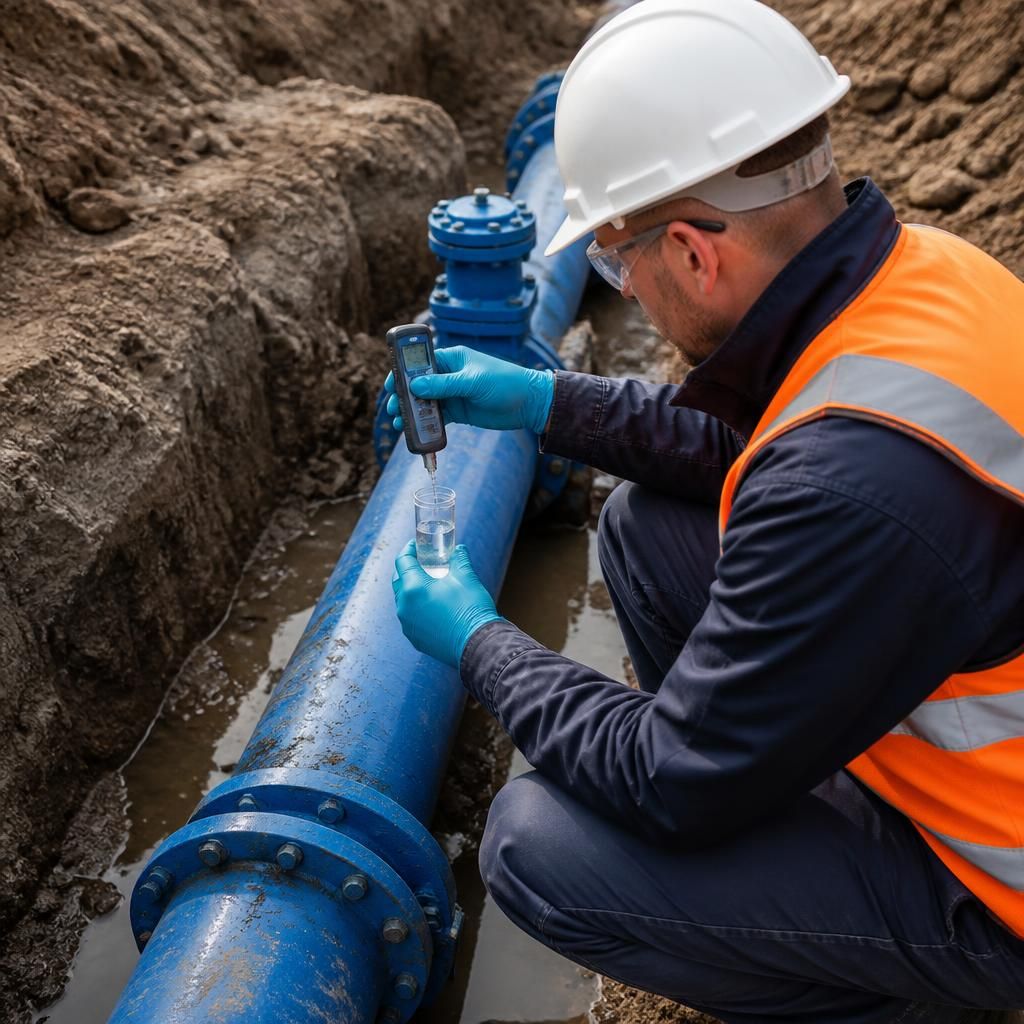
A mains section may require disinfection after commissioning checks identify an unresolved microbiological concern, even where the original work involved limited intervention. Before treatment is authorised, the result should be reviewed to exclude sampling or laboratory error and to determine whether the issue is confined to one section or indicates a wider problem. The verified finding then informs the corrective action and the evidence needed before the main can be returned to potable service.
Discuss your mains disinfection requirements
Discuss your planned mains works with Blue Fish Water Management to establish the appropriate disinfection requirements and supporting evidence before the main is returned to potable service.