
What should a mains chlorination method statement include?
A mains chlorination method statement should set out the treatment scope, planned sequence, responsibilities, hazards and control measures, including chemical handling and preventing unauthorised use of the water system. It should also define the required contact conditions, sampling and acceptance criteria, safe discharge arrangements, contingency actions and the records needed to demonstrate that the work was completed correctly.
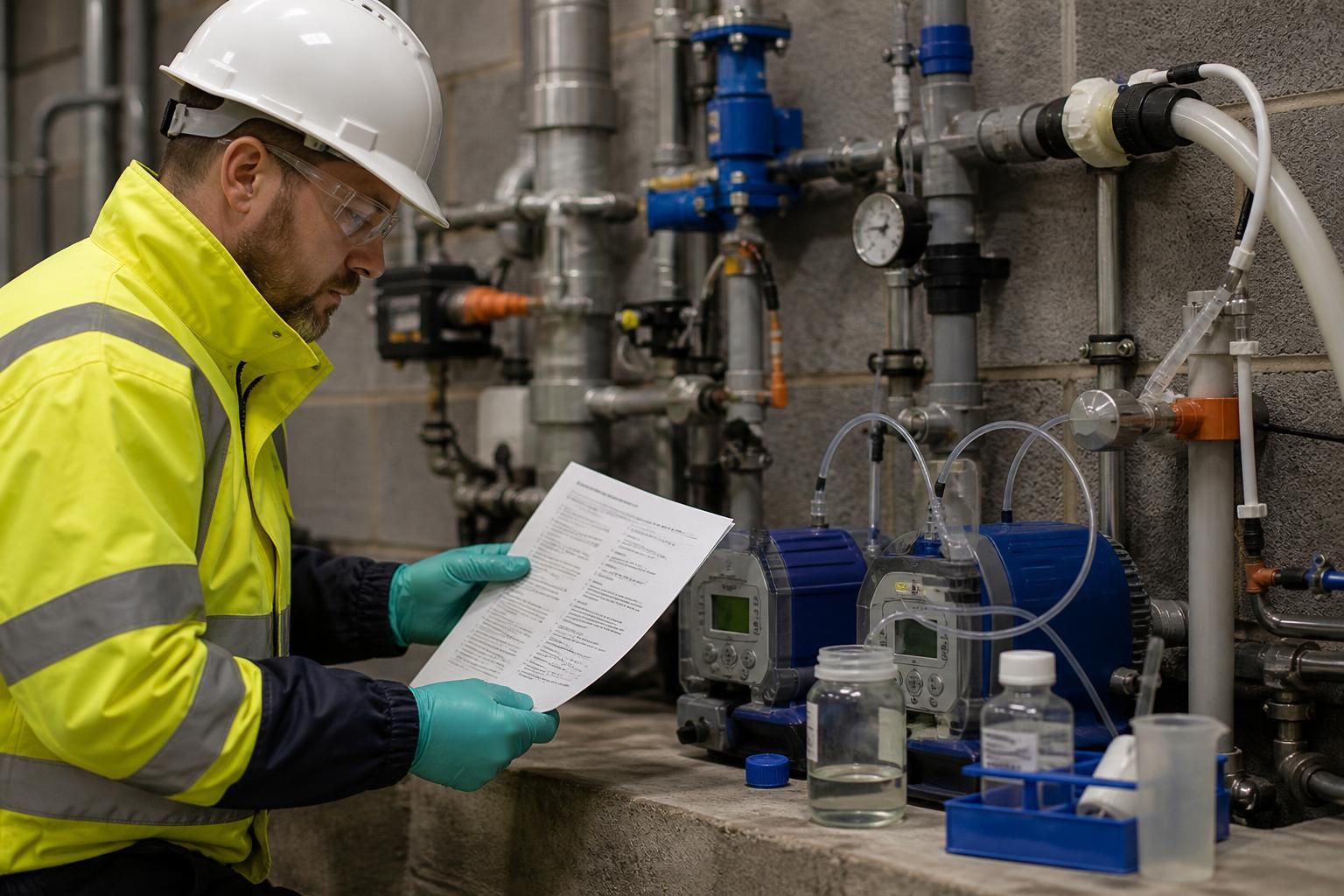
A mains chlorination method statement is a task-specific document explaining how a newly installed, modified or contaminated water main will be disinfected, checked and returned to service. It should convert the project design and risk assessment into clear instructions that operatives, the client and any approving authority can follow and audit.
It should begin with document control and project identification. Include the site address, drawing or work-package reference, revision number, issue date, author, reviewer and approval status. The document should identify the main or section being treated, its connection points, approximate configuration, materials and any interfaces with existing water infrastructure. A simple marked-up drawing can show isolation points, injection locations, drains, sampling points and areas that must remain protected.
The statement should also record the prerequisites for starting work. These may include completion of installation checks, removal of construction debris, confirmation that joints and fittings are suitable, availability of isolation arrangements, and agreement of the treatment plan with the relevant client or water-system representative. Any outstanding defect, restricted access point or alteration to the planned arrangement should be recorded rather than left to informal instructions.
A useful method statement sets out the technical basis for the chosen treatment. It should explain:
- which parts of the main are included and which are excluded;
- how the pipework will be filled, dosed, circulated or otherwise exposed to the disinfectant;
- how trapped air, dead legs and inaccessible sections will be addressed;
- what equipment will be used for dosing, mixing, measurement and sampling;
- which checks confirm that the disinfectant has reached the intended parts of the system; and
- what conditions must be met before flushing, sampling or reconnection.
Rather than relying on a generic instruction such as “chlorinate in accordance with regulations”, the document should identify the applicable project specification, recognised industry guidance and client requirements. It should state who is authorised to amend the procedure if the pipe configuration, water quality or site conditions differ from the assumptions used when it was prepared.
Equipment and materials need their own section. List the disinfectant, dosing equipment, test instruments, hoses, valves, temporary connections and protective equipment required for the task. The statement should explain how chemicals will be labelled, stored, transported and secured, and should identify the relevant safety data sheets and COSHH assessment. Measuring instruments should be suitable for the expected range and have a current calibration or verification record. Equipment that could introduce contamination should be clean and suitable for potable-water work where that applies.
The document should define the checks made during the work, not merely the final result. A monitoring schedule can specify who takes each sample, where it is taken, what is measured, the equipment used, and how results are recorded. It should explain how samples are identified, protected from contamination and sent for analysis when laboratory testing is required. Acceptance should be based on the applicable specification and documented criteria, with a clear instruction to stop, investigate and obtain approval if a result is outside those criteria.
Interfaces with other activities are often important. The method statement should identify how the work affects excavation, traffic routes, electrical equipment, confined or restricted spaces, nearby occupants, existing supplies and other contractors. It should set out any permit requirements, exclusion zones, communication arrangements and arrangements for isolating the section from consumers. Where a main forms part of an operational system, the responsible person should understand precisely when it is unavailable and what condition is required before it can be put back into use.
The final part should explain close-out. A complete record commonly includes:
- the approved method statement and any authorised variations;
- dates and times for each significant stage;
- the identity and competence of the people carrying out and supervising the work;
- chemical batch or preparation details and equipment identification;
- instrument calibration or verification evidence;
- field readings, laboratory reports and sample locations;
- flushing, reinstatement and inspection records;
- details of deviations, failed results, corrective action and retesting; and
- formal confirmation that the section is acceptable for handover.
These records should be traceable to the specific main section and retained with the project handover information. A method statement is strongest when it can be read alongside the risk assessment, drawings, COSHH assessment, test certificates and commissioning records, without relying on undocumented verbal explanations.
Before issue, the author should check that the instructions are practical for the actual site, that responsibilities are understood, and that the proposed controls match the chemical, equipment and water-system risks. Approval should come from the person with authority over the installation, while any specialist testing or interpretation should be undertaken by suitably competent personnel.

A mains chlorination method statement should include a specific emergency response for chemical exposure, spills, leaks or loss of control during dosing. It should state when operatives must stop work, how the area will be isolated, what first-aid and eyewash arrangements are available, how a spill will be contained, and who must be notified.
These arrangements should match the disinfectant and the site conditions, with the relevant safety data available to the people carrying out the task. Including them in the method statement ensures that an incident is managed through an agreed procedure rather than improvised while treatment is under way.
Discuss your mains chlorination method statement
Discuss your proposed mains chlorination method statement with Blue Fish Water Management Ltd to identify any gaps in the planned controls, testing arrangements or handover records before the work begins.