
How should a chlorine disinfection provider report treatment results?
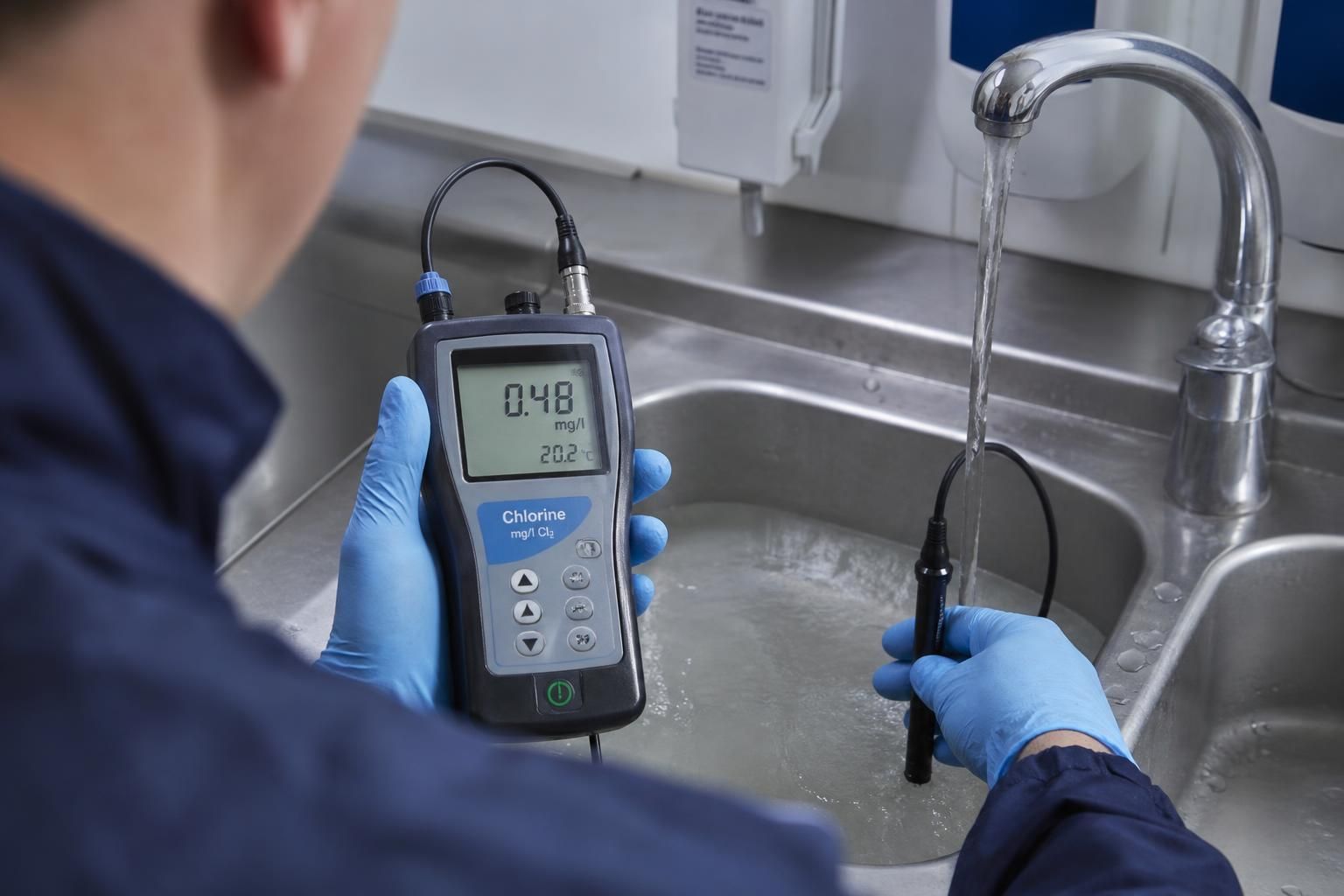
A suitable chlorine disinfection report is an auditable, decision-ready record that allows the responsible person to verify what was tested, assess whether the treatment criteria were met, and demonstrate why the system was safe to return to use. It should combine factual results with enough explanation for a facilities manager, water safety group, auditor or enforcement body to understand the outcome without relying on undocumented verbal advice.
Present results in a traceable format. Each result should be linked to a unique sample or test reference. The report should identify the sampling location using the site’s own asset or outlet description, rather than relying only on informal names such as “first floor tap”. Where relevant, a plan, schematic or outlet schedule can help show the relationship between sample points and the wider water system.
Results should be reported with the correct units, the analytical or field method used, and any applicable reporting limit. A value should not be described simply as “clear” or “passed” when a numerical result is available. The report should also distinguish between measurements taken during treatment, measurements used to confirm flushing or neutralisation, and any later verification samples. This prevents different stages of the process being treated as equivalent evidence.
Explain how the findings support the decision. A professional report should state whether the evidence supports return to normal operation, further flushing, repeat sampling, additional treatment or continued investigation. That conclusion should be based on the agreed acceptance criteria and the intended use of the system. Where a result is borderline, unexpected or unavailable, the report should say so rather than presenting an unqualified pass.
Interpretation should take account of limitations that could affect confidence in the findings. Examples include a sample taken before the system had stabilised, an outlet that could not be accessed, insufficient flushing, an unusual water demand during sampling, or a result received after the system had already been brought back into service. These points do not automatically invalidate treatment, but they should be visible to anyone relying on the report.
Include laboratory and quality-control information. Where samples are sent to a laboratory, the report should identify the laboratory report reference and retain the associated certificate or result sheet. It should be clear which analyses were performed on site and which were undertaken by a laboratory. The provider should explain any sample-preservation, transport or holding-time requirements that are relevant to the reliability of the result.
For UKAS-accredited testing, the report should make clear which specific analyses fall within the relevant scope of accreditation. Accreditation should not be implied for every observation, field measurement or interpretation in the document. Any amendments, corrected certificates or rejected samples should remain traceable through the document-control process.
Record exceptions and actions clearly. A useful report contains an action register rather than burying concerns in narrative text. Each action should identify:
- the issue or non-conformity;
- the affected part of the system;
- the recommended corrective measure;
- the person or organisation responsible;
- the evidence required to close the action; and
- the review status, including whether the action remains open.
If treatment did not achieve the intended outcome, the provider should avoid presenting the work as complete solely because disinfection was attempted. The report should distinguish between completion of the treatment activity and confirmation that the system meets the required condition. It may recommend further investigation into factors such as biofilm, dead legs, low-use outlets, inadequate circulation, contamination sources or ineffective flushing, but those recommendations should be supported by the observed evidence.
Make the report usable for compliance management. The final document should carry a report date, revision status, author or reviewer details, and an approval or sign-off section. Electronic records should be stored with the relevant certificates, photographs, system drawings, attendance records and corrective-action evidence. A concise summary can help senior stakeholders, while the underlying worksheets and certificates should remain available for technical review.
Reports should be retained in line with the organisation’s water safety management arrangements and any applicable contractual or regulatory requirements. They should also be easy to retrieve alongside earlier risk assessments, monitoring records and subsequent verification results. Comparing records over time can reveal recurring issues, such as the same outlets repeatedly producing atypical findings, rather than treating each disinfection exercise as an isolated event.
Before accepting a report, the responsible person should check that the conclusion is supported by the attached evidence, that unresolved actions have an owner, and that any restrictions on system use are explicit. A report that records the treatment but does not support a clear operational decision is incomplete, even when the individual test results appear satisfactory.
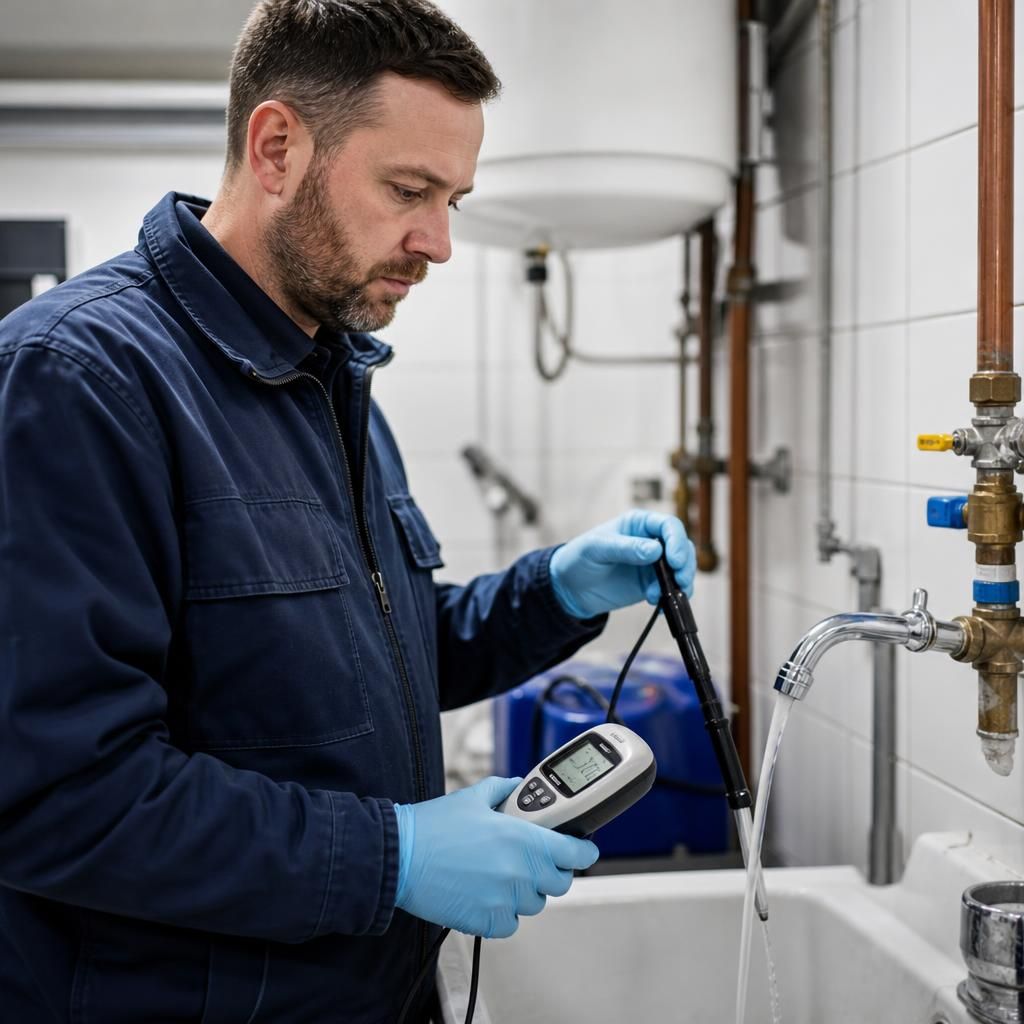
A treatment results report should record the conditions under which disinfection was carried out, not just the final test result. This includes the chlorine concentration applied, contact period, relevant pH and temperature readings, points at which the disinfectant was introduced, and the checks used to confirm that residual chlorine had been removed or reduced to the required level before normal use.
These details allow the reviewer to compare the work completed with the agreed treatment method. If the recorded concentration or contact period differed from the planned approach, the report should explain the difference and state whether its effect on the conclusion was assessed. A clear record therefore shows both what the water tests found and whether the treatment conditions were suitable for interpreting those findings.
Discuss your chlorine disinfection reporting requirements
If you need to establish whether your chlorine disinfection records provide sufficient evidence for compliance and operational decisions, discuss your reporting requirements with Blue Fish Water Management Ltd. Their team can help review the information your treatment documentation should contain.