
Who should approve a chlorinator and dosing system design?
A chlorinator and dosing system design should be approved by a competent water treatment engineer with relevant experience in chemical dosing, disinfection and UK water hygiene requirements. The client’s responsible person or water safety management team should also review and formally accept the design, confirming that it is suitable for the site, intended use and operational controls.
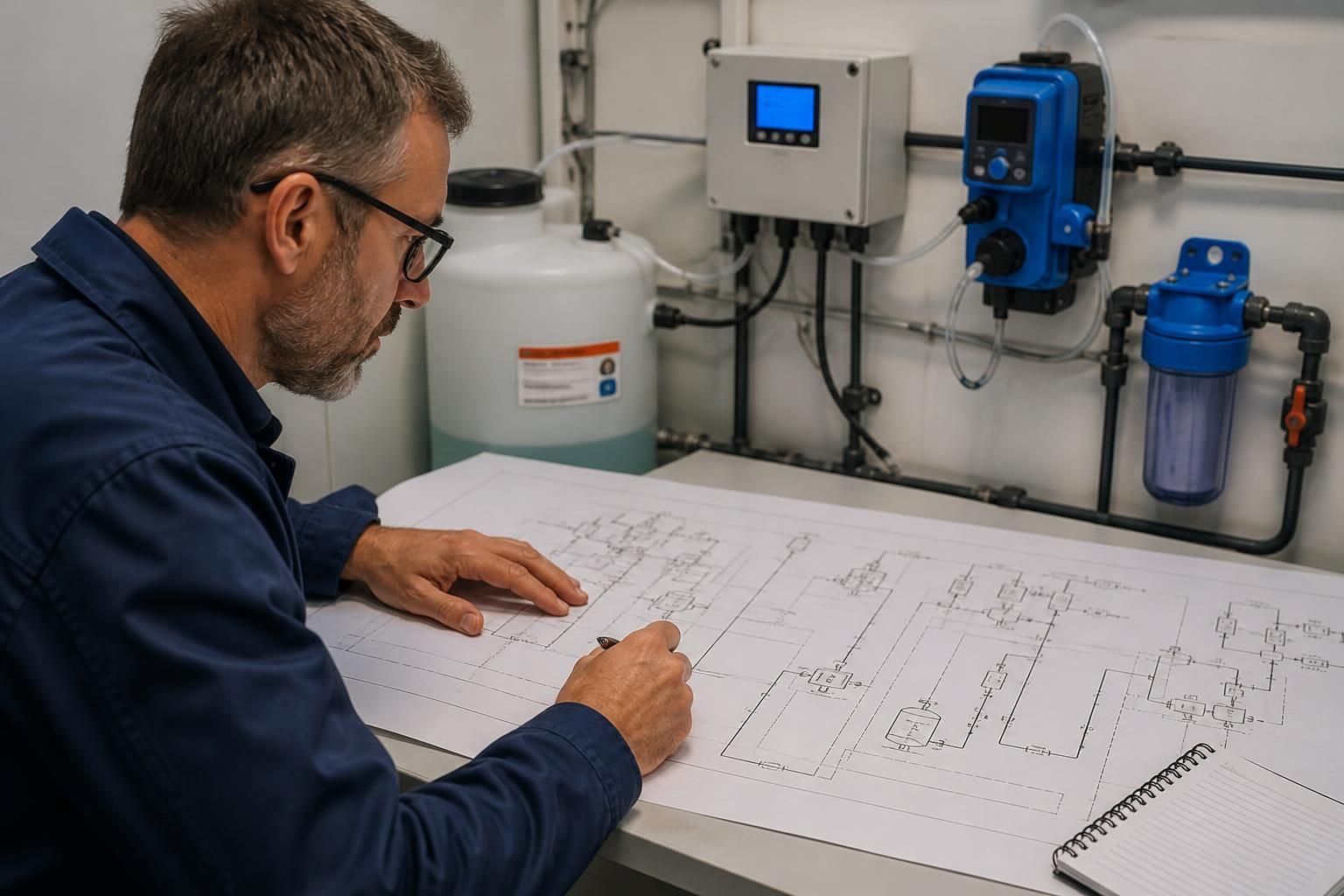
Approval should come from the people who can assess both the technical design and the risks created by operating the system. In practice, this means a suitably competent water treatment engineer leads the technical approval, while the organisation responsible for the premises confirms that the design fits its water safety arrangements, operating procedures and legal duties.
The person reviewing the design should be able to demonstrate relevant knowledge of:
- chlorine-based disinfection and chemical dosing principles;
- hydraulic performance, contact time and flow variation;
- chemical storage, injection, dilution and containment;
- instrumentation, alarms, interlocks and control set points;
- sampling, testing and verification of disinfection performance; and
- the UK guidance and site procedures applicable to the water system.
Approval by an installer, equipment supplier or project manager alone is not normally sufficient. Those parties may confirm that equipment has been installed or that it matches an order, but they may not have authority to accept the wider health, operational and compliance risks. The design reviewer should be independent of any commercial pressure to select a particular arrangement and should be able to challenge assumptions, identify omissions and require amendments.
The approval process should also involve the site’s relevant duty holders. Depending on the premises and the system’s purpose, this may include the person responsible for water hygiene, the facilities or engineering manager, the health and safety lead, and representatives responsible for chemical management and emergency procedures. Where the design affects an existing water safety plan, its control measures and review records should be updated before commissioning.
Some designs need additional specialist review rather than a single sign-off. For example, an electrical or controls engineer may need to verify panel interfaces, alarm logic and fail-safe operation. A suitably qualified health and safety professional may need to examine chemical exposure controls, storage and spill arrangements under COSHH requirements. Designs connected with drinking water or treatment chemicals may also require checks against relevant water fittings, chemical approval and water company requirements. The exact approvals depend on the application, the substances used and the ownership of the water system.
A formal approval record should identify the design version, the reviewer, their competence and authority, the documents examined, outstanding actions and any conditions attached to acceptance. It should include the process and instrumentation diagrams, equipment schedules, calculations, control philosophy, chemical data, alarm arrangements, commissioning method and maintenance requirements. Any departures from the approved design should be assessed and recorded rather than dealt with informally during installation.
Final acceptance should follow commissioning evidence, not precede it. The responsible parties should review installation checks, calibration records, initial water quality results, alarm tests and operating instructions before the system is placed into routine service. If the system is modified later, approval should be revisited where changes affect dosing capacity, chemical strength, control logic, storage, sampling or the risks identified in the original design.
For complex or higher-risk sites, an independent peer review can provide an additional safeguard. It is particularly useful where the design combines several treatment stages, serves variable demand, interfaces with automated plant or replaces an existing disinfection arrangement. The peer reviewer should examine the design assumptions and evidence objectively, while the organisation with control of the premises retains responsibility for deciding whether the system may be adopted.

Approval should be based on the design’s intended treatment outcome, not simply on whether the specified equipment can be installed. The reviewer should confirm that the proposed chlorinator and dosing arrangement is capable of maintaining the required disinfection performance across the expected operating conditions, including changes in flow, water quality and chemical demand.
This distinction matters because a system can contain suitable components yet still be unsuitable as a complete design. The approval record should therefore state the performance assumptions and operating limits that the design depends on. These might include the design flow range, target residual, chemical concentration, control response and sampling arrangements. If those assumptions change, the approval should be reconsidered rather than treated as a permanent endorsement of the equipment.
Request a Chlorinator and Dosing System Design Review
If you need an independent view of who should approve your proposed chlorinator and dosing system design, request a design review from Blue Fish Water Management Ltd. Provide the relevant drawings, calculations and control information so the review can focus on technical suitability and site responsibilities.