
When does a water system need bespoke chlorinator and dosing system design?
A water system needs bespoke chlorinator and dosing system design when its size, layout, water demand, treatment objectives or operating constraints cannot be addressed safely by a standard arrangement. This is particularly important for complex, high-risk or changing systems where dosing accuracy, monitoring, integration and regulatory compliance must be designed around the installation.
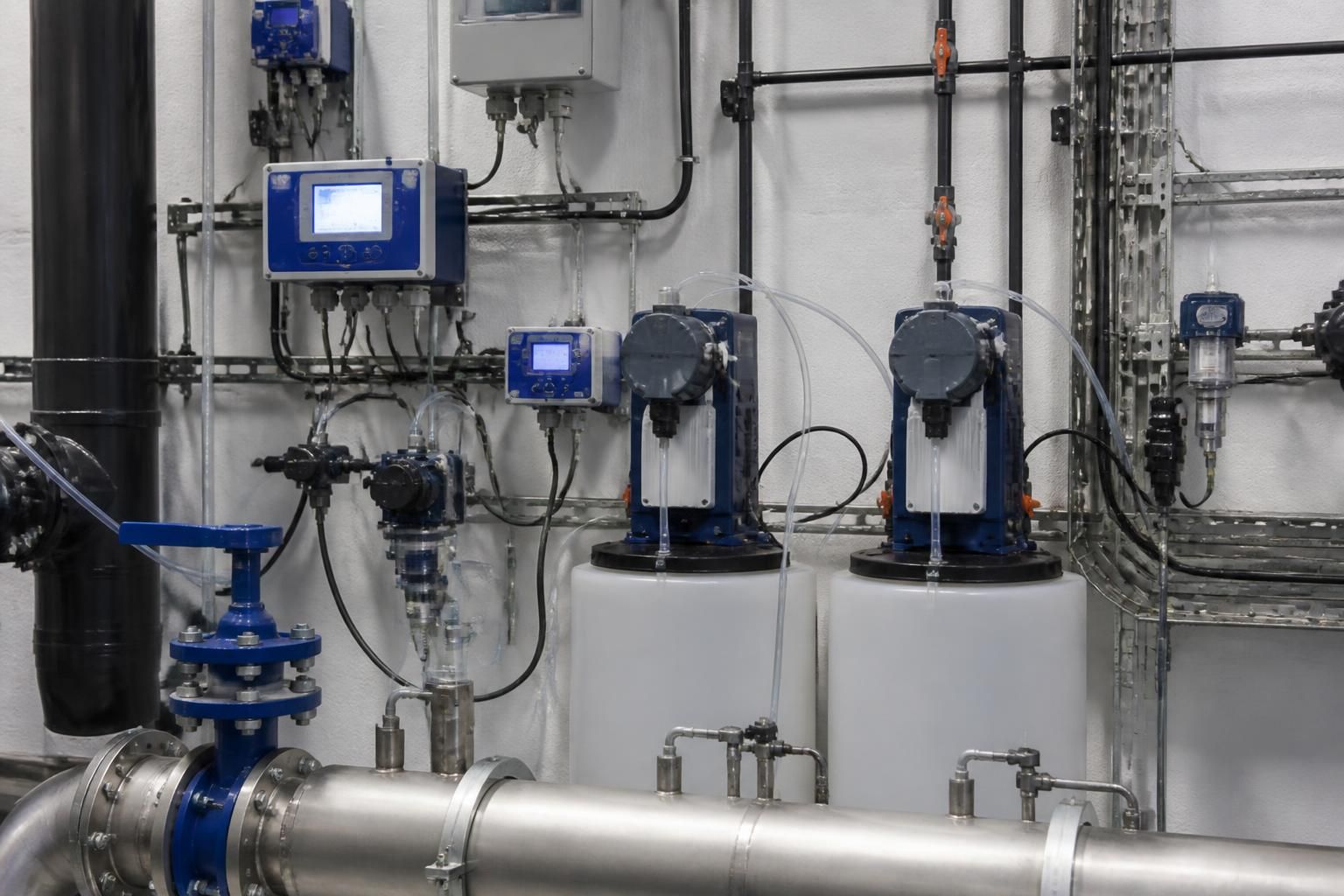
Bespoke chlorinator and dosing system design is needed where the treatment equipment must be matched to the site’s hydraulic conditions, water quality, operating pattern or compliance requirements. A standard packaged arrangement may be suitable for a straightforward installation with stable demand, but it is not automatically suitable for a system with variable flow, several dosing points, unusual pipework or limited space.
Variable or difficult-to-predict water demand is a common reason for commissioning a tailored design. Dosing equipment must deliver the required chemical concentration across the expected flow range without causing over-dosing at low demand or inadequate treatment during peak use. This may apply to premises with intermittent occupancy, production processes that operate in batches, seasonal demand, automatic top-up, or significant differences between daytime and night-time consumption.
A bespoke approach is also appropriate where a site contains multiple tanks, outlets, branches or treatment zones. The design may need to determine where dosing should take place, how treated water will circulate, whether separate control loops are required and how each part of the system will be monitored. Treating one point in a complex network does not necessarily provide effective control throughout the installation.
Existing infrastructure can make standard equipment unsuitable. Older pipework, restricted plant areas, unusual connection sizes, limited electrical capacity, difficult access and incompatible control panels may all affect the arrangement. A design should account for the actual installation rather than assume that the site can accept the dimensions, connections, power requirements and instrumentation of an off-the-shelf unit.
Design work is particularly important where the incoming water has variable or challenging characteristics. Changes in temperature, pH, turbidity, organic load or disinfectant demand can affect treatment performance and the accuracy of control. The selection of dosing pumps, injection points, storage arrangements, sensors and control parameters should therefore be based on the water system’s operating conditions and treatment objective.
A tailored design may be required for systems serving high-consequence or sensitive premises. Hospitals, care settings, industrial processes, accommodation and other premises with vulnerable occupants or critical water uses may require closer control, improved alarm functionality, monitoring at defined points and clear arrangements for responding to abnormal readings. The design should support the site’s water safety controls and make important operating information available to responsible personnel.
Bespoke design is also justified when chlorination or chemical dosing must be integrated with existing plant and building controls. This can include pumps, valves, flow meters, level switches, alarms, remote monitoring, filtration, heating equipment and building management systems. The specification should define how signals are exchanged, what conditions initiate or stop dosing, how faults are indicated and what happens if a sensor, pump or communication link fails.
Safety considerations can independently require a non-standard arrangement. Chemical storage, bunding, ventilation, access for maintenance, dosing-line routing, injection-point isolation and prevention of unwanted chemical mixing all need to be considered. Where operators will handle chemicals or carry out routine checks, the design should also provide practical access and clear indication of equipment status. These matters are easier to resolve at design stage than after installation.
A bespoke system is usually preferable where the treatment process must be verified rather than assumed. The design may need defined sampling points, residual measurement, flow confirmation, alarm set points, commissioning checks and records showing that the system performs under relevant operating conditions. Monitoring should be capable of identifying loss of dosing, empty chemical containers, abnormal flow, sensor failure and other conditions that could compromise control.
Design input should also be obtained when a system is being altered or extended. Adding a new building, increasing occupancy, changing production, replacing storage capacity or modifying circulation can change hydraulic demand and treatment requirements. Reusing the original dosing arrangement without reassessing these changes may leave the equipment incorrectly sized or the monitoring points in unsuitable locations.
In practice, the need for bespoke design can be assessed by reviewing:
- the source, storage capacity and distribution arrangement;
- normal, minimum and peak flow conditions;
- water quality and the intended treatment objective;
- the number and location of dosing and monitoring points;
- existing pumps, valves, controls, electrical supplies and communications;
- chemical storage, handling and maintenance requirements;
- the consequences of loss of treatment or an alarm condition; and
- planned changes to occupancy, production or water demand.
If these factors are unknown, inconsistent or likely to change, a standard selection based only on nominal flow is unlikely to provide a sufficient design basis. A competent designer can translate the site information into equipment duties, control logic, instrumentation, installation requirements and commissioning criteria. Blue Fish Water Management provides technical advice on chlorinator and dosing system design as part of its wider water hygiene and legionella control work, helping businesses develop a treatment arrangement that is appropriate to the installation and its operating risks.
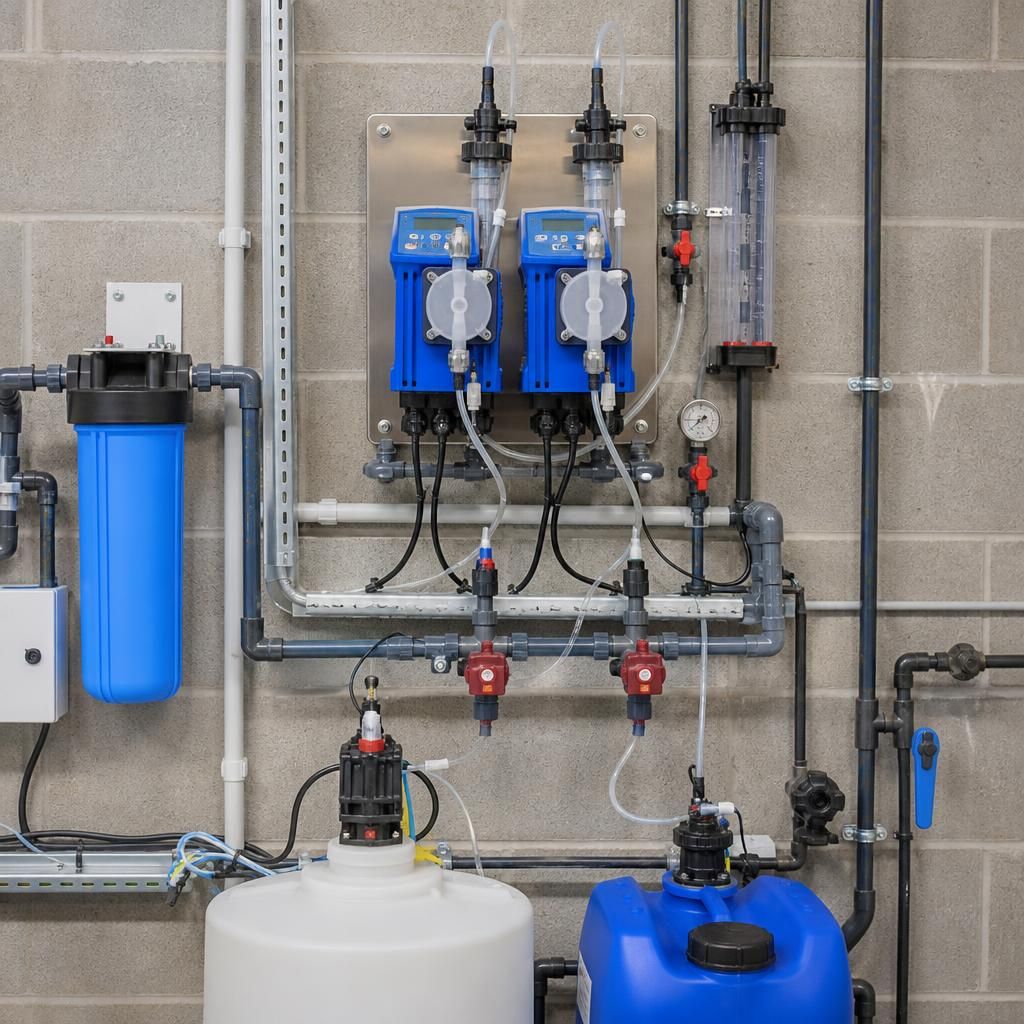
Bespoke chlorinator and dosing system design is needed when the installation cannot be safely defined by catalogue equipment alone. The requirement is not determined simply by the size of the building; it depends on whether the proposed arrangement can control treatment reliably across the system’s actual operating conditions and provide the evidence needed for safe operation.
A bespoke design does not necessarily mean that every component is specially manufactured. It may involve selecting standard pumps, sensors and control equipment, then engineering their duties, arrangement, interconnections and settings around the site. This approach is appropriate where the consequences of incorrect dosing, ineffective treatment or unclear operating controls make an assumed, off-the-shelf configuration unsuitable.
Discuss Your Bespoke Chlorinator and Dosing System Design Requirements
Discuss your site conditions and treatment objectives with Blue Fish Water Management to establish whether bespoke chlorinator and dosing system design is appropriate. The next step is to review the available system information and identify the design requirements that need further investigation.