
When is specialist chlorinator water treatment support needed?
Specialist chlorinator water treatment support is needed when a water system presents a legionella risk, shows inconsistent disinfection results, or requires assessment beyond the responsible person’s technical competence. It is also appropriate when commissioning, modifying, troubleshooting or reviewing chlorination equipment to verify that treatment is effective and compliance responsibilities are being met.
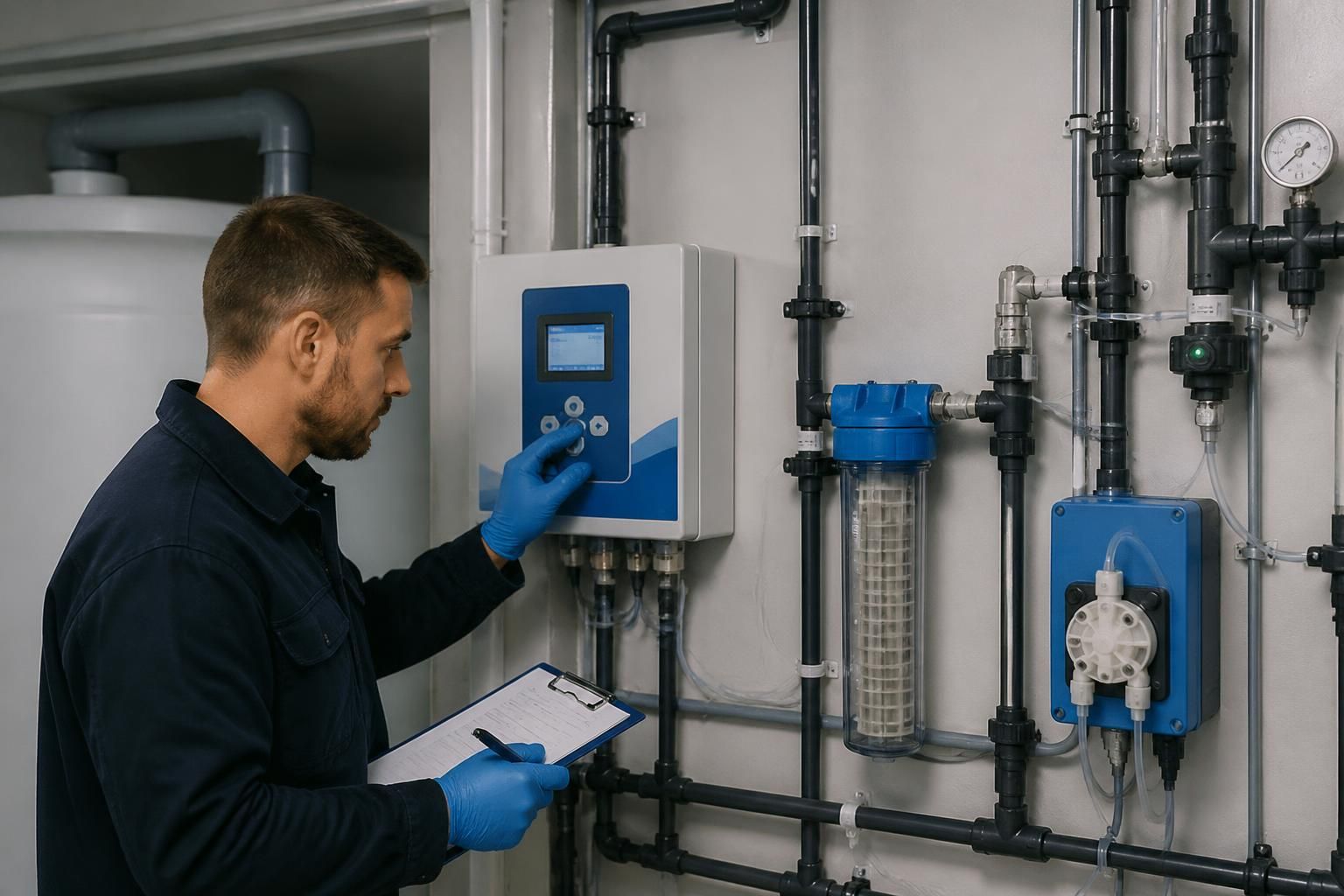
Specialist chlorinator water treatment support is needed when the safe operation of a chlorination regime depends on technical judgement, documented verification or corrective action that cannot be completed reliably through routine site management alone. The need may arise from the design of the system, the quality of available evidence, a change in operating conditions or uncertainty about whether the treatment is controlling the intended hazard.
Routine checks do not by themselves demonstrate that a chlorination process is suitable. A competent specialist may need to examine the relationship between dosing rate, water demand, contact time, temperature, pH, flow and disinfectant residual. These factors affect whether treatment reaches the required parts of the system and whether readings taken at one outlet accurately represent conditions elsewhere. Support is particularly relevant where the installation serves multiple buildings, has variable demand, includes storage tanks or contains sections that are difficult to circulate.
- The evidence is incomplete: missing monitoring sheets, unclear sampling locations, uncalibrated instruments or unexplained changes in readings can prevent the responsible person from demonstrating effective control.
- The treatment regime is difficult to interpret: a reading may need to be assessed alongside flow, dosing records, pH, temperature, contact time and the condition of the distribution system rather than considered in isolation.
- Corrective action has to be selected: specialist input can help distinguish between a dosing issue, inadequate circulation, dead legs, biofilm, fouling, equipment failure or a wider water-system problem.
- Several parties share responsibility: where a building owner, facilities team, water treatment contractor and equipment maintainer are all involved, technical support can help define who monitors, records, escalates and verifies each task.
Support is also appropriate when a chlorination process is being introduced into an existing water system. Before operation begins, the system may require a documented treatment strategy, clearly defined control points, suitable monitoring arrangements and confirmation that operators understand the limits of their responsibilities. At handover, records should show what has been tested, which settings apply, what actions are required when results fall outside the agreed parameters and who reviews the information.
Changes to the wider property can create a need for specialist review even when the chlorinator itself has not changed. Examples include alterations to pipework, new outlets, periods of low occupancy, changes in water demand, changes to stored-water capacity or the introduction of processes that affect water temperature or flow. These changes can alter hydraulic conditions and may make an established monitoring plan unsuitable. The appropriate response is to reassess the treatment arrangement rather than assume that previous settings remain valid.
Specialist support should be considered after an incident or near miss involving the water system. This includes unexplained illness concerns, failures in disinfection records, an extended interruption to dosing, contamination of stored water or evidence that remedial work has not resolved the underlying issue. An investigation should establish the sequence of events, identify control failures and verify that any corrective measures are effective. It should not be limited to resetting equipment or taking a single follow-up sample.
The responsible person should also seek advice where the site team cannot confidently meet its duties under the relevant UK water hygiene arrangements. The Health and Safety Executive’s Legionnaires’ disease: The control of legionella bacteria in water systems guidance, including ACOP L8 and HSG274, places importance on competent assessment, control measures, monitoring and records. The level of competence required depends on the complexity and risk profile of the system. External support does not remove the duty holder’s responsibilities, but it can provide technical assessment, independent review, water testing and a clear basis for decisions.
Before appointing a specialist, gather the available risk assessment, schematic drawings, equipment details, dosing and monitoring records, maintenance information, water-test results and details of recent changes or incidents. The scope should then state whether the requirement is investigation, compliance review, operational guidance, testing, remedial planning or verification after remedial work. A suitably defined scope makes it easier to determine whether the advice addresses the actual weakness in the chlorination regime.
In practice, specialist chlorinator water treatment support is justified when the consequences of uncertainty are significant, the system is technically complex, available records cannot demonstrate control, or a decision could affect the safety and compliance of the wider water system. The aim is to turn monitoring information and site conditions into proportionate, documented actions that the responsible organisation can manage and review.
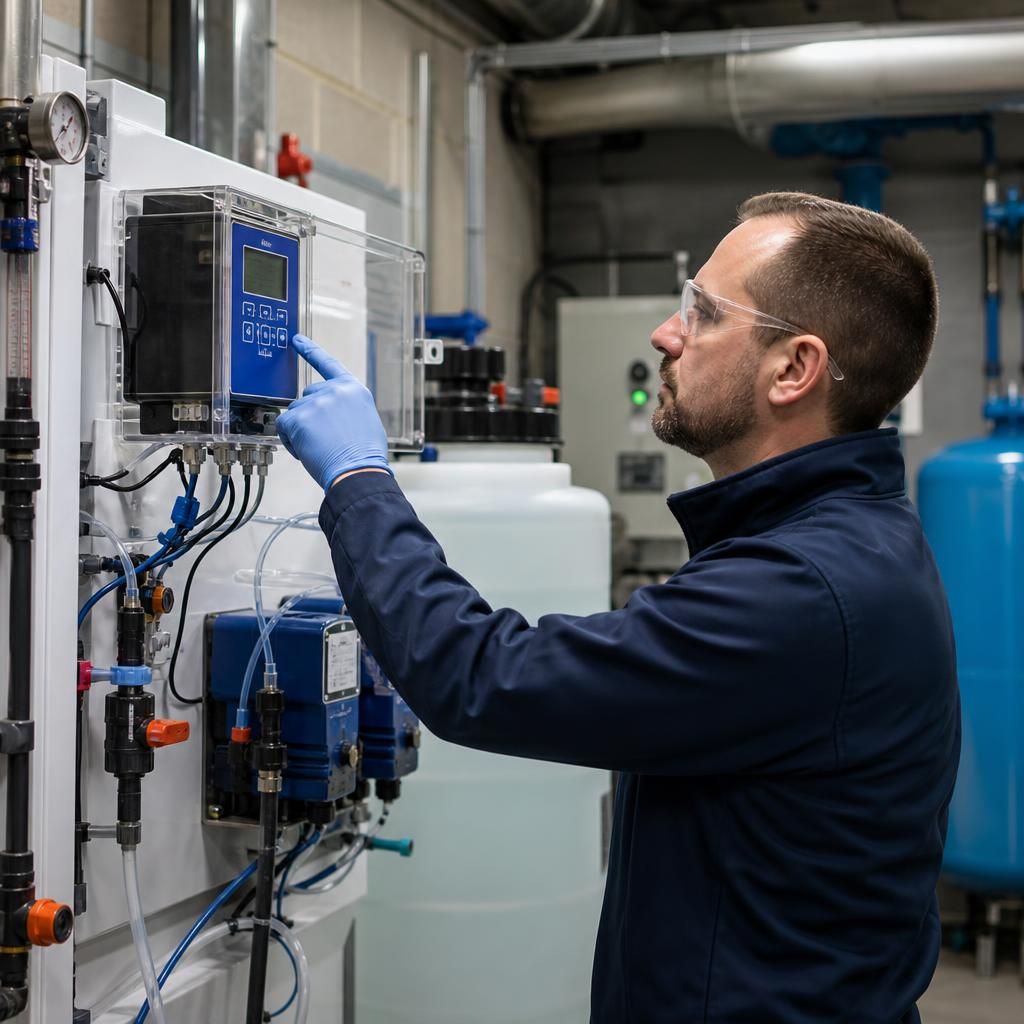
Specialist chlorinator water treatment support is particularly important at commissioning, before a newly installed or modified system is accepted for routine operation. The assessment should go beyond confirming that the dosing pump runs: it should establish that the control settings, alarms, interlocks and fail-safe functions operate as intended under actual site conditions.
Commissioning checks may also include instrument calibration, chemical dosing performance, the suitability of sampling points and the relationship between the chlorinator and associated pumps, tanks and controls. The final handover should record approved settings, test results, alarm responses and any operating limitations. Without this evidence, a system may appear operational while important faults remain undetected.
Discuss your chlorinator water treatment support needs
Discuss your chlorinator water treatment support needs with Blue Fish Water Management Ltd to identify the appropriate scope of technical advice, testing or review for your site. Provide details of the system and the specific uncertainty so the next step can be considered on an informed basis.