
When is chlorinator water treatment equipment due for an upgrade?
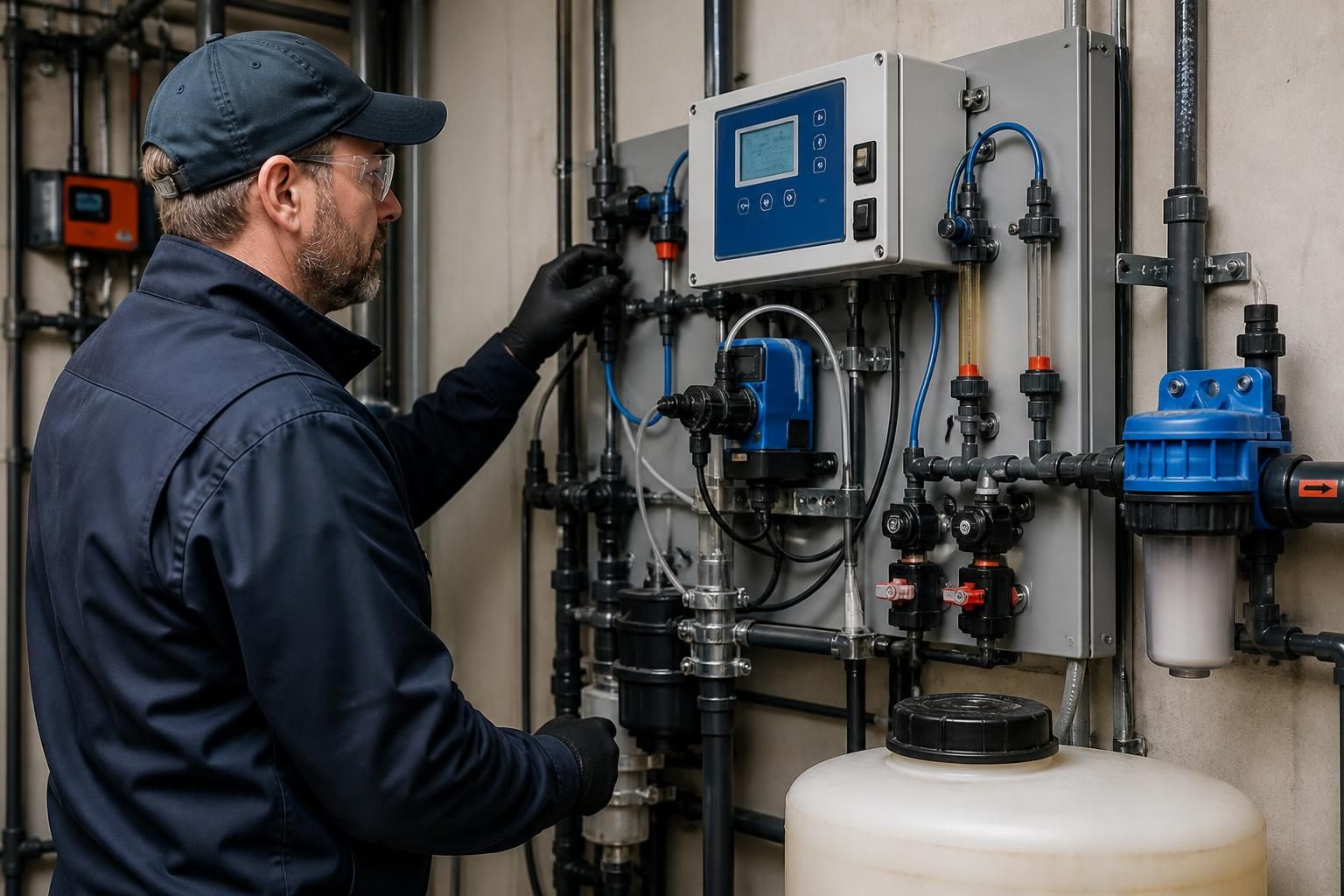
Chlorinator water treatment equipment is due for an upgrade when the existing arrangement can no longer provide a suitably controlled, maintainable and verifiable method of dosing and monitoring water treatment chemicals. The decision should be based on the condition and capability of the complete system, the risks identified through review, changes to the site or process, and whether the equipment can continue to support the organisation’s water safety and compliance arrangements.
Changes in the water system or its use can justify an upgrade even where the chlorinator is still operating. Alterations to storage capacity, occupancy, production processes, flow rates, operating schedules or system configuration may place demands on the equipment that were not present when it was installed. A system designed for a previous duty may no longer provide appropriate control across the full range of operating conditions. An upgrade may therefore involve resizing or reconfiguring dosing equipment, improving injection arrangements, or adding control and monitoring functions that reflect the current system.
The age of the installation is relevant, but age alone does not determine whether replacement is necessary. Older equipment should be assessed against its documented performance, condition, service history, supportability and compatibility with the rest of the treatment system. An installation may remain suitable if it is well maintained and demonstrably controlled, while a newer installation may require improvement if it is poorly matched to the duty or difficult to verify.
Equipment supportability is an important consideration. If essential components are no longer supported, replacement parts are difficult to source, or repairs require workarounds that affect reliability or safety, continuing with the existing equipment may create avoidable operational risk. A planned upgrade can provide a more sustainable arrangement than repeated intervention on a system whose key components are approaching the end of their practical service life.
An upgrade may be appropriate where the system does not provide sufficient information for responsible oversight. Depending on the installation, this can include improved indication of dosing conditions, clearer alarm functions, better access to recorded data, or more effective integration between chemical dosing and associated plant controls. The purpose is not to add technology for its own sake, but to make important operating conditions easier to observe, investigate and record.
Compliance evidence should form part of the decision. A chlorinator system needs to be considered within the site’s wider water safety arrangements, including its risk assessment, control measures, monitoring regime, maintenance procedures and management responsibilities. If the available records cannot demonstrate that the treatment process remains suitably controlled, the issue may be a deficiency in the equipment, its monitoring provisions, its operating procedure, or the way responsibilities have been allocated. An upgrade should address the underlying cause rather than simply replace an individual component.
Before approving replacement, a competent review should establish:
- the treatment duty the equipment is expected to perform and whether that duty has changed;
- the condition and remaining serviceability of pumps, dosing lines, injection points, sensors, control panels, storage arrangements and associated safeguards;
- the quality and frequency of available operational records;
- whether alarms and protective measures provide appropriate warning of abnormal conditions;
- the availability of technical support, spare parts and suitable maintenance procedures;
- how the proposed work will affect water treatment during installation, testing and commissioning; and
- what validation, staff instruction and documentation will be needed after the work.
Repair, refurbishment and full replacement should then be compared. Repair may be suitable where the underlying design remains appropriate and the defect is isolated. Refurbishment may improve selected components or controls while retaining usable parts of the installation. Full replacement is more likely to be justified where several elements are ageing together, the system is fundamentally unsuitable for its present duty, or modifications would produce a complex arrangement that is harder to operate and maintain.
The upgrade specification should be based on the required outcome rather than on a preferred item of equipment. It should define the dosing and monitoring requirements, interfaces with existing plant, safe chemical handling arrangements, alarm and shutdown logic, maintenance access, record-keeping needs and commissioning checks. Any changes should be reflected in the risk assessment, written procedures, inspection schedules and staff training.
Following installation, the upgraded system should be commissioned and its operation verified under representative conditions. This should include checking dosing control, monitoring points, alarms, interlocks, chemical delivery arrangements and the accuracy of relevant records. Independent water testing or other appropriate verification may also be needed to demonstrate that the treatment objective is being achieved. Blue Fish Water Management Ltd can provide practical advice on assessing whether an existing chlorinator arrangement should be repaired, refurbished or replaced, and on linking the technical work to wider legionella control and water hygiene requirements.
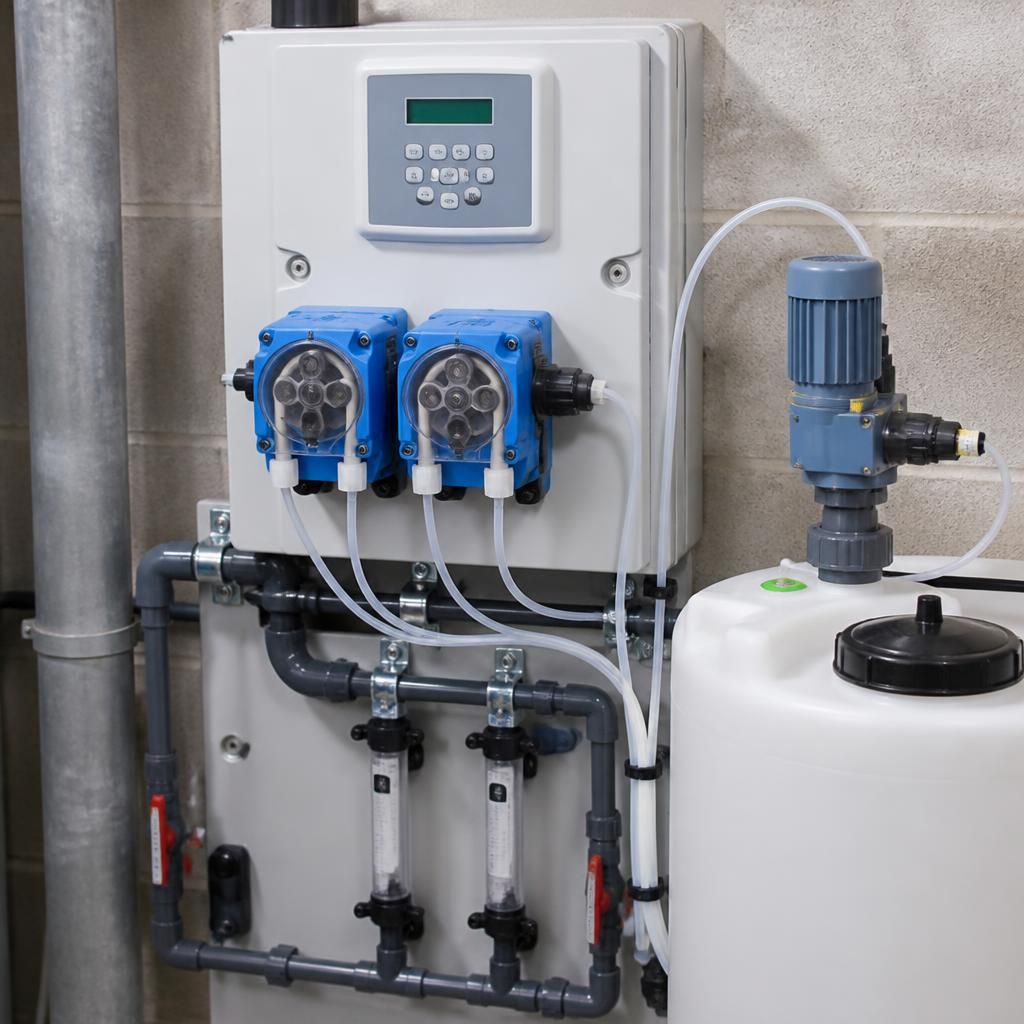
Chlorinator equipment may be due for an upgrade when its wetted components are no longer suitable for the chemicals, concentrations, temperatures or operating conditions in the treatment process. Dosing pumps, seals, tubing, valves and injection assemblies can deteriorate internally through chemical exposure, even when the control panel and external casing appear serviceable.
Signs such as swelling, brittleness, leaks, crystallisation, loss of dosing accuracy or repeated failure of the same component should be investigated as possible material-compatibility or design issues rather than treated as isolated maintenance faults. The upgrade decision should confirm that replacement materials, chemical storage arrangements and dosing components are appropriate for the current treatment duty and can be maintained safely.
Assess whether your chlorinator equipment needs an upgrade
If you are unsure whether your chlorinator equipment remains suitable for its current duty, speak to Blue Fish Water Management Ltd about an independent review of its condition, performance and upgrade requirements.