
What does a chlorinator water treatment review examine?
A chlorinator water treatment review examines dosing arrangements, equipment performance, monitoring records, safety controls and compliance with relevant water hygiene requirements. It identifies faults, gaps or remedial needs affecting the reliable and safe management of the system.
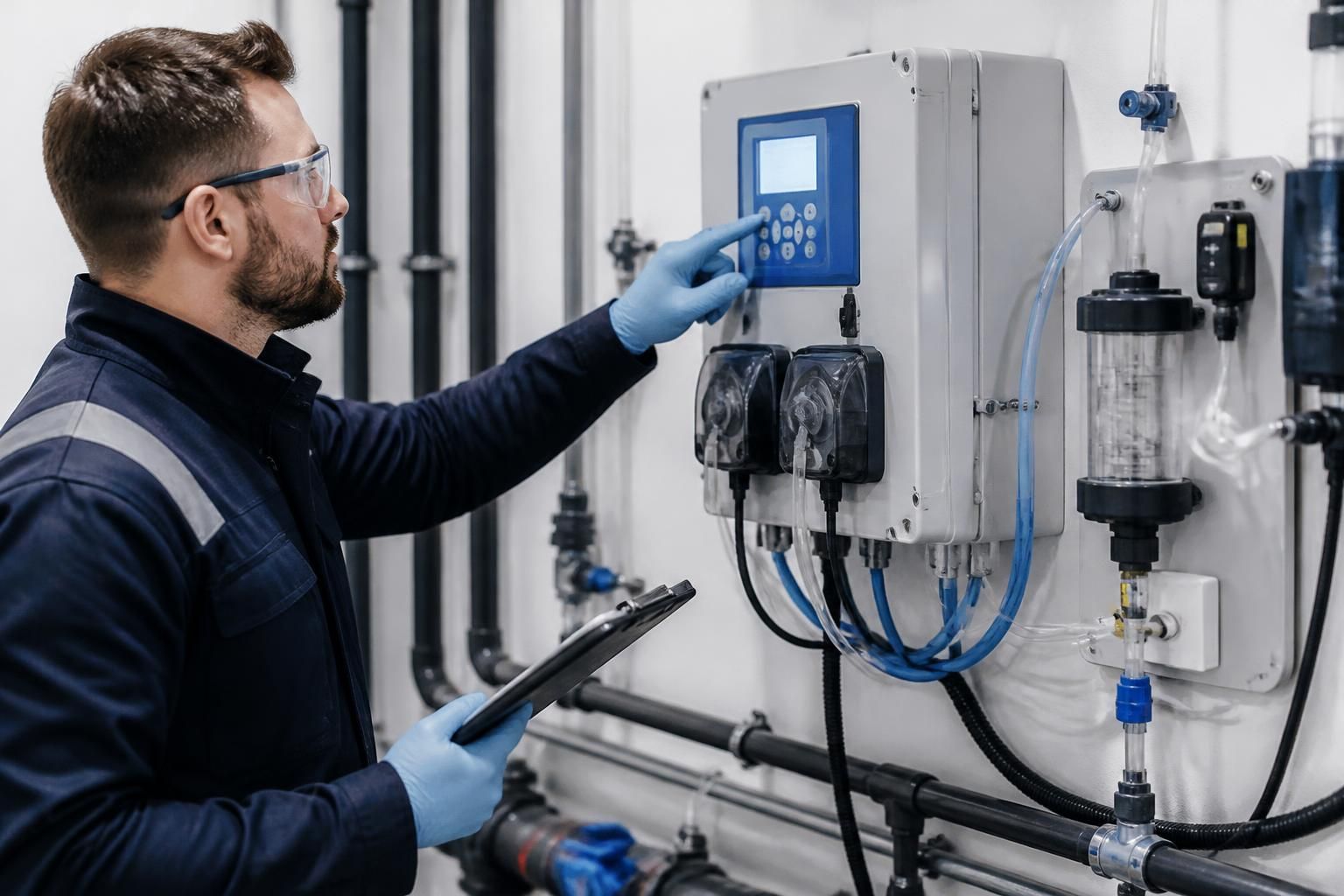
A chlorinator water treatment review is a structured examination of whether a chlorination system is suitable for the water system it serves, technically controlled and supported by adequate management information. It considers the relationship between the equipment, water chemistry, hydraulic conditions, operational procedures and the duties assigned to those overseeing the system.
The review will usually begin with the system’s purpose and design basis. This includes identifying which outlets, tanks, pipework or process areas are served, how water moves through the installation and whether the chlorinator is being used for routine control, corrective treatment or a specific disinfection requirement. The reviewer can then assess whether the arrangement remains appropriate following changes to occupancy, demand, plant, storage capacity or system configuration.
Water chemistry is an important part of the examination. A chlorination system cannot be assessed by equipment operation alone. The review considers factors that affect disinfectant effectiveness, such as pH, water temperature, organic loading, stagnation and the condition of the source water. It may also examine whether the selected control approach accounts for variations in demand and whether chemical consumption or water quality trends indicate an underlying issue.
Hydraulic performance and distribution are also considered. The relevant question is not simply whether disinfectant is introduced into the water, but whether the treated water reaches the intended parts of the system in a reliable and measurable way. The review may therefore examine:
- flow patterns, storage and areas where water may remain stagnant;
- the location of treatment and measurement points;
- the ability of the arrangement to cope with changing demand;
- pipework, valves and components that could restrict circulation or create untreated sections; and
- whether representative points are available for checking conditions throughout the system.
Documentation and operational evidence form another part of the review. Relevant information may include system drawings, asset details, chemical safety information, commissioning records, servicing information, test results, incident records and previous recommendations. These documents help establish whether the written arrangements reflect the installation that is actually in use. Inconsistencies between records and site conditions can make otherwise sound controls difficult to verify.
Competence and governance are examined alongside the physical installation. A review can identify who is responsible for checking the system, interpreting results, authorising adjustments, arranging maintenance and escalating abnormal findings. It should also consider whether those roles are clearly documented and whether staff understand the limitations of the equipment and the actions required when results fall outside the agreed operating range.
The review may include a site inspection, discussions with responsible personnel and examination of available records. Where the system forms part of a wider water hygiene regime, the reviewer will consider how chlorination interacts with other controls, including storage management, temperature control, cleaning, disinfection and legionella risk management. This prevents the chlorinator from being treated as a standalone solution when other parts of the system may influence water safety.
The resulting report should distinguish between observations, significant risks and recommended actions. It may prioritise issues according to their effect on water safety, operational reliability and the ability to demonstrate control. Recommendations could involve improving records, clarifying responsibilities, changing inspection arrangements, investigating water quality trends, repairing associated components or obtaining further specialist assessment. The appropriate action depends on the system’s design, use and evidence available at the time of the review.
For a business considering a chlorinator water treatment review, the most useful preparation is to provide access to current system information, relevant test and service records, chemical handling procedures and the people who operate or manage the installation. Blue Fish Water Management Ltd can use this information, together with site findings, to provide pragmatic guidance on the condition and management of chlorination arrangements within a wider water hygiene framework.
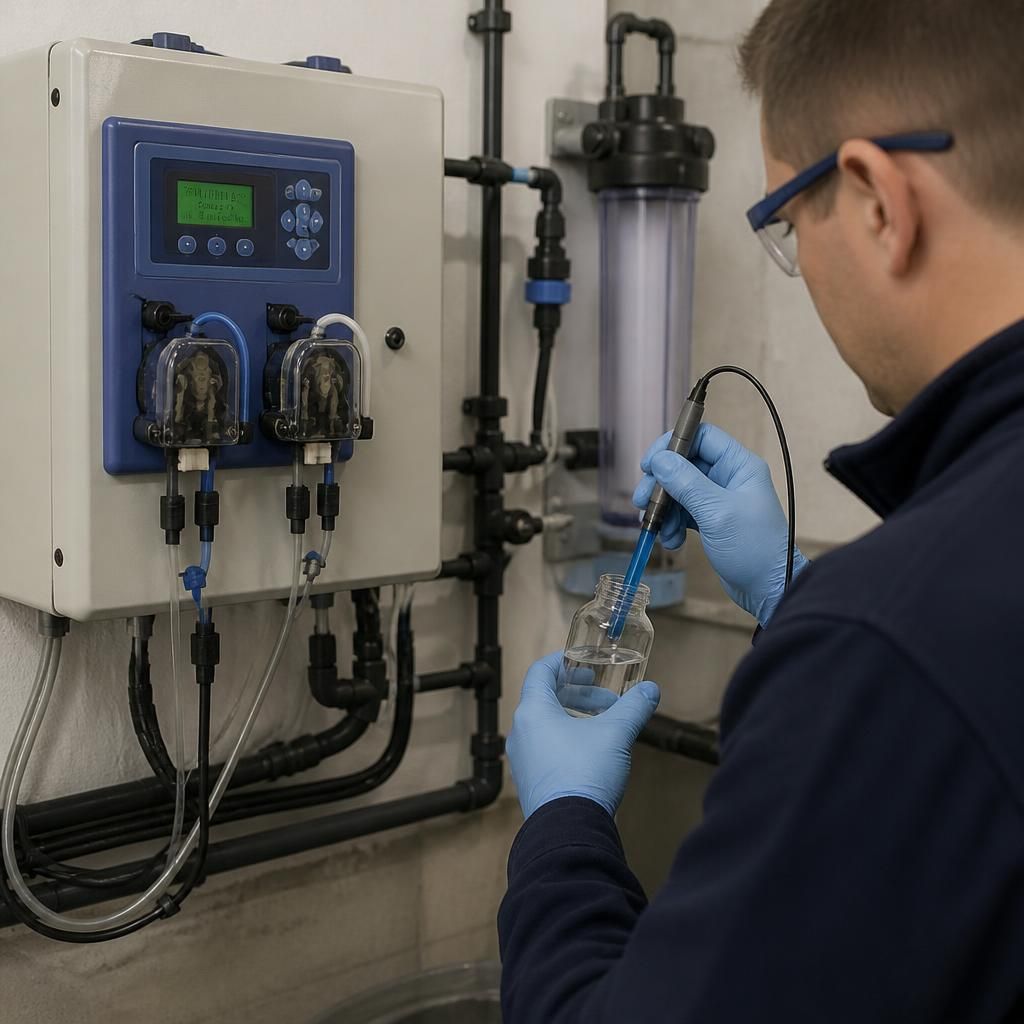
This part of the review helps distinguish equipment that operates under normal conditions from an arrangement that remains controlled during foreseeable faults. It may identify missing interlocks, unclear alarm indications, inadequate contingency arrangements or restart procedures that need to be documented and tested.
Discuss your chlorinator water treatment review
If you need to determine whether your chlorination arrangements require further examination, discuss the system’s current use, operating concerns and available evidence with Blue Fish Water Management Ltd. This can help establish an appropriate scope for a chlorinator water treatment review.